Mole Crickets: How to Identify the Damage and Control Them
 Sarah MitchellLawn Diagnostics Specialist | 12 Years
As an Amazon Associate we earn from qualifying purchases.
If you live anywhere along the Gulf Coast or across the Southeast and your lawn suddenly feels spongy underfoot, like you are walking on a thin mattress, that is not your imagination. Pair that with squiggly raised trails snaking across the surface and patches of bermuda or bahia that are thinning and browning for no obvious reason, and you are very likely looking at mole crickets. They are one of the most destructive warm-season turf pests we deal with in the South, and the damage they cause is sneaky because so much of it happens an inch or two underground where you cannot see it.
Spongy soil that gives underfoot plus raised tunneling trails across a warm-season lawn almost always means mole crickets. They are worst in bahiagrass and bermuda across the Gulf Coast and Southeast, and they damage turf two ways at once, by tunneling through the root zone and by feeding on roots and tender shoots near the surface.
To confirm them, mix dish soap and water and pour it over a suspect patch. If mole crickets are present they will come crawling to the surface within a couple of minutes. The single most important thing to know about control is timing: you treat the young nymphs in early-to-mid summer, not the big adults you notice in spring. Hit the nymphs while they are small and shallow and you win. Wait until they are adults and you are mostly wasting product.
What mole cricket damage actually looks like
Mole crickets do not chew up a leaf the way a lot of pests do, so the damage reads differently. The signs build slowly and then seem to appear all at once, which is part of why so many people misread it as drought stress or disease. Here is what I tell folks to look for, roughly in the order it shows up.
The spongy soil test
This is the one that gives them away. Mole crickets tunnel just below the surface, loosening and lifting the soil as they go. Over a few weeks that turns the top inch or two of your lawn into something that feels soft and springy when you walk across it, almost like a foam pad under the grass. Walk a section you suspect and a section you know is healthy and compare. If the suspect area gives and bounces while the healthy turf feels firm, that loosened soil is the tunnels collapsing slightly under your weight.
Raised trails and tunnel ridges
Look at the soil surface early in the morning, ideally right at dawn after a warm night. Mole crickets are most active overnight, and their tunneling pushes up little ridges of loosened soil that wind across the lawn in irregular squiggles, a bit like the surface trails moles leave but much smaller and finer. You will often see these most clearly in thin or bare spots where the soil shows. After a rain or a heavy dew the fresh tunneling stands out even more.
Dislodged seedlings and loose footing for the grass
Because the crickets are constantly working the soil around the crowns and roots, grass plants lose their anchor. Newly seeded or sprigged areas get the worst of it. You may notice seedlings that have been heaved up and tipped over, or established grass that pulls up far too easily, like the roots have been cut loose from the soil. That loss of root contact is a big part of why the turf browns even when you are watering.
Irregular browning and thinning
The visible turf damage is the last symptom to arrive, and it is the one people usually call about. You get irregular, patchy browning and thinning that does not follow the neat lines of a sprinkler miss or the broad even fade of dormancy. The grass is starving because its roots are being eaten and its anchor in the soil has been destroyed. The patches tend to spread and connect over the season as the cricket population grows and the nymphs get bigger and hungrier.
Confirm it: the soap flush test
Before you treat anything, prove that mole crickets are actually there. The damage signs above are strong clues, but a soap flush turns a clue into a confirmation, and it is about as low tech as lawn diagnostics get.
Mix a couple of squirts of liquid dish soap into a watering can or bucket of water, then pour it slowly over about a two foot by two foot section of a suspect area, especially over those raised trails. The soap irritates the crickets and drives them up out of their tunnels. Watch the patch for two or three minutes. If mole crickets are present, you will see them crawl to the surface, sometimes several of them. They are tan to brown, an inch or so long, with a broad shovel-shaped pair of front legs built for digging that look almost like tiny mole paws, which is exactly where the name comes from.
Do the flush in two or three different spots so you get a sense of how widespread they are. A flush that brings up crickets in one corner is a localized problem. A flush that brings them up everywhere you test means the whole lawn is under pressure and you will want a broader plan. The flush is also how you size up the nymphs, which matters enormously for timing, and we will get to that next.
If you would rather not crawl around your yard with a bucket, snap a photo for a free AI diagnosis. It reads your damage pattern against the pests that are actually active in your region right now and tells you whether mole crickets fit, so you know what you are dealing with before you buy anything.
Where and when: region, grass, and life cycle
Mole crickets are a Southern problem. They thrive in the warm, sandy soils of the Gulf Coast and the broader Southeast, and they hit warm-season grasses hardest. Bahiagrass and bermuda take the worst of it, but zoysia and St. Augustine across the same region are far from safe. If you are running a cool-season lawn up north, this is not your pest, and your spongy soil or thinning is almost certainly something else. (If you want to see how your grass type stacks up on pest pressure and other traits, the grass comparison tool lays the warm-season options side by side.)
The life cycle is the whole ballgame for control, so it is worth understanding even at a high level. Adults survive the winter in the soil and become active and very visible in spring, when warm evenings bring them out and you might see them on driveways or around lights. Through late spring the adults mate and the females lay eggs in underground chambers. Those eggs hatch into nymphs, and it is the nymphs, feeding and tunneling as they grow through summer, that do the bulk of the real damage to your turf.
Here is the timing rule that matters more than anything else in this article: you want to treat the young nymphs in early-to-mid summer, while they are small, shallow, and vulnerable. A small nymph is easy to reach and easy to kill. By late summer those same insects have grown into large, deep-tunneling, hard-bodied near-adults that shrug off treatments that would have wiped them out weeks earlier. The most common mistake I see is people reacting in spring to the adults they can see, or waiting until the visible turf damage is severe in late summer. Both miss the window. The adults you see in spring are mostly done laying by the time you would treat, and the late-summer insects are too big to control efficiently.
- The exact nymph-emergence window is regional and shifts year to year with temperature, so the timing that works in coastal Florida is not the timing that works in inland Georgia or the Carolinas. Your local cooperative extension office publishes the local nymph-emergence and best-treatment windows for your county, and that is the figure to trust over any generic calendar.
- Specific insecticide active ingredients, application rates, and the threshold for when a population justifies treatment all depend on your grass type, your situation, and current local recommendations. Ask your extension office for the current product guidance rather than relying on numbers from a general article.
- If your damage is on a newly established lawn, or you are dealing with repeat infestations year after year, the extension can advise on preventive timing that fits your local life cycle.
This is also exactly where a personalized care plan earns its keep. A care plan tells you the exact window mole cricket nymphs emerge for your region and your grass type, so you treat when control actually works instead of guessing off a national calendar that is weeks wrong for your county. Getting that one window right is the difference between a treatment that ends the problem and one that barely dents it.
How to control mole crickets
Control works best as a layered approach: shore up the lawn culturally so it can take a hit, then treat when the timing is right. Skipping straight to a product without the cultural side tends to produce short-lived results.
Cultural steps first
- Keep the turf dense and well-fed. A thick, vigorously growing stand of bermuda or bahia recovers from cricket feeding far better than a thin, stressed lawn, and dense turf is simply less inviting to egg-laying females. Sound fertilization and mowing at the right height for your grass do real work here.
- Water deliberately, not constantly. Mole crickets love warm, moist, sandy soil, and overwatering keeps that environment perfect for them while also weakening your grass. Deep, infrequent watering builds deeper roots that withstand feeding better. A watering schedule calculator can dial this in for your grass and climate so you are not accidentally rolling out the welcome mat.
- Reduce thatch and compaction. Healthy soil structure and a managed thatch layer give your grass a fighting chance to re-root after the crickets have loosened things up.
Then treat at the right time
When the soap flush confirms an active population and you are inside that early-to-mid summer nymph window for your area, that is when a treatment pays off. The product moves through the loosened top layer of soil where the small nymphs are feeding, and because the insects are small and shallow it actually reaches them. Watering the area lightly before treating often brings the nymphs closer to the surface and improves the result, but follow your local extension's current product guidance for the specifics, since the right active ingredient and how to apply it depend on your grass and your region.
Whatever you use, re-flush a week or two later to check whether the population dropped. Treating blind and never measuring the result is how people end up convinced nothing works, when really they treated the wrong life stage at the wrong time.
Recommended products
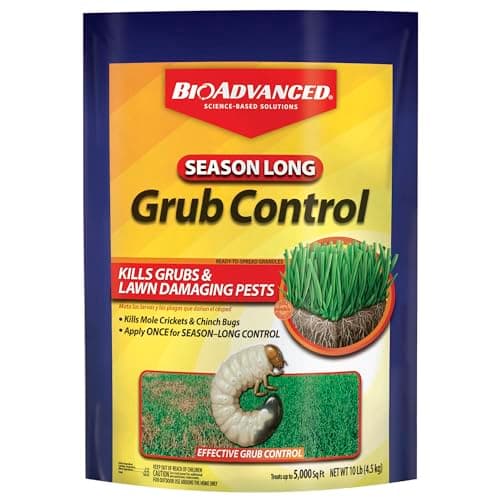
BioAdvanced Season Long Grub Control Granules
A preventive granule for early-season nymphs, applied in the June to July window across the Gulf South.
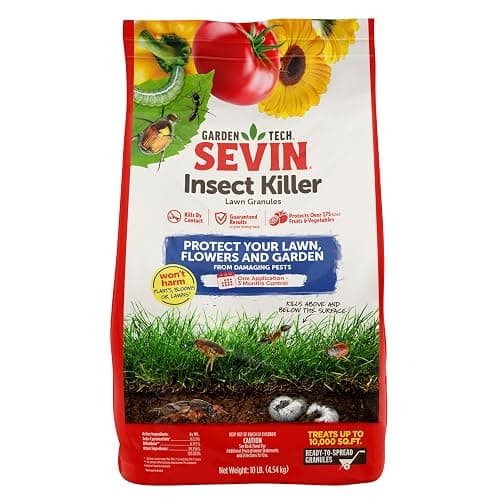
Sevin Insect Killer Granules
A curative granule for confirmed active tunneling later in the season.
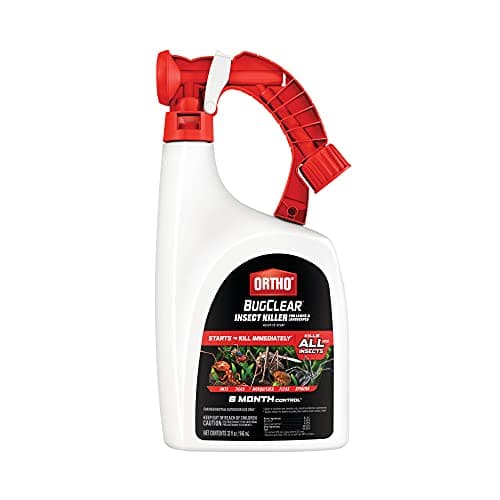
Ortho BugClear Insect Killer for Lawns Ready-to-Spray
A hose-end liquid for treating the specific tunneled zones a soap flush confirmed.
Don't confuse mole crickets with grubs or dormancy
Two look-alikes trip people up constantly, and getting the wrong diagnosis means the wrong treatment and a wasted season.
The first is white grubs. Grubs are the other big root-zone pest, but they tell a different story. Grub-damaged turf pulls up in loose mats like a poorly laid carpet because the grubs have severed the roots beneath, and you will find the fat C-shaped larvae when you peel that mat back. Mole crickets give you spongy, tunneled soil and raised surface trails instead, and the soap flush brings up crickets, not grubs. If you are not sure which root-zone pest you have, our guide on how to control grubs in your lawn walks through the grub side so you can compare symptoms directly.
The second is plain old dormancy or drought stress. Warm-season grass that browns evenly during a hot, dry stretch is very often just dormant or thirsty, not infested. The tell is the soil and the pattern. Dormant turf has firm soil and a broad, even fade; mole cricket damage has spongy soil, raised trails, and irregular patches that get worse over time. Before you assume the worst, it is worth ruling stress out, and our guide on whether your grass is dead or dormant covers that exact judgment call.
What Other Guides Miss
Most mole cricket articles bury the one thing that actually decides whether you win, which is timing, under a long list of products. They will hand you a chemistry and a rate and send you off to spray, and then you wonder why the crickets are back. Here is the part that gets glossed over.
The big, obvious mole crickets you notice are usually the wrong target. Those spring adults crawling around your driveway are loud and visible, so they feel like the enemy, and people spray them. But by the time you are reacting to adults, they have largely finished laying the eggs that become this season's real problem. Throwing product at adults is mostly throwing money at insects that are about to die of old age anyway.
The insects that destroy your turf are the small nymphs you cannot easily see, working underground in early-to-mid summer. They are tiny, shallow, soft-bodied, and easy to kill right then. Wait a month and those same individuals are large, deep, armored, and stubbornly hard to control. So the practical lesson almost no one leads with is this: ignore the dramatic adults, do your soap flush to find the nymphs, and treat the small ones in that narrow summer window. Spongy soil is your early-warning system, not the moment to panic. It shows up before the browning does, which means it is telling you to go flush and check for nymphs while you still have time to hit them small. That ordering, watch the soil, find the nymphs, treat the small ones, is what separates a lawn that recovers from one that gets steadily worse every year.
Related pest reading
Mole crickets rarely show up in isolation, and the Southern summer brings a whole cast of turf pests. If you are still narrowing down what you have, these will help: our roundup on dealing with summer lawn pests and the broader guide to identifying common lawn bugs and getting rid of them fast. Two other surface-and-root feeders worth ruling out are chinch bugs, which cause similar irregular browning in St. Augustine, and sod webworms, whose chewing damage can be mistaken for the thinning crickets cause. And if you have kids or pets and want to avoid harsh chemistry, our guide on pet-safe and kid-safe pest control covers gentler options.
Your mole cricket action plan
- Confirm the symptoms. Walk the lawn at dawn and feel for spongy, springy soil; look for raised, squiggly tunnel trails and irregular browning that does not match a sprinkler pattern or even dormancy.
- Run a soap flush. Pour soapy water over two or three suspect patches and watch for tan, shovel-legged crickets to surface within a few minutes. No crickets, no mole cricket problem, so look elsewhere.
- Figure out your nymph window. Get the local early-to-mid summer emergence timing for your county from your cooperative extension, or let a personalized care plan pin the exact window for your region and grass.
- Strengthen the lawn first. Tighten up mowing, fertility, and a deep-and-infrequent watering schedule so the turf can take a hit and recover.
- Treat the small nymphs, then verify. Apply during the nymph window using current local product guidance, then re-flush a week or two later to confirm the population dropped.
- Not sure at any step? Snap a photo for a free AI diagnosis to confirm mole crickets versus grubs, chinch bugs, or simple drought stress before you spend on treatment.
Free Lawn Care Tools
The clearest signs are soil that feels spongy and springy underfoot, small raised tunnel trails winding across the surface (most visible at dawn), seedlings that get dislodged, and irregular browning that does not match a sprinkler miss or even dormancy. To confirm, pour soapy water over a suspect patch and watch for tan, shovel-legged crickets to crawl up within a couple of minutes.
Mole crickets damage turf two ways at once. They tunnel just under the surface, which loosens the soil into a spongy layer and raises squiggly ridges, and they feed on roots and tender shoots, which starves and thins the grass. The result is patchy, irregular browning that spreads over the season, plus grass that pulls up easily because its roots have lost their anchor.
Layer your approach. First keep the lawn dense and well-fed and water deeply but infrequently so the turf can take a hit and the soil is less inviting. Then confirm an active population with a soap flush and treat the young nymphs during the early-to-mid summer window for your region. Treating the small, shallow nymphs is far more effective than spraying the large spring adults. Re-flush a week or two after treating to verify it worked.
Treat the young nymphs in early-to-mid summer, while they are small, shallow, and vulnerable, not the big adults you notice in spring. By late summer those nymphs have grown into large, deep-tunneling near-adults that shrug off treatment. The exact emergence window is regional, so get the local timing from your cooperative extension or a personalized care plan built for your region and grass type.
Mole crickets are a warm-season, Southern problem, worst across the Gulf Coast and Southeast in sandy soils. Bahiagrass and bermuda take the worst damage, and zoysia and St. Augustine in the same region are also at risk. Cool-season lawns in the North are not affected, so spongy soil up there is almost certainly something other than mole crickets.
Both are root-zone pests, but they leave different evidence. Grub-damaged turf lifts up in loose mats like poorly laid carpet, and you find fat C-shaped larvae underneath. Mole crickets leave spongy, tunneled soil with raised surface trails, and a soap flush brings up tan crickets with shovel-shaped front legs rather than grubs. If you are unsure, a photo diagnosis can separate the two before you treat.

Your lawn plan, in your pocket all season
Grass ID, a season plan, soil-timed reminders, and a lawn journal that remembers what you did. Free on iPhone.