Hairy Bittercress in a Lawn: How to Identify It Before It Sets Seed

As an Amazon Associate we earn from qualifying purchases.
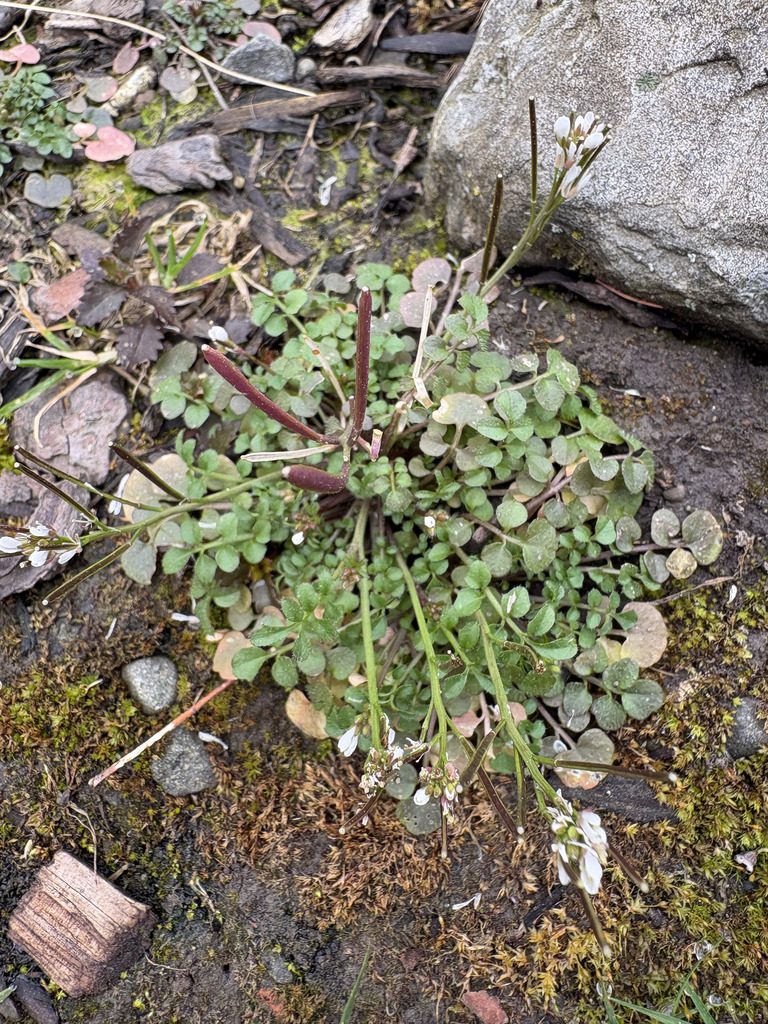
Did a small rosette appear in the lawn as weather cooled? Are white flowers sitting above rounded leaflets, followed by long narrow pods? That pattern can point to hairy bittercress.
Fast Answer: Hairy bittercress is a broadleaf weed that can emerge in fall, overwinter, and produce seed in early spring. Penn State Extension identifies its rounded basal leaflets, small white flowers, and narrow seedpods. Confirm those features early because mature pods can eject seed.
Could this be hairy bittercress?
Start at the base. Is there a low rosette with pinnately compound leaves, meaning several rounded leaflets along one central stem? Penn State Extension lists that rosette as an identification feature.
Next, check the flower stem. Hairy bittercress has small white flowers at the branch tips. After petals drop, narrow pods form. Mature pods can split suddenly and launch seed several feet, so do not squeeze them while you inspect the plant.
When did it appear? Seedlings often emerge in fall and can overwinter before flowering in early spring. The timeline supports the identification, but the leaves, flowers, and pods should still agree.
Why does timing matter?
Hairy bittercress can flower and make seed before many spring lawn treatments occur. Penn State Extension says this is a main challenge in control. A plant that has already formed mature pods needs a different response from a new fall rosette.
Do you plan to seed the lawn? Penn State also cautions that most preemergence herbicides prevent turfgrass seed from germinating. Coordinate any weed-prevention product with your seeding plan and follow the current label.
What should you do with a small patch?
Pull or dig individual plants before flowers and pods mature, then remove them from the lawn. Frequent early-spring mowing can remove flower stems, but it does not replace identification or prevent every seed from a mature plant.
Improve turf density with care that fits your grass and site. Penn State names proper fertilization and well-adapted turfgrasses as ways to reduce infestation. Use a soil test for fertilizer decisions, then make a seeding plan that does not conflict with a label restriction.
For larger infestations, consult local Extension guidance and use only a current label that lists the target weed, lawn site, and turfgrass. Do not assume a product used in a bed or pasture is suitable for a lawn.
Illustrative example: rosettes near a garden edge
A homeowner notices low rosettes beside a garden edge in fall. The leaves have rounded leaflets. By early spring, small white flowers and narrow pods appear. Those checks support hairy bittercress.
The homeowner removes the young plants before pods mature and writes down the location for a fall follow-up. If the lawn also needs seeding, the homeowner checks the timing and label before using any preemergence product.
Hairy bittercress checklist
- Look for a basal rosette with rounded leaflets.
- Confirm small white flowers and narrow pods.
- Remove plants before pods mature.
- Plan fall prevention around any turf seeding.
- Use only a current label matched to the weed and turf.
Source: Penn State Extension, Lawn and Turfgrass Weeds: Hairy Bittercress.
Free Lawn Care Tools
Seedlings often emerge in fall, overwinter, and flower in early spring, according to Penn State Extension.
Look for a basal rosette with rounded leaflets, small white flowers, and long narrow seedpods.
Yes. Penn State Extension warns that most preemergence herbicides also prevent turfgrass seed from germinating. Check the current label and coordinate with your seeding plan.

Your lawn plan, in your pocket all season
Grass ID, a season plan, soil-timed reminders, and a lawn journal that remembers what you did. Free on iPhone.