Common Purslane in a Lawn: How to Identify It and What to Check First

As an Amazon Associate we earn from qualifying purchases.
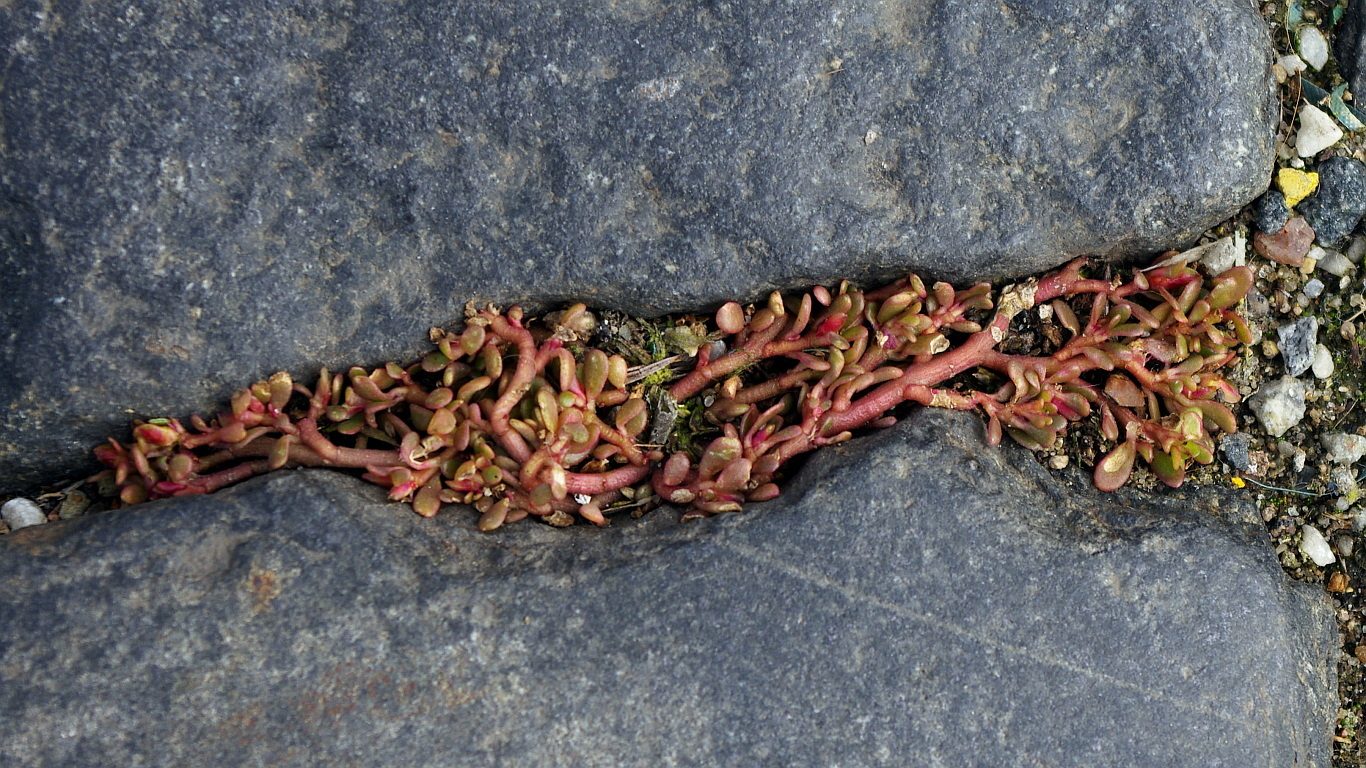
Do you have a low, spreading plant with thick leaves in a hot, thin part of the lawn? Check one stem before you pull it. Red or pink smooth stems and fleshy leaves point toward common purslane. A low mat alone does not settle the identification because spotted spurge and prostrate knotweed can spread in the same way.
Fast Answer: Common purslane is a summer annual that forms a low mat. Penn State Extension describes smooth red or pink stems, thick fleshy leaves, and small yellow flowers. Check for those features before treatment. Spurge can look similar from a distance, but it has milky sap when broken. Knotweed has a papery sheath where leaves meet the stem.
Identify before you spray. If the plant has succulent leaves and no milky sap, common purslane moves up the list. If the clues do not agree, use a close photo of the leaves, stem, and whole patch to narrow the identification.
Could the patch be common purslane?
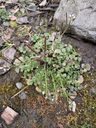
Photo credit: Georgy Vinogradov via iNaturalist, CC BY 4.0. Cropped for the hero display.
Start with the stem. Is it smooth, thick, and red or pink? Penn State Extension says common purslane stems lie close to the ground and spread outward from a central growing point. Young plants can stand more upright, then flatten as they grow.
Next, feel the leaf. Purslane leaves are smooth and fleshy, often oblong or wedge-shaped. They are not thin like ordinary turf weeds. Penn State notes that the leaves may grow in opposite clusters on the stem. That water-storing texture is the strongest clue in a lawn where several low plants are mixed together.
Finally, look for the flower when the plant is in bloom. Common purslane makes small yellow flowers with five petals. Penn State says they open in full sun. A missing flower does not rule it out, so use the stem and leaf checks first.
Is it purslane, spurge, or knotweed?
Three plants can make a flat patch. The test is in the stem and leaf, not the shape of the mat.
- Common purslane: thick, fleshy leaves on smooth red or pink stems. The plant feels succulent.
- Spotted spurge: small leaves that can carry a dark spot. Break one stem only if you can do so safely. Penn State Extension says spurge produces white, milky sap. Our spotted spurge guide covers that plant in more detail.
- Prostrate knotweed: thin leaves and a papery sheath at the base of foliage. Penn State identifies that sheath as a way to separate knotweed from purslane.
If the leaves are not fleshy and the stem test does not fit, stop at the identification step. A photo diagnosis can help narrow the list before you choose any control method.
What conditions should you inspect?
Where is the patch growing? Penn State describes common purslane in thin turf, newly seeded lawns, and warm sunny sites. University of Maryland also lists compacted soil, drought, and high light as favorable conditions. Those facts do not identify the reason for every patch. They tell you what to inspect after you name the weed.
Look at the surrounding grass. Is it sparse because the area was seeded in late spring or summer? Is the soil packed near a walk, driveway, or play area? Does the spot dry faster than the rest of the lawn? Write down what you find. Each condition has a different correction, and fertilizer is not a reliable response to every weed.
Use the watering schedule after you confirm the grass type and region. A plan matched to the wrong grass can leave the same opening in the lawn.
What should you do with a small patch?
Can you remove the plant while it is young? University of Maryland Extension lists hand pulling or a suitable weeding tool as the primary mechanical option for lawns. Moist soil makes the work easier. Pull the central root and gather loose pieces so they do not remain on the site.
Then repair the turf condition. A denser lawn makes it harder for a low annual weed to establish. The follow-up is turf density: mow at the height suited to your grass, use a soil test before changing nutrients, and address repeated traffic, shade, drought, or compaction where possible.
- If you use a herbicide, read the current label for the target weed, lawn site, turfgrass, rate, and temperature restrictions.
- Penn State lists both preemergence and postemergence options for common purslane. Preemergence products control seedlings from seed and do not affect purslane already growing.
- Ask your local Extension office about products and timing for your grass species and state. Do not use a landscape, pasture, or garden recommendation as a lawn instruction.
Working a case: a red-stemmed mat beside a driveway
A homeowner finds a low mat beside a driveway in late summer. The stems are smooth and pink-red. The leaves are thick, shiny, and fleshy. A small yellow flower opens in direct sun. Those checks support common purslane.
The patch sits where the lawn is thin and the soil is hard. The first job is to remove the young plants and inspect the turf around the driveway. The homeowner then checks mowing, soil condition, and traffic before choosing a lawn product. If the same area stays open, another summer annual can use the space next year.
What other guides misdiagnose
The common mistake is to name every low, red-stemmed mat as spurge. Purslane and spurge need different confirmation checks. Purslane has fleshy leaves. Spurge has milky sap. Knotweed has a papery leaf sheath. Use those visible clues together. The name matters because a product that is safe for one lawn and weed may not be suitable for another.
Do not use food-use photos or recipes as an identification guide for a lawn plant. A lawn specimen can grow beside treated turf, pavement, or pet areas. The question here is whether the plant is common purslane and what condition let it establish.
Your common purslane diagnosis checklist
- Check for smooth red or pink stems that spread low across the soil.
- Confirm thick, fleshy, smooth leaves.
- Look for small yellow flowers in full sun when the plant is blooming.
- Rule out spurge by checking for milky sap and knotweed by checking for a papery sheath.
- Remove small young patches, then inspect why turf is thin.
- Use only a current lawn label that matches the weed, turfgrass, site, and season.
Still between two suspects? Send a close photo for identification. Include the whole patch, one stem, and a leaf so the visible clues can be checked together.
Sources: Penn State Extension, Common Purslane; University of Maryland Extension, Purslane.
Free Lawn Care Tools
Look for thick, fleshy, smooth leaves on red or pink stems that lie close to the soil. Penn State Extension says common purslane also has small yellow flowers and spreads outward from a central point.
No. Both can form low mats, but purslane has succulent leaves and stems. Spotted spurge produces milky sap when a stem is broken, according to Penn State Extension.
Hand removal can work for a small patch, especially while plants are young and soil is moist. University of Maryland Extension lists hand pulling or a weeding tool as the main mechanical option for lawns.
Purslane often appears in thin or newly seeded turf and tolerates warm, sunny, dry, or compacted conditions. Those conditions point to checks for turf density and site stress, rather than a diagnosis from the weed alone.
No. Penn State Extension says preemergence products that control purslane from seed do not affect emerged plants. Read the current product label for your grass type, site, rate, and timing.

Your lawn plan, in your pocket all season
Grass ID, a season plan, soil-timed reminders, and a lawn journal that remembers what you did. Free on iPhone.
Related Articles
 Problem Solving
Torpedograss in Lawns: How to Identify It and What to Do Next
Sep 20, 2026•5 min read Problem Solving
Ragweed Identification: What It Looks Like and How to Control It
Aug 12, 2026•6 min read Lawn Care
Hairy Bittercress in a Lawn: How to Identify It Before It Sets Seed
Sep 22, 2026•5 min read