Is Yard Mastery Flagship 24-0-6 Worth It? The Real Cost-Per-Pound-of-Nitrogen Breakdown
 James ThorntonLawn Equipment & Maintenance Expert | 20 Years
As an Amazon Associate we earn from qualifying purchases.
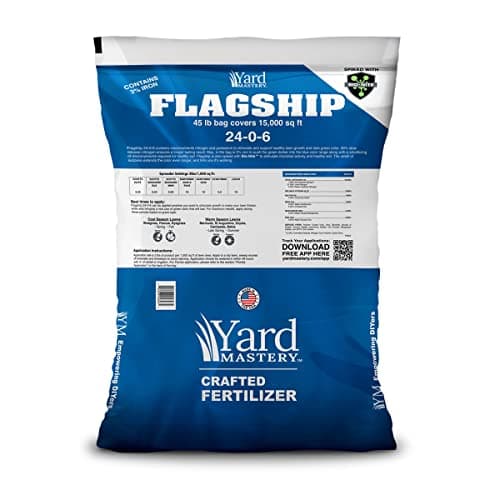
If you have spent any time in lawn care videos or forums, you have run into Yard Mastery Flagship 24-0-6. It is the granular fertilizer Allyn Hane, the Lawn Care Nut, built his following around, and it shows up in just about every "what should I put down this year" thread. It also runs about $80 for the big bag, which is roughly triple what a bag of big-box fertilizer costs. So the question people actually type into Google is a fair one: is Flagship worth it, or are you paying for a YouTube logo?
I did the one thing the marketing videos never do. I put Flagship next to two fertilizers people reach for as alternatives and worked out what each one actually costs per pound of nitrogen, because that is the number that matters when you are feeding a lawn. The result surprised me, and it is not the "stop overpaying" answer you would expect. Here is the real math.
Flagship 24-0-6 is not overpriced. On cost per pound of nitrogen, the number that actually matters, the 45 lb bag at $79.94 delivers nitrogen at about $7.40 a pound, the cheapest of the three bags compared here.
The 18 lb bag at $49.94 works out to roughly $11.56 per pound of nitrogen, about 50 percent more, so buy the big bag if you have the storage. The Andersons PGF Complete runs about $20.79 per pound of nitrogen and Milorganite about $55.17, so choose those for coverage quality or no-burn feeding, not cheap nitrogen.
What Flagship 24-0-6 actually is
Strip the branding off and Flagship is a 24-0-6 granular fertilizer with 3 percent iron and a slow-release nitrogen source the company calls Bio-Nite. Those three numbers are the NPK ratio: 24 percent nitrogen, 0 percent phosphorus, 6 percent potassium. If that shorthand is new to you, I walk through it in our guide to reading fertilizer numbers.
What you are paying for is real. You get a high nitrogen percentage, part of it slow-release so the lawn greens up over weeks instead of surging and crashing, iron for deep color, and a uniform particle size that spreads evenly. None of that is fluff. The only honest question is whether you can buy the same nitrogen for less somewhere else. So let us check.
The number that matters is cost per pound of nitrogen
Fertilizer is not really priced by the bag. It is priced by how much nitrogen is inside the bag, because nitrogen is the nutrient doing most of the work on a lawn. A cheap-looking $16 bag can cost more than an $80 bag once you do the division. The math is simple: multiply the bag weight by the nitrogen percentage to get pounds of nitrogen, then divide the price by that number. Here is how three common choices stack up at today's Amazon prices.
| Product | Bag and coverage | Price | Nitrogen | Pounds of N | Cost per lb of N |
|---|---|---|---|---|---|
| Yard Mastery Flagship 24-0-6 (45 lb) | 45 lb, covers 15,000 sq ft | $79.94 | 24% | 10.8 | $7.40 |
| Yard Mastery Flagship 24-0-6 (18 lb) | 18 lb, covers 6,000 sq ft | $49.94 | 24% | 4.32 | $11.56 |
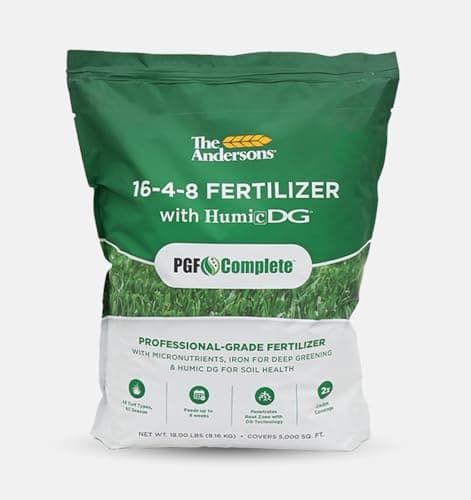
| The Andersons PGF Complete 16-4-8 | 18 lb, covers 5,000 sq ft | $59.88 | 16% | 2.88 | $20.79 |
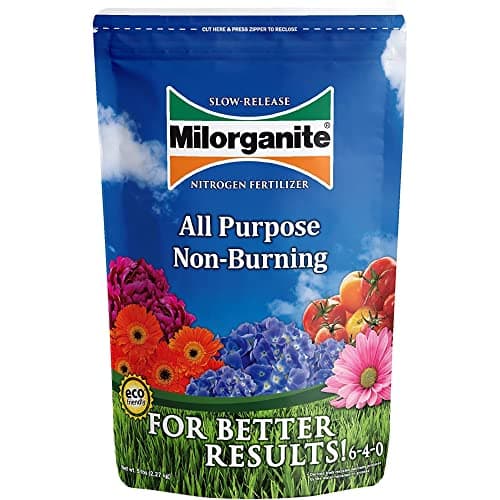
| Milorganite 6-4-0 (5 lb) | 5 lb, covers about 390 sq ft | $16.55 | 6% | 0.30 | $55.17 |
If a number here looks off by the time you read it, prices move and so do bag sizes, so plug the current price and weight into the same formula. The ranking rarely changes much, though.
The product links in this comparison are affiliate links. If you buy through them we may earn a small commission at no extra cost to you. It does not change which bag I would actually tell you to buy.
So is Flagship overpriced?
No. Look at the last column, the one that matters. The 45 pound bag of Flagship delivers nitrogen at about $7.40 a pound, the cheapest of the three by a wide margin. That high 24 percent nitrogen number in a big bag is exactly why: you are buying a lot of actual food per dollar, plus the iron and slow-release behavior on top. For an all-purpose feeding on most lawns, it is a genuinely good value, not a markup you are getting talked into.
One catch worth flagging. The small 18 pound bag tells a different story. At $49.94 it works out to about $11.56 per pound of nitrogen, roughly 50 percent more than the big bag. That is the usual small-package tax. If you have the storage and a lawn big enough to use it within a season or two, the 45 pound bag is the smarter buy. Skip the little one unless your lawn is tiny.
When The Andersons PGF Complete is worth paying more
Here is where the cheaper-alternative story falls apart. The Andersons PGF Complete 16-4-8 costs about $20.79 per pound of nitrogen, almost three times Flagship's big-bag number. It is not a way to save money on nitrogen, full stop. But that does not make it a bad buy, because you are paying for something different.
PGF Complete uses a dispersing granule that breaks into very fine particles once it gets wet, which means far more particles per square foot and noticeably more even coverage than a standard prill. It also carries 7 percent humic acid for the soil. If you fight streaky results, push-mow a show lawn, or care about soil health as much as top growth, that evenness and the humic content are the reason to choose it. Just go in knowing you are buying coverage quality and soil inputs, not cheap food.
Milorganite is for a different goal entirely
Milorganite is the classic slow-release organic option, and people cross-shop it against Flagship because both lean on slow-release nitrogen. On a pure nitrogen-cost basis it is the most expensive choice on this list by a mile. The 5 pound bag works out to about $55 per pound of nitrogen, because it is only 6 percent nitrogen and that small bag covers a tiny patch of lawn.
So why would anyone buy it? Because it is nearly impossible to burn your lawn with it, it feeds slowly and steadily, it adds organic matter and a little iron, and it is genuinely forgiving for beginners. Nobody serious uses Milorganite as their cheap nitrogen source. They use it for the no-burn, soil-building behavior. If that is your goal, buy the largest bag you can find in stock, since the cost per pound of nitrogen improves a lot at the bigger size. For how and when to put it down, see our Milorganite application guide.
What it will actually cost to feed your lawn
Cost per pound of nitrogen is the fair way to compare bags, but the number you really want is what a season costs for your yard. That depends on your square footage and how many times you feed. Rather than guess, measure it. Our fertilizer calculator turns your lawn size and target rate into exactly how many pounds and bags you need, and our step-by-step fertilizer math guide shows the formula if you would rather do it by hand.
As a quick gut check, the 45 pound Flagship bag is rated to cover 15,000 square feet, so a single full feeding on a 5,000 square foot lawn runs you roughly a third of the bag, about $27 in product. PGF Complete's bag covers 5,000 square feet for about $60. That gap is the real-world version of the per-pound math above.
Bottom line, which bag to buy for your goal
Flagship 24-0-6 is not overpriced. On the metric that counts, pounds of nitrogen per dollar, the big bag is the value pick here, and the iron and slow-release nitrogen are a real bonus. Buy it if you want a strong all-purpose granular feed and you are willing to get the 45 pound bag. Reach for The Andersons PGF Complete instead when even coverage and soil health matter more than nitrogen cost, and reach for Milorganite when you want a forgiving, no-burn organic feed and do not mind paying for it. Different goals, different bags. If you want to see how these stack up against the rest of the market, our ranked guide to the best lawn fertilizers covers the full field, and the complete fertilizing guide ties timing, rate, and product together. Not sure what your lawn needs first? Start with a quick lawn diagnosis and build the plan around the answer.
Free Lawn Care Tools
No, it actually comes out as the best deal of the three fertilizers compared here. At $79.94 for the 45 pound bag, Flagship works out to about $7.40 per pound of nitrogen, cheaper than both The Andersons PGF Complete and Milorganite on that basis. You're also getting 3 percent iron and a slow-release nitrogen source called Bio-Nite in that price, so it's not just cheap nitrogen with nothing else going on.
The 45 pound bag runs about $7.40 per pound of nitrogen at $79.94. The smaller 18 pound bag costs $49.94 and works out to roughly $11.56 per pound of nitrogen, about 50 percent more expensive per pound. That gap is the usual small-package tax, so the big bag is the better value if you can use it.
Go with the 45 pound bag if you have the storage and a lawn big enough to use it within a season or two. It covers 15,000 square feet and costs about $7.40 per pound of nitrogen, versus roughly $11.56 per pound in the 18 pound bag. Only grab the small bag if your lawn is genuinely tiny.
It depends on what you're after. PGF Complete costs about $20.79 per pound of nitrogen, almost three times Flagship's big-bag price, but it uses a dispersing granule that breaks into finer particles for more even coverage and carries 7 percent humic acid for the soil. If you fight streaky results or care about soil health as much as growth, that's worth paying more for. If you just want nitrogen at the best price, Flagship wins.
No, Milorganite is actually the most expensive of the three on a cost-per-pound-of-nitrogen basis, about $55.17 per pound in the 5 pound bag. People buy it for the no-burn, slow-steady, soil-building behavior, not to save money on nitrogen. If a forgiving organic feed is your goal, buy the largest bag you can find, since the per-pound cost improves at bigger sizes.

Your lawn plan, in your pocket all season
Grass ID, a season plan, soil-timed reminders, and a lawn journal that remembers what you did. Free on iPhone.