Lawn Termites: How to Identify Them and What to Do

Are winged insects coming out of your lawn, a stump, or the edge of the house? Start by checking the insect and recording exactly where it appeared.
Termites in the yard do not by themselves establish that your house is infested. NC State Extension distinguishes outdoor swarmers near stumps or landscape wood from termites swarming indoors, which usually indicate an infestation in the building.
Compare the waist, antennae and wings before choosing a treatment. Photograph uncertain insects for Extension identification. If termites emerge indoors, or you find suspected mud tubes on the house, arrange an inspection by a licensed structural pest professional.
Is it a termite or a flying ant?
Can you see a narrow waist between the middle and rear of the body? A winged ant has a pinched waist. A termite has a broad waist. Check an enlarged photograph, then compare the other features in UC IPM's ant and termite illustration.
| Feature | Termite | Winged ant |
|---|---|---|
| Waist | Broad, without a narrow pinch | Narrow and pinched |
| Antennae | Beaded, without the ant's distinct elbow | Elbowed |
| Wings, when present | Both pairs are equal in length | Hind wings are much shorter than front wings |
Are the wings missing or overlapping? Leave that feature unknown. UC IPM explains that reproductive termites shed their wings after flight. Workers and soldiers are wingless, so the wing comparison applies only to insects that still have wings.
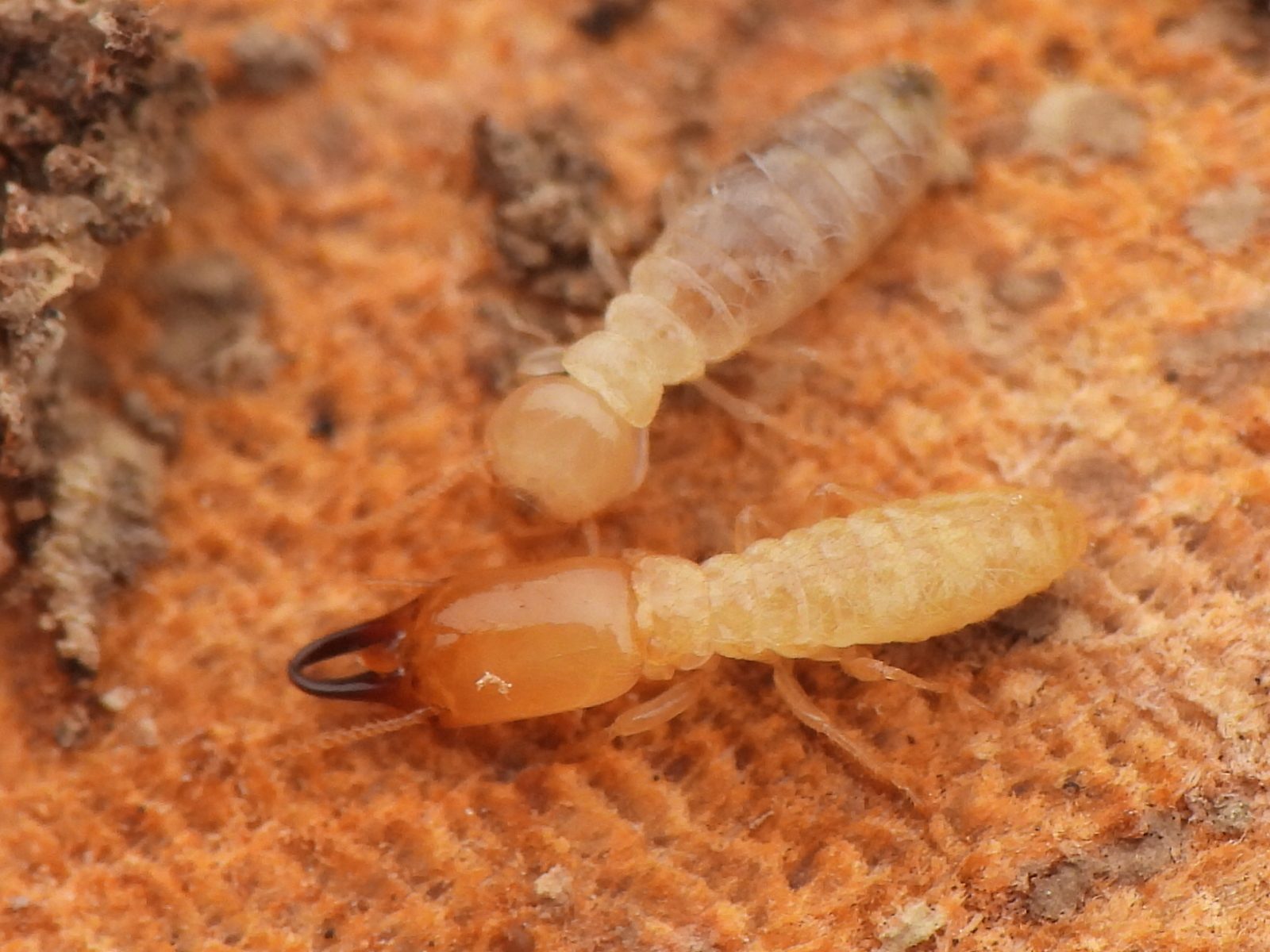
The hero photo shows wingless eastern subterranean termites, including a soldier with prominent jaws. It illustrates a different form from the flying adults in the comparison. An identification of termites still leaves the species and the extent of any infestation unresolved.
Where did the insects appear?
Did you see them around outdoor wood, or emerging inside the house? NC State's termite guidance says outdoor swarmers near stumps and landscape timbers do not establish a house infestation. Indoor swarming usually means termites are established somewhere within the house.
Do you see narrow earthen tubes on an accessible foundation wall? Subterranean termites use these mud tubes as sheltered routes, according to NC State. Photograph their location and contact a structural pest professional. A tube's age or an empty section cannot establish that the property is clear of termites.
Inspect only areas you can reach safely from the ground. Leave wall opening, wood probing and confined-space inspection to the professional. If you have an existing termite service contract, tell the provider what you found.
What should you record before calling?
Can another person locate the same spot and see the features you saw? Use this record when contacting Extension for identification or requesting a structural inspection:
- Write the date, state and county. Note whether the insects were indoors, on the building, in soil or on outdoor wood.
- Photograph the whole location, including its position relative to the house.
- Take a close photograph of an insect. Try to show the waist, antennae and both pairs of wings if present. Record unclear features as unknown.
- Photograph suspected mud tubes or damaged wood without opening the structure. Note where each sign occurs.
- Tell the inspector about existing bait stations, a termite contract, recent landscaping and moisture problems. Ask Extension how to provide a specimen if photos are insufficient.
This record helps the specialist assess the evidence. It cannot replace a building inspection. UC IPM says a professional inspection is usually needed to confirm a structural infestation.
What can you change around the house?
Is irrigation or a leaking fixture keeping the foundation wet? NC State's monitoring and prevention guidance identifies excessive moisture and contact between structural wood and soil, mulch or leaves as conditions that favor subterranean termites.
Correct accessible leaks and irrigation overspray. Ask the inspector about drainage or structural wood touching the ground. Keep installed bait stations in place. Before moving soil or mulch beside a treated foundation, ask the service provider how to preserve its treatment and inspection access. NC State warns that disturbing treated soil can compromise protection.
Ask your county Extension office to identify an uncertain insect. Use a licensed structural pest professional for suspected building infestation. Treatment depends on termite type, construction and local requirements. No pesticide product, lawn application rate or do-it-yourself structural treatment is recommended here.
What treatment assumptions should you check?
Would spraying the insects you can see protect the house? NC State says spraying swarmers or exposed infested wood can kill visible termites while leaving the infestation active. Ask the inspector to explain the evidence, treatment scope, follow-up and contract coverage.
Is the lawn also brown? The insects' presence alone cannot establish the cause of turf damage. The sources above address termite identification and wood infestation. For a separate turf problem, upload a lawn photo or consult the lawn pest reference. A personalized lawn care plan can organize routine turf care; it does not replace termite identification or a structural inspection.
Your lawn termite diagnosis checklist
- Compare the waist, antennae and wings. Keep uncertain features unknown.
- Record whether the insects appeared outdoors or emerged inside the building.
- Send clear photos and the location record to Extension for uncertain identification.
- Arrange a professional inspection for indoor termites or suspected signs on the house.
- Address moisture problems while preserving installed stations and treated soil.
This procedure uses published Extension guidance. No property inspection, insect collection or pesticide trial was performed for this article.
Display crops vary by screen.
Free Lawn Care Tools
An outdoor sighting alone cannot establish a house infestation. NC State distinguishes swarmers near outdoor wood from indoor swarming, which usually indicates an infestation within the building. Record the location and request a professional inspection if you find indoor termites or suspected signs on the house.
Check the waist, antennae and wings in an enlarged photograph. UC IPM shows a broad waist and beaded antennae on termites; ants have a pinched waist and elbowed antennae. When wings are present, both termite pairs are equal in length, while ant hind wings are much shorter.
Yes. UC IPM describes wingless workers and soldiers, and says reproductive termites shed their wings after flight. Use the other visible features and ask Extension to identify an uncertain specimen.
Identify the insect and assess any building signs first. NC State says spraying visible swarmers or accessible infested wood does not stop an infestation or protect the house. A licensed structural pest professional can assess the appropriate response.
Provide the date, location, insect photos and photos of suspected tubes or damaged wood. Note whether insects emerged indoors, and identify existing bait stations, service contracts and moisture problems. The article checklist organizes these observations; UC IPM recommends professional inspection to confirm suspected structural infestation.
Sources (4)
- UC IPM: Ants distinguished from termites.
- NC State Extension: Termites, biology and control.
- NC State Extension: Monitoring and management of eastern subterranean termites.
- UC IPM: Subterranean and other termites (updated May 2014; used for identification and inspection guidance).
Photos: Sam Kieschnick / iNaturalist · CC BY 4.0

Beat weeds and brown spots from your phone
Snap a photo, get the fix, and follow a plan timed to your soil and weather. Free on iPhone.