Sod vs Seed: Cost, Timing, and Which Is Right for Your Lawn
 Marcus GreenTurf Management Pro | 18 Years
As an Amazon Associate we earn from qualifying purchases.
You have decided your lawn needs to start over, and now you are stuck on the one question that changes everything downstream: do you lay sod or spread seed? It is the fork in the road for every new lawn, and the answer is not the same for every yard. Sod hands you a finished lawn the day it is installed but costs a lot more. Seed costs a fraction of that but makes you wait weeks or months and babysit it the whole time. Both can give you a beautiful lawn. The trick is matching the method to your budget, your timeline, your terrain, and the grass you actually want growing.
This guide is the head-to-head. We are not going to walk you through every step of laying sod or every step of seeding here (we have full how-to guides for that, linked below). The job of this article is to help you decide, with a clear-eyed look at what each method really costs, how long each one takes, and the situations where one clearly beats the other.
Not sure what you are even working with? Before you spend a dollar on sod or seed, it helps to know your grass type, your region, and what is actually wrong with the lawn you have. Get a free lawn diagnosis and you will get a clear read on your situation plus the method that fits it, so you are not guessing your way through a few hundred dollars of materials.
Fast Answer: Choose sod if you want a usable lawn now, you are fighting erosion or a slope, you are establishing a warm-season grass during a short planting window, or you simply do not want to nurse seedlings for weeks. You pay more up front, but you skip the fragile early stage entirely.
Choose seed if budget is your main constraint, you have time to wait and water, you want a wider selection of grass varieties (especially premium cool-season blends), and your yard is reasonably flat. Seed costs far less per square foot, but a usable lawn is weeks to a couple of months out, and those early weeks demand consistent attention.
How each method actually works
Quick orientation before the comparison, because the two methods solve the same problem in completely different ways. If you are also weighing a sprayed-on approach, our hydroseeding guide covers that third option.
Sod is mature grass that was grown on a farm, harvested in rolls or slabs with an inch or so of soil and roots attached, and trucked to you. You prep the soil, unroll the sod like carpet, and you have a green lawn that afternoon. The grass is already established. What it has to do at your house is send new roots down into your soil, which is the part that takes a couple of weeks of careful watering before the lawn is truly anchored and ready for normal use.
Seed is exactly what it sounds like. You prep the soil, spread seed at the right rate for your grass type, keep the surface consistently moist, and wait for germination. Different grasses sprout on different timelines, and a thin first flush of green is not a usable lawn. It takes weeks of growth and a few mowings before seeded grass fills in and toughens up enough to walk and play on.
The prep work, soil testing, grading, and amendments are nearly identical for both. That matters more than people expect, and we will come back to it.
The head-to-head: sod vs seed on the things that matter
Cost
This is usually the headline, and it is the clearest win for seed. Seed is dramatically cheaper per square foot than sod for the material itself, often by a large multiple. Sod carries the cost of farm-grown, harvested, and trucked grass, and on bigger lawns professional installation labor on top of that. For a large yard, the gap between a few bags of seed and pallets of sod can be the difference between a weekend project and a serious line item. If you want the sod side in real dollars, our breakdown of what it costs to install sod walks through prices per square foot, by lawn size, and by grass type.
One honest caveat: the material cost is only part of the picture, and we dig into the rest in the "what other guides miss" section below. But on raw material, seed wins decisively, and that single fact is why it is the default choice for anyone on a budget or covering a large area. If you want to see how the numbers shake out for your specific square footage, run them through our lawn cost estimator and our lawn size calculator so you are estimating against real measurements instead of a guess.
Time to a usable lawn
This is the clearest win for sod. The day sod goes down, you have a green lawn. You cannot throw a party on it immediately because the roots need to knit into your soil first, but you go from bare dirt to lawn in a single day, and to fully usable in a couple of weeks.
Seed is the opposite. After you spread it, you wait for germination, then for the grass to thicken, then for it to mature enough to handle foot traffic. Depending on the grass type and the season, that is a span of weeks to a couple of months before the lawn is genuinely usable, and during the early stretch the area is essentially off-limits. If you have an event on the calendar, kids who need a yard, or you are selling the house, the sod timeline is hard to beat.
Effort and risk in the early stage
Seed asks more of you, and it asks during the riskiest window. Newly seeded ground has to stay consistently moist, which often means light watering more than once a day in warm weather. Let it dry out at the wrong moment and you lose germination. Heavy rain can wash seed off a slope. Birds eat it. Patchy results are common and usually mean overseeding the thin spots later.
Sod shifts the effort. The hard part is the prep and the installation day itself, which is physical work, but once it is down the watering routine is more forgiving than babysitting bare seed, and there is no germination to fail. You are nurturing established grass rather than hoping seedlings appear. For first-timers who are nervous about getting it wrong, sod removes a lot of the ways the project can go sideways.
Success rate and forgiveness
Sod is the more forgiving method for beginners precisely because the grass already exists. The main failure modes are poor soil prep, gaps between slabs, or letting fresh sod dry out before it roots. Seed has more failure modes: wrong rate, wrong depth, drying out, washout, weed competition in the bare soil before the grass closes in. None of these are dealbreakers if you do it right, but seed simply gives you more opportunities to make a mistake.
Erosion and slopes
This is the factor that quietly tips a lot of decisions toward sod, and it is the one homeowners underweight most. On a slope or any area prone to erosion, loose seed is fighting gravity and water from the start. A good rain can carry your seed and your topsoil downhill before anything roots. Sod, by contrast, is laid as a continuous mat that holds the soil in place immediately and protects against washout while it establishes. If a meaningful part of your yard is sloped, sod on those areas is often the smarter call even when seed would be fine on the flat sections.
Grass-type options
Seed wins on selection. You can buy seed for a huge range of species and cultivars, including premium cool-season blends and mixes tuned for shade, drought, or wear. Sod availability is narrower and regional. Sod farms grow what sells in their market, so your local options may be limited to a handful of popular types. If you have your heart set on a specific blend, or you want a grass that simply is not grown as sod in your area, seed may be your only route. Not sure which species suits your yard? Start with how to identify your grass type and our guides to cool-season grasses and warm-season grasses.
Best season to do it
Both methods have ideal windows, but sod is more flexible. Because the grass is already grown, sod can be installed across a wider stretch of the growing season as long as you can water it. Seed is pickier: it needs the right soil temperatures and a stretch of favorable weather to germinate and establish, so the planting windows are tighter. For cool-season grasses, fall is the classic establishment season for both methods, with the soil still warm, cooler air, and fewer weeds competing. Warm-season grasses like bermuda, zoysia, and centipede are different: they establish from seed in late spring to early summer once the soil is warm, not in fall, so match your window to your grass type. If you are reading this in late summer heading into fall, you are looking at the best window of the year for a new cool-season lawn, by either method. Our fall lawn prep guide covers timing in more detail.
On cost ranges and timing, lean local. Real-world prices for seed and sod swing widely by region, grass type, lawn size, and whether you install sod yourself or hire it out, so treat any blanket dollar figure with suspicion. Your state university cooperative extension service is the best source for both local price expectations and the exact establishment windows for your area. They publish region-specific guidance on which grasses establish best from seed versus sod and the ideal planting dates for each. Search for your state's extension lawn establishment guide, or call your county extension office, before you lock in a budget or a date.
Recommended products
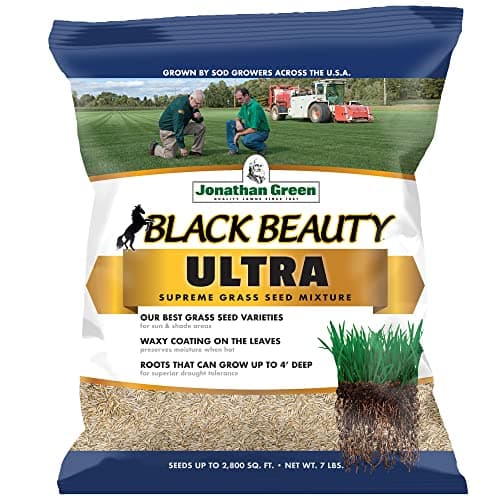
Jonathan Green Black Beauty Ultra Grass Seed (7 lb)
A cool-season blend of tall fescue, bluegrass, and ryegrass that covers about 2,800 square feet of new lawn.
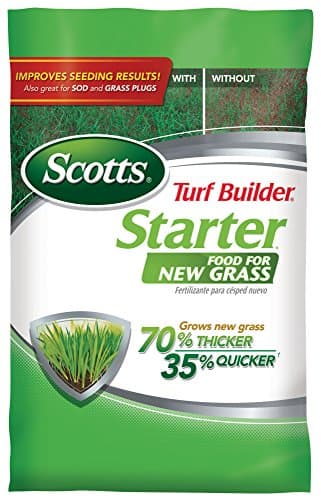
Scotts Turf Builder Starter Food for New Grass
A starter fertilizer formulated for the phosphorus demand of germinating seed and freshly laid sod alike.
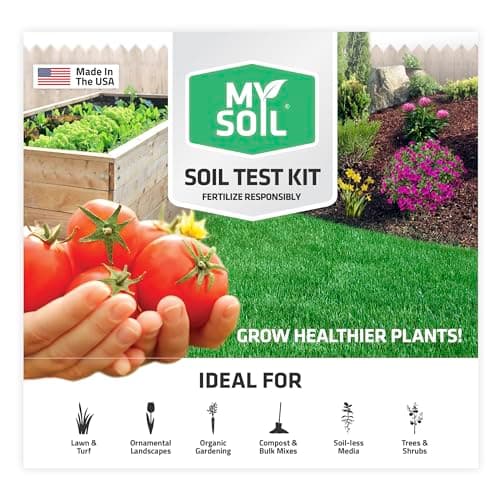
MySoil Soil Test Kit
A mail-in test that reports pH and nutrient levels before you spend money on either method.
Which to choose, by scenario
Stack the factors above against your own situation and the answer usually gets obvious. A few common cases:
- Tight budget, large flat yard, time to wait: Seed, comfortably. The material savings are largest on big areas, and a flat yard removes the erosion concern that would otherwise push you toward sod.
- You need a lawn now (event, sale, kids, dust and mud problem): Sod. You are paying for instant results, and that is exactly what you are getting.
- Sloped or erosion-prone yard: Sod on the slopes at minimum. Loose seed and gravity do not mix.
- You want a specific or premium grass blend: Seed, since selection is far wider. Check that your desired type is even sold as sod locally before assuming sod is an option.
- First-timer who wants the lowest chance of failure: Sod is the more forgiving path if the budget allows. Fewer ways to get it wrong.
- Establishing warm-season grass in a short window: Sod buys flexibility. Seeding warm-season grasses has a narrow window, and sod widens it.
Still on the fence after all that? Your lawn's specifics, grass type, region, slope, sun, and what is wrong with the current turf, are exactly what decide this. Run a free diagnosis to get a read tailored to your yard, then upgrade to a personalized plan that maps out the full establishment timeline for whichever method you pick.
The hybrid option nobody mentions
You do not have to pick one method for the entire yard. One of the smartest plays, especially on larger or mixed properties, is to sod the parts that need it and seed the rest. Sod the high-traffic zones, the slopes, the areas where erosion is a real risk, or the spots that are most visible from the street. Seed the large flat back sections where you can afford to wait and where the savings really add up.
This gives you instant coverage and erosion protection exactly where you need it, while keeping the overall cost far below all-sod. The one thing to watch: if you are mixing methods, try to use the same grass type for both so the lawn looks uniform once everything matures. Buying sod and seed of the same species is usually doable for popular grasses.
What to do after you decide
Once you have chosen, the actual install is its own project, and we have step-by-step guides for each path so you do not have to wing it:
- Going with seed? Start with how to start a lawn from scratch for the full prep-to-seed walkthrough, then growing grass from seed: how long it takes so you know what to expect week by week. Dial in your seeding rate with our seeding calculator so you are not under- or over-applying.
- Going with sod? Read how long sod takes to root for the installation and watering routine that gets it established without losing slabs to dry-out.
For both methods, the groundwork before you ever buy materials is where lawns are won or lost. Get a soil test, fix the grade, and correct your pH if it is off (our guide on improving soil pH for grass covers that, and if the test calls for lime, when to apply lime and how much walks through the timing and rate). When it is time to put down starter fertilizer or spread seed, the right equipment matters too, so if you are buying or choosing one, our guide on broadcast versus drop spreaders helps you pick, and the right spreader settings get the application even.
What other guides miss
Most sod-vs-seed comparisons stop at the sticker price and call it a day. Two things deserve more weight than they usually get.
The real cost is prep and water, not just the material. Both methods need the same soil prep: testing, grading, amending, sometimes hauling in topsoil. That cost is identical whether you sod or seed, so it should not factor into the choice between them at all, yet people fixate on the material gap and forget the prep is the bigger job. And water is a recurring cost that hits both methods, with seed often needing more frequent watering during its long establishment. When you compare total cost honestly, prep plus water plus material, the headline seed savings shrink a bit. Seed is still cheaper overall, but the gap is narrower than the bag price suggests.
Slope and erosion should tip the call more than they do. Homeowners reflexively choose seed to save money, then watch a rainstorm wash half of it into the street gutter on anything steeper than flat. On slopes, sod's ability to hold soil in place from day one is worth real money, because reseeding a washed-out slope two or three times erases the savings that made you choose seed in the first place. If you have a slope, weight it heavily.
Your decision checklist
Run through these in order and the right method usually picks itself:
- Measure the area. Square footage drives the cost gap. Use the lawn size calculator so your budget is based on real numbers.
- Check your timeline. Need a usable lawn within a couple of weeks? That is sod. Have a couple of months? Seed is on the table.
- Look at your slope. Any meaningful slope or erosion risk pushes those areas toward sod.
- Set your budget. Run material plus prep plus water through the lawn cost estimator, not just the bag or pallet price.
- Pick your grass. Want a specific or premium blend? Confirm it is sold as sod locally, or plan on seed.
- Confirm the season. Check your local establishment window with your extension service so you are planting at the right time for your grass type.
- Consider a hybrid. Sod the slopes and high-traffic zones, seed the flat rest, to balance cost and results.
- Diagnose first. If you are unsure about any of the above, run a free lawn diagnosis to get a recommendation built around your actual yard.
Whichever way you go, the lawn you end up with depends far more on how well you prep and how consistently you water than on the sod-versus-seed choice itself. Pick the method that fits your budget, your timeline, and your terrain, then commit to the groundwork. That is the part that actually determines whether you are looking at a thick green lawn next season or starting over again.
Free Lawn Care Tools
Seed is significantly cheaper than sod on material cost, often by a large multiple, because sod carries the cost of farm-grown, harvested, and trucked grass plus any installation labor. The gap is widest on large lawns. Just remember that soil prep and watering cost the same for both methods, so the total-project savings are narrower than the bag-versus-pallet price suggests.
Sod gives you a green lawn the day it is installed and is typically usable within a couple of weeks once it roots into your soil. Seed takes much longer: you wait for germination, then for the grass to thicken and mature, which spans weeks to a couple of months depending on grass type and season, with the area mostly off-limits during the early stage.
Sod is usually better on slopes. It goes down as a continuous mat that holds soil in place immediately and resists washout while it establishes. Loose seed on a slope can be carried off by rain before it roots, which often means reseeding the same area several times. On a mixed yard, a common approach is to sod the slopes and seed the flat sections.
Both have ideal windows, but sod is more flexible because the grass is already grown and can be installed across more of the growing season as long as you water it. Seed needs the right soil temperatures and favorable weather to germinate, so its windows are tighter. For cool-season grasses, fall is the classic establishment season for both. Check your local cooperative extension service for the exact dates for your grass type and region.
Yes, and it is often the smartest choice on larger or mixed properties. Sod the high-traffic zones, slopes, erosion-prone areas, and the most visible spots, then seed the large flat sections where you can afford to wait. This gives you instant coverage where it matters while keeping total cost well below all-sod. Use the same grass species for both so the lawn looks uniform once it matures.
Yes. Seed is available for a far wider range of species and cultivars, including premium cool-season blends and mixes tuned for shade, drought, or wear. Sod availability is narrower and regional, since sod farms grow only what sells locally. If you want a specific or unusual blend, seed may be your only route, so confirm your desired grass is even sold as sod in your area before assuming sod is an option.

Your lawn plan, in your pocket all season
Grass ID, a season plan, soil-timed reminders, and a lawn journal that remembers what you did. Free on iPhone.