

Tall Fescue Diseases: Identification and Treatment
 Sarah MitchellLawn Diagnostics Specialist | 12 Years
As an Amazon Associate we earn from qualifying purchases.
I have walked a lot of tall fescue lawns over the past dozen years, and one thing I tell every homeowner is the same: tall fescue is a tough, drought-tolerant grass that asks for very little, right up until the weather turns warm and humid. Then it can light up with disease almost overnight. Because tall fescue grows in bunches rather than spreading by runners, it does not knit itself back together the way bermuda or zoysia does. A patch that thins out from disease tends to stay thin until you reseed it. That makes correct identification and prevention far more important on fescue than on a self-repairing grass.
The big one for tall fescue is brown patch, a hot, humid-weather fungus that creates large circular tan areas. It is common enough that I gave it its own deep-dive guide. Beyond brown patch, the diseases I see most on fescue are leaf spot and melting out, dollar spot, pythium blight (which is brutal on new seedings), red thread, rust, and gray leaf spot, which is the one that genuinely scares me on tall fescue because it can collapse a stand fast in late summer.
Almost all of these trace back to a handful of fixable conditions: mowing too short, watering in the evening, pushing nitrogen at the wrong time of year, and a thin stand that holds moisture. Fix the culture first, overseed with disease-resistant turf-type tall fescue, and reach for a fungicide only when a high-value lawn is under active, spreading pressure.
Why tall fescue gets sick the way it does
Tall fescue is a cool-season grass, so its happy zone is spring and fall. The problem is that most of the country's worst turf diseases love exactly the conditions fescue hates: warm nights, high humidity, long dew periods, and lush growth from spring nitrogen. That mismatch is why a fescue lawn can sail through April and then break out in July.
The bunch-type growth habit is the second half of the story. Bermuda and zoysia send out stolons and rhizomes, so a damaged spot fills back in on its own. Tall fescue does not. Each plant is essentially its own clump. When disease kills the crowns in a patch, nothing creeps over to cover the gap, which is why your repair plan almost always ends with overseeding rather than waiting for the lawn to recover. Keep that in mind as you read the diseases below: prevention and reseeding do more of the heavy lifting on fescue than they would on any warm-season grass.
Brown patch: the number one fescue disease (briefly)
Brown patch is the disease most tall fescue owners eventually meet. It shows up in hot, humid weather as roughly circular tan or brown areas that can run from the size of a dinner plate to several feet across, and the blades at the patch edge carry tan lesions with darker borders. After a string of warm, muggy nights with heavy morning dew, you can watch it expand day to day.
Because brown patch is so common and so treatable, I wrote a full deep-dive on it rather than cramming it in here. If your patches match that description, head straight to Brown Patch Disease in Fescue: Diagnosis and Organic Treatment Options for the complete identification, organic control, and seasonal recovery plan. The rest of this guide focuses on the diseases that get less attention but still do real damage to fescue.
Leaf spot and melting out
Leaf spot and melting out are two phases of the same family of fungal diseases, and tall fescue gets its share. The leaf spot phase starts as small, dark brown to purplish spots on the leaf blades, often with a tan center and a darker border. From a distance the lawn just looks faded or off-color, almost like it needs nitrogen, which is exactly why people misread it and fertilize, making it worse.
The melting out phase is the dangerous one. The fungus moves down from the blades into the crowns and roots, and that is when thin areas open up and a lawn that looked merely tired suddenly starts dying back in patches. Cool, wet spring weather and lawns mowed too short are the classic setup. I see it most on fescue that gets scalped and then hit with spring nitrogen.
How to tell it apart
Look closely at individual blades. Leaf spot gives you distinct spots with colored borders, not the uniform tan lesions of brown patch and not the bleached-out tips of dollar spot. If you are seeing general thinning with spotted blades after a cool, wet stretch, lean toward leaf spot and melting out. For the full identification and treatment walkthrough, see Leaf Spot and Melting Out: Identification and Treatment. The single best cultural fix is raising your mowing height, which I will come back to.
Dollar spot
Dollar spot is easy to recognize once you have seen it. It makes small, round, bleached or straw-colored spots about the size of a silver dollar, hence the name, and on a home lawn they often merge into larger irregular patches. The giveaway is on the blade: dollar spot leaves hourglass-shaped lesions, tan in the middle with reddish-brown borders that pinch in at the waist. Early in the morning you may also see fine, cobwebby fungal growth across the spots before the dew dries.
The condition dollar spot loves most is low nitrogen combined with heavy dew. It is one of the few common diseases that actually gets worse when the lawn is hungry, so a modest, well-timed feeding can be part of the cure rather than the cause. Dry soil with humid air at the canopy is its sweet spot. Watering deeply but infrequently, and watering in the morning so the grass dries fast, takes a lot of the pressure off. For a deeper look, see What Causes Dollar Spots in Your Lawn.
Pythium blight
If there is one disease I want fescue owners to respect, it is pythium blight, especially on new seedings. Tall fescue is notably pythium-prone, and a freshly overseeded lawn in warm, wet weather is the most vulnerable lawn there is. Pythium can wipe out seedlings in a matter of days.
Pythium shows up fast in hot, humid weather, often in low or poorly drained areas and along the lines where water runs. You will see small, dark, water-soaked or greasy-looking patches that can streak in the direction of water flow or mower traffic. In the early morning, before the dew burns off, infected areas often have a cottony, white-gray fungal growth that some people describe as looking like spider webbing. As it dries, the grass collapses and mats down.
Why new seedings are so exposed
Seedlings have tiny root systems, you are keeping the surface constantly moist to germinate them, and warm soil plus standing water is a perfect pythium incubator. That is the worst possible combination. The practical takeaway is timing: seed and overseed tall fescue in early fall when soil is warm enough to germinate but air temperatures and humidity are dropping, not in the heat of summer. If you must water new seed daily, do it early so the canopy dries by midday. For identification details and management, see Pythium Blight: Identification and Treatment. Pythium is also one of the few diseases where, on a high-value lawn or a critical new seeding, a preventive fungicide is genuinely worth considering because it moves so fast.
Red thread
Red thread is mostly a cosmetic disease, and it is one of the more reassuring ones to diagnose because it rarely kills the lawn. It shows up as irregular patches of tan or pinkish, bleached grass, and the signature is the red. Look closely and you will see thin, reddish-pink threads of fungal growth extending from the leaf tips, sometimes with little pink cottony tufts. In the right light a patch can take on a faint pink cast.
Red thread is a classic sign of underfed grass. It thrives in cool, wet weather on lawns that are short on nitrogen, which makes it common in spring and fall on lawns that have not been fertilized in a while. The good news is the fungus usually stays in the leaves and does not attack the crown, so once you correct the nutrition and the weather settles, the lawn grows out of it. A light, balanced feeding is often all it takes. See Red Thread Lawn Disease: Identification and Treatment for the full rundown.
Rust
Rust is the disease that turns your shoes orange. It produces yellow-orange to rusty-brown powdery pustules on the leaf blades, and the dead giveaway is that the spores rub off onto anything that touches the grass: shoes, mower tires, the dog. From a distance the lawn looks yellowed or thin and slightly orange-tinged.
Rust tends to show up on slow-growing, stressed grass in late summer and early fall, often when the lawn is low on nitrogen or short on water, and especially in shady, damp spots with poor air movement. The pattern here should be familiar by now. Rust is a stress disease, and the fix is to get the grass growing again with a light feeding and proper watering, then mow regularly to physically remove infected tissue. It rarely needs a fungicide on a home lawn. For more, see Lawn Rust Disease: Treating Orange Grass.
Gray leaf spot
Gray leaf spot is the one I treat with the most caution on tall fescue, because over the last couple of decades it has become a serious problem for this grass and it can take down a stand surprisingly fast in hot, humid weather. It is most aggressive in mid to late summer, exactly when fescue is already stressed by heat.
On the blades, gray leaf spot starts as small brown to gray spots that elongate into oval lesions with tan or gray centers and darker, sometimes yellowish, borders. As lesions multiply, the leaf tips twist, wither, and take on a scorched, drought-stricken look. From a distance a badly affected lawn can look like it is burning out from drought, which is one reason it gets missed. When it is severe, especially on newer seedings and lawns pushed with summer nitrogen, it can thin a stand quickly. The conditions are the usual warm-season disease recipe taken to an extreme: high heat, high humidity, extended leaf wetness, and lush growth.
What makes gray leaf spot different
Two things put gray leaf spot in its own category for fescue. First, it favors high summer temperatures, so it can run alongside or follow brown patch during the worst of the heat. Second, summer nitrogen makes it markedly worse, which is one more reason to hold your feeding for fall. If you see rapid late-summer decline on a fescue lawn with twisted, scorched leaf tips and oval gray lesions, get a diagnosis before you do anything else, because the management leans heavily on backing off nitrogen and, on high-value lawns under active pressure, a properly timed fungicide.
Cultural management: the part that actually prevents disease
Here is the truth after a dozen years of this work: the lawns that stay healthy are not the ones with the best fungicide program, they are the ones with the best habits. Almost every disease above is encouraged by the same handful of mistakes, so fixing the culture protects you against all of them at once.
Mow tall
Tall fescue should be mowed high, generally in the 3 to 4 inch range, and never scalped. Taller grass shades the soil, develops deeper roots, and tolerates heat and disease stress far better than a short, stressed lawn. Mowing too low is the single most common mistake I see, and it directly feeds leaf spot, melting out, and general thinning. Keep the blade sharp too, because a clean cut heals faster and gives fungi fewer wounds to enter. If you are unsure where to set your deck, our mowing height tool will get you in the right range.
Water in the morning, deeply and infrequently
Extended leaf wetness is the common thread behind nearly every disease on this list. The fix is timing. Water in the early morning so the grass dries quickly as the sun comes up, and never in the evening, which leaves the canopy wet all night and rolls out the welcome mat for fungus. Water deeply and less often to encourage deep roots rather than a shallow, constantly damp surface. A simple watering schedule built around morning, deep, infrequent cycles removes a huge amount of disease pressure on its own.
Time your nitrogen for fall, not summer
Nitrogen timing is where a lot of well-meaning homeowners go wrong. Heavy nitrogen in late spring and summer pushes soft, lush growth right when brown patch, pythium, and gray leaf spot are most active, and that lush tissue is exactly what they feed on. Tall fescue is a cool-season grass, so its main feeding window is fall. Feed in fall to build a strong stand going into winter, keep spring feeding light, and avoid pushing nitrogen during the summer disease window. The exception is dollar spot and red thread, which are diseases of underfed grass, so a modest feeding can actually help there. Balance, not abundance, is the goal.
Overseed with disease-resistant turf-type tall fescue
Because tall fescue does not self-repair, overseeding is both your recovery tool and a long-term defense. Every fall, overseed thin and damaged areas with quality turf-type tall fescue, and choose cultivars bred for improved disease resistance, including resistance to brown patch and gray leaf spot. A modern blend of two or three improved cultivars spreads your risk so that no single disease can take out the whole stand. Early fall is the prime window: warm soil for germination, cooling air, dropping humidity, and lower disease pressure. Our overseeding calculator will tell you how much seed you need for your square footage.
Improve airflow and drainage
Anything that keeps grass wet longer raises your risk. Thin out or limb up trees and shrubs that block air movement and morning sun, especially in low corners where dew lingers. Address compaction and low spots that hold water, since poorly drained areas are where pythium and brown patch start. Core aeration in fall helps relieve compaction and improves the soil environment your fescue roots live in.
- Disease identification is regional and seasonal. Your state university extension or local cooperative extension office can confirm a diagnosis and tell you which diseases are active in your area right now.
- For fungicide questions, including which active ingredients and rates are appropriate and legal in your area, follow current extension recommendations and the product label rather than generic advice. Labels and registrations change.
- When a disease is spreading fast or you cannot confirm what it is, a turf sample sent to your extension's plant disease diagnostic lab is the most reliable way to know for certain before you spend money on treatment.
- Ask your extension which improved turf-type tall fescue cultivars perform best for disease resistance in your climate, since regional trial data beats any national list.
When a fungicide is actually warranted
I am conservative about fungicides on home lawns, and you should be too. For most homeowners, most of the time, the cultural practices above will keep disease at a level you can live with, and many of these diseases (red thread, rust, mild dollar spot) clear up on their own once the weather or the nutrition is corrected. A fungicide does not fix a lawn that is mowed too short, watered at night, and overfed in July. It just buys time.
That said, there are situations where a fungicide is reasonable: a high-value lawn under active, spreading pressure from brown patch or gray leaf spot during a prolonged hot, humid stretch; a critical new seeding threatened by pythium, where damage happens too fast to wait; or a recurring, severe problem on a lawn that matters to you. In those cases, apply preventively or at the very first signs, follow the label exactly, rotate active ingredients to avoid resistance, and lean on your extension's current product recommendations. A fungicide is a supplement to good culture, never a substitute for it.
Recommended products
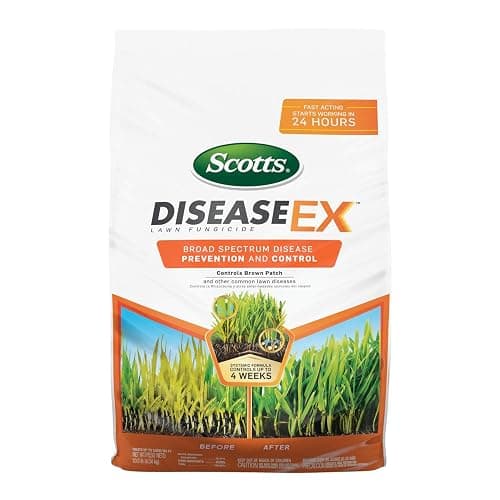
Scotts DiseaseEx Lawn Fungicide
A granular azoxystrobin fungicide that covers brown patch, dollar spot, and gray leaf spot on cool-season lawns.
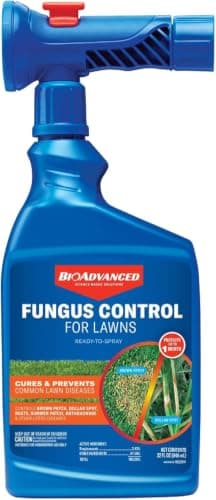
BioAdvanced Fungus Control for Lawns (32 oz)
A propiconazole concentrate in a different chemical class, useful for rotating so disease does not build resistance.
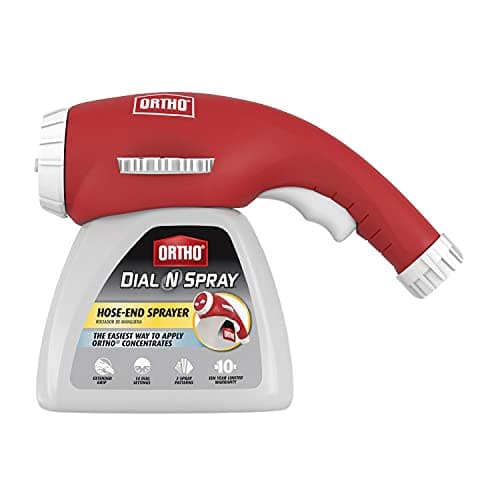
Ortho Dial N Spray Hose-End Sprayer
A hose-end sprayer with 14 dilution settings that takes the math out of mixing a liquid fungicide.
What Other Guides Miss
Most fescue disease articles hand you a list of fungal names and a photo gallery and stop there. Three things get left out that actually matter on the ground.
First, the bunch-type growth habit changes the whole game. Guides written with bermuda or zoysia in mind assume the lawn will fill back in after you treat the disease. Tall fescue will not. If you treat brown patch and walk away, you are left with a dead patch that stays dead until you reseed it. On fescue, treatment and overseeding are two halves of one job, and any plan that skips the reseeding step leaves you with a thin, vulnerable lawn that invites the next disease.
Second, gray leaf spot is underrated for tall fescue. A lot of older content treats it as primarily a perennial ryegrass or St. Augustine problem, but it has become a genuinely serious tall fescue disease, and it punishes summer nitrogen harder than almost anything else. If your fescue is collapsing in late summer with scorched, twisted leaf tips, do not assume drought and do not reach for the nitrogen bag.
Third, the same four habits prevent almost everything. Articles tend to give each disease its own separate treatment list, which makes the whole thing feel overwhelming. In reality, mow tall, water in the morning, time your nitrogen for fall, and overseed every year, and you have addressed the root cause of nearly every disease on this page at once. When you are staring at a patch and cannot tell what it is, you do not have to. Snap a photo for a free AI diagnosis that factors in your region and season, then follow the cultural plan below regardless of which fungus it turns out to be.
Your tall fescue disease prevention plan
If you do nothing else, do these, in this order:
- Raise your mowing height to 3 to 4 inches and keep the blade sharp. This single change protects against more diseases than any product you can buy.
- Move all watering to early morning, deep and infrequent. Never water in the evening. Drying the canopy fast starves most of these fungi of the leaf wetness they need.
- Shift your nitrogen to fall and keep summer feeding off. Light spring, generous fall, nothing pushed during the summer disease window. Make an exception only for dollar spot and red thread, which want a modest feeding.
- Overseed every fall with two or three improved, disease-resistant turf-type tall fescue cultivars. This is how a bunch-type grass stays thick, and thick turf resists disease.
- Improve airflow and drainage, and aerate compacted soil in fall. Open up shady, damp corners and fix the low spots where pythium and brown patch get started.
- Diagnose before you treat, and reserve fungicides for high-value lawns under active pressure or threatened new seedings. Confirm what you have, ideally with your extension, then treat by the label and rotate chemistries.
Tall fescue rewards good habits more than almost any grass I work with. Get the culture right and the diseases on this page mostly stay theoretical. When something does break out, identify it first, treat the few that warrant it, and always finish the job with fall overseeding so your bunch-type lawn comes back thick. Not sure what you are looking at? Snap a photo for a free AI diagnosis and let it narrow the field before you spend a dime.
Free Lawn Care Tools
The most common diseases on tall fescue are brown patch, leaf spot and melting out, dollar spot, pythium blight, red thread, rust, and gray leaf spot. Brown patch is the most frequent in hot, humid weather, while gray leaf spot and pythium can be the most damaging, especially on new seedings and lawns pushed with summer nitrogen. Most of them trace back to the same handful of cultural mistakes.
Brown patch fungus thrives in warm, humid weather with long periods of leaf wetness, which is exactly what summer nights with heavy dew provide. Mowing too short, watering in the evening, and applying nitrogen in late spring or summer all make it worse. Watering in the early morning, mowing at 3 to 4 inches, and holding nitrogen for fall greatly reduce the problem. Our dedicated brown patch guide covers the full treatment plan.
Tall fescue grows in bunches rather than spreading by runners, so it does not self-repair the way bermuda or zoysia does. A patch killed by disease will stay thin until you reseed it. That is why recovery on fescue almost always means overseeding the damaged areas in early fall, on top of fixing the watering, mowing, and fertilizing habits that allowed the disease in the first place.
Yes. Gray leaf spot has become a serious disease for tall fescue over the last couple of decades and can thin a stand quickly in hot, humid late-summer weather. It causes oval gray lesions and scorched, twisted leaf tips that are easy to mistake for drought. Summer nitrogen makes it markedly worse, so the main defenses are holding nitrogen for fall and, on high-value lawns, a properly timed fungicide guided by your extension.
Tall fescue is naturally prone to pythium, and new seedings are the most vulnerable lawns of all because seedlings have tiny roots and you keep the surface constantly wet to germinate them. Add warm, humid weather and poor drainage and pythium can wipe out seedlings in days. The best defense is timing: seed in early fall as humidity drops, water early in the day, and consider a preventive fungicide on critical new seedings.
Usually not. For most home lawns, correcting mowing height, watering timing, and nitrogen timing controls disease at a livable level, and red thread, rust, and mild dollar spot often clear up on their own. A fungicide is worth considering for a high-value lawn under active, spreading brown patch or gray leaf spot, or a new seeding threatened by pythium. Even then, it supplements good cultural practices rather than replacing them.

Your lawn plan, in your pocket all season
Grass ID, a season plan, soil-timed reminders, and a lawn journal that remembers what you did. Free on iPhone.