Slime Mold on Grass: How to Identify and Remove It

Did gray or purple clusters appear on your grass after rain? Look closely before choosing a lawn treatment. Slime mold can cover the blades while the grass underneath remains alive.
Slime mold on grass usually needs no treatment. Purdue Extension describes a brief, noninfectious outbreak that commonly lasts one to two weeks. You can leave it alone or gently remove the surface growth with a broom, rake, or normal mowing.
Check the blades beneath the coating. Tiny round growths on the surface fit slime mold; dead leaves, lasting lesions, or an expanding damaged patch need a separate diagnosis. Photograph the patch before removal so your local Extension office can assess it if the grass keeps declining.
What does slime mold look like on grass?
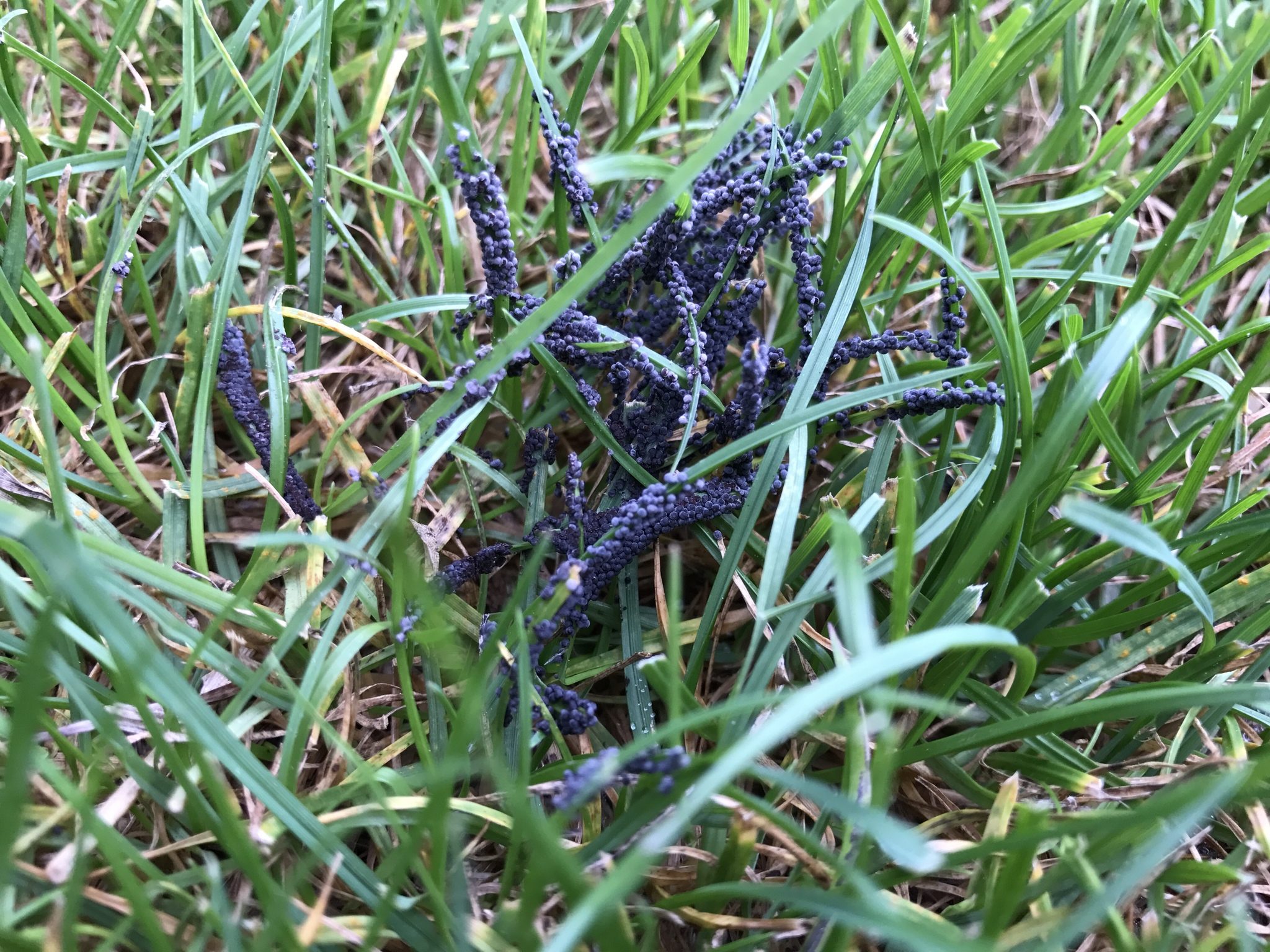
Are there small beads coating several blades? NC State Extension describes round surface growths that can appear overnight. They may be purple, white, gray, yellow, or orange. These are reproductive structures that hold spores.
Is the coating sticky or powdery? Iowa State Extension describes a slimy early stage that dries into a powdery covering. The growth can shade the leaves and cause some yellowing. Slime mold does not infect the grass, according to University of Maryland Extension.
Could it be rust or powdery mildew?
Compare the surface pattern, not just its color. The University of Minnesota diagnostic guide separates these three signs:
- Slime mold forms many pinhead-sized, round structures on the blade surface, often after rain or high humidity.
- Lawn rust produces raised orange or yellow spots. Its orange powder can rub onto a white tissue or shoes. Our lawn rust guide covers that pattern.
- Powdery mildew looks like flour on the blades, with white or gray powdery spots. Minnesota notes that it is common in shaded grass.
If the leaf itself has brown or black lesions, photograph those too. A coating and damaged leaf tissue can occur in the same patch. Use a photo diagnosis to narrow the possibilities; a local plant diagnostic service can confirm an uncertain cause.
How do you remove it without damaging the lawn?
Start by deciding whether removal is needed. Purdue Extension says slime mold causes temporary cosmetic damage and needs no chemical treatment. Iowa State recommends leaving it alone or removing it mechanically.
- Take a close photo and a wider photo of the affected area.
- Check the grass under the coating. If the blades are mostly green and intact, leave the patch to dry or remove the covering.
- Gently sweep the surface with a broom or use a light rake. Avoid pulling out the grass.
- If the lawn already needs mowing, mow at its normal height. Do not scalp it to remove the coating.
- Check the same patch again after the covering clears. If the grass keeps dying or the damaged area expands, seek a separate diagnosis.
Purdue also allows washing the growth from the blades with water. A gentle rinse is an option, but more water is unnecessary if you can wait or brush it away. The watering schedule tool can help plan routine irrigation around your grass and weather.
Why does it return after rain?
Has the same spot appeared before? Iowa State says slime mold can return under warm, humid conditions. NC State notes that its spores survive in soil and thatch, the layer of old plant material near the soil surface. A return after wet weather does not mean the earlier removal failed.
Check whether your sprinklers run while the soil is already wet. Adjust routine watering to the lawn's needs; one patch does not prove a drainage defect. A personalized paid care plan can organize seasonal watering and maintenance for your grass and location, while an uncertain diagnosis still needs confirmation.
What other guides misdiagnose
Does the word "mold" mean you need fungicide? Maryland explains that slime molds are not true fungi and recommends no treatment. NC State includes a severe-case chemical option, but marks the listed product as unsuitable for home lawns. That table is not a home treatment recommendation.
Use the surface growth and the condition of the grass together. If removal reveals persistent dead patches, send photos or a sample to your local Extension office. Do not select a pesticide from the coating's color alone.
Your slime mold diagnosis checklist
- Look for tiny round structures on the grass surface.
- Compare orange rust spots and flour-like mildew before naming the problem.
- Leave confirmed slime mold alone or remove it gently.
- Recheck the grass beneath it; investigate continuing decline separately.
Sources: NC State Extension, Slime Mold in Turf; Iowa State Extension, Slime Molds; University of Maryland Extension, Mushrooms and Slime Molds in Lawns; University of Minnesota Extension, Discolored leaf blades; Purdue Extension, Slime Molds (BP-112-W); Hero photo license: CC BY 4.0 (displayed with a crop).
Free Lawn Care Tools
Slime mold does not infect grass. Maryland Extension says a dense covering can block light, so remove it gently if needed and check whether the grass recovers.
Purdue and Iowa State Extension describe outbreaks that commonly last one to two weeks. Wet conditions can bring another outbreak, so check the grass beneath the growth instead of relying only on the calendar.
Purdue Extension recommends no chemical treatment for routine slime mold. Leave it alone or remove it mechanically; seek a diagnosis if the grass keeps declining.
Iowa State Extension lists mowing as a removal option. Use your normal mowing height and avoid cutting lower just to remove the covering.
Minnesota Extension describes slime mold as clusters of small round surface structures. Rust makes orange or yellow leaf spots and orange powder that can rub onto a white tissue.

Beat weeds and brown spots from your phone
Snap a photo, get the fix, and follow a plan timed to your soil and weather. Free on iPhone.