Grass Seed Heads: What to Do Before You Mow

Fast Answer: Mow normal grass seed heads with a sharp blade. Keep the cutting height suited to your grass. Kentucky bluegrass, tall fescue, and perennial ryegrass can flower in maintained lawns. Purdue Extension recommends more frequent mowing, without lowering the deck just to cut the stalks.
Check the grass before choosing a treatment. Seed heads alone do not prove a weed infestation. Bahiagrass also produces tough seed stalks, but its care differs from northern lawn grasses. Skip a chemical purchase until you know what is growing.
Check the stalks first
A seed head is the grass's flowering structure. It sits at the end of a stem. UF/IFAS's identification guide uses seed heads alongside leaves and other plant features.
Compare several plants across the patch. Photograph the whole patch, a leaf, and a flowering stem. Keep those views together when requesting identification. One close-up can leave out the differences between the patch and surrounding grass.
For Florida grasses, use the UF/IFAS identification key. For other regions, request a local Extension identification. A photo identification can suggest a likely match. Confirm an uncertain match with your local Extension office before treating it.
| What you see | What it can mean | What to do |
|---|---|---|
| Uneven stalks above known bluegrass, tall fescue, or perennial ryegrass | Normal flowering can occur in these lawn grasses. | Keep the usual species-appropriate height. Mow more often while stalks grow. |
| Pale or white stem tips after mowing | Tough seed stalks can leave pale cut ends. | Check whether the pale ends are on stalks. Check blade sharpness before changing lawn treatments. |
| A patch with different leaves or growth | Another grass may be mixed into the lawn. | Identify the patch separately. Keep chemical treatment on hold. |
| Tall seed stalks in confirmed bahiagrass | Seed head production can determine its mowing schedule. | Use bahiagrass mowing guidance. Keep the blade sharp. |
Purdue's seed head guidance supports the first two observations. It also notes that cultivars differ in seed head production. The bahiagrass row uses UF/IFAS guidance for Florida lawns. A table observation is a reason to inspect, not a confirmed diagnosis.
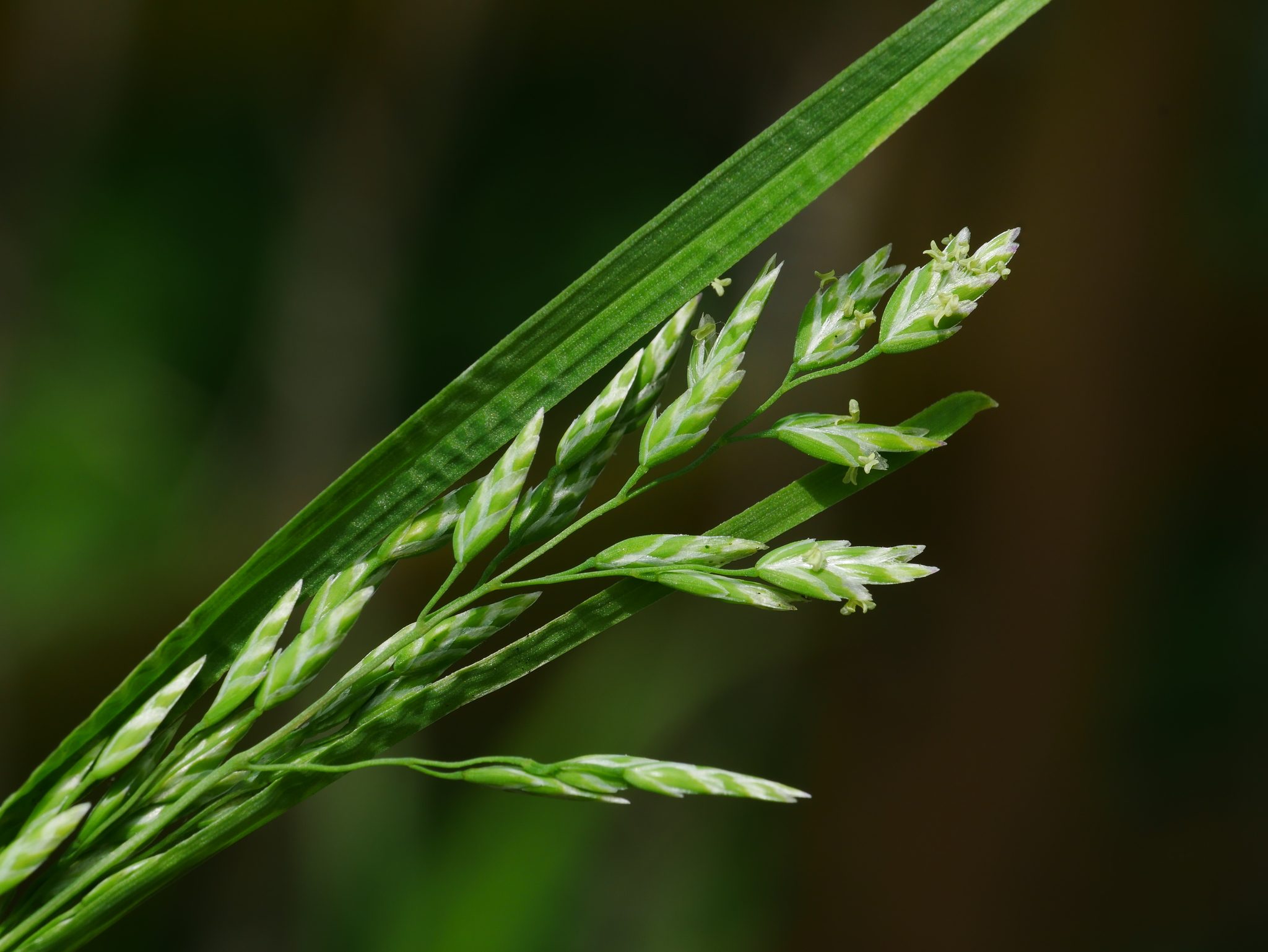
The hero shows a close-up of Kentucky bluegrass, Poa pratensis, from an iNaturalist observation. It shows a flowering structure. It does not document a maintained lawn or a mowing result.
Keep the deck height steady
Use the mower you already have if it suits your grass. Start with maintenance. Skip buying another mower just because seed stalks appeared.
- Confirm the grass type. Check its normal cutting range in the mowing guide or local Extension guidance.
- Clear stones, sticks, and other debris. Mow when the turf is dry. UF/IFAS lists both precautions in its mowing guidance.
- Follow the mower manual for inspection, service, and safe shutdown. Keep the cutting blade sharp. Do not handle a blade while the mower can start.
- Keep the deck within the recommended range for your grass. Purdue advises against lowering it to chase seed heads.
- Check growth between mowings. UF/IFAS recommends removing no more than one-third of leaf height at one mowing. Increase frequency when needed to keep within that limit.
- Leave ordinary clippings on the lawn when they spread evenly. Distribute heavy clumps and sweep clippings off pavement, as UF/IFAS directs.
A ruler and a grass-specific height are the starting inputs. Our mowing calculator can help check the height plan. Keep local guidance and your mower's operating limits in view.
Shop math: one-third of leaf height
Illustrative inputs: leaf height is 4.5 inches. Your confirmed grass is suited to a 3-inch cut. These numbers describe an example, not a setting for every lawn.
- The one-third limit permits removing 4.5 ÷ 3 = 1.5 inches.
- A 3-inch cut removes 4.5 − 3 = 1.5 inches. That meets the limit.
- A 2-inch cut removes 4.5 − 2 = 2.5 inches. That exceeds the limit.
Measure the leaves for this calculation. A tall flowering stalk does not set the cutting height. Skip the lower cut even when it would remove more stalks.
Use bahiagrass settings in Florida
Confirmed bahiagrass in Florida needs its own plan. UF/IFAS recommends a rotary mower and a 3-to-4-inch cutting height during active growth. Its published interval is every 7 to 14 days, with seed heads often determining when to mow.
The leaves and seed stems are tough. UF/IFAS calls for regular blade sharpening. Keep the one-third leaf-height limit. Check actual growth instead of waiting for a calendar date.
Those heights belong to bahiagrass care in Florida. Use the UF/IFAS bahiagrass guidance and local recommendations. Skip using that setting for Bermuda, zoysia, or an unidentified patch.
Skip natural reseeding for thin bluegrass
Letting Kentucky bluegrass seed heads mature is a poor repair plan for a thin lawn. Iowa State Extension explains that seed production uses energy needed by other plant parts. A less dense stand also leaves more room for weeds.
For thin bluegrass, identify the cause and use a planned renovation when needed. Iowa State recommends late summer or early fall if normal maintenance does not improve the turf. Choose timing for your region. Our new-seed watering guide covers the separate establishment job.
This advice has a species limit. UF/IFAS says unmowed bahiagrass can reseed itself. That does not make letting a bluegrass lawn grow tall a sound repair method.
What other guides get wrong
Seed heads do not supply a fertilizer rate. Iowa State notes that low nitrogen can increase seed head production in cool-season lawns. That observation does not establish your lawn's nutrient needs. Skip extra fertilizer solely to hide flowering. Follow the grass's normal schedule and local restrictions.
Skip growth regulators as a quick fix for visible seed heads. Purdue describes professional use with precise timing and rates. It says visible seed heads are already too late for effective application. No product or application rate is recommended here.
Season also needs a species check. Purdue and Iowa State describe cool-season flowering in spring conditions. Florida bahiagrass has a different pattern. A single month or a seed head's color cannot identify every grass.
The seed head punch list
- Document the patch and confirm the grass.
- Check the normal mowing range for that grass and region.
- Maintain a sharp blade and mow dry turf.
- Keep the deck in range. Increase mowing frequency as growth requires.
- Inspect persistent thinning or a different-looking patch before buying treatment.
Use your grass type and location to build a care schedule. A personalized care plan can organize seasonal tasks. An uncertain plant or unexplained decline still needs confirmation.
Sources: Purdue, Managing Seedheads; Purdue, Seedheads Make for Tough Mowing; Iowa State, Seed Head Development in Lawns; UF/IFAS, Bahiagrass for Florida Lawns; UF/IFAS, Mowing Your Florida Lawn; UF/IFAS, Florida Turfgrass Identification.
Display crops vary by screen.
Free Lawn Care Tools
Seed heads alone do not prove weeds are present. Kentucky bluegrass, tall fescue, perennial ryegrass, and bahiagrass can produce them. Identify the plant before choosing a treatment.
Keep the cutting height suited to your grass. Purdue recommends more frequent mowing with a sharp blade instead of lowering the deck to remove seed heads. Follow the one-third leaf-height limit.
Tough seed stalks can leave light green or white cut ends, according to Purdue. Inspect the ends and blade sharpness before treating the lawn. White leaf coatings or spreading damage need a separate check.
Iowa State advises against relying on seed head maturation to repair thin Kentucky bluegrass. Seed production uses energy needed elsewhere in the plant. Unmowed bahiagrass can reseed itself, according to UF/IFAS, so confirm the grass before applying this advice.
For Florida bahiagrass during active growth, UF/IFAS recommends a 3-to-4-inch cutting height. Keep a sharp rotary mower blade and remove no more than one-third of leaf height. Seed head production and actual growth help determine mowing frequency.

Beat weeds and brown spots from your phone
Snap a photo, get the fix, and follow a plan timed to your soil and weather. Free on iPhone.