Algae in lawn: how to identify it and fix wet patches

Is a green film or black crust spreading across bare soil in your lawn? Look at the soil between the blades. A slick surface coating points to algae. A raised, leafy mat points to moss, while jelly-like clumps need a closer check.
Fast Answer: To control algae in a lawn, correct the wet conditions and help grass cover the exposed soil. Iowa State Extension recommends better drainage, less frequent watering, relief of compaction, and suitable light and mowing height. A spray alone leaves the conditions that allow the growth to return.
Check the growth before treating it. Algal scum can look green when wet and form a black, cracked crust when dry. Dark, jelly-like colonies may be Nostoc, a type of cyanobacteria often called blue-green algae. Keep people off slippery patches, and get an uncertain identification checked before using a chemical.
Is it algae, moss or Nostoc?
Does the patch coat the ground or stand above it? Compare its surface while wet and again after it dries. Take close photographs on both visits. Color alone cannot identify it.
| What you see | What to check | Likely growth |
|---|---|---|
| Greenish film that becomes a black crust | Look for a coating on soil or thin turf and cracks as it dries. | Algal scum, described by Iowa State Extension. |
| Thick green mat with tiny leafy stems | Look closely for the branched stems and leaves. | Moss, described by Clemson Extension. |
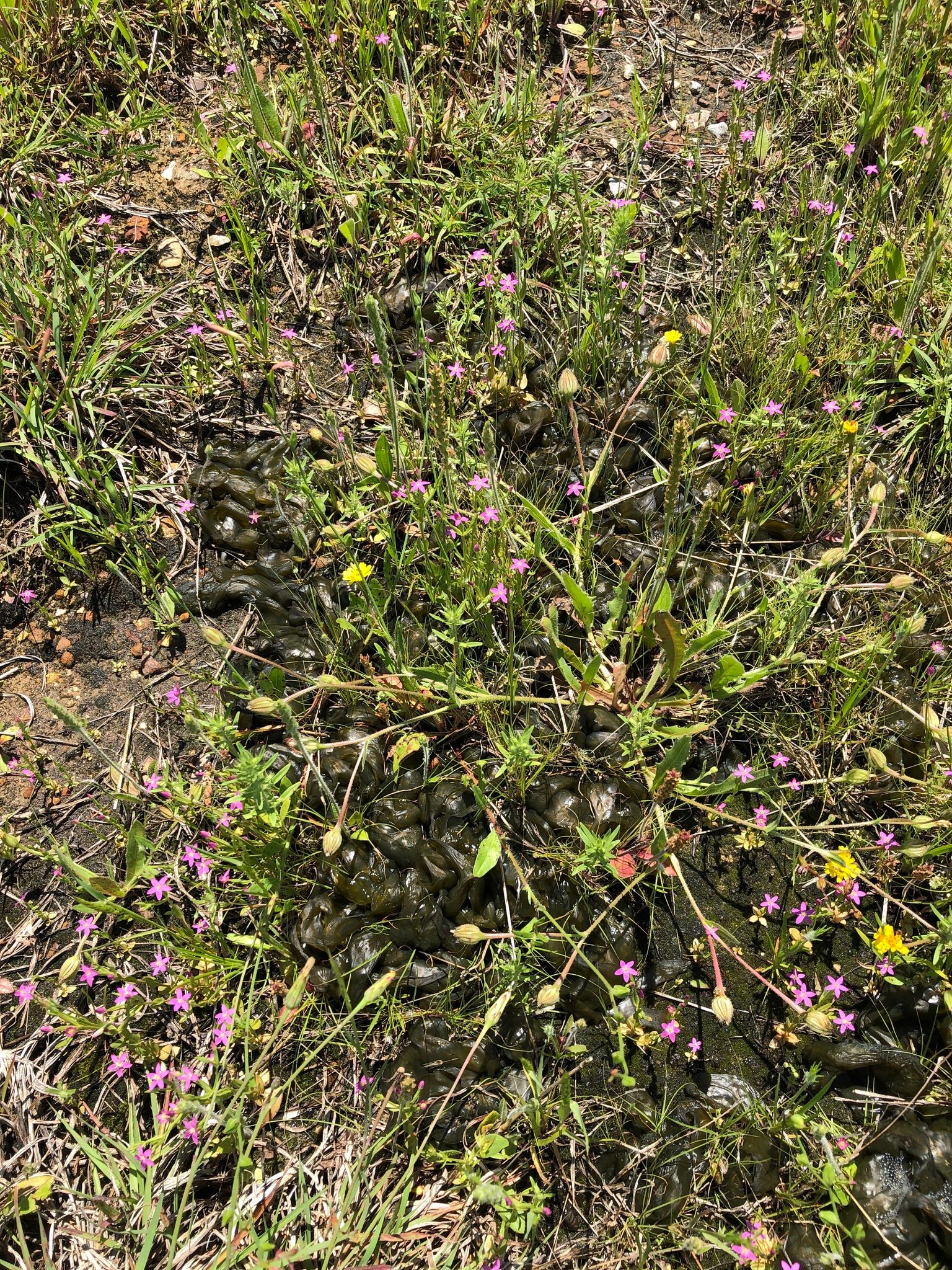
| Dark green jelly-like clumps after rain | Check whether the clumps shrink into a dark crust during dry weather. | Nostoc, described by Clemson Extension. |
The hero photo shows a community-identified Nostoc commune observation among mixed vegetation. It illustrates the jelly-like form; it does not show a confirmed case in a maintained lawn. Display crop varies by screen.
If you find a leafy mat, use the separate moss removal procedure. If the growth coats individual grass blades, photograph those blades too. You can upload lawn photos for an initial assessment; your extension office can help confirm an uncertain identification.
Why does the same patch stay wet?
Does it collect runoff, receive sprinkler water after rain, or stay shaded while nearby grass dries? Check after rainfall and during the next irrigation cycle. Record which water source reaches the patch and whether water collects there.
Texas A&M AgriLife Extension links algal scum with wet soil, poor air movement and compaction. Thin grass leaves space for a coating that can further limit water and air movement. That makes the bare patch harder to repair.
Is the ground hard to penetrate? Compare a soil probe in the affected area with one in nearby healthy turf at similar moisture. Clemson describes shallow roots and difficulty penetrating soil as signs of compaction. Dry soil can also be hard, so do not decide from a single probe reading.
How do you clear the growth and repair the lawn?
Use this sequence after the surface checks fit algae or Nostoc. These are source-based care steps, not results from a field trial.
- Keep traffic off slippery growth. NC State's Nostoc profile identifies wet colonies as a slipping hazard. Use a dry route while you assess the area.
- Correct excess irrigation. For an established lawn, replace unnecessary frequent watering with irrigation that reaches the root zone when the grass needs it. NC State Extension recommends deep, infrequent irrigation. This schedule is for established turf; newly seeded areas need their own establishment care. Check the watering calculator for grass-specific planning, then account for actual rain and soil moisture.
- Address water collection. Repair a leaking sprinkler or redirect avoidable runoff. For a persistent low area or drainage problem, get a site assessment before changing the ground level. Clemson lists drainage changes as possible solutions; the right change depends on where the water can safely go.
- Relieve confirmed compaction. Clemson recommends core aeration, which removes small plugs of soil. Match the timing to your grass's growth season with the aeration calculator. Postpone work on saturated ground.
- Remove small Nostoc colonies carefully. Clemson recommends skimming them from the soil surface with a flat-edged shovel. Work only on the surface and preserve nearby grass. For a broad crust within turf, ask your extension office about suitable removal; aggressive scraping can also remove grass.
- Restore suitable grass cover. Texas A&M recommends dense, healthy turf as the long-term defense against algal growth. Use the mowing calculator to check your species' height. Correct shade and drainage limits before reseeding or laying sod. If the site cannot support grass, choose a suitable groundcover with local advice.
Do you need lime or fertilizer? Test the soil before changing its pH or adding nutrients. Algae alone does not prove an acidic soil. Clemson advises checking phosphorus where Nostoc occurs and avoiding further phosphorus additions when levels are already high. Follow your grass species' care guidance and the soil report.
Should you use an algae killer?
Start with the conditions that keep the surface wet. Texas A&M generally advises against algicide use on turf because it can burn grass. Clemson says some products offer temporary Nostoc management, but growth can return until site conditions improve.
A putting-green treatment chart also needs a home-lawn check. NC State explicitly says chlorothalonil and mancozeb are not approved for residential lawns. Do not transfer golf-course rates or repeat-spray schedules to your yard.
If chemical treatment is still being considered, have your local extension office confirm the growth and check the current product label. It must permit the intended home-lawn use and your grass species. Follow its rate, protective-equipment, watering and access instructions. No product is recommended here without that check.
Your algae diagnosis checklist
- Photograph the wet and dry surface and compare film, leafy mat and jelly-like forms.
- Identify the water source and check shade and compaction.
- Correct those conditions before removing growth or repairing bare turf.
- Photograph the same area after the next wet period. If it still returns or grass keeps thinning, send the photos and watering history to your extension office.
Free Lawn Care Tools
Iowa State Extension describes greenish to black scum on soil or thin turf. Compare it when wet and dry: it can become a cracked black crust.
Dark green jelly-like colonies may be Nostoc, a type of cyanobacteria often called blue-green algae. Clemson describes it shrinking to a dark crust when dry. Photograph both forms and get uncertain growth checked.
Algal crust can interfere with water movement and turf recovery, according to NC State. Check the wet conditions and thinning that allowed it to develop. The coating alone does not identify the original cause of the bare patch.
Algae alone does not establish that your soil needs lime. Clemson recommends a soil test to guide pH correction. Use the result and your grass species to decide what to add.
Check the residential-use restriction before considering a treatment. NC State says chlorothalonil and mancozeb are not approved for residential lawns. Ask your extension office to check a current label for your site.
Sources (6)
- Iowa State Extension: Managing algae in the lawn. Appearance and care changes.
- Clemson Extension: Moss and algae control in lawns. Moss comparison, soil tests and compaction.
- Clemson Extension: Nostoc. Wet and dry forms, removal and management limits.
- NC State Extension: Algae in turf. Irrigation, recovery and residential pesticide restrictions.
- NC State Extension: Nostoc profile. Slippery colonies.
- Texas A&M AgriLife Extension: Algal scum. Surface conditions and turf recovery.
Photos: Sam Kieschnick / iNaturalist · CC BY 4.0

Beat weeds and brown spots from your phone
Snap a photo, get the fix, and follow a plan timed to your soil and weather. Free on iPhone.