Types of Grass in Minnesota: The Common Lawn Grasses
 Marcus GreenTurf Management Pro | 18 Years
As an Amazon Associate we earn from qualifying purchases.
Minnesota is cool-season lawn country, and four grasses make its lawns: Kentucky bluegrass, fine fescue, tall fescue, and perennial ryegrass, almost always sown as a mixture. Bermuda and zoysia cannot survive Minnesota winters, so your yard's sun, shade, and workload do the choosing.
Kentucky bluegrass is the most popular turfgrass in the state, fine fescue is the shade and no-mow pick, and tall fescue is the drought-tough one, though U of M warns off ground that holds winter ice. Keep perennial ryegrass under 10 percent by weight. Seed mid-August to mid-September.
Every grass that makes a Minnesota lawn is cool-season, tough enough for the cold. University of Minnesota Extension notes Minnesota lawns of cool season turfgrasses bear the stress of changing weather and can survive harsh winters, growing fast in the cool of spring and fall. The four species U of M recommends are Kentucky bluegrass, fine fescues, turf-type tall fescue and some of the perennial ryegrass varieties. This guide covers each and how to tell which is in your yard.
The types of grass that grow in Minnesota
Kentucky Bluegrass
Kentucky Bluegrass is the standard Minnesota lawn, the most popular turfgrass in MN per U of M. It spreads by rhizomes into a dense, self-repairing sod and shrugs off Minnesota winters, which is why it is the default for sunny yards. The trade-offs U of M notes: it has a higher maintenance requirement (fertilizer, water, etc.) than most other cool-season turfgrasses and may not grow well in shade.
Fine Fescue
Fine Fescue is Minnesota's low-input star, the grass behind the state's no-mow lawn movement. U of M says fine fescues have lower maintenance requirements, including less irrigation, mowing, and fertilizing, that strong creeping red and Chewings fescue are the most tolerant of tree shade, and that they need very little irrigation in Minnesota. They are the kind of turfgrasses that are used in no-mow and reduced-mow lawns, so they cover shady, dry, and low-effort corners where bluegrass struggles.
Tall Fescue
Tall Fescue is the drought-tough choice, valued for its deep roots. U of M calls it one of the most drought-tolerant turfgrasses for Minnesota due to deep, extensive roots, and it takes some shade and lower inputs than bluegrass. Its one Minnesota caveat is winter wet: U of M warns to not plant in areas that hold ice in the winter, since standing ice can smother the crowns. It grows in coarse clumps rather than a knitting sod.
Perennial Ryegrass
Perennial Ryegrass is the quick-cover blend partner, but only in small doses here. U of M notes it is often found in seed mixes due to its quick germination and establishment, yet it lacks winter hardiness in Minnesota's cold. That is why U of M advises to not have more than 10% perennial ryegrass by weight, since it often performs poorly in Minnesota. It belongs as a fast-starting nurse grass in a blend, never as a stand-alone lawn.
Notice what is missing: warm-season grasses. Bermuda, zoysia, St. Augustine, and centipede, the grasses that carpet Southern lawns, are not grown in Minnesota because they cannot survive the winters, so U of M recommends only the four cool-season species above. The most Minnesota-specific trend on that list is the rise of fine-fescue no-mow lawns, low-input plantings that U of M actively promotes for homeowners who want to mow, water, and fertilize less.
Minnesota grass types compared at a glance
| Grass | Season | Best role | Sun / shade | Water need | Maintenance |
|---|---|---|---|---|---|
| Kentucky Bluegrass | Cool | Standard sunny lawn | Full sun, poor shade | Moderate to high | Medium-high |
| Fine Fescue | Cool | Low-input, shade, no-mow | Best shade tolerance | Very low | Low |
| Tall Fescue | Cool | Drought-tough, some shade | Sun to part shade | Low (deep-rooted) | Low-medium |
| Perennial Ryegrass | Cool | Quick-cover blend partner (<10%) | Sun to part shade | Moderate | Medium |
How to tell which type you already have
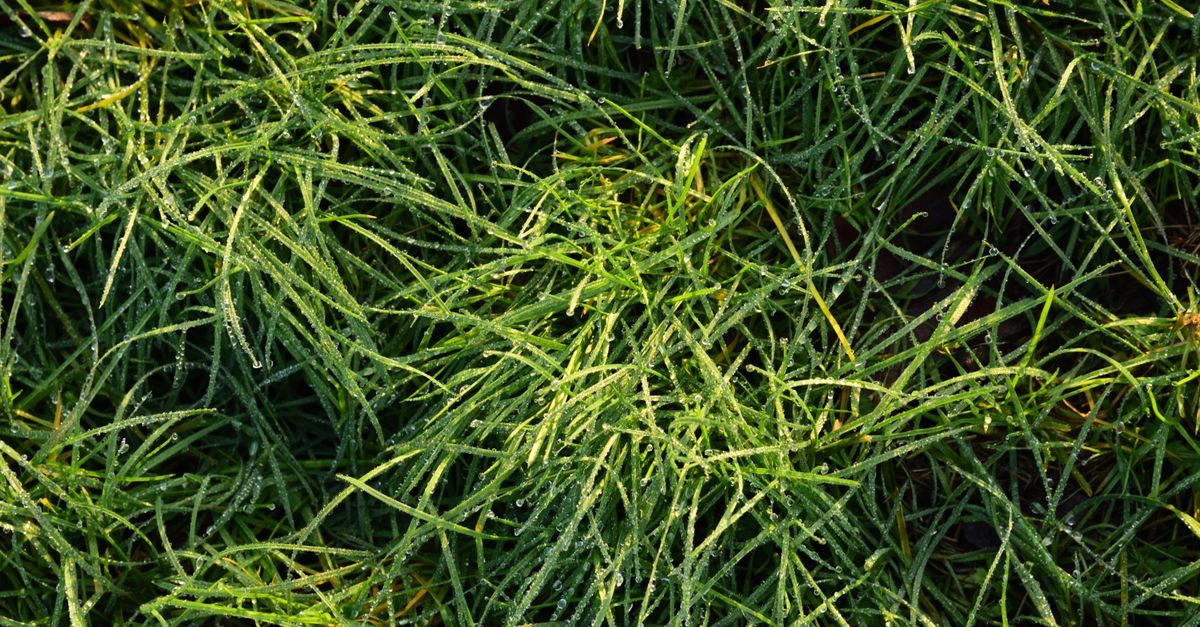
All four Minnesota grasses are cool-season, so they all stay green through the growing season and green up first in spring. Only Kentucky bluegrass truly spreads, by rhizomes; fine fescue, tall fescue, and perennial ryegrass grow in clumps. So blade width and color do most of the sorting, from fine fescue's thread-thin blades to tall fescue's wide, coarse ones.
| Grass | Blade | Growth habit | Standout tell |
|---|---|---|---|
| Kentucky Bluegrass | Fine, soft | Spreads by rhizomes, dense sod | Boat-shaped blade tip; open seed-head panicle |
| Fine Fescue | Very fine, needle-like | Bunching, some creeping | Wispy, thread-thin blades; used in no-mow lawns |
| Tall Fescue | Wide, coarse, rough edges | Bunching, no runners | Grows in clumps, coarser than the rest |
| Perennial Ryegrass | Fine to medium, glossy | Bunching | Shiny blade underside; fast to sprout |
Still not certain? Our free AI grass identifier reads a close-up photo, names the grass, and builds a 12-month care plan tuned to your ZIP.
Which types grow in your part of Minnesota
Unlike the South, Minnesota does not split into warm and cool grass zones, the whole state, including the cold far north, is cool-season country. So the real question is not where you live but what your yard is like. Match the grass to your site:
- Sunny, higher-input yards: Kentucky bluegrass, the dense, traditional Minnesota lawn, for full sun and a manicured look.
- Shady yards (under trees): Fine fescue, especially creeping red and Chewings, which U of M rates the most shade-tolerant. Tall fescue takes some shade too.
- Dry or low-water yards: Tall fescue for its deep roots, or fine fescue, which needs very little irrigation once established.
- Low-maintenance or no-mow yards: A fine-fescue mix, U of M's recommended choice for reduced mowing, watering, and fertilizing.
- Wet, ice-prone low spots: Avoid tall fescue, which U of M warns off ground that holds winter ice.
Minnesota grass timing that matters
The key Minnesota timing rule is that cool-season grasses go in during late summer, not spring. Soil temperature drives the rest:
- Fall seeding, the key window: U of M says the best time to seed in Minnesota is late summer (mid-August to mid-September), so roots set before the hard freeze.
- Fine-fescue lawns: seed on the same late-summer schedule as other lawns.
- Last spring frost: roughly early-to-mid May across southern and central Minnesota, and into late May or early June in the far north.
- First fall frost: roughly late September to early October in the south, and as early as early September up north.
- Spring pre-emergent: put crabgrass pre-emergent down in spring before the soil warms through about 55F and crabgrass germinates.
Our herbicide timing tool pins the exact pre-emergent date for your ZIP.
Next steps
Once you know your grass type, the care gets specific. Dig into the full guides for Kentucky Bluegrass, Fine Fescue, Tall Fescue, or Perennial Ryegrass, or line any two up in our grass comparison tool. For the wider picture, see how every state compares.
And if you are not sure what is growing out there, start with a quick photo on our free grass identifier.
Top Picks
 Jonathan Green Black Beauty Ultra Grass SeedCheck price on Amazon
 Scotts Turf Builder Starter Food for New Grass, 15 lb.Check price on Amazon
As an Amazon Associate we earn from qualifying purchases.
Free Lawn Care Tools
Kentucky bluegrass, which U of M Extension calls the most popular turfgrass in Minnesota. It is the dense, traditional sunny lawn, usually blended with fine fescue and a little perennial ryegrass. Fine fescue is the go-to for shade and low-input yards.
Four cool-season grasses make up Minnesota lawns: Kentucky bluegrass, fine fescue, turf-type tall fescue, and some perennial ryegrass varieties. U of M recommends only these four; warm-season grasses cannot survive Minnesota winters.
No. Warm-season grasses like Bermuda and zoysia cannot survive Minnesota's harsh winters, so U of M recommends only cool-season species. Minnesota lawns are cool-season top to bottom, even in the milder south.
Fine fescue. U of M promotes fine-fescue no-mow and reduced-mow lawns because they need less mowing, watering, and fertilizing than Kentucky bluegrass, and they handle shade and drought well.
Late summer, mid-August to mid-September per U of M. Fall seedings root before the freeze and avoid the summer heat and crabgrass that ruin spring seedings.
Sources (2)
- University of Minnesota Extension, Buying turfgrass seed for Minnesota lawns and Seeding and sodding home lawns.
- U of M Extension, Planting and maintaining a fine fescue lawn and Lawn care calendar.
Photos: Elliot Greiner / iNaturalist · CC BY 4.0, Jonathan Curley / iNaturalist · CC BY 4.0, stephen / iNaturalist · CC BY 4.0, Tyler Bishop / iNaturalist · CC BY 4.0

Beat weeds and brown spots from your phone
Snap a photo, get the fix, and follow a plan timed to your soil and weather. Free on iPhone.
Related Articles
 Climate & Regional Tips
6 Types of Grass in West Virginia and How to Tell Which You Have
Sep 2, 2026•7 min read Climate & Regional Tips
4 Types of Grass in Connecticut and How to Tell Which You Have
Sep 2, 2026•7 min read Climate & Regional Tips
5 Types of Grass in Idaho and How to Tell Which You Have
Sep 2, 2026•8 min read