Best Fertilizer for Kentucky Bluegrass in Ohio (2026)
 Sarah MitchellLawn Diagnostics Specialist | 12 Years
As an Amazon Associate we earn from qualifying purchases.
Kentucky bluegrass can look dense, dark, and high-end in Ohio, but only when fertilizer is matched to cool-season growth cycles, clay-heavy soils, summer stress, and local nutrient limits. The best fertilizer is not one universal bag. It depends on soil test results, nitrogen timing, lawn age, irrigation, shade, mowing height, and whether the lawn is in northern, central, or southern Ohio.
Homeowners searching for the best fertilizer for Kentucky bluegrass in Ohio in 2026 need two things: a smart product profile and a season-by-season plan. The right program feeds heavily enough to support bluegrass density and rhizome repair, but not so aggressively that it creates disease, surge growth, runoff, or summer decline.
The best fertilizer for Kentucky bluegrass in Ohio is usually a high-nitrogen, low-phosphorus cool season lawn fertilizer with moderate potassium and 30-50% slow-release nitrogen. Confirm phosphorus, potassium, and pH with a soil test before choosing the final ratio.
Apply most nitrogen in September through November, keep spring moderate, and avoid heavy nitrogen during summer heat or drought. For 2026, aim for about 2.5-4 lbs of nitrogen per 1,000 sq. ft. annually, with the highest-maintenance irrigated lawns at the upper end.
- Kentucky bluegrass in Ohio usually performs best with 2.5-4 lbs of nitrogen per 1,000 sq. ft. per year, with most of that applied in fall.
- The most important Kentucky bluegrass fertilizer window in Ohio is September through November, when cool-season turf repairs summer damage and builds roots.
- Spring applications should usually stay light to moderate at 0.25-0.75 lb nitrogen per 1,000 sq. ft. to avoid excessive top growth.
- Summer nitrogen should usually be 0-0.25 lb per 1,000 sq. ft. and skipped entirely during drought dormancy or heat-stressed brown turf.
- Kentucky bluegrass grows best around pH 6.0-7.0, so lime and phosphorus decisions should come from soil testing rather than guesswork.
This guide covers Ohio-specific timing, soil, and product notes. For the full national picture, NPK ratios, and the complete product comparison, see our main best fertilizer for Kentucky bluegrass guide.
Ohio's Most Important Feeding Is in November, Plus the Lake Erie Rule
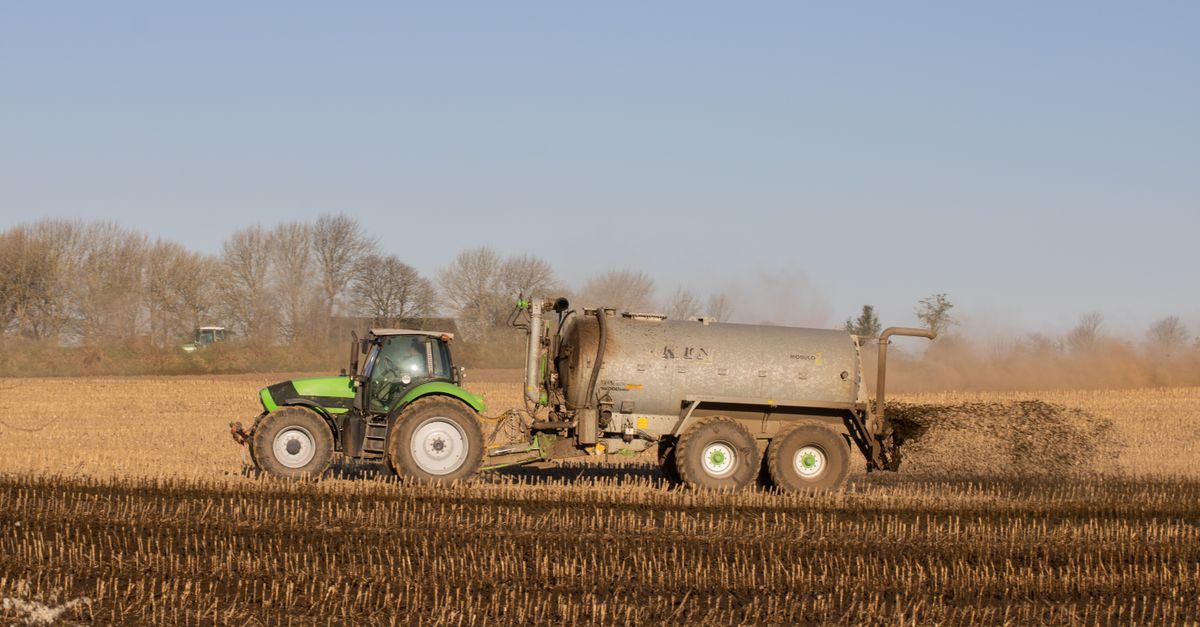
Ohio State's turf research lands on a conclusion that surprises most homeowners: the single most important lawn feeding of the year is the late-fall one, put down around late October in northern Ohio and into November farther south, while the grass is still green. OSU data shows it delivers spring green-up two to six weeks earlier without the flush of soft top growth, and the endless April mowing, that a heavy spring nitrogen feeding causes. If you feed your bluegrass only once a year in Ohio, make it that one.
The flip side is summer restraint. In Ohio's warm, humid summers, excess nitrogen feeds brown patch on bluegrass, so the plan is to fertilize in spring and fall, make the late May to June feeding 0.75 to 1 pound per 1,000 square feet with slow-release nitrogen, and keep midsummer feeding minimal. Dollar spot runs the other way: it tends to show up on underfed turf, which is one more reason not to skip the scheduled feedings. A sensible Ohio budget is roughly 2 to 4 pounds of nitrogen a year, weighted to fall.
Then there is the Lake Erie rule. Phosphorus runoff feeds the harmful algal blooms in the western basin (the 2014 bloom shut off drinking water for about 400,000 Toledo-area residents), and the Maumee watershed is the main conduit. Established Ohio lawns almost never need phosphorus, so use a low or zero-phosphorus fertilizer such as 18-0-10 unless a soil test says otherwise, sweep stray granules off the driveway back onto the lawn, and never spread on frozen ground.
Ohio Kentucky Bluegrass Fertilizer Calendar (OSU)
| When | Feed? | Rate & product | Why here |
|---|---|---|---|
| April to May | Yes (modest) | ~0.75-1 lb N | Do not front-load spring nitrogen |
| Summer | No / minimal | 0-0.5 lb N, slow-release only | Excess N feeds brown patch |
| September | Yes | ~0.75-1 lb N | Fall recovery and rooting |
| Late October to November (most important) | Yes | ~0.75-1 lb N while still green | Earliest spring green-up, no spring mowing surge |
| Phosphorus | Only if soil test says so | Low/zero-P (e.g. 18-0-10) | Lake Erie watershed rule |
| Frozen ground | Never | Nothing | Runoff; sweep stray granules back onto the lawn |
What Kentucky Bluegrass Needs in Ohio
Kentucky bluegrass in Ohio needs most of its fertility during active cool-season growth, especially fall recovery and root-building periods. It grows strongest when days are mild, soil moisture is adequate, and nitrogen is available without pushing weak, lush growth into summer heat.
Recommended products
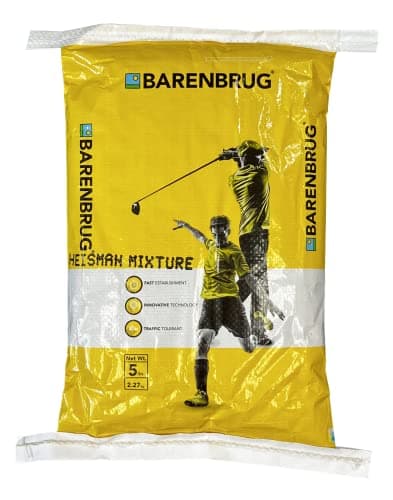
Jacklin Seed by Barenbrug Heisman Kentucky Bluegrass Blend (5 lb)
Certified 85% Kentucky bluegrass / 15% perennial ryegrass blend from a pro sod-grower brand, dense, self-repairing KBG turf; 5 lb full-lawn bag.
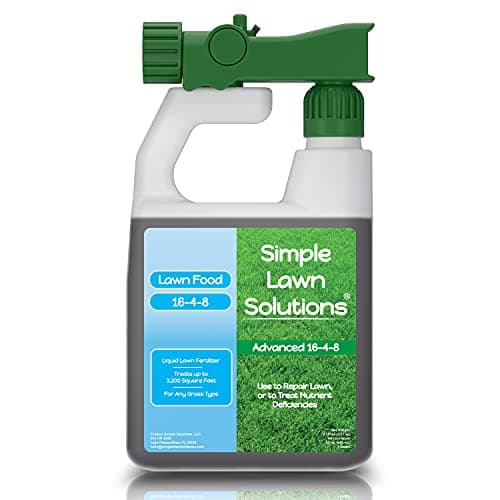
Simple Lawn Solutions Advanced 16-4-8 Liquid Fertilizer
Concentrated liquid fertilizer with balanced 16-4-8 NPK for quick green-up through any hose-end sprayer.
Our Grass Database shows Kentucky Bluegrass has peak growth from March-May and September-November, with winter dormancy from December-February and possible summer dormancy under prolonged heat or drought without irrigation. That pattern explains why a Kentucky bluegrass fertilizer 2026 plan should not treat April, July, and October the same way.

Why Kentucky Bluegrass Performs Differently in Ohio
Kentucky bluegrass is a cool-season grass that performs best in Ohio when fertilizer supports spring green-up, fall thickening, and summer stress survival. Ohio lawns often move through four phases: early spring green-up, late spring growth surge, summer heat and drought pressure, and fall recovery.
The soil adds another layer. Many Ohio lawns have clay-heavy, compacted soil that holds nutrients but drains slowly and limits oxygen around roots. The best fertilizer for Kentucky bluegrass in Ohio should help support dense tillering, rhizome spread, deep roots, disease resistance, and winter hardiness rather than just produce a temporary dark green color.
Key Nutrients Kentucky Bluegrass Needs
Nitrogen is the main nutrient Kentucky bluegrass uses for color, density, and recovery, but phosphorus, potassium, iron, and pH determine how well that nitrogen performs. If the lawn greens briefly after feeding but stays thin, the issue may be compaction, low potassium, poor pH, shade, or drought stress rather than a simple lack of fertilizer.
Our Grass Database recommends 4 lbs of nitrogen per 1,000 sq ft annually for Kentucky Bluegrass under a high-maintenance program. For many Ohio homeowners, a practical range is about 2.5-4 lbs per 1,000 sq. ft. per year, with lower rates for shaded, non-irrigated, or low-maintenance lawns.
- Nitrogen/N: Drives color, density, leaf growth, and recovery from traffic.
- Phosphorus/P: Supports seedling establishment and roots, but is rarely needed on established lawns unless soil testing confirms a deficiency.
- Potassium/K: Improves drought tolerance, traffic recovery, winter hardiness, and disease resistance.
- Iron/Fe: Deepens color without forcing as much top growth as nitrogen.
- Soil pH: Kentucky bluegrass generally performs best around pH 6.0-7.0, based on our grass characteristics data.
- Penn State Extension guidance: cool-season lawns generally need 2-4 lbs of nitrogen per 1,000 sq. ft. per year, and fall applications typically provide the greatest benefit.
- Purdue Turfgrass Science guidance: phosphorus is rarely needed on established lawns unless a soil test shows a deficiency.
Beginner vs. Advanced Fertility Goals
A beginner Kentucky bluegrass program aims for acceptable color and density with 3-4 seasonal applications, while an advanced program adjusts nitrogen source, release rate, and timing to growth stage, weather, and soil data. Both approaches can work if the yearly nitrogen total and seasonal timing are correct.
Beginner lawns should focus on soil testing, fall feeding, correct mowing height, and avoiding summer overfeeding. Advanced homeowners can layer in spoon-feeding, iron, potassium management, and soil improvement work. Related topics that often matter just as much as fertilizer include How to Improve Clay Soil for Lawns, Kentucky Bluegrass vs Tall Fescue, How to Fix a Patchy Lawn in Ohio, and Best Grass Seed for Ohio Lawns.
Best Fertilizer Types for Kentucky Bluegrass in Ohio in 2026
The best fertilizer types for Kentucky bluegrass in Ohio in 2026 are nitrogen-forward, low-phosphorus products with enough slow-release nitrogen to feed steadily during cool-season growth. The correct product should match your soil test, season, and lawn condition instead of relying on a single “best” ratio for every yard.
For established lawns, look for products such as 24-0-10, 25-0-5, 20-0-10, or 22-3-11 only when phosphorus is justified. Starter fertilizer is not the default choice for established Kentucky bluegrass because the phosphorus may be unnecessary or restricted.
Best Overall Fertilizer Profile
The best overall fertilizer profile for established Kentucky bluegrass in Ohio is high nitrogen, low or zero phosphorus, moderate potassium, and 30-50% slow-release nitrogen. This combination feeds color and density while reducing surge growth compared with a fully quick-release product.
If the soil test shows adequate phosphorus, choose a zero-phosphorus fertilizer. If potassium is low, a product with a stronger third number can help support stress tolerance. If the lawn is newly seeded or being renovated, a starter fertilizer may fit, but only when allowed and supported by the soil test.
Slow-Release vs. Quick-Release Nitrogen
Slow-release nitrogen is usually the better foundation for Kentucky bluegrass because it feeds more evenly and reduces the risk of burn and sudden growth flushes. Quick-release nitrogen can be useful for targeted fall recovery, but it needs careful measuring and should not be used heavily before hot, humid weather.
Advanced label readers can look for nitrogen sources such as urea, coated urea, methylene urea, sulfur-coated urea, polymer-coated urea, or biosolids. Slow-release sources are especially useful in spring and fall when steady growth is the goal. Quick-release sources can green turf quickly, but they can increase mowing demand and disease pressure when timing is wrong.
- NC State TurfFiles guidance: slow-release nitrogen sources feed turf more evenly and reduce surge growth compared with quick-release products.
Granular vs. Liquid Fertilizer
Granular fertilizer is best for most Ohio homeowners because it is easier to apply evenly and usually provides longer residual feeding. A properly calibrated broadcast spreader gives more consistent coverage than a hose-end liquid application for full-lawn feeding.
Liquid fertilizer is better for advanced spoon-feeding, small nitrogen doses, micronutrients, or iron applications. A product such as Simple Lawn Solutions Advanced 16-4-8 Liquid Fertilizer can fit homeowners who want a controlled liquid option for quick response on actively growing turf. It is not the best choice for drought-dormant turf or for replacing a full soil-test-based fertility plan.
Organic vs. Synthetic Fertilizer
Organic and synthetic fertilizers can both work on Kentucky bluegrass if the timing, nitrogen rate, and soil needs are correct. Organic fertilizers tend to feed more slowly and support soil biology over time, while synthetic fertilizers provide more precise nutrient control and faster visible results.
For homeowners comparing Organic vs Synthetic Fertilizers, the diagnostic question is simple: do you need fast correction, slow soil-building, or both? Milorganite Lawn and Garden Nitrogen Fertilizer 6-4-0 fits homeowners who want a gradual, low-burn nitrogen source and are comfortable with a slower response. Synthetic products fit better when the soil test calls for a specific N-P-K target.
Best Fertilizer by Lawn Situation
The best fertilizer choice changes by lawn condition because Kentucky bluegrass responds differently when it is established, newly seeded, shaded, irrigated, or heat-stressed. Pick the fertilizer profile that matches the symptom and season instead of forcing one product into every situation.
| Lawn situation | Best fertilizer approach | What to avoid |
|---|---|---|
| Established Kentucky bluegrass | High-N, low-P, moderate-K cool season lawn fertilizer | Starter fertilizer unless soil test supports phosphorus |
| Newly seeded lawn | Starter fertilizer if permitted and soil test supports it | Pre-emergent herbicides that block seed germination |
| Summer stress | Iron or very light nitrogen only if turf is irrigated and growing | Heavy nitrogen on brown, crunchy, drought-stressed turf |
| Fall recovery | Nitrogen-focused fertilizer with potassium if needed | Skipping September and trying to catch up in winter |
| Shaded lawn | Lower nitrogen rates and careful watering | Pushing lush growth that increases disease risk |
| Irrigated high-performance lawn | More frequent light applications within annual nitrogen budget | Exceeding yearly nitrogen targets without monitoring growth |
Ohio Kentucky Bluegrass Fertilizer Schedule
An Ohio Kentucky bluegrass fertilizer schedule should put the heaviest feeding in fall, moderate feeding in spring, and little to no nitrogen in summer heat. Calendar dates help planning, but active growth, soil moisture, forecast, and mowing frequency should decide the final application day.
The timing data we track puts Kentucky Bluegrass peak growth in March-May and September-November, which makes September through November the most important feeding stretch. The schedule below works as a practical 2026 framework for most Ohio lawns.
Quick 2026 Fertilizer Calendar
The 2026 Kentucky bluegrass fertilizer calendar in Ohio should follow cool-season growth rather than a fixed holiday schedule. Northern Ohio may run slightly later in spring and fall, while southern Ohio often needs more caution as heat arrives earlier.
| Season | Timing | Nitrogen rate per 1,000 sq. ft. | Main goal |
|---|---|---|---|
| Early spring | March-April, after 1-2 mowings | 0.25-0.75 lb | Gentle green-up |
| Late spring | May-early June | 0.5-0.75 lb | Density before summer |
| Summer | June-August | 0-0.25 lb | Stress avoidance |
| Early fall | September | 0.75-1.0 lb | Recovery and rhizomes |
| Mid fall | October | 0.5-1.0 lb | Density and root growth |
| Late fall | November-early December | 0.5-1.0 lb | Winter preparation |
Early Spring: March to April
Early spring fertilizer should be applied only after Kentucky bluegrass is actively growing and has been mowed once or twice. This usually means a light application of 0.25-0.75 lb nitrogen per 1,000 sq. ft., not a heavy push at first green-up.
The issue with heavy early nitrogen is that it encourages lush top growth before roots are ready to support summer stress. If you also apply crabgrass preventer, coordinate timing carefully so the herbicide window and fertilizer need both make sense. When to Apply Crabgrass Preventer in Ohio is a separate timing decision from feeding the lawn.
Late Spring: May to Early June
Late spring fertilizer should support density before summer without forcing excessive growth into heat and humidity. Apply 0.5-0.75 lb nitrogen per 1,000 sq. ft. when the grass is still actively growing and the forecast is mild.
A slow-release cool season lawn fertilizer with potassium is usually the best fit. If humidity is high and disease pressure is showing, reduce nitrogen or delay the application. The symptom you are trying to avoid is soft, lush turf that needs frequent mowing and becomes more vulnerable as Ohio summer heat builds.
Summer: June to August
Summer fertilizer for Kentucky bluegrass in Ohio should be minimal because the grass is naturally stressed by heat, drought, and humidity. Apply 0-0.25 lb nitrogen per 1,000 sq. ft. only when turf is irrigated, actively growing, and not under heat stress.
If the lawn is brown, crunchy, or drought-dormant, skip fertilizer. Fertilizer does not wake up drought dormancy safely; water and cooler weather do. During peak summer, focus on mowing height and moisture. Our Grass Database shows Kentucky Bluegrass needs 1.5 inches of water per week in summer and performs best at a mowing height of 2.0-3.5 inches, with 1.5 inches as the minimum mow height.
Fall: September to November
Fall is the most important season for Kentucky bluegrass fertilizer in Ohio because turf is recovering from summer and building roots, rhizomes, and winter hardiness. If you can only fertilize twice, make those applications in September and the late October to November window.
Apply 0.75-1.0 lb nitrogen per 1,000 sq. ft. in September, 0.5-1.0 lb in October, and 0.5-1.0 lb in late fall after top growth slows but before the ground freezes. Use a nitrogen-forward fertilizer with potassium if the soil test supports it. Do not apply late fall fertilizer to frozen ground or before heavy rain.
How to Choose the Best Fertilizer for Your Specific Ohio Lawn
The best fertilizer for your specific Ohio lawn is the one that matches your soil test, turf condition, region, and maintenance goal. Fertilizer selection should begin with diagnosis because nitrogen alone cannot correct poor pH, compaction, shade stress, or a potassium deficiency.
Let’s diagnose this step by step: first confirm soil chemistry, then identify your lawn goal, then choose the product ratio and release type. This prevents the common mistake of buying a “green-up” product when the real limitation is pH or summer drought stress.
Start With a Soil Test
A soil test is the confirmation step most homeowners skip, but it is the only reliable way to know whether phosphorus, potassium, or lime is needed. Test pH, phosphorus, potassium, organic matter, and cation exchange capacity if available.
Use a local extension service, university lab, or private soil lab every 2-3 years for established lawns and before any major renovation or seeding. Do not apply phosphorus unless a soil test indicates a need or local rules allow it for establishment. How to Test Your Lawn’s Soil and How to Improve Soil pH for Grass are worth understanding before spending money on specialty fertilizers.
Match Fertilizer to Lawn Goals
Your fertilizer choice should change based on whether the goal is deeper color, thicker turf, drought tolerance, disease reduction, or lower maintenance. Deep green color usually needs nitrogen plus iron, not excessive nitrogen alone.
If the goal is thicker turf, prioritize fall nitrogen and overseeding where needed. If drought tolerance is the goal, avoid overfeeding in spring and maintain potassium according to the soil test. If disease reduction is the goal, avoid lush summer growth and improve airflow, mowing, watering, and thatch management.
Consider Your Region of Ohio
Ohio region matters because northern, central, and southern lawns enter spring, summer stress, and late fall at slightly different times. Northern Ohio often has a longer cool-season performance window, while southern Ohio needs more caution with late spring and summer nitrogen.
Central Ohio follows the balanced schedule most years, but clay compaction and summer drought can shift timing. In every region, adjust applications based on actual soil moisture, rainfall, drought status, and growth rate. If the lawn is not growing enough to need mowing, it usually is not ready for nitrogen.
Read the Fertilizer Label Like a Pro
A fertilizer label tells you the nutrient ratio, nitrogen release type, coverage area, application rate, and whether the product includes herbicides or insecticides. The first number is nitrogen, the second is phosphorus, and the third is potassium.
Check the percent slow-release nitrogen and avoid “weed and feed” unless the herbicide timing matches your actual weed problem. A spring broadleaf product will not solve a fall fertility issue, and a crabgrass product may interfere with seeding. Weed and Feed vs Fertilizer and How to Read a Fertilizer Label are useful topics when a product tries to solve several problems at once.
Step-by-Step Fertilizer Application Guide
Correct fertilizer application means measuring the lawn, calculating nitrogen, calibrating the spreader, applying under safe conditions, and watering in according to the label. Even the best fertilizer can burn Kentucky bluegrass, streak the lawn, or create runoff if the rate or spreader pattern is wrong.
Use the following process for granular fertilizer, which is the most practical format for most homeowners. Liquid products require the same nitrogen math, but the measuring and spray coverage method will differ by label.
Step 1: Measure Your Lawn
Measure only the fertilized turf area, excluding driveways, sidewalks, landscape beds, patios, and buildings. For rectangular areas, use length x width to calculate square feet.
For irregular lawns, break the yard into smaller rectangles or use a mapping tool. This step matters because a 10,000 sq. ft. estimate on a 7,500 sq. ft. lawn results in overapplication, even if the fertilizer itself is appropriate.
Step 2: Calculate the Correct Fertilizer Amount
The fertilizer amount depends on the desired nitrogen rate divided by the fertilizer’s nitrogen percentage. The formula is: desired nitrogen rate ÷ fertilizer nitrogen percentage = pounds of product per 1,000 sq. ft.
For example, to apply 1 lb nitrogen per 1,000 sq. ft. using a 25-0-10 fertilizer, calculate 1 ÷ 0.25 = 4 lbs of product per 1,000 sq. ft. To apply 0.5 lb nitrogen with the same product, use 2 lbs of product per 1,000 sq. ft. Overapplying even a premium fertilizer causes burn risk, weak growth, and nutrient loss.
Step 3: Calibrate Your Spreader
Spreader calibration ensures the fertilizer lands evenly at the intended rate. Start lower than the bag setting if unsure, then adjust after checking how much product is used over a measured area.
For best coverage, apply in two perpendicular passes at half rate. Keep fertilizer off hard surfaces, and sweep granules from sidewalks or driveways back into the lawn. Granules left on pavement are a runoff problem and a wasted application.
Step 4: Apply Under the Right Conditions
Fertilizer should be applied to dry grass blades, mild temperatures, and soil that is neither saturated nor drought-stressed. Avoid windy days, frozen soil, high heat, and heavy rain in the forecast.
If you see brown, crispy blades and the lawn has stopped growing, this typically points to drought dormancy rather than a fertilizer need. Confirm by checking soil moisture 4-6 inches deep with a screwdriver or soil probe. If the probe is difficult to push and the soil is dry, water management comes before fertilizer.
Step 5: Water In Properly
Many granular fertilizers need light watering after application to move nutrients off leaf blades and into the soil. A typical target is about 0.1-0.25 inches of irrigation, unless the product label gives different directions.
Do not overwater after fertilizer. Heavy irrigation can move nutrients away from the root zone or into runoff. Keep kids and pets off the lawn until the product is watered in and the area is dry, or follow the longer re-entry interval listed on the label.
Advanced Fertilizer Strategy for High-Performance Kentucky Bluegrass
Advanced Kentucky bluegrass fertility in Ohio starts with an annual nitrogen budget and then divides that nitrogen by season, release rate, and turf condition. The goal is controlled growth, strong recovery, and consistent color without creating summer disease pressure.
This approach fits irrigated, closely monitored lawns better than low-maintenance yards. It also requires accurate measuring, consistent mowing, and a willingness to skip applications when weather or turf condition says “not yet.”
Annual Nitrogen Budgeting
Annual nitrogen budgeting prevents overfeeding in one season and underfeeding when Kentucky bluegrass needs recovery. A low-maintenance lawn may need 2-2.5 lbs nitrogen per 1,000 sq. ft. per year, a standard lawn often fits 3-3.5 lbs, and a high-performance irrigated lawn may use 4+ lbs only with proper management.
Based on our regional dataset for Kentucky Bluegrass, high-maintenance turf aligns with 4 lbs of nitrogen per 1,000 sq ft annually, split heavily toward fall. Our Grass Database shows the seasonal split as Spring 30%, Summer 0%, Fall 70%, Winter 0%, which reinforces why fall feeding does most of the work.
Spoon-Feeding and Growth Regulation
Spoon-feeding means applying small, frequent nitrogen doses during active growth instead of larger, less frequent applications. This can create more consistent color and reduce surge growth when irrigation and measuring are precise.
Liquid fertilizer is often used for spoon-feeding, sometimes with iron for color. The caveat is accuracy. A small math error repeated several times can exceed the annual nitrogen budget faster than one granular application mistake.
Fertilizer and Disease Pressure
Fertilizer affects disease pressure because both excessive and deficient nitrogen can make Kentucky bluegrass more vulnerable in different conditions. Too much spring or summer nitrogen can worsen lush, humid growth, while too little nitrogen can contribute to weak turf and dollar spot susceptibility.
Common Ohio Kentucky bluegrass disease concerns include dollar spot, brown patch, summer patch, leaf spot, and snow mold. Understanding why this happens helps you prevent it next time: fertility must work with mowing, watering, airflow, and thatch management. How to Prevent Lawn Fungus and Brown Patch vs Dollar Spot are useful next diagnostic topics if lesions, smoke rings, or matted turf appear.
Fertilizing Around Overseeding or Renovation
Fertilizer around overseeding should support seedling establishment without violating phosphorus rules or interfering with germination. Starter fertilizer may be appropriate when soil testing supports phosphorus or when local rules allow it for new seeding.
For full renovation, correct pH and major nutrient deficiencies before seeding. Avoid pre-emergent herbicides that prevent Kentucky bluegrass seed germination unless using a compatible product. If seeding is part of the plan, When to Overseed in Ohio and Kentucky Bluegrass Germination Time are directly connected to fertilizer timing.
If you are renovating a thin Kentucky bluegrass lawn, Jacklin Seed by Barenbrug Heisman Kentucky Bluegrass Blend (5 lb) fits homeowners who want a certified Kentucky bluegrass blend with some perennial ryegrass for quicker establishment. Use it when soil preparation, watering, and starter fertilizer decisions are already planned.
Common Mistakes to Avoid
The most common Kentucky bluegrass fertilizer mistakes in Ohio are choosing products without a soil test, fertilizing during stress, and misapplying products around hard surfaces, pets, and kids. These are the gaps many basic fertilizer guides miss because they focus on product ratios instead of confirmation steps.
The real answer to when to fertilize Kentucky bluegrass in Ohio is “during active cool-season growth, especially fall.” That means the lawn’s growth rate, soil moisture, and forecast matter as much as the date on the calendar.
Choosing Fertilizer Without a Soil Test
Choosing fertilizer without a soil test can lead to unnecessary phosphorus, missed potassium deficiency, or incorrect pH correction. If a lawn stays pale despite nitrogen, poor pH or compaction may be limiting nutrient uptake.
The fix is to test soil every 2-3 years and before renovation. If phosphorus is adequate, choose a low-P or zero-P product. If potassium is low, select a fertilizer that helps correct it over time. Composting for a Healthier Lawn can also support soil structure, but it does not replace nutrient testing.
Fertilizing Too Early, Too Late, or During Stress
Timing mistakes usually involve heavy nitrogen in early spring, fertilizing summer drought dormancy, or applying winterizer to frozen ground. These errors push growth when the lawn cannot use fertilizer efficiently.
Confirm readiness by checking active growth. If the lawn has not needed mowing, delay. If the soil is dry 4-6 inches deep, water first and reassess. If the ground is frozen or heavy rain is forecast, postpone the application.
Misapplying Products Around Pets, Kids, and Hard Surfaces
Product safety mistakes usually happen when granules are left on pavement, pets return too soon, or spreader settings are guessed. The issue is not only turf injury, but also unnecessary runoff and exposure.
Follow label re-entry instructions, water in as directed, and keep fertilizer on the lawn. Sweep granules from hard surfaces back into the turf. Calibrate the spreader before full application instead of trusting the bag setting blindly.
Conclusion
The best fertilizer for Kentucky bluegrass in Ohio in 2026 is usually a high-nitrogen, low-phosphorus cool season lawn fertilizer with slow-release nitrogen and potassium based on soil test results. Fall is the most important fertilization season, spring should stay moderate, and heavy summer nitrogen should be avoided during heat or drought stress.
Start with a soil test, choose a fertilizer based on your results and lawn goals, then follow an Ohio Kentucky bluegrass fertilizer schedule that puts most nitrogen in September through November. Track every 2026 application by date, product, and nitrogen rate per 1,000 sq. ft. so next year’s plan is more accurate. For your next step, look for fertilizer with 30-50% slow-release nitrogen, low or zero phosphorus unless testing supports it, and potassium that matches your soil report.
Top Picks

As an Amazon Associate we earn from qualifying purchases.
Free Lawn Care Tools
The best fertilizer is usually a high-nitrogen, low-phosphorus cool season lawn fertilizer with moderate potassium and 30-50% slow-release nitrogen. Use a soil test to confirm whether phosphorus, potassium, or lime is needed before choosing the final N-P-K ratio.
The most important fertilizer window is September through November, when Kentucky bluegrass repairs summer stress and builds roots. Spring feeding should be light to moderate, and summer nitrogen should be skipped during heat or drought dormancy.
Most Ohio Kentucky bluegrass lawns need about 2.5-4 lbs of nitrogen per 1,000 sq. ft. per year. Low-maintenance or shaded lawns should stay near the lower end, while irrigated high-performance lawns may use the upper end with careful management.
You can apply a very light dose, about 0-0.25 lb nitrogen per 1,000 sq. ft., only if the lawn is irrigated and actively growing. Do not fertilize brown, crunchy, drought-dormant, or heat-stressed Kentucky bluegrass.
Starter fertilizer is usually not needed on established Kentucky bluegrass unless a soil test shows phosphorus deficiency. It is more appropriate for new seeding or renovation when phosphorus is permitted and needed.
Many granular fertilizers should be watered in soon after application with about 0.1-0.25 inches of irrigation, unless the label says otherwise. Keep kids and pets off the lawn until the product is watered in and the grass is dry.
Photos: terimakasih0 / Pixabay, Aaron Burden / Unsplash, MonikaP / Pixabay

Beat weeds and brown spots from your phone
Snap a photo, get the fix, and follow a plan timed to your soil and weather. Free on iPhone.