Best Fertilizer for Kentucky Bluegrass in Colorado (2026)
 Sarah MitchellLawn Diagnostics Specialist | 12 Years
As an Amazon Associate we earn from qualifying purchases.
Kentucky bluegrass can look dense, dark, and self-repairing in Colorado, but only when fertilizer timing matches the state’s dry air, alkaline soils, irrigation limits, altitude swings, and short cool-season growth windows. The best fertilizer for Kentucky bluegrass in Colorado is not simply the highest nitrogen number on the bag. It is the right nitrogen source, applied at the right rate, during the periods when bluegrass can actually use it.
Generic lawn fertilizer advice often fails in Colorado because it treats spring, summer, and fall like equal feeding windows. They are not. Front Range lawns may jump from snow to 80°F quickly, foothill lawns may stay cool weeks longer, Western Slope lawns may face higher heat and salinity concerns, and mountain lawns often have a compressed growing season. A good Colorado Kentucky bluegrass fertilizer schedule has to account for all of that.
The best fertilizer for Kentucky bluegrass in Colorado in 2026 is usually a slow-release, low-phosphorus nitrogen fertilizer with potassium and iron adjusted by soil test results. Confirm pH, phosphorus, potassium, salinity, and iron before choosing a product.
Feed lightly in spring, use slow-release nitrogen in late spring, avoid heavy July feeding, and make September plus late fall the main fertilizer windows. Do not fertilize drought-dormant bluegrass or frozen soil.
- Kentucky bluegrass in Colorado generally performs best with about 2-4 lbs of actual nitrogen per 1,000 sq ft per year, adjusted for irrigation, soil, and traffic.
- Early spring fertilizer should usually stay light at 0.25-0.5 lb nitrogen per 1,000 sq ft after the lawn has been mowed once or twice.
- September opens the fall feeding stretch, the most important of the year for Colorado Kentucky bluegrass, with 0.75-1.0 lb nitrogen per 1,000 sq ft often appropriate for recovery.
- Summer fertilizer should usually be 0-0.5 lb nitrogen per 1,000 sq ft and only applied when the lawn is irrigated and actively growing.
- Established Kentucky bluegrass in Colorado often does best with zero-phosphorus fertilizer unless a soil test confirms a phosphorus deficiency.
This guide covers Colorado-specific timing, soil, and product notes. For the full national picture, NPK ratios, and the complete product comparison, see our main best fertilizer for Kentucky bluegrass guide.
Colorado's Iron Trap: Why a Yellow Bluegrass Lawn Rarely Needs More Nitrogen
The most expensive fertilizer mistake on the Front Range is dumping nitrogen on a yellow lawn. Colorado soils are alkaline and often carry free lime, pushing pH above 7.5, and at that pH iron gets locked into forms grass roots cannot absorb. The result is iron chlorosis: yellow blades with green veins. More nitrogen makes it worse. The CSU fix is iron, specifically a high-pH EDDHA chelate (ordinary EDTA iron products quit working above about pH 7.2 to 7.5) or a foliar iron spray, plus a soil test before you add anything else.
CSU's rate table adds up to roughly 3.5 to 5 pounds of nitrogen per 1,000 square feet a year for a fully irrigated, high-maintenance lawn, and that ceiling assumes full irrigation. Two Colorado realities pull most homeowners well below it. First, if your Front Range city caps watering to two or three days a week, feed less, because nitrogen you cannot water in only stresses the turf. Second, going over about 4 pounds of nitrogen a year can drive necrotic ring spot, a bluegrass disease Colorado lawns are prone to.
The timing also flips the national script: in Colorado the October to November feeding, put down while the grass is still green and two to three weeks before the ground freezes, is where CSU says most of the year's nitrogen belongs, and a heavy April feeding is often unnecessary. Returning your clippings trims the nitrogen you need by a quarter to a third.
Colorado Kentucky Bluegrass Fertilizer Calendar (CSU)
| When | Feed? | Rate & product | Why here |
|---|---|---|---|
| Mid-March to April | Optional | 0.5-1 lb N | Often skip if fed the previous fall |
| May to mid-June | Yes | 1 lb N per 1,000 sq ft | Spring growth |
| July to early August | No | Nothing | Summer skip |
| Mid-Aug to mid-Sept | Yes | 1 lb N | Fall recovery |
| October to November (final feeding) | Yes | 1 lb N while green, 2-3 wks before freeze | Drives earlier spring green-up |
| Whenever it yellows | Iron (EDDHA), not N | High-pH iron chelate | Alkaline Front Range soils; keep the yearly total near 4 lb N (over that risks necrotic ring spot) |
What Kentucky Bluegrass Needs in Colorado
Kentucky bluegrass in Colorado needs steady nitrogen during active cool-season growth, careful summer restraint, adequate irrigation, and soil-tested potassium and iron support. Our Grass Database shows Kentucky Bluegrass is a high-maintenance cool-season grass with medium drought tolerance, high traffic tolerance, and a summer water need of 1.5 inches per week. That combination explains why bluegrass can look excellent under irrigation but fade quickly when heat, drought, and low fertility overlap.
Recommended products
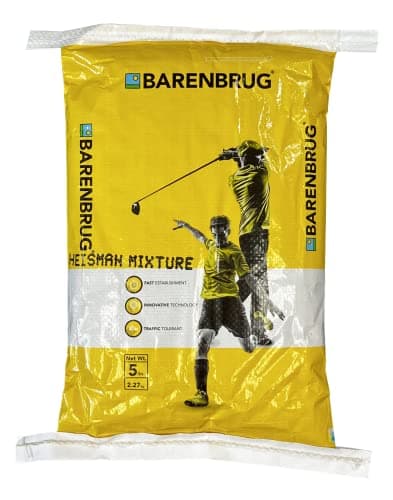
Jacklin Seed by Barenbrug Heisman Kentucky Bluegrass Blend (5 lb)
Certified 85% Kentucky bluegrass / 15% perennial ryegrass blend from a pro sod-grower brand, dense, self-repairing KBG turf; 5 lb full-lawn bag.
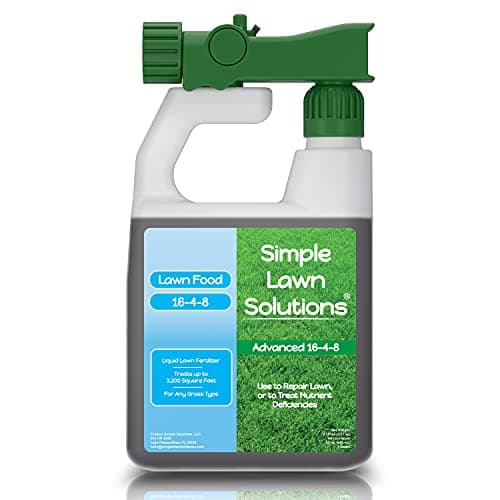
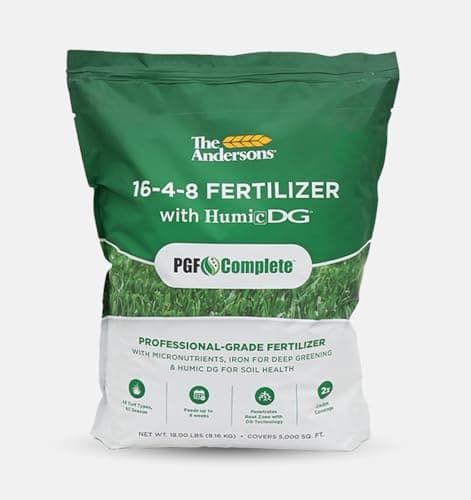
Simple Lawn Solutions Advanced 16-4-8 Liquid Fertilizer
Concentrated liquid fertilizer with balanced 16-4-8 NPK for quick green-up through any hose-end sprayer.
The timing data we track puts Kentucky bluegrass peak growth in March-May and September-November, with winter dormancy from December-February and possible summer dormancy under prolonged heat or drought without irrigation. In Colorado, the fall portion of that growth cycle matters most because the plant is rebuilding roots, rhizomes, and carbohydrate reserves after summer stress.

Why Kentucky Bluegrass Performs Differently in Colorado
Kentucky bluegrass performs differently in Colorado because the grass is cool-season, but Colorado’s climate regularly creates warm-season stress during the middle of the year. Low humidity increases evapotranspiration, which means water leaves the soil and grass blades quickly. Intense sun at elevation adds more stress, especially on south-facing lawns and exposed corners near sidewalks or driveways.
Soil also changes the diagnosis. Many Front Range lawns have alkaline clay soils that compact easily and can limit iron availability. Foothill and mountain properties may have sandy, rocky, or decomposed granite soils that drain fast and hold fewer nutrients. A high altitude lawn fertilizer strategy also has to account for cooler soils, slower microbial activity, and shorter windows for nutrient release, especially when using organic fertilizers.
The Core Nutrients: Nitrogen, Phosphorus, Potassium, and Iron
Nitrogen is the primary nutrient for Kentucky bluegrass color, density, and recovery in Colorado. If the lawn is pale, thin, and slow to recover from traffic, nitrogen may be part of the issue, but confirmation requires looking at irrigation, compaction, and soil test results too. Heavy nitrogen during heat can force top growth when roots are already under stress, so timing matters as much as the product.
Phosphorus supports establishment, but it is often unnecessary on established lawns unless a soil test shows a deficiency. Potassium supports stress tolerance, drought response, and winter hardiness when soil levels are low. Iron is especially useful in high-pH Colorado soils because bluegrass may appear yellow-green even when nitrogen is adequate. Chelated iron is often more useful than basic iron sources in alkaline soil because it remains more available to the plant.
- Purdue Turfgrass Science guidance: phosphorus is rarely needed on established lawns unless a soil test shows a deficiency.
Ideal Annual Nitrogen Range for Colorado Kentucky Bluegrass
The ideal annual nitrogen range for Colorado Kentucky bluegrass is about 2-4 lbs of actual nitrogen per 1,000 sq ft per year for most managed lawns. Our Grass Database recommends 4 lbs of nitrogen per 1,000 sq ft annually for Kentucky Bluegrass, which fits a high-performance, irrigated lawn with regular mowing and recovery needs. Lower-input lawns may perform better at 1.5-2.5 lbs per 1,000 sq ft per year.
Use the higher end only when the lawn has enough water, sun, and mowing support to use that fertility. A heavily shaded, compacted, or under-irrigated lawn will not become dense just because more nitrogen is added. The symptom you’re seeing usually points to one of a few things: nutrient deficiency, watering inconsistency, compaction, disease, or heat stress. Confirm with a soil test and a simple irrigation audit before raising the yearly nitrogen total.
Best Fertilizer Types for Kentucky Bluegrass in Colorado in 2026
The best fertilizer types for Kentucky bluegrass in Colorado in 2026 are slow-release or mixed-release nitrogen fertilizers with low phosphorus, soil-tested potassium, and iron where alkaline soil causes poor color. The goal is controlled feeding, not a sudden flush of growth. A product that feeds evenly for several weeks usually fits Colorado conditions better than a cheap, fast-release fertilizer applied during hot weather.
For homeowners comparing Kentucky bluegrass fertilizer 2026 options, focus on the label, not marketing language. Look for how much nitrogen is slow-release, whether phosphorus is included, whether potassium is justified by a soil test, and whether the label provides clear spreader and watering instructions.
Best Overall Fertilizer Profile
The best overall fertilizer profile for established Kentucky bluegrass in Colorado is a granular, slow-release nitrogen fertilizer with little or no phosphorus and optional potassium and iron. Good N-P-K examples include 20-0-5, 24-0-6, 25-0-10, 28-0-3, or 30-0-4 with iron. These ratios provide nitrogen without automatically adding phosphorus.
A fertilizer with 30-60% slow-release nitrogen is a strong default for late spring and early fall. If the lawn is pale but growing well, iron may improve color without pushing excess blade growth. If a soil test shows low potassium, a 25-0-10 or similar analysis may fit better than a low-potassium product.
Slow-Release vs. Quick-Release Nitrogen
Slow-release nitrogen feeds Kentucky bluegrass more evenly and is usually the safer choice for Colorado’s dry climate. It reduces surge growth, lowers burn risk, and supports steadier color when the grass is actively growing. It is especially useful in late spring, early fall, and for lawns where missed watering could make quick-release fertilizer risky.
Quick-release nitrogen still has a place, especially for targeted spring green-up or late fall feeding when soil is cool but not frozen. The issue is timing. In July heat, quick-release nitrogen can push tender top growth while roots are struggling for water. If the lawn is gray-blue, footprints remain visible, or soil is dry several inches down, delay fertilizer and correct water stress first.
- NC State TurfFiles guidance: slow-release nitrogen sources feed turf more evenly and reduce surge growth compared with quick-release products.
Organic vs. Synthetic Fertilizer for Kentucky Bluegrass
Organic fertilizer for Kentucky bluegrass supports soil biology and organic matter over time, while synthetic fertilizer provides more predictable nutrient delivery. In Colorado, the key tradeoff is release speed. Organic products often depend on microbial activity, so they can work slowly in cool spring soils and high-altitude areas.
Synthetic slow-release fertilizers are easier to calculate when the target is 0.5, 0.75, or 1.0 lb nitrogen per 1,000 sq ft. A hybrid approach often works best: use synthetic or blended slow-release fertilizer for precision, then improve weak soil structure with compost topdressing or organic amendments. Related topics such as Organic vs Synthetic Fertilizers and Composting for a Healthier Lawn are especially relevant for compacted clay or low-organic-matter lawns.
For homeowners who want a slower organic-style nitrogen source, Milorganite Lawn and Garden Nitrogen Fertilizer 6-4-0 can fit low-burn, gradual feeding needs. It is best for lawns where gentle feeding matters more than precise fast correction. Use it according to the label and account for the phosphorus in the 6-4-0 analysis when soil test phosphorus is already high.
Best Fertilizer for New Sod or Seeded Kentucky Bluegrass
The best fertilizer for new Kentucky bluegrass sod or seed is a soil-test-based starter program that avoids excessive nitrogen before roots are established. New seed and sod may need phosphorus, but only when soil testing supports it or local rules allow it. For established lawns, phosphorus should not be treated as automatic.
For seeded Kentucky bluegrass, keep early nitrogen light until seedlings have been mowed several times. Our Grass Database shows Kentucky Bluegrass establishment takes 14-28 days, so early care should focus on consistent moisture and safe establishment rather than aggressive feeding. If you are renovating, related topics such as How to Overseed Kentucky Bluegrass and Best Time to Seed Grass in Colorado become part of the fertilizer decision.
If reseeding thin Kentucky bluegrass areas, Jacklin Seed by Barenbrug Heisman Kentucky Bluegrass Blend (5 lb) fits homeowners who want a Kentucky bluegrass-dominant repair blend with some perennial ryegrass for quicker cover. Fertilizer should still be based on soil test results and seedling stage, not applied heavily at seeding by default.
Colorado Kentucky Bluegrass Fertilizer Schedule
A Colorado Kentucky bluegrass fertilizer schedule should place the strongest feeding in fall, use moderate slow-release nitrogen in late spring, and keep summer applications light or skipped. This pattern matches Kentucky bluegrass growth biology and Colorado stress patterns. It also reduces the risk of pushing growth when irrigation cannot keep up.
The table below gives a practical baseline. Adjust the dates by elevation, local weather, watering rules, and whether the lawn is actively growing.
| Season | Timing | Fertilizer Goal | Suggested Approach |
|---|---|---|---|
| Early Spring | March-April after active growth begins | Light green-up only | Optional 0.25-0.5 lb N per 1,000 sq ft if pale |
| Late Spring | May-early June | Build density before heat | 0.5-0.75 lb N with slow-release nitrogen |
| Summer | July-August | Maintain without forcing growth | 0-0.5 lb N only if irrigated and active |
| Early Fall | September, earlier at elevation | Main recovery feeding | 0.75-1.0 lb N per 1,000 sq ft |
| Late Fall | October-November before ground freezes | Root storage and spring response | 0.5-1.0 lb N, low/no phosphorus |
Need help estimating product amount from your lawn size and nitrogen target? Use the calculator below for general fertilizer math, then match the result to the specific product label.
Loading Fertilizer Calculator...
Early Spring Fertilization: Go Light
Early spring fertilization for Kentucky bluegrass in Colorado should be light and delayed until the lawn is actively growing. A good action trigger is one or two mowings, not the first warm day. Do not fertilize frozen, snow-covered, saturated, or runoff-prone soil.
Use 0.25-0.5 lb actual nitrogen per 1,000 sq ft if the lawn is pale and did not receive a late fall application. Too much early spring nitrogen encourages lush top growth, increases mowing, and can contribute to shallower rooting before summer. If the lawn was fertilized well in late fall, early spring fertilizer may not be needed.
Late Spring Fertilization: Prepare for Summer Stress
Late spring fertilization prepares Colorado Kentucky bluegrass for summer by building density before heat and irrigation stress peak. For many Front Range lawns, this means mid-May to early June. Higher-elevation communities should wait until the grass is consistently growing and soil has warmed.
A typical rate is 0.5-0.75 lb nitrogen per 1,000 sq ft, preferably from slow-release nitrogen. Potassium may help if soil tests show low levels. Pair this feeding with deep, infrequent watering and mowing near the upper end of Kentucky bluegrass tolerance. Our Grass Database shows a Kentucky Bluegrass mowing height range of 2.0-3.5 inches and a minimum mow height of 1.5 inches, but Colorado heat usually favors staying near the taller end rather than scalping.
Summer Fertilization: Usually Less Is Better
Summer fertilization is usually the least important part of a Colorado Kentucky bluegrass fertilizer schedule. Kentucky bluegrass can slow or go dormant in prolonged heat and drought, and fertilizer cannot replace water. If the lawn is drought-dormant, gray-blue, crispy, or not rebounding after footprints, skip nitrogen.
Summer fertilizer may be appropriate when the lawn is irrigated, actively growing, and recovering from traffic. Keep the rate at 0-0.5 lb nitrogen per 1,000 sq ft. Iron-only products may improve color without forcing much growth, which is useful when appearance matters but heat stress is present. Avoid applying fertilizer if irrigation restrictions prevent watering-in according to the label.
Fall Fertilization: The Most Important Window
Fall fertilization is the most important feeding window for Kentucky bluegrass in Colorado because the grass is recovering from summer and storing energy for winter and spring. Early fall, usually September along the Front Range, supports density, rhizome growth, and repair from traffic or heat thinning. At higher elevations, this window may begin in late August depending on frost risk.
Apply 0.75-1.0 lb nitrogen per 1,000 sq ft in early fall when the lawn is actively growing. Late fall feeding can follow after top growth slows but before soil freezes, often October to early November in lower-elevation areas. A late fall rate of 0.5-1.0 lb nitrogen per 1,000 sq ft can improve root storage and spring response. Choose low- or zero-phosphorus fertilizer unless testing shows a need.
- Penn State Extension guidance: cool-season lawns generally need 2-4 lbs of nitrogen per 1,000 sq ft per year, and fall applications usually provide the greatest benefit.
How to Choose the Best Fertilizer Product
The best fertilizer product for Kentucky bluegrass in Colorado is the one that matches your soil test, nitrogen target, irrigation capacity, and application season. This is where many fertilizer decisions go wrong. A product can be excellent in September and a poor choice during a July heat wave.
Start with diagnosis, then buy the product. If the lawn is yellow, confirm whether the cause is nitrogen deficiency, iron chlorosis, drought stress, compaction, or disease. Understanding why this happens helps you prevent it next time instead of applying more fertilizer to a non-fertility problem.
Start With a Soil Test
A soil test is the confirmation step that separates a Colorado-specific fertilizer plan from guesswork. Test every 2-3 years, or before major renovation, sod installation, or overseeding. The most useful results include pH, organic matter, phosphorus, potassium, salinity, iron, texture, and cation exchange capacity if available.
Colorado-specific interpretation matters. High pH is common, which can make iron less available even when iron is present. Phosphorus may already be adequate, especially in established landscapes. Salinity becomes more important in drier regions or where irrigation water quality is questionable. Related topics such as How to Test Your Lawn's Soil and How to Improve Soil pH for Grass fit naturally before making major product changes.
Understand the Fertilizer Label
The fertilizer label tells you whether a product matches Kentucky bluegrass needs in Colorado. N-P-K stands for nitrogen, phosphorus, and potassium. Nitrogen supports growth and color, phosphorus supports establishment and root development, and potassium supports stress tolerance.
Look beyond the three large numbers. Terms such as water-insoluble nitrogen, slow-release nitrogen, sulfur-coated urea, polymer-coated urea, biosolids, urea, and chelated iron tell you how the product behaves. For established Kentucky bluegrass in Colorado, a zero-phosphorus fertilizer is often the best default unless testing says otherwise.
For a quick liquid green-up on an actively growing, irrigated lawn, Simple Lawn Solutions Advanced 16-4-8 Liquid Fertilizer may fit homeowners who need a balanced liquid option through a hose-end sprayer. It is not the best default for phosphorus-restricted or high-phosphorus soils, so compare the label with your soil test first.
Calculate the Right Amount
The right fertilizer amount is based on actual nitrogen per 1,000 sq ft, not bag size. Measure the lawn first, subtract patios and beds, then choose the nitrogen rate for the season. Divide the target nitrogen rate by the fertilizer’s nitrogen percentage to find pounds of product per 1,000 sq ft.
For example, if the goal is 0.75 lb nitrogen per 1,000 sq ft and the fertilizer is 25-0-5, divide 0.75 by 0.25. The result is 3 lbs of product per 1,000 sq ft. For a 5,000 sq ft lawn, that equals 15 lbs of product. Do not increase the amount because the lawn looks thin. Thin turf may indicate shade, compaction, watering gaps, disease, or poor establishment.
Product Selection Checklist for 2026
A strong Kentucky bluegrass fertilizer 2026 checklist starts with controlled nitrogen and ends with label practicality. Look for slow-release or controlled-release nitrogen, low or zero phosphorus for established lawns, potassium when soil tests support it, iron for alkaline-soil color, clear spreader settings, and pet and child re-entry guidance.
Avoid weed-and-feed unless the weed timing and turf condition truly justify it. Also avoid high-phosphorus fertilizer without a test, cheap fast-release nitrogen during hot weather, and products requiring immediate heavy watering when local restrictions prevent it. Best Fertilizers for Lawns can be a useful comparison topic, but Colorado Kentucky bluegrass needs a more precise filter than “all-purpose lawn food.”
Regional and High-Altitude Adjustments
Regional and high-altitude adjustments change fertilizer timing more than they change Kentucky bluegrass nutrient biology. Bluegrass still needs nitrogen during active growth, but active growth begins and ends at different times across Colorado. Soil texture, irrigation limits, and freeze timing determine how aggressive the schedule should be.
Let’s diagnose this step by step: first identify your region, then confirm whether the lawn is actively growing, then match the rate to water availability. If any one of those three pieces is off, even the best fertilizer for Kentucky bluegrass in Colorado can underperform.
Front Range Lawns
Front Range lawns in Denver, Boulder, Fort Collins, Colorado Springs, Loveland, Longmont, Castle Rock, and similar areas usually need fall-focused feeding with careful summer restraint. Common issues include alkaline clay soils, spring snow followed by rapid warming, watering restrictions, compaction, heat, and drought stress.
Prioritize September and late fall feeding. Use slow-release nitrogen in late spring, and avoid heavy summer nitrogen unless the lawn is irrigated and actively growing. If the lawn yellows despite adequate nitrogen, test pH and iron availability before adding more nitrogen.
Foothills and Mountain Communities
Foothill and mountain lawns need delayed spring fertilization, earlier fall decisions, and lighter applications because the growing season is shorter. Cool soils slow nutrient release, especially from organic fertilizers. Late spring in Denver may still feel like early spring at higher elevation.
Delay spring feeding until active growth is visible and mowing has begun. Fall applications may need to happen earlier so the lawn can use the nitrogen before hard freezes. Potassium can be useful for winter hardiness if a soil test shows deficiency, but do not apply it blindly.
Western Slope and Drier Microclimates
Western Slope and drier Colorado microclimates require extra caution with fertilizer salts, irrigation timing, and dormant turf. Heat, alkaline soil, and higher irrigation demand can make aggressive nitrogen programs risky. If irrigation water is limited, fertilizer should be reduced, not increased.
Favor slow-release nitrogen, water in thoroughly according to the label, and avoid fertilizing when the lawn is dormant or irrigation cannot support growth. If soil or irrigation water has elevated salts, choose fertilizer only after reviewing soil and water quality results. A local extension office or soil lab can help verify salinity concerns.
How to Apply Fertilizer Correctly
Correct fertilizer application means applying the calculated amount evenly, on actively growing turf, when water-in and safety directions can be followed. Application errors can cause stripes, burn, runoff, stained concrete, and poor response. The product matters, but distribution often determines the visible result.
Fertilizer works best when the lawn is not under severe stress. If the grass is wilted, drought-dormant, diseased, or sitting in saturated soil, fix the underlying condition first. Fertilizer should support recovery, not substitute for diagnosis.
Pre-Application Checklist
A pre-application checklist prevents most Colorado fertilizer problems before they happen. Mow 1-2 days before applying if the lawn is tall, then confirm the turf is not dormant or drought-stressed. Check the forecast and avoid heavy rain, snowmelt runoff, extreme heat, or high wind.
- Verify the spreader is clean, dry, and calibrated.
- Confirm irrigation is available for watering-in if the label requires it.
- Sweep fertilizer off sidewalks, driveways, streets, and patios.
- Keep pets and children off treated areas until the label’s re-entry period has passed.
- Store leftover fertilizer away from moisture, animals, and children.
Step-by-Step Application Process
The best way to apply granular fertilizer evenly is to measure, split, cross-apply, and water according to the label. First, measure the lawn and calculate the exact product amount. Then divide the fertilizer into two equal portions.
- Apply the first half while walking north-south across the lawn.
- Apply the second half while walking east-west across the same area.
- Keep fertilizer out of rock beds, gutters, streets, and planting beds.
- Use light irrigation if the label requires watering-in.
- Monitor response for 7-21 days, depending on release type and temperature.
If stripes appear, the issue is usually spreader overlap, clogged openings, inconsistent walking speed, or applying the full rate in one direction. Correct the application method before adding more fertilizer.
Pro-Level Application Tips
Pro-level fertilizer application focuses on uniformity and avoiding edge damage. Use a broadcast spreader for larger lawns and a drop spreader near beds, sidewalks, or tight edges. Calibrate on a test area before treating the whole lawn, especially when using a concentrated product.
Reduce overlap to avoid dark stripes or burn. Avoid getting iron products on concrete because staining can occur. Pair fertilizer with proper mowing height. For Colorado lawns, Kentucky bluegrass usually performs better near the taller end of its recommended range during heat, and Best Mowing Height for Kentucky Bluegrass is worth reviewing if scalping or summer browning is common.
Common Mistakes to Avoid
The most common fertilizer mistakes in Colorado come from skipping diagnosis, applying too much nitrogen at the wrong time, and ignoring water or label constraints. Many competitor guides recommend one universal product, but Colorado lawns vary too much for that approach. Soil testing, regional timing, and irrigation capacity change the correct answer.
These mistakes are especially important because the best fertilizer for Kentucky bluegrass in Colorado will still fail if it is applied to dormant grass, compacted soil, or a lawn that cannot be watered in. Product selection and timing have to work together.
Fertilizing Without a Soil Test
Fertilizing without a soil test can lead to unnecessary phosphorus, potassium imbalance, missed salinity problems, or misdiagnosed iron chlorosis. A yellow lawn may be nitrogen deficient, but it may also have high pH, dry soil, compacted roots, or disease pressure. The confirmation step is testing, not guessing.
If the lawn is yellow-green while growth is otherwise normal, high-pH iron chlorosis is possible. Confirm with soil pH and iron data. If the lawn is thin and weak in traffic areas, compaction or irrigation inconsistency may be the primary issue. Confirm with a screwdriver test and irrigation catch-cup test before adding more nitrogen.
Applying Too Much Nitrogen at the Wrong Time
Applying too much nitrogen at the wrong time causes growth problems even when the fertilizer is high quality. Heavy early spring feeding can increase mowing and reduce root emphasis. Heavy July feeding can push growth during heat stress. Feeding drought-dormant bluegrass wastes product and can increase injury risk.
High-elevation lawns have a different mistake: waiting too late in fall. If hard freezes arrive before the grass can use the fertilizer, the application loses value. Adjust fall applications earlier in foothills and mountain communities, and base the final feeding on active growth and unfrozen soil.
Ignoring Watering, Pet Safety, and Label Directions
Ignoring water, pet safety, and label directions turns a good fertilizer choice into a poor application. Fertilizer often needs light irrigation to move nutrients off the blade and into the soil. If watering restrictions prevent that, delay the application or choose a product and timing that fit local rules.
Do not apply before runoff-producing storms. Keep pets and children off treated areas until the label says re-entry is safe. Do not guess spreader settings, especially with concentrated 2026 fertilizer blends. If label directions conflict with a general schedule, follow the label.
Conclusion
The best fertilizer for Kentucky bluegrass in Colorado in 2026 is usually a slow-release, low-phosphorus nitrogen fertilizer with potassium and iron added only when soil test results support them. The correct schedule is light in spring, controlled in late spring, minimal in summer, and strongest in early fall plus late fall.
Soil test first, prioritize September, avoid heavy nitrogen during heat or drought, and adjust timing for elevation, region, soil type, and irrigation access. Look for fertilizers with slow-release nitrogen, low or zero phosphorus, clear spreader settings, and label directions that fit your watering rules. Then build your Colorado Kentucky bluegrass fertilizer schedule around your soil test, lawn square footage, elevation, and watering plan.
Top Picks

As an Amazon Associate we earn from qualifying purchases.
Free Lawn Care Tools
The best fertilizer is usually a slow-release or mixed-release nitrogen fertilizer with low or zero phosphorus. Add potassium or iron only when a soil test shows a need, especially in Colorado’s alkaline soils.
Fertilize lightly in early spring only after active growth begins, apply a moderate slow-release feeding in late spring, and make September the main feeding window. A late fall application can be made before the ground freezes if the lawn is still able to use it.
Most Colorado Kentucky bluegrass lawns need about 2-4 lbs of actual nitrogen per 1,000 sq ft per year. Lower-input lawns may stay closer to 1.5-2.5 lbs, while irrigated high-performance lawns may use 3-4 lbs.
You can fertilize in July only if the lawn is irrigated, actively growing, and not heat- or drought-stressed. Keep the rate light at 0-0.5 lb nitrogen per 1,000 sq ft, or use iron for color instead of pushing growth.
Established lawns often do not need phosphorus unless a soil test shows a deficiency. Unneeded phosphorus wastes product and can contribute to runoff concerns, so zero-phosphorus fertilizer is often the better default.
Quick-release fertilizer may show color response in about 7-10 days under good growing conditions. Slow-release fertilizer often responds more gradually over 2-3 weeks, especially in cool soil or high-altitude areas.
Photos: Alexander Grey / Unsplash, Alexas_Fotos / Pixabay, PublicDomainPictures / Pixabay

Beat weeds and brown spots from your phone
Snap a photo, get the fix, and follow a plan timed to your soil and weather. Free on iPhone.