Best Fertilizer for Tall Fescue (2026 Guide)
 Sarah MitchellLawn Diagnostics Specialist | 12 Years
As an Amazon Associate we earn from qualifying purchases.
The best fertilizer for tall fescue is a slow-release, nitrogen-heavy blend such as 16-4-8 or 12-4-8, applied mostly in fall, for a total of about 3 to 4 pounds of nitrogen per 1,000 square feet per year. A balanced slow-release granular like The Andersons PGF Complete 16-4-8 covers most lawns, while an organic option like Milorganite 6-4-0 feeds gently without burn. The single most important thing to get right is timing: unlike warm-season grasses, tall fescue wants the bulk of its food in fall, very little in spring, and almost none in summer.
Tall fescue is a cool-season bunch grass, which means it grows in clumps rather than spreading by runners. It greens up early, holds color into late fall, and pushes its deepest roots when soil temperatures are mild. Feed it on that rhythm and you get a dense, dark green lawn with excellent drought tolerance. Feed it on the wrong calendar, especially heavy nitrogen in summer heat, and you invite brown patch disease, thatch, and wasted money.
Recommended products
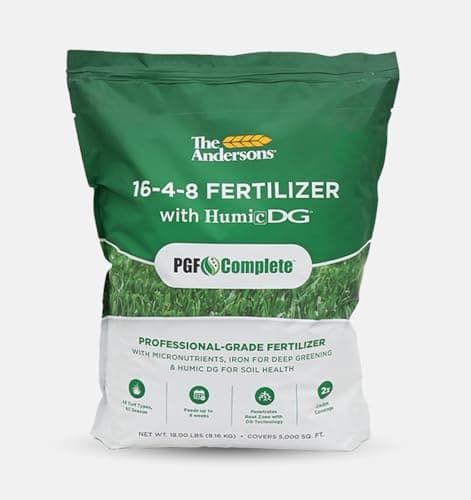
The Andersons PGF Complete 16-4-8
Professional-grade slow-release with humic acid and a super-fine particle that spreads evenly.
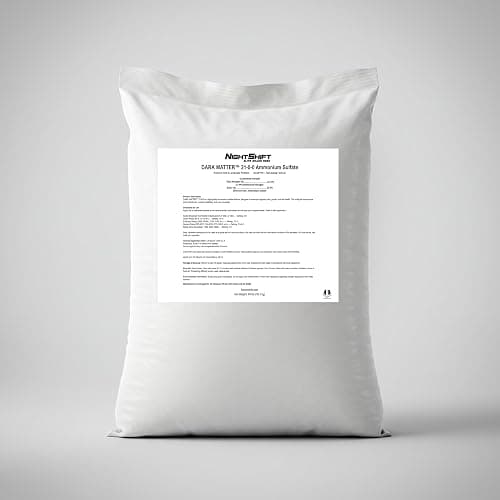
Dark Matter 21-0-0 Ammonium Sulfate
A fast-acting, high-nitrogen source for the heavy fall feeding window when tall fescue can use the most food.
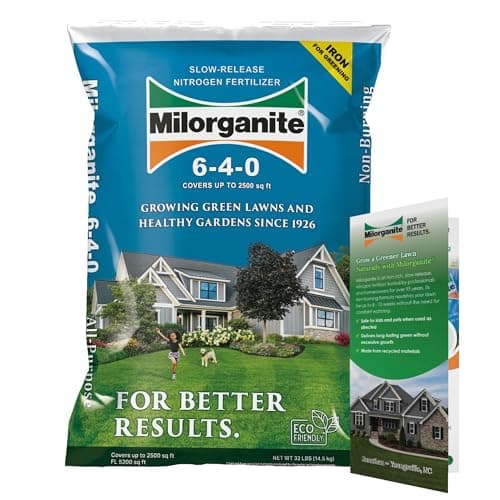
Milorganite 6-4-0 Slow-Release
A gentle, slow-release organic that will not burn, adds a little iron for color, and is a clean fit for a low-maintenance fescue lawn.
This guide covers three things. First, how tall fescue actually uses nutrients and why its feeding schedule is the reverse of warm-season grasses. Second, how to choose the right product and NPK ratio for your soil and goals. Third, a season-by-season schedule, plus how to handle the overseeding that every thinning fescue lawn eventually needs. Want the math done for you? Our fertilizer calculator turns any bag's NPK and your lawn size into an exact application rate.
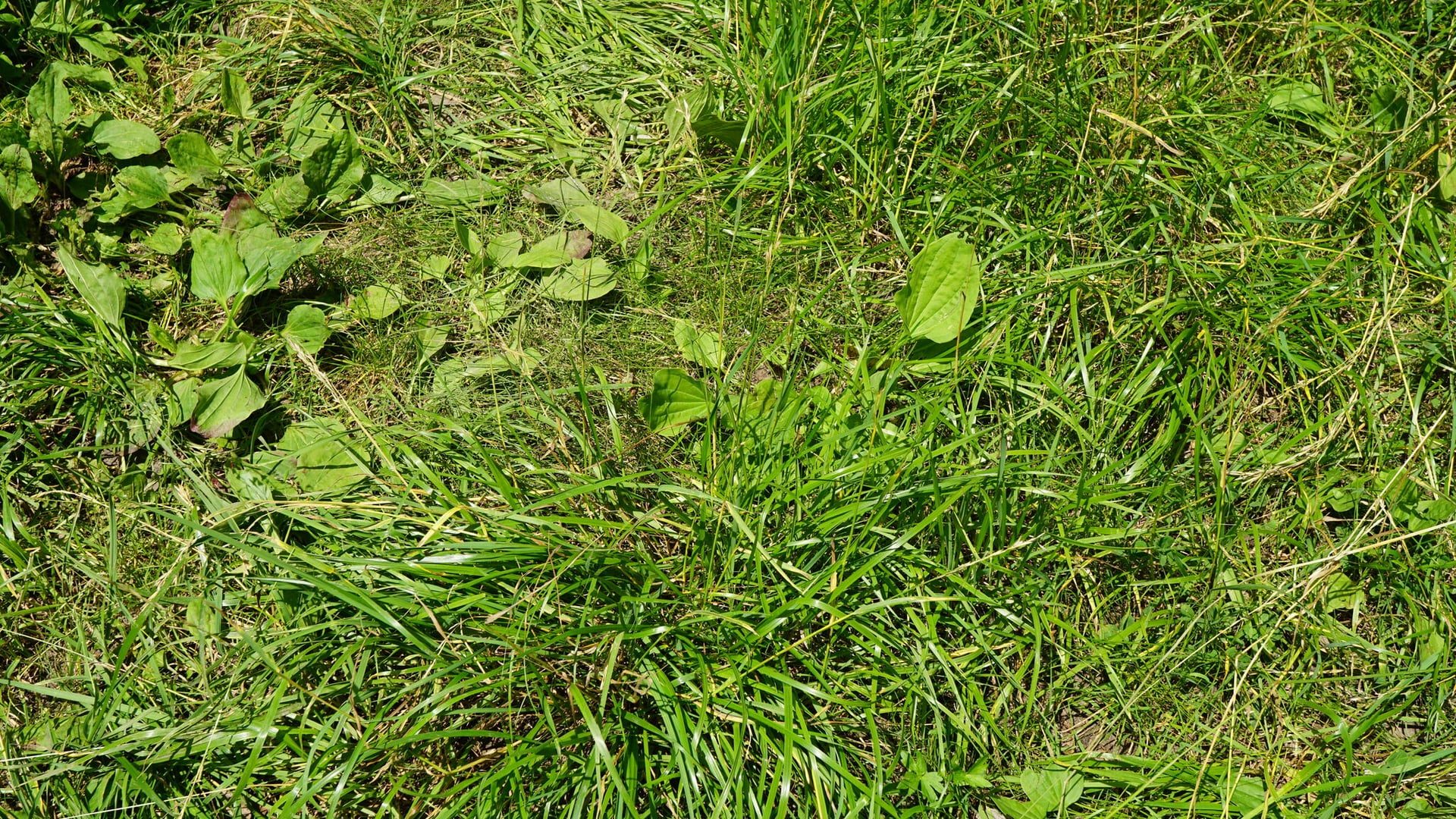
If your tall fescue looks pale, thin, or patchy, the most common causes are low nitrogen, summer heat stress, or a thinning bunch-grass stand that needs overseeding rather than just more fertilizer. Confirm with a soil test and by checking how long it has been since your last feeding.
The safest fix during the growing season is a balanced slow-release granular in the 16-4-8 range at about 0.75 to 1.0 pound of nitrogen per 1,000 square feet, watered in lightly. Save your heaviest feeding for fall, hold off almost entirely in the heat of summer, and plan to overseed thin areas in early fall when soil is still warm but air is cooling. Expect deeper color within 1 to 2 weeks of a feeding when temperatures are in the cool-season sweet spot.
Understanding Tall Fescue's Nutrient Needs
What Makes Tall Fescue Different
Tall fescue is a cool-season grass, so its growth follows soil temperature in the opposite pattern from Bermuda, zoysia, or centipede. It is most active in spring and fall when soils sit roughly between 50 and 75 degrees Fahrenheit, and it slows or struggles in the heat of midsummer. That single fact drives the entire fertilizer schedule: you feed when the grass is growing and rooting, which for tall fescue means fall first, spring second, and summer almost never.
It is also a bunch grass. Unlike Kentucky bluegrass, which knits itself together with underground rhizomes, tall fescue grows in individual clumps and does not fill bare spots on its own. Over time, traffic, disease, and heat thin the stand, and the only real fix is overseeding. No amount of nitrogen makes a bunch grass spread sideways, so a good tall fescue program pairs feeding with periodic overseeding rather than expecting the lawn to self-repair.
The payoff is roots. A healthy tall fescue plant can root 12 to 18 inches deep, far deeper than most cool-season grasses, which is why it handles drought and heat better than bluegrass or ryegrass once established. Fertilizer that builds those roots, applied in fall, is what makes the difference between a fescue lawn that survives summer and one that thins out every July.
The Three Numbers, for Tall Fescue
Nitrogen (N) drives color and growth and is the nutrient tall fescue needs most. A healthy stand wants roughly 3 to 4 pounds of nitrogen per 1,000 square feet per year, with most of it delivered in fall. Too little leaves the lawn pale and thin; too much, especially fast-release nitrogen in summer heat, fuels brown patch disease and excess top growth.
Phosphorus (P) supports root development and is most important when establishing new seed. Many lawns already have enough, and a number of states restrict phosphorus on established turf, so the middle number is often low or zero unless a soil test or a new overseeding says otherwise.
Potassium (K) builds stress tolerance, helping tall fescue handle heat, drought, and disease pressure through summer. Because tall fescue has to survive a hot dormant-ish stretch that warm-season grasses are built for, steady potassium matters. Ratios with meaningful K, such as 16-4-8 or 20-0-10, are a good fit.
Iron is the quiet helper. When you want deeper green in summer without pushing growth or risking disease, a foliar iron application darkens the lawn in a few days without adding the nitrogen that summer heat makes risky.
Start With a Soil Test

Soil testing is the step most homeowners skip and the reason many fertilizer programs underperform. Without a test you are guessing on phosphorus, potassium, and pH, and two neighboring lawns can test completely differently. Tall fescue prefers a pH between about 6.0 and 7.0; below 5.8, nutrients (especially phosphorus) become less available, and you can pour on fertilizer and still see a mediocre lawn.
A basic test tells you three things that change your product choice: your pH (and whether you need lime or sulfur), your phosphorus and potassium levels (and therefore whether to use a 16-4-8, a zero-phosphorus 20-0-10, or a starter), and your organic matter. If potassium is low, a higher-K product moves up your list. If phosphorus is already high, choose a zero-middle-number fertilizer to stay compliant and avoid runoff.
- NC State Extension's tall fescue maintenance calendar recommends a complete N-P-K turf fertilizer in a 3-1-2 or 4-1-2 ratio (for example 12-4-8 or 16-4-8) when a soil test is not available, with nitrogen concentrated in the fall.
Types of Fertilizer for Tall Fescue
Slow-Release vs Quick-Release Nitrogen
This choice matters more than the brand on the bag. Slow-release sources (sulfur- or polymer-coated urea, methylene urea, and organics) feed steadily over 6 to 12 weeks, reduce burn risk, and are the safer choice through warm weather. Quick-release sources (urea, ammonium sulfate) green up the lawn in days but feed for only a few weeks and burn easily if overapplied. For tall fescue, a fertilizer with at least 30 to 50 percent slow-release nitrogen is ideal for most of the year, with a quick-release product reserved for the cool fall window when you want a strong, safe push of growth and rooting.
Granular vs Liquid
Most homeowners build their program around granular fertilizer because it is easy to spread evenly with a broadcast spreader and delivers a predictable amount of nitrogen over weeks. Liquids shine for quick color, micronutrients like iron, and light summer touch-ups where you want a little color without the growth surge that a full granular feeding would cause. Many fescue owners run granular for the core fall and spring feedings and keep a liquid iron product on hand for summer.
Organic and Hybrid Options
Organic fertilizers such as Milorganite (6-4-0) or Down to Earth Bio-Turf (8-3-5) release nitrogen slowly through soil microbes, will not burn, and build soil over time. Their nitrogen percentage is lower, so you apply more product to hit the same rate, and response is slower in cool weather. They are an excellent fit for a low-input fescue lawn or as part of a hybrid program that pairs an organic base with a synthetic fall push.
The Best Tall Fescue Fertilizers for 2026
The table below covers the products that fit a tall fescue program across the year. Match the choice to your soil test and the season: a balanced slow-release for spring and the main fall feeding, a high-nitrogen source for the heavy fall push, an organic for gentle feeding, and a starter when you overseed.
| Product | NPK | Type | Best For | Coverage | Price Range | Buy |
|---|---|---|---|---|---|---|
| The Andersons PGF Complete | 16-4-8 | Granular, slow-release | All-purpose spring & fall base | 5,000 sq ft | $55–60 | Buy Direct from Andersons |
| Dark Matter 21-0-0 Ammonium Sulfate | 21-0-0 | Granular, quick-release | Heavy fall nitrogen push | 13,000 sq ft | $55–65 | Check on Amazon |
| Milorganite Slow-Release | 6-4-0 | Granular, organic | Gentle, no-burn feeding | 2,500 sq ft | $15–35 | Check on Amazon |
| Down to Earth Bio-Turf | 8-3-5 | Granular, OMRI organic | Organic program, added potassium | 1,000 sq ft | $20–25 | Check on Amazon |
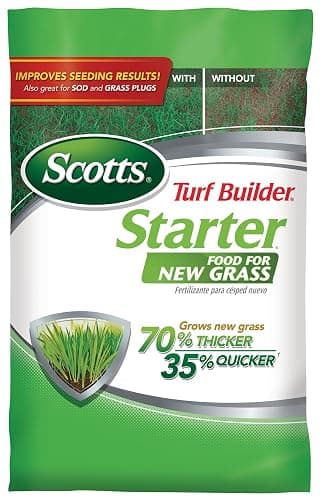
| Scotts Turf Builder Starter Food | Starter (high P) | Granular, starter | Overseeding & new seed | 5,000 sq ft | $25–35 | Check on Amazon |
Prices are approximate and vary by retailer. Always confirm the bag is labeled for cool-season lawns and translate the NPK into pounds of nitrogen per 1,000 square feet before applying.
How to Choose the Right NPK Ratio
For an established tall fescue lawn with a soil test in hand, use this simple framework:
- Balanced needs, or no soil test: a 3-1-2 or 4-1-2 ratio such as 16-4-8 or 12-4-8. This is the safe default and what most extension calendars recommend.
- Phosphorus already adequate or high: a zero-phosphorus, high-K product such as 20-0-10 or a high-N source like 21-0-0 for the fall push. This keeps you compliant with phosphorus rules and avoids runoff.
- Establishing or overseeding: a starter fertilizer with higher phosphorus to drive root growth in the first few weeks, then switch back to your normal program.
Whatever the ratio, the rate per application matters more than the exact numbers. Keep each feeding to about 0.5 to 1.0 pound of nitrogen per 1,000 square feet, and never dump 1.5 pounds in a single shot, which spikes growth and disease risk. Our fertilizer calculator does the conversion for any bag.
When and How to Fertilize: The Fall-First Calendar
This is where tall fescue differs most from warm-season grasses. Track soil temperature rather than the calendar, and weight your nitrogen heavily toward fall.
Fall: The Main Event (50 to 60 percent of annual nitrogen)
Fall is the single most important time to feed tall fescue. As summer heat breaks and soils cool back into the 60s and 70s, the grass shifts energy into roots and tillering. Apply your largest feedings from early September through October, often two applications of about 0.75 to 1.0 pound of nitrogen each, with the final feeding while the grass is still actively growing. This fall feeding builds the deep roots and dense crown that carry the lawn through the next summer.
Spring: A Light Touch (20 to 30 percent)
When tall fescue greens up and soil at 4 inches holds steadily above about 50 degrees, a single light feeding of around 0.5 to 0.75 pound of nitrogen wakes it up without forcing the lush, soft growth that struggles in the coming heat. Resist the urge to load nitrogen in spring; a fescue lawn pushed hard in April is a fescue lawn that thins in July.
Summer: Mostly Hands Off
Through the heat of summer, hold off on nitrogen almost entirely. Tall fescue is already under heat and drought stress, and feeding nitrogen now fuels brown patch disease (Rhizoctonia), which thrives in hot, humid conditions on lush growth. If the lawn looks pale and you want color, use a foliar iron product rather than nitrogen, and focus your effort on deep, infrequent watering and proper mowing height.
Late Fall / Early Winter: Optional Finish
In many regions a light late-season feeding before the ground gets cold helps roots keep working and improves spring green-up, since tall fescue roots stay active in cool soil. Keep it modest and skip it if you have already hit your annual nitrogen target.
How to Apply It
- Measure your lawn in square feet so you can calculate the right amount of product.
- Calculate product needed: divide your target nitrogen rate by the bag's nitrogen percentage (as a decimal). For 0.75 pound of N from a 16-4-8, that is 0.75 / 0.16, or about 4.7 pounds of product per 1,000 square feet.
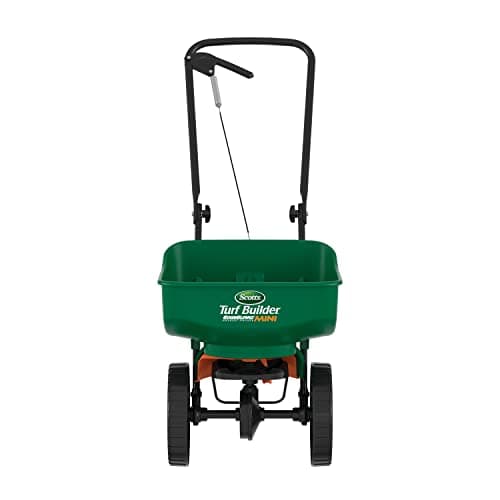
- Calibrate your spreader and apply half the product in one direction, the other half perpendicular, for even coverage.
- Sweep granules off hard surfaces back onto the lawn and water lightly to move the fertilizer into the soil.
- University turf programs across the transition zone and cool-season regions consistently recommend that the majority of a tall fescue lawn's nitrogen be applied in fall, with little to none during summer heat, to limit disease and build root depth.
Overseeding and Reviving a Thin Tall Fescue Lawn
Because tall fescue is a bunch grass that does not spread to fill gaps, overseeding is part of normal maintenance, not a sign of failure. The best window is early fall, when soil is still warm enough for fast germination but air is cooling, which is also when you are doing your heaviest feeding anyway.
When you overseed, switch from your regular fertilizer to a starter fertilizer with higher phosphorus, which drives root development in new seedlings. Apply it at seeding, keep the seedbed consistently moist, and hold off on heavy nitrogen or any weed-and-feed until the new grass has been mowed two or three times. Pairing an early-fall overseeding with your fall feeding is the single most effective way to keep a tall fescue lawn thick year after year. For a deeper look at the disease that most often thins these lawns, see our guide to brown patch in fescue.
Common Mistakes to Avoid
Feeding Heavily in Spring or Summer
The most common tall fescue mistake is loading nitrogen in spring or pushing it through summer. Both fuel soft growth that is vulnerable to heat and brown patch. Shift the bulk of your feeding to fall and your lawn will be denser and far more disease resistant.
Treating a Thinning Lawn With More Nitrogen
If your fescue is thinning, more fertilizer is rarely the answer, because a bunch grass cannot spread into bare spots. Overseed in early fall instead, and feed to support the new and existing plants.
Skipping the Soil Test and Overdoing Phosphorus
Applying a high-phosphorus product every year, on a lawn that already tests high, wastes money, can violate local rules, and contributes to water-quality problems. Use phosphorus when establishing or overseeding, or when a soil test calls for it, and otherwise lean on low- or zero-phosphorus products.
The Bottom Line
The best fertilizer for tall fescue is a slow-release, nitrogen-forward blend like 16-4-8, applied on a fall-first schedule that totals about 3 to 4 pounds of nitrogen per 1,000 square feet per year. Start with a soil test, feed lightly in spring, hold off in summer, and make fall your main event, pairing it with an early-fall overseeding to keep this bunch grass thick. Get the timing right and tall fescue rewards you with one of the most drought-tolerant, deep-rooted cool-season lawns you can grow.
Related Guides
Free Lawn Care Tools
The best fertilizer for tall fescue is a slow-release, nitrogen-heavy blend with a 3-1-2 or 4-1-2 ratio, such as 16-4-8 or 12-4-8. The Andersons PGF Complete 16-4-8 is a strong all-purpose choice, while Milorganite 6-4-0 is a good gentle organic option. Whatever you pick, apply most of it in fall, aim for about 3 to 4 pounds of nitrogen per 1,000 square feet per year, and match the phosphorus and potassium to a soil test.
Fertilize tall fescue mainly in fall, which is when this cool-season grass builds roots and density. Apply your heaviest feedings from early September through October, add one light feeding in spring once soil holds above about 50 degrees, and avoid nitrogen during the heat of summer. A modest late-fall feeding before the ground gets cold is optional and helps spring green-up.
Yes. Fall is the single most important time to fertilize tall fescue, and it should receive 50 to 60 percent of the lawn's annual nitrogen. As summer heat breaks, the grass shifts energy into roots and new tillers, so fall feeding builds the deep roots and dense crown that carry the lawn through the next summer. Aim for one or two fall applications of about 0.75 to 1.0 pound of nitrogen each.
A healthy tall fescue lawn wants about 3 to 4 pounds of nitrogen per 1,000 square feet per year, with most of it applied in fall. Keep each single application to roughly 0.5 to 1.0 pound of nitrogen to avoid burning the lawn or fueling disease. Translate any bag's nitrogen percentage into pounds of N per 1,000 square feet so you can hit that target precisely.
It is best to avoid nitrogen fertilizer on tall fescue during the heat of summer. The grass is already under heat and drought stress, and feeding nitrogen fuels brown patch disease, which thrives on lush growth in hot, humid weather. If you want more color in summer, use a foliar iron product instead of nitrogen, and focus on deep watering and mowing high.
Yes, 16-4-8 is one of the most widely recommended ratios for tall fescue. It matches the 4-1-2 ratio extension programs suggest: enough nitrogen to drive color and density, a little phosphorus for roots, and potassium for heat and drought tolerance. A slow-release 16-4-8 such as The Andersons PGF Complete works well for both the spring and the main fall feedings.
No. Tall fescue is a bunch grass that grows in clumps and does not spread by runners the way Kentucky bluegrass or Bermuda does, so it cannot fill bare spots on its own. The fix for a thinning tall fescue lawn is overseeding, ideally in early fall, paired with a starter fertilizer. More nitrogen alone will not make a bunch grass spread sideways.

Your lawn plan, in your pocket all season
Grass ID, a season plan, soil-timed reminders, and a lawn journal that remembers what you did. Free on iPhone.
Related Articles
 Fertilizing
Andersons PGF Complete 16-4-8 Application Guide: Rate, Schedule + Results
Jul 8, 2026•11 min read Fertilizing
Simple Lawn Solutions 16-4-8 Review: Results, Rate, and How to Apply (2026)
Jun 27, 2026•2 min read Fertilizing
Best Fertilizer for Bermuda Grass in Tennessee (2026)
Jul 18, 2026•8 min read