Transition Zone Lawn Care: Best Grass Types and a Month-by-Month Schedule
 Marcus GreenTurf Management Pro | 18 Years
As an Amazon Associate we earn from qualifying purchases.
If you garden anywhere across Kentucky, Tennessee, the Carolinas, Virginia, Maryland, or the wider mid-Atlantic, you already know the frustration. Your cool-season fescue looks gorgeous in April, then melts in the August heat. Or your neighbor's bermuda is lush all summer and then sits brown and crunchy from October through April. Neither grass feels fully at home, and that is exactly the problem. You are not doing anything wrong. You are gardening in the hardest lawn climate in the country.
Transition zone lawn care means picking a grass that can take both summer heat and winter cold, then timing your maintenance around that grass instead of fighting the calendar. For most yards, turf-type tall fescue is the safest all-rounder because it stays green nearly year-round and tolerates more heat than other cool-season grasses. If your lot is full sun and you want zero winter watering, a cold-hardy warm-season grass like zoysia or bermuda is the better bet, accepting that it goes tan from late fall into spring.
The core rule: cool-season grasses get their heavy feeding and seeding in fall, warm-season grasses get theirs in late spring and summer. Once you know which camp your lawn falls in, the month-by-month calendar below tells you what to do and when. Doing the right task at the wrong time is the single most common reason transition zone lawns struggle.
Why the transition zone is so hard on grass
Turf grasses split into two families. Cool-season grasses (fescue, bluegrass, ryegrass) evolved for northern climates and grow hardest in spring and fall, then suffer in summer heat. Warm-season grasses (bermuda, zoysia, centipede, St. Augustine) evolved for the South, thrive in summer, and go dormant and brown once nights turn cold. The transition zone is the band where summers get too hot for cool-season grass to stay comfortable and winters get too cold for warm-season grass to stay green. Both families can survive here, but neither one cruises through the year the way it would in its home turf.
That is the whole dilemma in one sentence. You are not choosing a grass that will be perfect. You are choosing which compromise you can live with: a green-most-of-the-year lawn that needs help surviving summer, or a heat-proof lawn that sits dormant and tan for several months. If you want the deeper science on these two families, I walk through it in the cool-season versus warm-season grass guide. This post is the climate-band care plan that sits on top of that decision.
Best grass for the transition zone, compared
Here is how the realistic options stack up for an in-between climate. There is no single winner, but there is usually a best fit for your specific lot, sun exposure, and tolerance for winter color.
| Grass | Family | Winter color | Summer heat | Best transition-zone fit |
|---|---|---|---|---|
| Turf-type tall fescue | Cool-season | Stays green | Good for a cool-season grass | The default pick for most yards; sun to part shade |
| Kentucky bluegrass | Cool-season | Stays green | Weaker than fescue | Usually blended into fescue for self-repair, not solo |
| Perennial ryegrass | Cool-season | Stays green | Weak alone | A small blend partner for fast germination |
| Zoysiagrass | Warm-season | Tan when dormant | Excellent | Dense, cold-hardiest warm-season; full sun lawns |
| Bermudagrass | Warm-season | Tan when dormant | Excellent | Full sun, high traffic, fastest to recover |
For the majority of transition zone homeowners I have worked with, turf-type tall fescue is the answer. It keeps color through winter, its deep roots help it ride out summer better than bluegrass or ryegrass, and it handles the part-shade that most suburban lots actually have. If you want the full breakdown on establishing and caring for it, the tall fescue guide is the pillar reference. If your lot is wide-open full sun, no shade, and you would rather have a heat-proof lawn than dodge summer disease, the warm-season route is legitimate. The honest head-to-head on the most common version of this choice lives in the fescue versus bermuda comparison.
The shade factor most people skip
Warm-season grasses are sun-hungry. Bermuda especially thins out fast in anything more than light shade. If you have mature trees, a north-facing yard, or a house that throws long afternoon shadows, that quietly removes bermuda and most warm-season options from your list and pushes you toward fescue. Walk your yard at noon and again at 4 p.m. before you commit. Sun exposure decides more transition zone lawns than the grass label on the bag does.
Recommended products
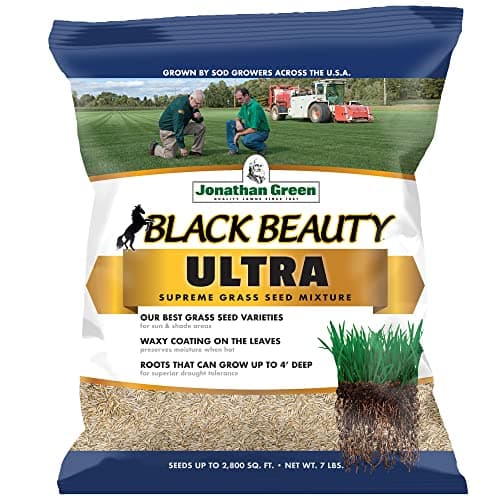
Jonathan Green Black Beauty Ultra Grass Seed
A deep-rooted tall fescue blend, the usual cool-season answer on the northern half of the transition zone.
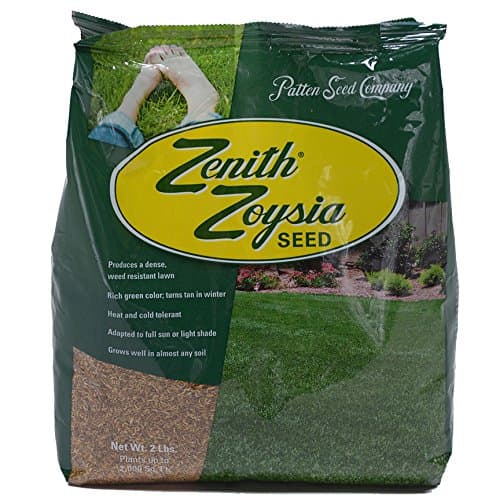
Zenith Zoysia Grass Seed
A cold-hardy zoysia seed for lawns willing to trade winter color for summer durability.

Outsidepride Maya Bermuda Grass Seed
An improved bermuda seed for the southern edge of the zone where summer heat wins.
Your transition zone lawn calendar, month by month
This is the part that actually moves the needle. The same month asks completely different things of a cool-season lawn versus a warm-season lawn, because their growth peaks are six months apart. Find your grass family in the columns below and follow that track. Do not blend the two tracks, because that is how people end up fertilizing dormant grass or seeding into summer heat.
| Month | Cool-season lawns (fescue, bluegrass) | Warm-season lawns (bermuda, zoysia) |
|---|---|---|
| January | Rest. Keep leaves and debris cleared so the canopy can breathe. | Fully dormant. Stay off frozen turf to avoid crown damage. |
| February | Plan ahead; sharpen the mower blade and soil test. | Still dormant. Last chance to plan pre-emergent timing. |
| March | Light cleanup; apply spring pre-emergent as soil warms. | Apply pre-emergent before green-up. Hold off on nitrogen. |
| April | Peak growth begins; mow regularly, spot-treat weeds. | Green-up starts. Begin mowing as color returns. |
| May | Last light feeding before heat; raise mowing height. | Growth ramps up; begin the main feeding window. |
| June | Survival mode. Water deeply, mow tall, do not fertilize hard. | Peak season. Feed, mow frequently, address summer weeds. |
| July | Watch for disease and heat stress; deep infrequent watering. | Peak growth continues; this is warm-season prime time. |
| August | Keep it alive; plan the fall renovation now. | Strong growth; final heavy feeding window opens. |
| September | Prime time. Aerate, overseed, and start fall feeding. | Begin tapering nitrogen; growth slows as nights cool. |
| October | Heaviest feeding of the year; keep mowing while it grows. | Stop feeding; dormancy approaches. Final mow shorter. |
| November | Final fall feeding; final mow; leaf management. | Going dormant and tan. Apply winterizing only if advised. |
| December | Winding down; keep debris off the lawn. | Dormant. No inputs needed. |
Notice the mirror image. Cool-season lawns earn their keep in fall, with aeration, overseeding, and the year's biggest feeding all stacked into September through November. Warm-season lawns flip that, doing their building and feeding from May through August. If you want a more general framework you can adapt, the monthly lawn care calendar covers the universal version, and the best cool-season grass for northern lawns post goes deeper on the fescue and bluegrass side if you lean that way.
The four moves that make or break a transition zone lawn
1. Seed and feed cool-season grass in fall, not spring
This is the one I correct most often. Spring feels like the natural time to fix a thin fescue lawn, but spring seedlings get cooked by their first summer before their roots are deep enough to survive. Fall planting gives roots a full cool season to establish before heat arrives. For a cool-season transition zone lawn, fall is the renovation season. Spring is for light touch-ups only.
2. Mow tall, especially through summer
Taller grass shades its own soil, keeps roots cooler, and crowds out weeds. For tall fescue through the heat, the higher end of the mowing range pays off every time. Scalping a cool-season lawn in June is asking for brown patches and crabgrass. Warm-season grasses tolerate and even prefer a shorter cut, which is one more reason not to mix the two playbooks.
3. Water deep and infrequent, not light and daily
Shallow daily watering trains roots to stay near the surface, exactly where summer heat does the most damage. A deep soak a couple of times a week pushes roots down and builds drought resilience. Early morning is the right time so blades dry before the disease-friendly heat of midday.
4. Match every input to your grass's growth peak
Fertilizer fuels growth. Feeding a dormant or heat-stressed lawn does not help it, and can feed weeds or disease instead. The whole point of the calendar above is to land your nitrogen during the window when your specific grass is actively building. If you are unsure whether a brown patch is dormancy, drought, disease, or a grub problem, that is exactly the moment to run a quick photo diagnosis before you reach for a product. Treating the wrong cause is how a small problem becomes a renovation.
- Soil pH for most transition zone turf usually sits best in the low-to-mid 6 range. A soil test from your county office is the only way to know yours and what amendment, if any, it needs.
- Spring pre-emergent for crabgrass is generally timed to soil temperatures in the mid-50s Fahrenheit, which varies by year and location. Your local extension can confirm the window for your county.
- Annual nitrogen totals for cool-season versus warm-season lawns differ widely and are split across multiple feedings, not dumped at once. Ask your extension for the recommended yearly range and split for your grass.
- Grass variety recommendations are region-specific. Your state's cooperative extension publishes turf variety lists vetted for local heat, cold, and disease pressure. Start there before buying seed.
What other guides miss about the transition zone
Most transition zone articles hand you a grass list and a generic calendar and call it done. Here is the angle they skip: the transition zone is not one climate, it is a gradient, and your position inside it should change your strategy. The northern edge, think Maryland and northern Virginia, behaves much more like a cool-season region, and fescue cruises there. The southern edge, like middle Tennessee and the Carolina midlands, leans warm-season, and bermuda or zoysia start to make more sense. The same advice does not fit both ends of the band.
The second thing they miss is that your specific microclimate can override the map entirely. A shaded, north-facing lot in the warm southern edge of the zone may still want fescue because the trees keep it cooler than its zip code suggests. A south-facing, full-sun slope in the cooler northern edge may bake hot enough to favor zoysia. The grass does not read the map. It responds to the heat, light, and drainage of the actual ground it sits in. That is why I push people to assess their own yard, sun exposure, and existing grass before copying a regional template. A diagnosis of what you currently have, and how it is actually performing, beats any generic zone recommendation.
The third miss is the all-or-nothing framing. You do not have to commit your whole property to one grass. Plenty of transition zone yards run fescue in the shaded front and a warm-season grass in the blazing back, each managed on its own track. It is more work to run two calendars, but it can give you the best-performing lawn in each zone instead of a compromise everywhere.
How a personalized plan removes the guesswork
Everything above is the framework. The hard part is translating it into the exact weeks that apply to your address, because the transition zone shifts the timing by several weeks from its northern edge to its southern edge, and from one year's weather to the next. That is the gap a personalized care plan fills. Instead of a generic table, a 12-month plan built around your zip code and confirmed grass type tells you the actual week to apply pre-emergent, the week to start fall overseeding, and the week to make each feeding, all dialed to your local conditions. For a climate this unforgiving on timing, knowing the precise week instead of the rough month is the difference between a lawn that survives the swings and one that limps through them.
The starting point is always the same: know exactly what you are growing and how it is doing right now. Upload a photo for a free AI diagnosis, confirm your grass type and any active problems, and from there you can build out the month-by-month plan that turns this general calendar into your specific to-do list.
Your transition zone action plan
- Identify what you are actually growing. Confirm whether your lawn is cool-season or warm-season, since every decision below depends on it.
- Walk your yard at noon and late afternoon and map your real sun and shade. Sun exposure decides your grass more than the map does.
- Pick your track. Fescue for green-most-of-the-year and part shade, or a cold-hardy warm-season grass for full sun and heat-proof summers.
- Get a soil test from your county extension and correct pH before you invest in seed or fertilizer.
- Follow the column in the calendar that matches your grass family, and resist the urge to borrow tasks from the other column.
- Do cool-season renovation in fall and warm-season building in late spring and summer. Right task, right window.
- Mow tall, water deep and infrequent, and feed only during your grass's active growth peak.
- When something looks off, diagnose the cause before treating it, then layer a personalized 12-month plan on top to lock in the exact weeks for your zip and grass type.
The transition zone will never be the easiest place to grow grass. But once you stop fighting the calendar and start working with your grass's natural rhythm, a thick, healthy lawn here is absolutely within reach. Pick your compromise, time it right, and let the season do the heavy lifting.
Top Picks
- Scotts Turf Builder Grass Seed Bermudagrass (4 lb)Check price on Amazon
- Gordon’s SpeedZone Lawn Weed KillerCheck price on Amazon
- Jonathan Green (10322) Black Beauty Ultra Grass Seed - Cool Season Lawn Seed (7 lb)Check price on Amazon
As an Amazon Associate we earn from qualifying purchases.
Free Lawn Care Tools
For most transition zone yards, turf-type tall fescue is the best all-around choice because it stays green nearly year-round, has deep roots that help it survive summer heat, and tolerates the part shade most suburban lots have. If your lot is full sun and you do not mind a tan, dormant lawn in winter, a cold-hardy warm-season grass like zoysia or bermuda is a strong alternative. Sun exposure usually decides the choice more than anything else.
The transition zone is the band stretching across the central United States where summers get too hot for cool-season grasses to thrive and winters get too cold for warm-season grasses to stay green. It runs through states like Kentucky, Tennessee, North Carolina, Virginia, Maryland, and the broader mid-Atlantic. It is a gradient, not a sharp line, so the northern edge behaves more cool-season and the southern edge leans warm-season.
For cool-season lawns like tall fescue, early fall is by far the best time to overseed, typically once the worst summer heat breaks and soil is still warm enough for germination. Fall seeding gives roots a full cool season to establish before the next summer. Spring overseeding is risky because young seedlings rarely build deep enough roots to survive their first summer. Warm-season lawns are established differently and are not overseeded the same way.
It depends on your priorities and your lot. Choose cool-season grass like tall fescue if you want green color most of the year, have any shade, and can give the lawn extra care through summer. Choose a warm-season grass like zoysia or bermuda if your yard is full sun, you want a heat-proof lawn, and you can accept several months of tan dormancy in winter. Many homeowners even split their yard and run both.
If you have a cool-season lawn like fescue, summer dieback usually comes from a mix of heat stress, shallow watering, mowing too short, and disease that thrives in heat and humidity. The fixes are mowing taller, watering deeply but less often, and avoiding heavy fertilizer during the heat. If your lawn struggles every single summer despite good care, it may be a sign your lot is better suited to a warm-season grass. A photo diagnosis can help pin down whether it is dormancy, disease, drought, or pests.
It depends on the grass family. Cool-season grasses like fescue and bluegrass get their heaviest feeding in fall, with only light feeding in spring and none during summer heat. Warm-season grasses like bermuda and zoysia are fed during late spring and summer when they are actively growing, and not while dormant. Feeding the right grass in the wrong season wastes product and can fuel weeds or disease, which is why matching inputs to your grass's growth peak matters so much.

Your lawn plan, in your pocket all season
Grass ID, a season plan, soil-timed reminders, and a lawn journal that remembers what you did. Free on iPhone.