Goatheads in Grass: How to Identify and Get Rid of Puncturevine

As an Amazon Associate we earn from qualifying purchases.
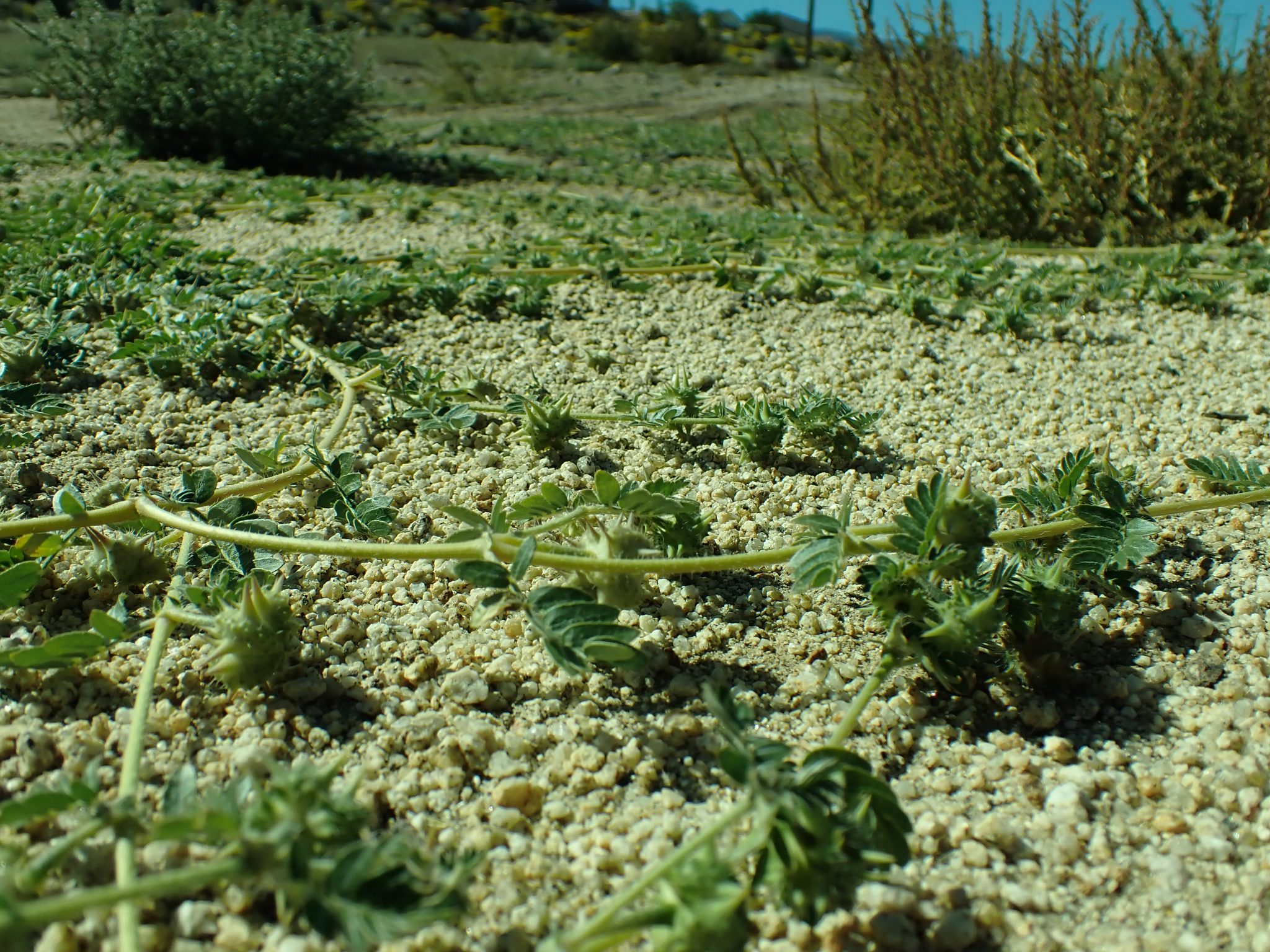
Hero image: Puncturevine with spiny goathead burs by Matt Lavin, used under CC BY-SA 2.0.
Are hard, sharp burrs sticking to your shoes after you cross the lawn? The plant may be puncturevine, usually called goatheads. The burr is easy to recognize, but the plant can look like several low-growing weeds before it makes seed.
Goatheads are the hard, spiny seed burs of puncturevine (Tribulus terrestris). Look for a low, spreading mat, opposite compound leaves, small yellow flowers, and five-part burrs with rigid spines. Pull or dig small patches through the taproot while the plant is young. If burs have formed, wear gloves, collect every visible burr, and bag the material so the seeds do not spread.
For a large patch, use a product whose label lists puncturevine and your grass. Young plants are easier to control than mature plants. Glyphosate is non-selective, so reserve it for careful spot treatment where desirable plants will not be hit. The exact product, timing, and rate depend on your grass, location, and label. UC IPM guidance describes the plant and its control limits, and the Washington State weed board stresses control before seed production and repeat checks.
Are these goatheads or another sticker weed?
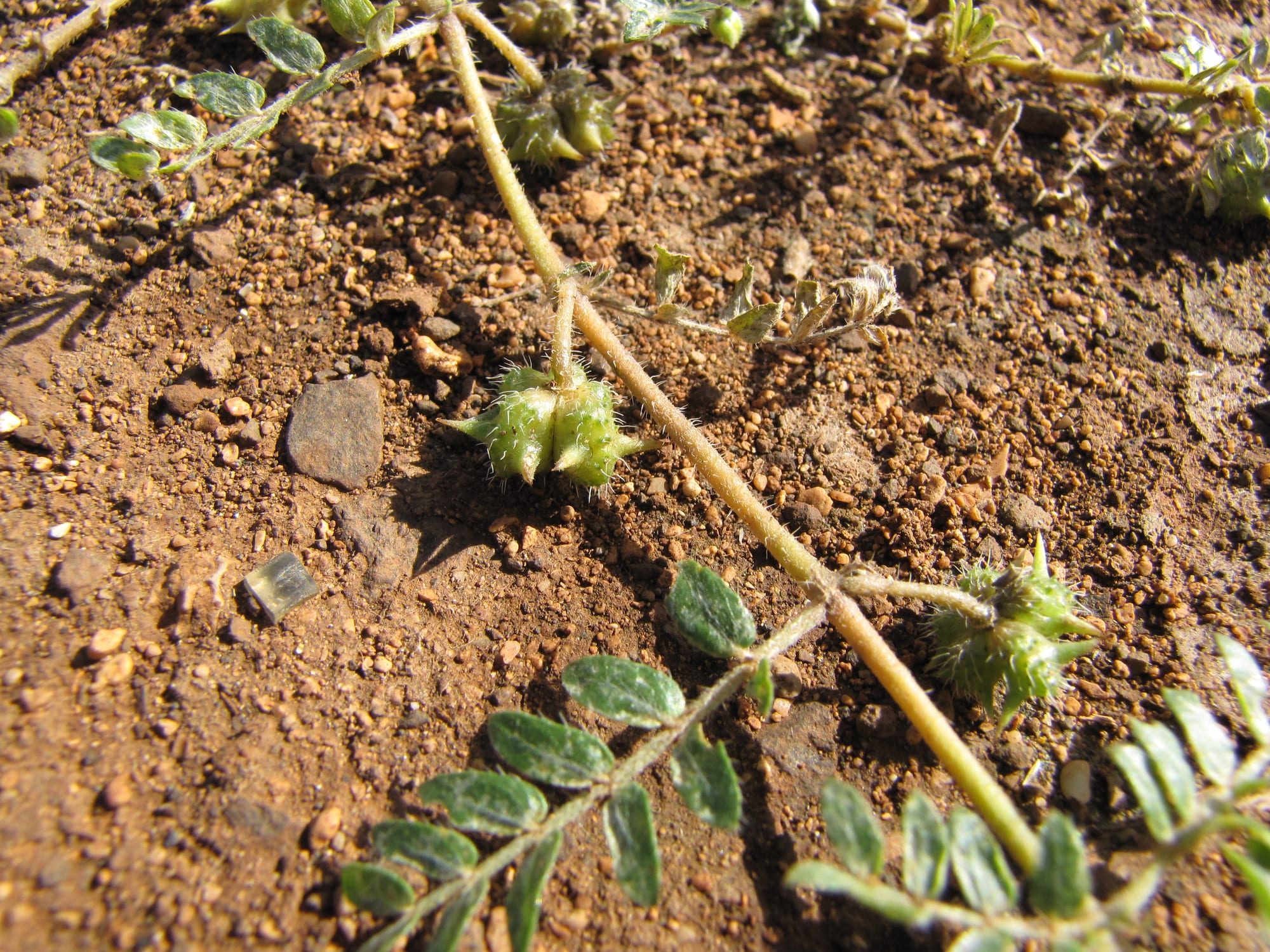
Start with the plant, then inspect the burr. UC IPM describes puncturevine as a summer annual that forms a low mat. Its stems radiate from a central taproot, and its hairy leaves are divided into opposite pairs of leaflets. Small yellow flowers form in the leaf axils, followed by a hard fruit that breaks into five spiny burrs.
Is the plant upright and grass-like? Sandbur is a different weed with grass-shaped leaves and burrs on the seed head. Is the plant a broadleaf rosette with small burs in cool weather? Lawn burweed is another possibility. Compare the plant with the identification details from UC IPM before choosing a treatment.
If the plant has a radiating mat, opposite leaflets, yellow flowers, and a five-part burr, the evidence points to puncturevine. If one of those checks fails, use the weed identifier or send a photo through photo diagnosis before spraying.
What other guides misdiagnose
Goatheads are often treated as a generic sticker problem. That shortcut can send the wrong product onto the lawn. Use the whole plant as evidence, not only the sharp object that stuck to a shoe.
- Sandbur: the plant looks grass-like, and the burs form on a seed head. If the leaves and growth habit point to a grass, compare the case with the sticker weed comparison guide before you select a broadleaf treatment.
- Lawn burweed: the plant is a low broadleaf weed that appears in cool-season windows and makes flat burs. It does not have puncturevine's opposite leaflet pairs, yellow flowers, or five-part woody burr.
- Puncturevine: the stems spread outward from a taproot. The leaves have paired leaflets, the flowers are small and yellow, and the mature fruit breaks into sections with rigid spines. Those checks match the UC IPM description of puncturevine.
If only loose burs remain, identification is less certain. Photograph the plant, the leaf arrangement, and the fruit before you remove the last sample. A close-up of a burr can support the case, but it cannot replace a view of the growing plant. When the checks disagree, use the photo diagnosis flow or ask your county extension office before applying herbicide.
Why do goatheads keep coming back?
Have you removed the green plant and still found new burrs the next summer? The seed bank explains that pattern. UC IPM says puncturevine seeds may remain viable in soil for up to five years. Washington State's Noxious Weed Control Board says the plant spreads by seed and that seeds commonly germinate from spring through fall, depending on conditions.
Where is it growing? Puncturevine favors disturbed areas, paths, roadsides, and other places where the soil is open. Thin turf gives new seedlings room to establish. Clean spiny burs from shoes, tires, pet fur, and equipment before moving across the yard, because the burs are built for transport.
- UC IPM recommends removing small infestations by hand, hoeing, or digging through the taproot. It says mowing is ineffective because the plant grows low to the ground.
- Washington State's Noxious Weed Control Board recommends controlling plants before seed production, repeating the work as new seedlings emerge, and checking the area for several years because seed can remain viable.
- Read the product label before using any herbicide. The label determines whether the active ingredient, site, grass type, rate, weather limits, and re-entry instructions fit your lawn.
How should you inspect a goathead patch?
Start at the outside edge of the patch. Puncturevine can hide short stems under taller grass, and a single missed crown can produce more flowers and burrs. Look for stems that radiate across the soil instead of growing upright. Then check the leaf pairs and the underside of the plant for hairs. These small details are more useful than the common name because people use “goathead” for several different sticker weeds.
Next, check where the patch begins and ends. Driveways, paths, fence lines, and other disturbed edges often have thinner turf and open soil. Mark those edges with a simple note or photograph. That record helps you return to the same location after rain and helps you decide whether the problem is one small patch or a wider seed-spread route.
Do not mow first just to make the plant easier to see. UC IPM says mowing is ineffective against puncturevine because the plant grows low. Walk the area, wear gloves, and keep footwear and pets away from the patch until you finish the inspection. If a child, pet, or bare foot has already contacted a burr, remove the visible burr carefully and then inspect the plant that made it.
How do you remove a small goathead patch?
Is the patch small enough to reach every stem? Hand removal is the most controlled first step. Wear thick gloves, loosen the soil, and follow the plant to its taproot. Remove the whole plant before flowers or burrs form when possible.
- Mark the edge of the patch so you do not miss short stems.
- Pull or dig through the taproot. Do not leave a rooted crown in the soil.
- Place the plant and any loose burrs in a sealed container so the seeds do not spread during handling.
- Check shoes, gloves, mower tires, and pet fur for burs before leaving the area.
- Walk the same spot again after the next wet period and remove new seedlings.
Are mature burrs already on the ground? Handle the area as a seed-spread problem. Use gloves, collect visible burs, and inspect paths and lawn edges where tires and shoes carried them. A single pass reduces the immediate hazard, but repeated checks are needed while the seed bank is active.
How do you manage the seed bank?
Think in seasons, not in one cleanup. Removing a green plant prevents that plant from making more seed, but it does not erase seed that is already in the soil. UC IPM reports that puncturevine seed can remain viable for up to five years. Washington State also recommends checking the site for several years and removing new plants before they make seed.
Make the first follow-up check after the next wet period, then repeat the check through the warm growing season. Pull seedlings while their roots are still easy to trace. Search the places that carried the burrs, including the edge of the driveway, the path to a shed, pet routes, mower storage, and the tires of equipment used in the patch. A clean lawn can still receive a new seed from outside the yard, so monitor both the original patch and the routes around it.
After you remove the plant, reduce the open ground that allowed it to establish. Repair thin turf when the season and grass type allow it. Where turf is not appropriate, use a ground cover or mulch that fits the site. The goal is not to bury a mature burr under a new layer. The goal is to reduce exposed soil and make the next seedling easier to see and remove.
Pre-emergent control may be part of a larger plan, but the product label must list puncturevine, the site, and your grass. Do not treat a seed-bank problem as permission to spray every bare edge. Read the label, check local restrictions, and use the smallest treatment area that fits the identified problem.
Which herbicide can you use in a lawn?
First, identify the grass. A product that is safe on one turf species can injure another. UC IPM lists broadleaf herbicide options for emerged puncturevine and says younger plants respond better. It also notes that glyphosate can injure most plants, so it belongs only in carefully controlled spot treatment.
Do you have a thin patch among desirable grass? A selective product may fit if its current label lists puncturevine and your grass. Are the plants beside ornamentals, trees, or a vegetable bed? Drift and root-zone exposure add risk, so mechanical removal may be the better choice. If your lawn is stressed, newly seeded, or near water, ask your county extension office for site-specific guidance.
Do not choose a rate from a search result or another state's fact sheet. Read the label on the product you have, confirm the active ingredient and turf tolerance, and follow its weather, protective-equipment, re-entry, and interval instructions. If the label does not list your site and grass, stop and choose another method.
When should you use diagnosis instead of treatment?
Pause before spraying when the plant is not a clear match, when you cannot identify the grass, or when the patch touches ornamentals, vegetables, trees, a drainage area, or a neighbor's property. A product that fits bermudagrass may injure another turf species. Wind, heat, drought stress, and recent seeding can also change the safe choice.
Use herbicide timing guidance to organize the product label, weather window, and turf restrictions. The calculator does not replace the label. It helps you keep the timing question separate from the identification question. If the diagnosis remains uncertain, upload a clear photo through photo diagnosis and wait for the result before choosing a treatment.
That pause is useful even when the burr looks obvious. A wrong treatment can injure the lawn and leave the actual plant in place. A correct diagnosis gives you a smaller treatment area, a more useful follow-up date, and a better record for next year.
Working a case: goatheads beside a bermudagrass lawn
Imagine a homeowner finds a 30-square-foot mat beside a driveway in late summer. The stems radiate from one point, the leaves are paired, and several hard five-part burs are present. Those checks fit puncturevine. The first job is to wear gloves, collect the burs, and dig through the taproot. A broadcast spray would expose the whole lawn when the problem is limited to one edge.
The homeowner then checks the driveway, shoes, mower tires, and the bare soil beside the patch. They fill the open soil with healthy turf or an appropriate ground cover after the area is clear. They mark the location and inspect it again after rain. If seedlings return, the follow-up treatment is based on the current product label and local extension guidance.
Your goathead diagnosis checklist
- Photograph the plant, leaf arrangement, flower, and burr before removing it.
- Confirm that the plant is puncturevine rather than sandbur or lawn burweed.
- Remove small plants through the taproot and bag mature burs.
- Clean anything that crossed the patch.
- Record the location and check it again after the next wet period.
- Use photo diagnosis if the identification remains uncertain, then use the site's care plan options for a personalized 12-month schedule based on your ZIP code, turf, and treatment windows.
Name the weed, remove the seed source, and return to the same spot. If the plant does not fit these checks, stop treating and ask your extension office or use a photo diagnosis to narrow the case.
Free Lawn Care Tools
Goatheads are the hard, spiny burs produced by puncturevine, or Tribulus terrestris. The plant forms a low mat with opposite compound leaves and small yellow flowers before it makes five-part burs.
Remove small plants through the taproot and collect mature burs before they spread. For larger patches, use only a product whose label lists puncturevine and your grass, and follow the current label instructions.
Mowing is ineffective because puncturevine grows low to the ground. Hand removal or digging through the taproot is more controlled for small patches, followed by repeat checks for new seedlings.
Puncturevine seeds can remain viable in soil for several years. New plants can also arrive on shoes, tires, animals, and equipment, so remove burs and monitor the same area after wet periods.
A selective herbicide may fit if its current label lists puncturevine and your grass. Glyphosate is non-selective and can injure desirable plants, so reserve it for careful spot treatment where the label allows it.
No. Goatheads are the spiny burs of a broadleaf plant called puncturevine. Sandbur is a grass-like weed with burrs on its seed head, so the identification check changes the treatment choice.

Your lawn plan, in your pocket all season
Grass ID, a season plan, soil-timed reminders, and a lawn journal that remembers what you did. Free on iPhone.
Related Articles
 Problem Solving
How to Get Rid of Stickers in Your Yard (Burweed, Sandburs and Goatheads)
Sep 17, 2026•5 min read Problem Solving
Ragweed Identification: What It Looks Like and How to Control It
Aug 12, 2026•6 min read Problem Solving
Johnson Grass in Your Lawn: How to Identify It and Kill It for Good
Sep 18, 2026•6 min read