How to Get Rid of Stickers in Your Yard (Burweed, Sandburs and Goatheads)

As an Amazon Associate we earn from qualifying purchases.
It's usually a bare foot that finds them first. A kid runs across the yard on a warm April afternoon, stops dead, and sits down to pick tiny spiked burs out of a heel. By then the plant that made those burs has been growing in the lawn since fall, and the easy window to stop it has already closed.
Fast Answer: The usual sticker weeds are lawn burweed, sandbur, and goatheads, and each has its own window. Lawn burweed makes spring burs, so UGA says to apply pre-emergent from late September to mid-October and post-emergent around February. Sandbur is a summer grass that Texas A&M says starts sprouting at 52°F soil, so its pre-emergent goes down before that.
Goatheads are summer annuals of hot, compacted ground, and Colorado State points to pendimethalin or trifluralin as they germinate, plus hand pulling. UGA notes that once burweed burs harden, herbicides can no longer help.
What Are the Little Stickers in My Yard?
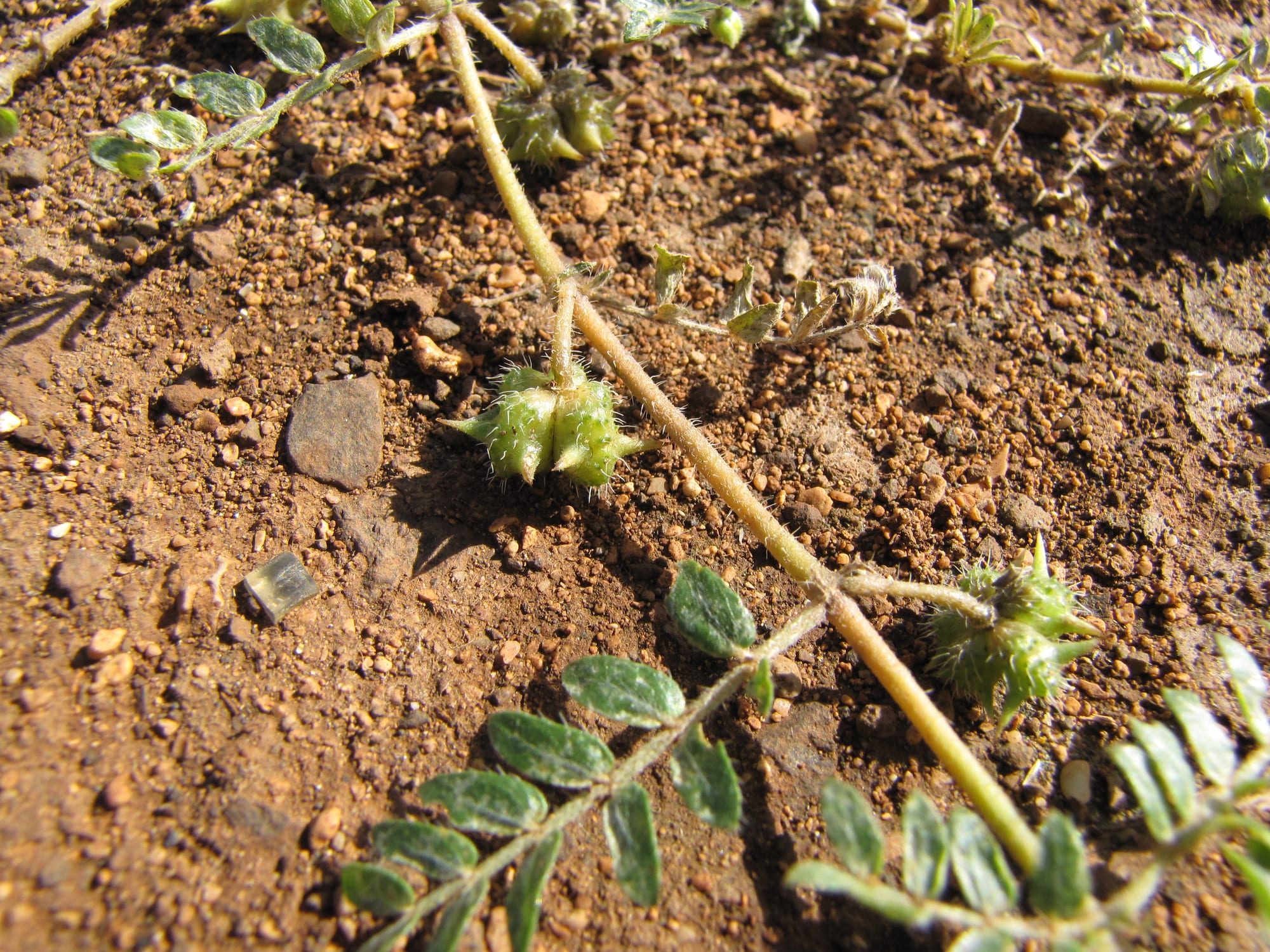
The little stickers in a yard are usually lawn burweed, sandbur, or goatheads. Burweed is a low, parsley-leaved winter weed with spring burs, and sandbur is a grass with summer burs. Goatheads are a mat-forming summer plant with woody, spiny burs.
| Trait | Lawn burweed (spurweed) | Sandbur (grassbur, sandspur) | Goathead (puncturevine) |
|---|---|---|---|
| Plant type | Low broadleaf with bright green, parsley-like divided leaves (LSU) | A "sticker" plant that looks like a grass (K-State) | Trailing, mat-forming plant with bright yellow flowers (CSU) |
| Life cycle | Winter annual that sprouts in fall (MSU, UC IPM) | Summer annual, or a perennial that overwinters in warmer areas (Texas A&M) | Summer annual that dies in winter (CSU) |
| When burs or flowers show up | Burs form by March and harden by April (UGA) | Summer, after seed sprouts in soil from 52°F, peaking at 72°F (Texas A&M) | Flowers March to October in California (UC IPM), July to September in Pueblo, Colorado (CSU) |
| Where it's a problem | Louisiana, Georgia, Mississippi (LSU, UGA, MSU) and parts of California (UC IPM) | Kansas and Texas lawns (K-State, Texas A&M) | Hot-summer areas like California and Colorado (UC IPM, CSU) |
| Soil and site | Moist soil and thin turf, tolerates low mowing (LSU); compacted paths (UC IPM) | Thin lawns, especially in dry years (K-State); poor, nutrient-deficient soil (Texas A&M) | High soil compaction, walkways, roadsides (UC IPM) |
| The bur | Flat, winged, one spine, 1/8 to 1/5 inch (UC IPM) | Burs on a plant that looks like grass (K-State) | Woody, five-lobed bur, 5 to 10 mm across, that breaks into nutlets with two stout spines each (UC IPM) |
Standing in your yard, I'd go by season. Prickly burs in spring on a southern lawn mean burweed, so you treat it in fall and again in January or February. Burs on a grassy plant in summer, in thin or underfed turf, mean sandbur, and the fix is a spring pre-emergent before soil reaches 52°F.
Sticker mats on hot, packed ground by the driveway or a path mean goatheads. If you're still unsure, run a photo through the weed identifier and ask it which sticker you've got.
Why Does My Yard Have So Many Stickers?
Your yard has so many stickers because the turf left room for them. K-State says sandbur invades thin lawns, and Texas A&M says it thrives in poor soil. LSU finds burweed in thin turf, and UC IPM ties puncturevine to compacted ground. All three spread by seed, so every bur you leave is next year's crop.
On a golf course, the rough along a cart path is always the first place weeds show up. Tires pack the soil, the grass thins, and anything that likes hard, bare ground moves in. A home lawn works the same way along the driveway and the dog's running track, so start your thickening work on those strips.
The seed also hangs around. Colorado State says goathead seed lives four to five years in the soil, so a yard with a sticker history keeps throwing seedlings for a while after you get ahead of it.
When to Treat a Lawn for Stickers?
Treat a lawn for burweed in fall, late September to mid-October per UGA, then again in January through March before burs form. Treat for sandbur in spring, before soil reaches 52°F, which Texas A&M gives as the start of germination. Goatheads get a pre-emergent as seeds germinate in warm weather.
Getting pre-emergent down is like getting the tarps on the infield before the storm. Once the rain's falling, you're late.
| Window | Lawn burweed | Sandbur | Goatheads |
|---|---|---|---|
| Late September to October | Pre-emergent. UGA: late September to mid-October. MSU: October, when temperatures are around 70°F | Off season | Off season |
| January to March | Post-emergent. MSU: January, February, or March. UGA: February is the second chance, and mid to late March can still help | Plan the spring pre-emergent | Off season |
| Early to mid spring | Burs harden by April and herbicides stop helping (UGA) | Pre-emergent before soil hits 52°F, split into two applications (Texas A&M). K-State's Kansas dates: oryzalin about April 15, pendimethalin April 15 and June 1 | Pre-emergent as seeds germinate (CSU) |
| Summer | Rake or mow up leftover burs (UGA) | Quinclorac gives some control on seedlings (K-State), but never on St. Augustine, centipede, or bahia (product label) | Pull plants while the soil is moist (CSU) |
UGA adds one weather rule for burweed sprays: avoid post-emergents during spring green-up or hot weather. Your ZIP code shifts every one of these dates, so run it through the herbicide timing calculator and put the result on the calendar.
What Kills Stickers but Not Grass?
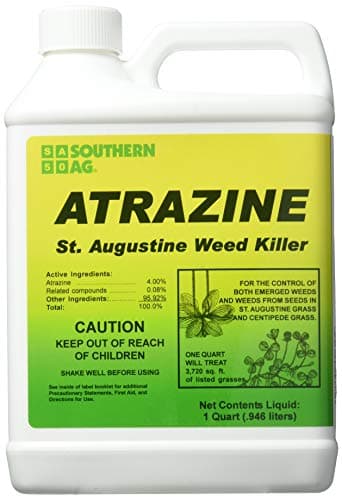
Selective herbicides matched to both the weed and your grass kill stickers without killing the lawn. For burweed, LSU lists atrazine, metsulfuron, and 2,4-D + dicamba + mecoprop on the four southern grasses, with atrazine only on dormant bermuda. For sandbur, K-State says quinclorac gives some control on seedlings, and Texas A&M names Katana, Celsius WG, and Image 70 DG.
| Grass | Burweed options (LSU unless noted) | Flags |
|---|---|---|
| St. Augustine | Atrazine, metsulfuron, 2,4-D + dicamba + mecoprop, simazine as a pre-emergent | UGA says atrazine works well here; use caution with metsulfuron (UGA) |
| Centipede | Same list as St. Augustine | Atrazine works well (UGA); use caution with metsulfuron (UGA) |
| Zoysia | Atrazine, metsulfuron, 2,4-D + dicamba + mecoprop, simazine as a pre-emergent | UGA calls metsulfuron highly effective on burweed in zoysia |
| Bermuda | Metsulfuron, 2,4-D + dicamba + mecoprop, simazine as a pre-emergent; atrazine only while dormant | UGA calls metsulfuron highly effective on burweed in bermuda |
Sandbur needs its own plan because it's a grass, and two of its products can hurt southern lawns. The Albaugh Quinclorac 75 DF label says not to apply it to bahiagrass, carpetgrass, St. Augustinegrass, or centipedegrass. The Katana label rates St. Augustine, Argentine bahia, and carpetgrass as sensitive and warns of centipede injury during spring and fall transition.
Texas A&M calls Image Kills Nutsedge the most homeowner friendly of its picks. If you grow St. Augustine, read our St. Augustine weeds guide before spraying anything with 2,4-D in it.
- The label is the law. Use only a product whose label lists your grass, at the rate printed there.
- LSU's list covers the four southern grasses. For cool-season lawns or new sod, ask your county extension office.
- Sandbur products are grass-specific. Quinclorac and Katana can injure St. Augustine, so check that the label lists your grass.
- Rates and restrictions change by product and state. Your extension office can confirm what's labeled where you live.
How to Get Rid of Stickers in Your Yard Fast
The fastest way to get rid of stickers is a spot spray of a labeled post-emergent on young plants, before burs form. For burweed that means January to March, per MSU. After burs harden, UGA says herbicides can no longer help, so fast turns into raking, mowing, and pulling.
A Lawn I'd Walk You Through: 5,000 Square Feet of Centipede in January
Say it's mid-January and you have a 5,000 square foot centipede lawn that was full of stickers last April. Walk it on a clear morning and look for small, flat, parsley-leaved plants in the thin spots. UGA calls February the second chance, when small plants are visible but have not formed burs yet. Measure the patches instead of the whole yard: three patches of 200, 150, and 150 square feet add up to 500 square feet, a tenth of the lawn.
Next, pick the product. LSU lists 2,4-D + dicamba + mecoprop as labeled for centipede, and UGA's caution about metsulfuron on centipede makes the three-way mix the simpler first choice. Read the label rate. If the label says X ounces per 1,000 square feet, your 500 square feet takes 0.5 times X, where the whole lawn would take 5 times X.
Mix only what the patches need, and use the tank mix calculator to turn the label rate into ounces for your sprayer. Spray on a mild day, since UGA says to avoid green-up and hot weather.
Removing Burs That Are Already There
Once burs are hard, you're cleaning up, and the goal is keeping seed out of the soil. UGA's summer advice for burweed is to rake or mow the burs up and focus on the turf. Texas A&M says catching clippings when sandbur is mature cuts down the seed left in the soil, so bag the mower that week.
Goatheads come out by hand. Colorado State says to pull the plant sideways rather than straight up, do it while the ground is moist, and bag the debris carefully so seeds don't scatter. It also suggests a few inches of mulch in the affected area to keep seeds from germinating.
Pre-Emergent for Stickers
A pre-emergent stops sticker seeds as they sprout, and it's how you get ahead of next season's burs. The ingredient depends on which sticker you have, and a couple of them cover more than one.
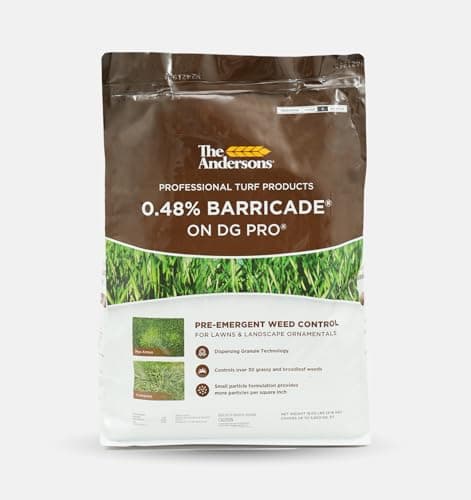
- Lawn burweed: look for prodiamine, atrazine, or simazine on the label, the three UGA names. MSU's list adds dithiopyr, pendimethalin, indaziflam, and isoxaben, and UGA calls simazine excellent for warm-season grasses.
- Sandbur: look for pendimethalin, dithiopyr, indaziflam, or oryzalin, the Texas A&M list, split into two applications because germination runs long. K-State adds prodiamine, which can go on all common Kansas lawn grasses with one application a year, and says oryzalin fits warm-season grasses and tall fescue but should stay off Kentucky bluegrass.
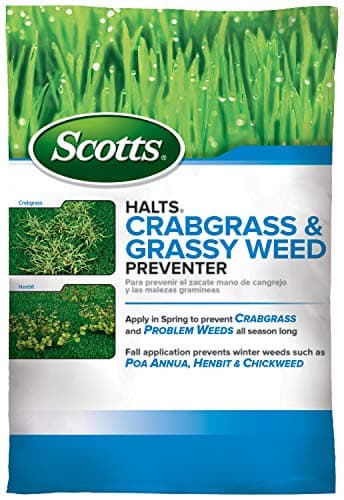
- Goatheads: look for a crabgrass preventer with pendimethalin or trifluralin, which Colorado State says controls them as the seeds germinate.
Pendimethalin shows up on all three lists and prodiamine on two, which helps a yard with more than one sticker, though the burweed and sandbur windows fall at different times of year. Our fall pre-emergent timing guide covers the burweed window in more detail, and the granular pre-emergent guide covers spreading and watering it in.
If remembering October, February, and a spring soil temperature sounds like one date too many, WGIS Premium sends reminders timed to your ZIP code and grass for the fall pre-emergent, the January post-emergent, and the spring sandbur window.
Thicken the Turf and the Stickers Lose Ground
K-State says the best control for sandbur is a thick, healthy lawn, and MSU says the most effective way to prevent burweed is healthy turf going into fall. In my experience, yards that stay sticker-free after treatment are the ones where the owner fixed the mowing and feeding. LSU gives the numbers for southern grasses.
| Grass | Mowing height | Nitrogen per 1,000 sq ft per year |
|---|---|---|
| Bermuda | 1 to 2 inches | Up to 3 pounds |
| Centipede | 1 to 2.5 inches | Up to 2 pounds |
| St. Augustine | 2.5 to 3 inches | Up to 3 pounds |
| Zoysia | 1 to 2.5 inches | Up to 2 pounds |
Stick with it for more than one season. UGA says treating consistently for at least two years in a row can nearly eliminate lawn burweed in most lawns. Texas A&M adds that most homeowners overdo irrigation, starting too early and watering too often, which can weaken turfgrass.
Your Sticker Action Plan
Name the sticker first, by season and plant type or with a free photo diagnosis. Then work the plan for the one you have.
- Lawn burweed: pre-emergent from late September to mid-October, a spot spray of young plants from January to March with a product labeled for your grass, then rake or mow up any burs that harden.
- Sandbur: a split spring pre-emergent that starts before soil reaches 52°F, no quinclorac on St. Augustine, centipede, or bahia and no Katana on St. Augustine, and bagged clippings once plants mature.
- Goatheads: a pendimethalin or trifluralin preventer as seeds germinate, and plants pulled sideways while the soil is moist.
- Any sticker: mow at the right height and feed to LSU's numbers so the turf fills in.
Free Lawn Care Tools
A selective herbicide matched to the sticker and your grass kills stickers. For lawn burweed, LSU AgCenter lists atrazine, metsulfuron, and 2,4-D + dicamba + mecoprop on southern lawn grasses. For sandbur, K-State says quinclorac gives some control on seedlings, but its label bars St. Augustine, centipede, and bahia. Buy only a product whose label lists your grass.
Stickers show up where the turf is thin or stressed. K-State says sandbur invades thin lawns, especially in dry years, and LSU AgCenter finds lawn burweed in thin turf on moist soil. UC IPM ties goatheads to compacted ground. Thicken the lawn with proper mowing and fertilizer, and bag burs so the seed stays out of the soil.
Spot-spray young sticker plants with a labeled post-emergent before burs form. Mississippi State says burweed post-emergents go on in January, February, or March. UGA warns that once burs harden, herbicides can no longer help, so at that point rake or mow up the burs and plan a fall pre-emergent.
Treat lawn burweed with a pre-emergent from late September to mid-October, then a post-emergent around February, per UGA. Treat sandbur in spring with a pre-emergent before soil reaches 52°F, the temperature Texas A&M gives for early germination. UGA also says to avoid post-emergent sprays during spring green-up or hot weather.
Yes, 2,4-D is listed for lawn burweed. UGA, Mississippi State, and LSU AgCenter all name 2,4-D or 2,4-D mixes as burweed post-emergents, applied in winter before burs form. K-State and Texas A&M do not list it for sandbur, which is a grass. Check that the product label lists your grass.
Get rid of grass burrs, or sandburs, with a split spring pre-emergent and a thicker lawn. Texas A&M lists dithiopyr, indaziflam, oryzalin, and pendimethalin, applied before soil reaches 52°F. K-State says quinclorac gives some control on seedlings, though the quinclorac label bars St. Augustine, centipede, and bahia. K-State calls a thick, healthy lawn the best control.
Sandbur, also called grassbur or sandspur, is the grass that has burrs. Texas A&M describes it as an annual or perennial grass, and K-State calls it the sticker plant that looks like a grass. It invades thin lawns and poor, nutrient-deficient soil. Lawn burweed, a broadleaf weed, and goatheads also make burs.
Get rid of lawn burweed with a fall pre-emergent and a winter post-emergent. UGA recommends late September to mid-October for the first application and February for the second chance, before burs form. Mississippi State lists prodiamine, dithiopyr, and atrazine among pre-emergents. UGA says treating two years in a row can nearly eliminate it.
Sources (10)
- UGA Extension, Evans County: Spring Stickers Start in the Fall
- LSU AgCenter: Lawn Burweed
- Mississippi State University Extension: How to Treat Lawn Burweed
- UC IPM: Lawn Burweed (Spurweed)
- K-State Research and Extension: Controlling Grassy Sandburs
- Texas A&M AgriLife: How to Win the Fight Against Stickers
- UC IPM: Puncturevine
- Colorado State University Extension, Pueblo County: Getting Rid of Goatheads
- Albaugh Quinclorac 75 DF product label
- Katana Turf Herbicide product label

Your lawn plan, in your pocket all season
Grass ID, a season plan, soil-timed reminders, and a lawn journal that remembers what you did. Free on iPhone.
Related Articles
 Problem Solving
How to Get Rid of Thistle in Your Lawn (Why It Keeps Coming Back)
Aug 12, 2026•6 min read Problem Solving
Broadleaf Plantain: How to Get Rid of This Stubborn Lawn Weed
Aug 12, 2026•6 min read Problem Solving
How to Get Rid of Foxtail Grass in Your Lawn (and Keep It Out)
Aug 12, 2026•6 min read