Ragweed Identification: What It Looks Like and How to Control It
 Marcus GreenTurf Management Pro | 18 Years
As an Amazon Associate we earn from qualifying purchases.
If you have been sneezing since the middle of August and you keep eyeing that tall, ferny-looking plant along the fence line, you are probably onto something. Ragweed is what most people are actually reacting to this time of year, and it grows in exactly the places we stop paying attention to: behind the shed, along the fence, the bare edge where the mower does not quite reach. Here is how to know it on sight and what you can realistically do about it.
Common ragweed is an upright annual, one to four feet tall, with deeply cut, fern-like leaves and thin green flower spikes at the top, easy to miss since they have no color at all. Giant ragweed is the same plant scaled up, with broad three-lobed, sandpapery leaves and heights that can pass ten feet.
Control comes down to timing. Ragweed is an annual, so it lives one season and comes back from seed. Pull or mow it before those green spikes open in late summer, and you cut off next year's seed supply. Young plants pull out easily by hand. Repeated mowing keeps a stand from ever setting seed. And the long-term fix is simply a thick lawn, because ragweed is bad at competing with dense turf and very good at colonizing bare, disturbed ground.
How to Identify Common Ragweed
Common ragweed (Ambrosia artemisiifolia) is the one most people mean when they say ragweed. Work through it in three parts and you will rarely get it wrong.
The Leaves
This is the giveaway. Ragweed leaves are deeply cut into narrow segments, and those segments are cut again, which gives the whole leaf a fern-like or lacy look. Hold one flat and it looks almost like a carrot top. The color is a medium green, often grayish or dull rather than glossy, and the underside tends to be paler and slightly fuzzy. Down low the leaves sit opposite each other on the stem, and further up they usually alternate. That switch is normal.
The Height and Habit
Most common ragweed around a yard runs one to four feet tall. It grows upright with a branching, slightly scruffy shape, and the stems are green to reddish with fine hairs you can feel with a thumb. It is not a vine, it does not creep, and it does not form a mat. It stands up.
The Flowers
Here is where people get thrown off. Ragweed flowers are green, small, and completely unshowy. They form thin spikes at the tips of the stems, held above the leaves, and they look like narrow green bottle brushes or fuzzy tails. No yellow, no white, no petals worth the name. That plainness is the whole point: ragweed is wind pollinated, so it never needed to advertise to insects. It just needed to release pollen into the air and let the breeze do the work, which is precisely why it makes so many people miserable. When you see those spikes forming, the clock has run out on this season's prevention.
Giant Ragweed Looks Different Than You Would Expect
Giant ragweed (Ambrosia trifida) shares a family with common ragweed but it is not a bigger version of the same leaf. Its leaves are broad and typically split into three big lobes, roughly the shape of an open hand, sometimes five on a vigorous plant. They are large, coarse, and rough to the touch, close to sandpaper. In rich moist ground along a ditch or field edge the plant can clear ten feet without much trouble.
The flowers follow the same pattern as its smaller cousin: green spikes at the tips, no color, wind pollinated. So if you find something enormous with three-lobed sandpapery leaves and green flower tails, you have found giant ragweed, and you have found it late. Catch these while they are ankle high if you can.
Giant ragweed is much more of a ditch and fence-row plant than a lawn plant. If it is showing up in your yard, look at the boundary first.
Ragweed Versus Goldenrod
This is the comparison worth learning, and it is the one almost everyone gets backwards.
Goldenrod (Solidago species) is the tall plant with the bright yellow plume that lights up roadsides and old fields from late summer into fall. It blooms at the same time ragweed does, and it is impossible to miss. So it gets blamed for allergy season constantly, because when your eyes are streaming in September the yellow thing waving at you from the ditch looks like an obvious suspect.
It is almost always the wrong suspect. Goldenrod is insect pollinated. Its pollen is comparatively heavy and sticky, built to hitch a ride on a bee rather than to float, so it does not go airborne in any real quantity. Meanwhile ragweed stands right next to it, drab and green and invisible, releasing wind-borne pollen designed specifically to travel through the air.
Telling them apart is easy once you know to look:
- Flower color. Goldenrod is bright yellow and showy. Ragweed is green and easy to overlook.
- Flower shape. Goldenrod forms a dense plume or spray of tiny yellow flowers. Ragweed forms thin green spikes like little tails.
- Leaves. Goldenrod leaves are simple, narrow, and lance shaped with a smooth or lightly toothed edge. Common ragweed leaves are deeply cut and fern-like. They look nothing alike.
- Lifecycle. Goldenrod is a perennial that returns from its roots each year. Common and giant ragweed are annuals that return only from seed.
That last difference matters for control, and it is the reason ragweed is more beatable than it looks.
- Herbicide chemistry and turf safety are strictly local questions. Which broadleaf active ingredients are labeled for ragweed, which ones your grass type tolerates, and what temperature limits apply all vary by state and product. Check your state land-grant extension service before you buy anything.
- Warm-season lawns such as St. Augustine and centipede are far more sensitive to common broadleaf herbicides than cool-season lawns. Do not assume a product that is safe on bluegrass in Ohio is safe on your lawn in Florida.
- The product label is the legal document. Where a label and any article disagree, including this one, the label wins.
Where Ragweed Actually Grows
Ragweed is a disturbance specialist. It wants bare, sunny, recently churned-up soil and is not fussy about quality. The places it turns up around a home are predictable:
- Fence lines and property boundaries, where nothing gets mowed regularly
- The edges of driveways, beds, and gravel areas
- Thin, patchy turf where the canopy does not close
- New construction and anywhere soil was recently graded or trenched
- Neglected corners, behind sheds, along ditches, around utility boxes
Notice that a dense, regularly mowed lawn is absent from that list. That is not a coincidence. Ragweed seedlings need light at the soil surface and room to establish, and healthy turf denies them both. A thick lawn is not just a nice outcome here, it is the actual defense mechanism. If ragweed is coming up inside your lawn rather than along its edges, the real problem is turf density, not the weed.
That changes what you do. Spraying an edge every August treats the symptom every August, while closing the canopy stops the cycle. Our overseeding calculator will tell you how much seed a thin area needs, and the mowing height calculator will give you the right cutting height for your grass type, which does more for canopy density than most people expect.
How to Get Rid of Ragweed
Ragweed is an annual. It germinates in spring, grows through summer, flowers in late summer, sets seed, and dies with the first hard frost. It has no roots waiting underground to send up a new plant next spring. Everything that returns comes back from seed. So the entire game is: do not let it flower.
Timing Is the Whole Thing
Get it before the green spikes open. In most of the country that means acting in July and early August rather than September. Once those spikes are shedding pollen, you have lost the pollen argument for this year and you are quickly losing the seed argument too. Pulling a flowering plant is still worth doing, because you may beat viable seed set, but it is a rescue, not a plan.
Pulling
Young ragweed pulls out beautifully. The taproot is shallow when the plant is small, and moist soil after rain makes it almost effortless. For a scattered handful of plants along a fence, twenty minutes with gloves is the whole solution. Get the root, not just the top, and bag anything that has started to flower rather than composting it.
Mowing
For a larger stand in a rough area, repeated mowing works well. Ragweed tries to regrow and re-flower lower to the ground after a cut, so one pass is not enough. Cut it, let it push new growth, cut it again before that growth can flower. Keep that up through late summer and the stand sets little or no seed, which is how you shrink it over a couple of seasons.
Herbicide
Broadleaf postemergent herbicides do control ragweed, and they work best on young, actively growing plants rather than mature ones. Beyond that, the specifics depend on your grass type, your state, and the product in hand, which is why the extension note above matters more than any product name would. Timing matters as much as chemistry here, and our herbicide timing tool will tell you whether conditions in your area suit an application this week.
Established Stands in Beds
Ragweed that has been seeding into a bed for a few years leaves behind a seed bank, and seed banks are patient. Expect two or three seasons of effort rather than one clean win. Mulch heavily to block light and pull seedlings while they are small. The seed bank drains, it just does not drain fast.
Recommended products
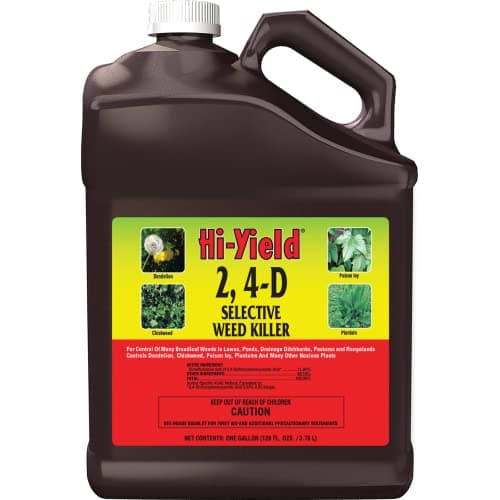
Hi-Yield 2,4-D Amine Selective Herbicide
A broadleaf herbicide that kills ragweed in turf without harming the grass around it.
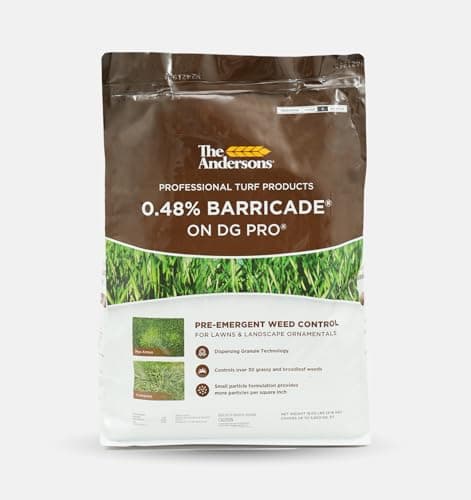
The Andersons Barricade Professional-Grade Prodiamine
A pre-emergent that stops ragweed seed from germinating the following spring, which matters because ragweed returns only from seed.
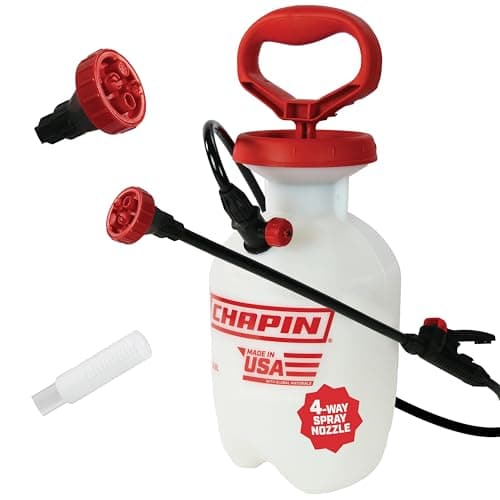
Chapin 1-Gallon Pump Sprayer with 4-in-1 Nozzle
A one gallon pump sprayer with an adjustable nozzle for spot-treating scattered ragweed along fence lines and beds.
Reducing Your Pollen Allergy Exposure, Honestly
Let us be straight about what removing ragweed from your property does and does not accomplish.
Clearing plants near the house, near windows, and near the doors and patios you use daily is worth doing. Pollen concentration is highest close to the source, so the plant twelve feet from your bedroom window contributes more to your personal exposure than one across town.
But ragweed pollen is built to travel. It is light, wind-carried, and it moves substantial distances from wherever it was released. Your neighbors have ragweed. The roadside has ragweed. The field two miles away has an enormous amount of it. Clearing your own yard reduces your local exposure. It does not give you a pollen-free September, and anyone promising that is selling something.
One more honest note: what to do about the symptoms is a conversation for a doctor or pharmacist, not a lawn care site. We can tell you what the plant is and how to remove it. We are not going to tell you what to take.
- Local pollen-season timing varies by latitude and by year. Your state extension service and regional pollen monitoring stations publish local counts and seasonal start dates, which beat any national average.
- Extension offices maintain regional weed identification guides with photos of common and giant ragweed at multiple growth stages, including the seedling stage. That is the stage worth learning if you want to catch plants early.
- Many counties have nuisance weed guidance covering ragweed on roadsides and vacant lots. If a neighboring parcel is the source, that is the office to ask.
What Other Guides Miss
The goldenrod scapegoat is the most useful thing on this page. Every year, millions of people spend allergy season resenting a plant that is not doing anything to them. Goldenrod is guilty of being bright yellow at the wrong time of year and standing near the actual culprit.
This is not trivia. It changes what you remove. If you go out in September and clear all the pretty yellow plants from your fence line, you will have done a lot of work, removed a good pollinator plant, and left the actual problem standing. Learn the green spikes and the lacy leaves, and you will spend your effort on the right target.
The second thing guides miss is that ragweed control is a July problem people treat as a September problem. By the time symptoms tell you to go look, the plant is flowering and the pollen is already out. An hour of pulling in early August beats a season of pills in September, and for most yards it really is about an hour. The trigger should be the calendar and a walk along your fence line, not your sinuses. Put a reminder in your phone for mid-July. That is the entire trick, and it is why this plant is more manageable than its reputation suggests.
Third, most guides treat ragweed as a lawn weed. It usually is not. It is an edge weed that occasionally wanders in where turf has thinned, so treating your lawn while ignoring the fence line aims at the wrong place entirely.
Your Ragweed Action Plan
If you want to shrink the ragweed around your place, here is the order that actually works.
- Confirm the ID first. Lacy fern-like leaves plus thin green flower spikes means common ragweed. Big three-lobed sandpapery leaves means giant ragweed. Bright yellow plumes mean goldenrod, and you can leave that one alone. Weedy stand at the fence line you cannot name? Snap a photo and get a free AI diagnosis before you spend a Saturday on it.
- Walk your edges in mid-July, not September. Fence lines, bed edges, behind the shed, around the utility box, any spot where soil got disturbed this year.
- Pull the young plants now. Gloves, moist soil, get the root. This is the highest-value hour you will spend on the problem.
- Mow the stands you cannot pull, repeatedly. One cut is not enough. Keep cutting through late summer so nothing sets seed.
- Check your local extension guidance before reaching for a herbicide, then use the herbicide timing tool to pick the week.
- Close the canopy this fall. Overseed thin areas and raise your mowing height. Dense turf is what keeps ragweed out permanently, and fall is when you build it.
- Repeat next July. The seed bank takes a few seasons to drain, so consistency beats intensity here.
If keeping track of which week to overseed and which week to walk the fence line is the part that never quite happens, that is what a personalized care plan is for. It builds the schedule around your grass type, your region, and your actual calendar, with the specific goal of thickening turf so edge weeds like ragweed never get the bare ground they need. Start with a free photo diagnosis and it builds from there.
For more on the weeds that show up alongside ragweed in late summer, see our guides to summer weed control timing, common lawn weeds and how to remove them, and how to get rid of doveweed.
Top Picks
- Ortho Weed B Gon Plus Crabgrass Control Ready-To-SprayCheck price on Amazon
- Rachio 3 Smart Sprinkler Controller 8-ZoneCheck price on Amazon
- BioAdvanced Fungus Control for LawnsCheck price on Amazon
As an Amazon Associate we earn from qualifying purchases.
Free Lawn Care Tools
Common ragweed is an upright annual, usually one to four feet tall, with deeply cut fern-like leaves that look almost lacy up close. The stems are green to reddish and finely hairy. The flowers are the part people miss: thin green spikes at the tips of the stems, with no petals and no color at all. Giant ragweed is the same plant family scaled up, with broad three-lobed sandpapery leaves and heights that can pass ten feet.
Goldenrod has showy bright yellow flower plumes and simple narrow leaves, and it is a perennial. Ragweed has plain green flower spikes and deeply cut fern-like leaves, and it is an annual. The bigger difference is pollination: goldenrod is insect pollinated with heavy sticky pollen that barely goes airborne, while ragweed is wind pollinated and releases light pollen built to travel. Goldenrod gets blamed for allergy season mostly because it is visible at the same time ragweed is quietly doing the damage.
Before it flowers, which usually means July and early August in most of the country. Once the green flower spikes open, the pollen is already out and the plant is heading toward setting seed. Pulling a flowering plant is still worthwhile because you may beat viable seed set, but it is a rescue rather than a plan.
It can reduce your local exposure, especially for plants growing close to windows, doors, and patios you use every day, because pollen concentration is highest near the source. It will not give you a pollen-free season. Ragweed pollen is wind-carried and travels substantial distances, so your neighbors, the roadside, and nearby fields all contribute. For the symptoms themselves, talk to a doctor or pharmacist.
Rarely. Ragweed is a disturbance specialist that needs bare, sunny soil and light at the soil surface to establish, and a dense mowed lawn denies it both. That is why it shows up along fence lines, bed edges, and recently graded ground instead. If ragweed is coming up inside your turf rather than along its edges, thin turf is the real problem.
Both common and giant ragweed are annuals, so the individual plants die with the first hard frost and never return from their roots. Everything you see next year grows from seed. That is why preventing seed set through pulling or repeated mowing works, though an established seed bank can keep producing plants for two or three seasons before it drains.

Beat weeds and brown spots from your phone
Snap a photo, get the fix, and follow a plan timed to your soil and weather. Free on iPhone.