

Ice Melt Safe for Grass and Pets: Which De-Icer Does the Least Harm?

As an Amazon Associate we earn from qualifying purchases.
Is the strip of grass along your driveway brown every spring, and does your dog limp or lick its paws after a winter walk? Both can trace back to the bag in the garage. Which de-icer you buy matters, and so do how much you spread, where the treated snow ends up, and whether you sweep up the leftovers.
For grass, the gentlest choices are calcium magnesium acetate (CMA), which Iowa State Extension says causes little or no damage to landscape plants, and non-melting grit or sand. Magnesium, calcium and potassium chloride are less harmful to plants than rock salt per Iowa State, but the Minnesota Pollution Control Agency's deicer table still rates calcium and magnesium chloride high for vegetation damage, the same as rock salt. For paws, Pet Poison Helpline says every type of ice melt can be hazardous, and the MPCA notes there are no labeling requirements behind "pet friendly" claims on a bag.
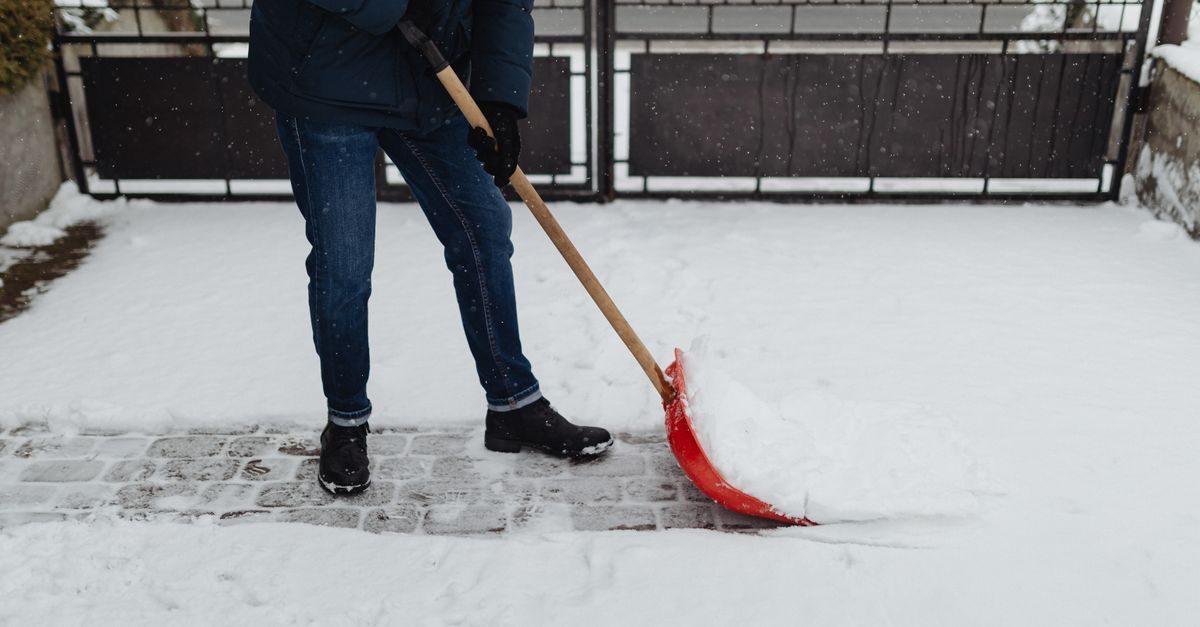
Shovel before you spread anything. For rock salt, the MPCA says about 12 ounces, one coffee mug, treats a 20-foot driveway, and leftover salt on dry pavement should be swept up. Keep treated snow off the lawn, wipe your dog's paws after every walk, and expect any lawn damage to show up the following spring, when K-State Extension says de-icer injury is usually discovered.
Does ice melt kill grass?
Can a de-icer kill the lawn next to the walk? Yes. The University of Minnesota Extension says deicing salt can sharply raise salt levels in the soil of turf next to walkways and roads, and that high salinity can cause root damage and dehydration in many turfgrass species, resulting in yellowing and death. Iowa State Extension explains why: salty soil keeps roots from taking up water even when the soil is moist.
So how do you tell salt damage from the other spring browning? Start with where it is. The UMN Extension diagnostic key describes de-icing salt injury as long strips or irregular areas of dead grass next to driveways, sidewalks and curbs where salt was applied. Its look-alike is ice-cover injury, where snowmelt could not drain along a curb or drive. A dead strip in a low spot that held water points to ice cover; one that follows the edge you salted points to salt. Ice cover can also leave strips along curbs and drives, so the drainage check matters. Matted, circular patches, sometimes with gray or pink webby growth, can also be snow mold.
Does your grass type change the odds? It can. UMN Turfgrass Science reports that Kentucky bluegrass generally suffers more damage, while fine fescues, especially creeping varieties, show more tolerance. If you are not sure which grass lines your driveway, a free photo diagnosis can help you find out.
How long does it take for salt to kill grass?
No extension source I could find gives a number of days. K-State Research and Extension in Johnson County says if damage from de-icers is going to occur, it will not be noticeable right away; problems are uncovered in spring, when the grass along the walks is dead. Iowa State adds that severity depends on the amount applied, soil type, rainfall, runoff direction and wind.
If the strip along your driveway is already brown in spring, our salt damage recovery guide covers the repair. What follows is about choosing and using a de-icer so there is less to fix.
De-icers compared by chemistry
Where sources give different working temperatures, each figure is listed with its source. The MPCA figures are "lowest practical melting pavement temperature"; the other sources don't say how theirs were measured.
| De-icer | Lowest working temperature | Grass and soil | Concrete | Paws and pets |
|---|---|---|---|---|
| Sodium chloride (rock salt) | 15°F pavement (MPCA); "most effective" above 15°F (Iowa State); about 12°F (K-State Johnson Co.); 25°F (Penn State) | Causes the most significant plant damage (UMN). Sodium is hard on soil structure (Iowa State). MPCA rates vegetation impact high. | Can corrode concrete (Penn State). MPCA: low/moderate, will make scaling worse. | Mild ingestions cause stomach upset; large amounts can cause high blood sodium with nervous system signs, and can be fatal (Pet Poison Helpline). |
| Calcium chloride | -20°F (Iowa State; MPCA pavement); -25°F (Penn State; K-State Johnson Co.) | Slightly less damaging to plants than rock salt (Iowa State). MPCA still rates vegetation impact high. | Highly corrosive to concrete and metals (Iowa State). MPCA: low/moderate, will make scaling worse. | Calcium salts are the most severe irritants among ice melt ingredients, including on skin and paws (Pet Poison Helpline). |
| Magnesium chloride | -13°F (Iowa State; Penn State); -10°F pavement (MPCA) | Less damaging than rock salt but still causes damage, especially when over-applied (Iowa State). Releases 40% less chloride than rock salt or calcium chloride (Penn State). MPCA rates vegetation impact high. | MPCA: moderate/high, will make scaling worse, risk of paste damage from magnesium. | Can irritate and upset the stomach (Pet Poison Helpline). Often the base of products sold as pet friendly (PetMD). |
| Potassium chloride | About 12°F (Penn State) | Less damaging to plants than rock salt (Iowa State), but overuse can be deadly to plants (Penn State) and it can injure foliage and roots (K-State Johnson Co.). | Iowa State calls KCl highly corrosive without naming a surface. Not in the MPCA table. | A severe irritant if eaten (Pet Poison Helpline). |
| Calcium magnesium acetate (CMA) | About -15°F (Iowa State); 5°F (Penn State); 20°F pavement (MPCA) | Little or no damage to landscape plants (Iowa State). MPCA rates vegetation impact low, with osmotic stress at high levels. | Little effect on concrete (K-State Johnson Co.). MPCA: moderate/high, will make scaling worse. | Pet Poison Helpline groups CMA with the calcium salts it calls the most severe irritants. |
| Urea | About 21°F (K-State Johnson Co.) | Can damage plants if overused and can carry nitrates into ground and surface water (K-State Johnson Co.). | Much less corrosive than salt (K-State Johnson Co.). Not in the MPCA table. | Urea products are generally the ones labeled safe around pets; eating it usually causes drooling and mild stomach upset, but large ingestions may cause weakness, tremors and methemoglobinemia (Pet Poison Helpline). |
| Sand, grit or kitty litter | Does not melt ice (Iowa State; MPCA) | Not harmful to plants (Iowa State). Can be a source of runoff pollution (Penn State). | No chemical rating in these sources. | No rating in these sources. Iowa State notes it gets tracked indoors. |
Table sources: Iowa State, Penn State (archived), K-State Johnson County, MPCA Stormwater Manual, Pet Poison Helpline.
Where do the sources disagree?
Why does CMA show up anywhere from -15°F to 20°F? Iowa State lists about -15°F, Penn State 5°F, and the MPCA 20°F as the lowest practical pavement temperature. The MPCA also notes acetates need an estimated 20 to 70 percent more material by weight than salt for comparable melting. If your winters often run below 20°F, expect CMA to do less on the coldest mornings.
Are the "gentler" chlorides gentle on grass? The witnesses split again. Iowa State says calcium, potassium and magnesium chloride are less harmful to plants than sodium chloride. The MPCA table gives calcium and magnesium chloride the same "high" vegetation rating as rock salt, because spray damages foliage and chloride stresses roots. Both can be true: less harmful per pound still adds up on an edge that gets a scoop every storm.
What about concrete? K-State's Johnson County office says CMA has little effect on concrete. The MPCA table rates CMA and magnesium chloride moderate to high for making scaling worse. The Pennsylvania Aggregates and Concrete Association, an industry group, goes further: it says deicers containing magnesium chloride, potassium chloride, CMA and urea have been shown to cause much higher rates of deterioration, while sodium or calcium chloride are generally considered acceptable on good quality dense concrete. The test that settles it for your driveway is its age and condition, plus the product label.
Is "pet safe" ice melt actually safe for pets?
What does "pet safe" on the bag promise? The Minnesota Pollution Control Agency says there are no labeling requirements for deicer packaging, and warns buyers about claims like "pet friendly" because no testing has been done to prove such products are safe or will work in all conditions. Pet Poison Helpline says urea-based ice melts are generally the ones labeled safe for pets, and that all types of ice melts have a potential to be hazardous, through both eating and skin contact.
Which ingredient is roughest on paws? Pet Poison Helpline names the calcium salts (calcium chloride, calcium carbonate and CMA) as the most severe irritants of all ice melt ingredients, causing local irritation on skin and paws. So a bag can be easier on your grass and still be hard on your dog's feet.
What should you do on walks? The ASPCA suggests bringing a towel to clean irritated paws, checking for cracks in the pads or redness between the toes, rubbing petroleum jelly into the paw pads before going out, and using booties, which it calls even more effective. PetMD adds that most sidewalks are treated with ordinary products, so wipe your dog's feet after walks on treated sidewalks, between the toes and around the central pad. The ASPCA also says to keep ice melt out of pets' reach.
If you think your pet ate ice melt, the ASPCA says to call your veterinarian or the ASPCA Animal Poison Control Center at (888) 426-4435 right away; a consultation fee may apply.
What about urea?
Urea is a fertilizer, which is why it sounds lawn friendly. K-State Research and Extension in Johnson County says it is effective to about 21 degrees, is much less corrosive than salt, can damage plants if overused, and can still contaminate ground and surface water with nitrates. If you pick a urea-based product for your dog's sake, use the same rule as with salt: a thin layer on pavement only, swept up once it's dry.
How much ice melt is enough near a lawn?
Is the crunch under your boots a sign it's working? The MPCA says that crunch does not signify safety, and for rock salt, about 12 ounces, enough to fill a coffee mug, treats a 20-foot driveway. Acetates such as CMA need more by weight, as the MPCA notes above. The order to follow:
- Shovel first. UMN Turfgrass Science says to always shovel before adding any chemical deicer, and the MPCA says the more you remove, the less salt you need.
- Check the temperature. Below 15°F, the MPCA says most salts stop working; use sand for traction, knowing it does not melt ice.
- Use enough to loosen the ice, then shovel again. Iowa State says fully melting it takes much more product. Its 50-to-1 sand-to-salt mix also works and is easier on plants.
- Keep it off the grass. UMN Extension advises avoiding spreading salt on grass, and Iowa State warns against piling salt-laden snow around trees and shrubs. By the same logic, I throw treated snow onto pavement or a spot I won't mind losing, away from the lawn edge and from storm drains.
- Sweep up visible leftovers on dry pavement. The MPCA says it is no longer doing any work and can be kept for reuse.
If you'd rather hand the driveway to someone else, the snow removal cost calculator gives you a budget, and our snow removal directory lists local pros. Ask which product they use and how they keep it off the grass.
Working a case: a dog, a bluegrass strip and cold mornings
The givens, hypothetical: a six-year-old concrete driveway, a Kentucky bluegrass strip along one edge that browned last spring, a dog that walks the drive twice a day, and icy mornings in the teens.
First check: did the brown strip follow the salted edge on ground that drains? Then salt fits better than ice cover, per the UMN key. Second check: the teens sit near or below the 15°F floor the MPCA gives for rock salt, so extra salt was likely doing little. Third check: the dog's paws, and Pet Poison Helpline ranks calcium salts as the harshest irritants. A plan that fits: shovel, then grit on the icy mornings in the teens, where salt is at the edge of what it can do. If a melter is still needed, use a thin layer kept off the grass strip, skip calcium chloride on the dog's route because Pet Poison Helpline calls calcium salts the most severe irritants of all ice melt ingredients, wipe the dog's paws after each walk, sweep up the leftovers, and reseed the strip in spring with fine fescue, which UMN Extension says performs best in salty soil.
Which bags fit which job?
Each pick lists the chemistry its maker states on its product page or data sheet. Temperature ratings here are the maker's claims.
| Product | Chemistry (maker's statement) | Where it fits |
|---|---|---|
| Snow Joe Dead Sea Magnesium Chloride Flake, Natural Ice Melt Pellets, 50lb | Magnesium chloride hexahydrate, per Snow Joe's product page; Snow Joe rates it to -15°F. | Cold-climate driveways next to grass, where you want less chloride than rock salt. Still a chloride, so keep it off the lawn. |
| Safe Paw Pet Safe Ice Melt, Salt Free Driveway and Sidewalk De-Icer, 8 lb | A urea derivative plus glycols and surfactants, chloride-free, per Safe Paw; Safe Paw rates it to -2°F. The maker does not say which glycol, so check its safety data sheet. | Steps and walks your dog uses daily. Urea still carries nitrogen, so sweep up the excess. |
| Peladow Calcium Chloride Pellets Snow and Ice Melter, 50 lb. | Calcium chloride assay above 90%, per the OxyChem product sheet. | Very cold climates where nothing else melts. Hardest on paws per Pet Poison Helpline; use the least you can and keep pets off fresh application. |
| Cherry Stone Traction Grit, 25 Pounds | Sharp crushed rock that gives traction without melting, per maker TCC Materials. | Mornings below the working range of salt, and any spot where you want zero chemicals near the grass. Sweep it up in spring. |
What other guides misdiagnose
The first is the front of the bag. A product can put "CMA" or "pet" in large type and still contain a chloride. Snow Joe's own page lists its pet-safer blend as sodium chloride and CMA, with no proportions. Iowa State notes straight CMA can cost as much as 20 to 30 times more than sodium chloride and is sometimes hard to find. Read the ingredient line or the maker's safety data sheet.
The second is assuming the gentlest product for grass is also gentlest for everything else. CMA rates low for vegetation in the MPCA table and high for concrete scaling. Calcium chloride melts at the lowest temperatures and is the harshest on paws, per Pet Poison Helpline. Decide what matters most at each spot: the dog's walk, the driveway, the grass strip. The concrete association also says deicers should not be used on concrete less than one year old.
The third is blaming every brown spring strip on salt. Ice cover and snow mold also brown grass after winter. If you can't tell which you have, a photo diagnosis narrows it down first, so the seed or soil amendment matches the problem.
- Working temperatures vary by source, from about 12°F to 25°F for rock salt and from -15°F to 20°F for CMA. Your state's extension service or department of transportation may publish figures for your climate.
- Follow the label on the specific product for rate and surfaces.
- If you think a pet ate ice melt, the ASPCA says to contact your veterinarian or the ASPCA Animal Poison Control Center at (888) 426-4435 immediately.
- For a lawn edge that browns every spring, your county extension office can point you to a soil test that checks salts and a seed mix suited to your area.
Can you use ice melt salt to kill weeds?
Will the leftover bag clear the weeds in your driveway cracks? Illinois Extension warns that salt destroys the soil structure and is mobile, so it can move to nearby areas and damage plants you meant to keep. Identify the weed first, then use a product labeled for it; our photo ID can name it.
Your ice melt diagnosis checklist
- Note where last spring's dead grass sat: along the salted edge, or in a low spot where meltwater pooled.
- Pick the chemistry for the spot: grit or CMA next to grass, no calcium chloride where your dog walks, and on concrete, check its age and the bag label first.
- Shovel first, spread a thin layer (about a coffee mug of rock salt for a 20-foot driveway), and sweep up what's left.
- Wipe paws at the door and keep the bag out of your pet's reach.
- In spring, reseed damaged strips with a fine fescue mix, following our salt damage recovery steps.
Once the strip is repaired, a personalized lawn care plan can keep the spring reseeding, feeding and mowing for your grass type on schedule, so the edge thickens back up before next winter.
Free Lawn Care Tools
It can. University of Minnesota Extension says deicing salt raises soil salt levels next to walks and drives, and high salinity can cause root damage, yellowing and death in many turfgrasses. Look for strips of dead grass along the edges you salted after snowmelt. UMN Turfgrass Science notes Kentucky bluegrass generally suffers more damage than fine fescues.
No extension source we found gives a timeline in days. K-State Research and Extension in Johnson County says de-icer damage is not noticeable right away and usually shows up in spring, when the grass along the walks is dead. Iowa State Extension adds that severity depends on how much was applied, soil type, rainfall and runoff.
Calcium magnesium acetate (CMA) is the gentlest chemical option: Iowa State Extension says it causes little or no damage to landscape plants, and the MPCA rates its vegetation impact low. Sand or grit is not harmful to plants but does not melt ice. Magnesium, calcium and potassium chloride are less harmful than rock salt per Iowa State, yet the MPCA still rates calcium and magnesium chloride high for vegetation damage.
No ice melt is harmless. The Minnesota Pollution Control Agency says there are no labeling requirements for deicer packaging and warns about "pet friendly" claims, and Pet Poison Helpline says all types of ice melt can be hazardous. Wipe your dog's paws after winter walks, keep the bag out of reach, and if your pet eats ice melt, call your veterinarian or the ASPCA Animal Poison Control Center at (888) 426-4435.
No chemical de-icer is rated harmless to concrete in the sources we used. The MPCA's deicer table says chloride salts and CMA all make scaling worse, and the Pennsylvania Aggregates and Concrete Association says magnesium chloride, potassium chloride, CMA and urea have been shown to cause higher rates of deterioration than sodium or calcium chloride on good quality concrete. That group also says not to use deicers on concrete less than one year old; grit gives traction without chemicals.
Illinois Extension warns that salt destroys soil structure and is mobile, so it can move into nearby soil and damage plants you want to keep. Next to a lawn, that means the same injury you see from winter salting. Identify the weed first and use a product labeled for it.
We did not find an extension or veterinary source that vouches for a homemade melting recipe as pet safe. Iowa State Extension suggests sand or kitty litter for traction; they do not melt ice but are not harmful to plants. Shovel first, use grit on the walks your pet uses, and wipe paws after each walk.
Sources (15)
- Iowa State University Extension and Outreach: Using Deicing Salts in the Home Landscape
- Penn State Extension: De-Icers and Plant Health (archived copy, December 2025)
- K-State Research and Extension, Johnson County: Ice Melts Help But Can Be Harmful
- Minnesota Stormwater Manual (MPCA): How salt works and overview of deicing chemicals
- Minnesota Pollution Control Agency: smart salting practices
- University of Minnesota Extension: The effects of deicing salts on landscapes
- University of Minnesota Extension: Protecting trees and shrubs in winter
- University of Minnesota Extension: diagnosing brown grass
- UMN Turfgrass Science: Home Lawn Care Newsletter, January 2023
- Illinois Extension: Homemade herbicide considerations
- Pet Poison Helpline: Ice Melts Safe for Dogs
- PetMD: 6 Things to Know About Pet-Safe Ice Melts
- ASPCA: Do You Know How to Keep Your Pet Safe in Winter?
- ASPCA Animal Poison Control Center
- Pennsylvania Aggregates and Concrete Association: Protecting Concrete From Deicer Damage

Beat weeds and brown spots from your phone
Snap a photo, get the fix, and follow a plan timed to your soil and weather. Free on iPhone.
Related Articles
 Seasonal Care
Managing Salt Damage on Lawns Winter Recovery and Prevention Strategies
Dec 23, 2025•10 min read Seasonal Care
Snow Mold on Grass: How to Identify, Treat, and Prevent It
Dec 16, 2025•12 min read Seasonal Care
How to Protect Grass in Winter: Winterization and Damage Prevention
Dec 10, 2025•11 min read
