How to Kill Bermuda Grass in a Fescue Lawn (and When to Start)

You can't kill bermudagrass in a fescue lawn with one spray, but you can push it out. Is the bermuda in a few patches? Spray those patches with glyphosate and reseed them. Is it mixed into part of a fescue lawn you want to keep? Run a selective program: repeated fenoxaprop sprays, often mixed with triclopyr, while you mow the fescue at about 4 inches. Is it scattered through most of the lawn? Consider killing the whole lawn and reseeding. Virginia Tech's turf specialists say programs started in late summer or early fall work far better than spring and midsummer programs, and that 100 percent control is unlikely in any one season.
Bermudagrass in tall fescue is a multi-year job. In November, bermuda is dormant, so herbicides won't move into it. Use the tan patches to map where it is, then plan the work. In spring, when the bermuda is about half green, start a selective program and repeat it every 3 to 4 weeks. Stop when days reach 90°F. The stronger push comes later: a selective program from mid-August, or glyphosate on the patches from late June or early July, then seeding around Labor Day. Keep the fescue mowed at 3.5 to 4 inches the whole time. Taller fescue shades the bermuda, and bermuda does not tolerate low light.
Is it bermudagrass?
What are the tan patches in your green fescue lawn this month? In the transition zone, the usual answer is dormant bermudagrass. Virginia Tech notes that bermuda in a cool-season lawn shows up as distinct brown patches in the colder months, when the bermuda is fully dormant and the fescue is still green. Run these checks before you plan a treatment:
- Pull up the edge of a patch. Do runners come with it? Bermuda spreads by stolons (runners on the surface) and rhizomes (stems under the soil). Runners that root at the joints point to bermuda. Tall fescue grows in clumps and has no surface runners.
- Do the patches grow outward in summer? Bermuda grows fast in hot weather and "finds new ground" with its runners, per Virginia Tech. A patch that gets bigger each summer and turns tan each winter fits bermuda.
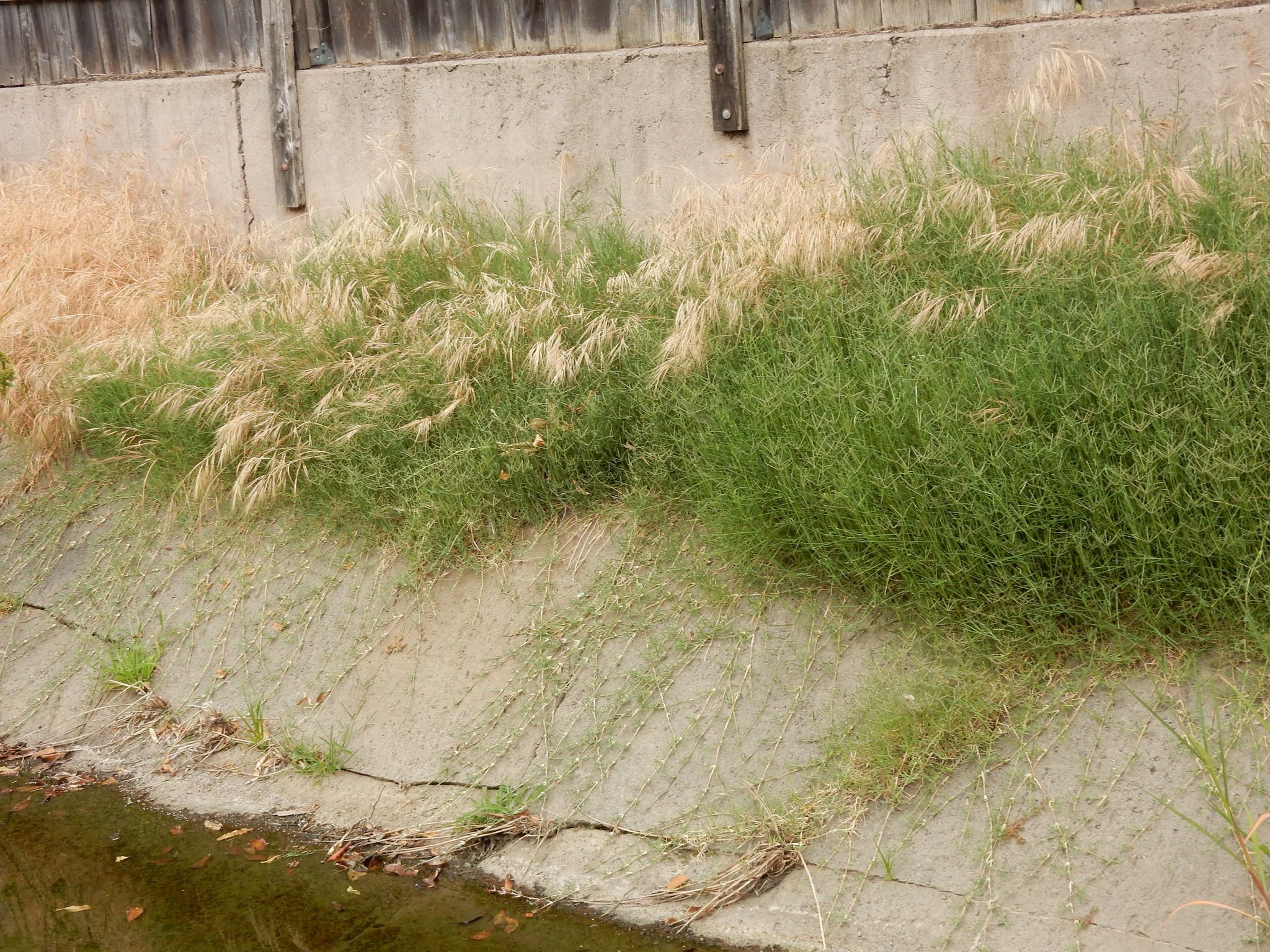
- Do the patches run into beds and over the edge of walks? The same runners invade flower beds and creep over concrete, like the runners in the photo above.
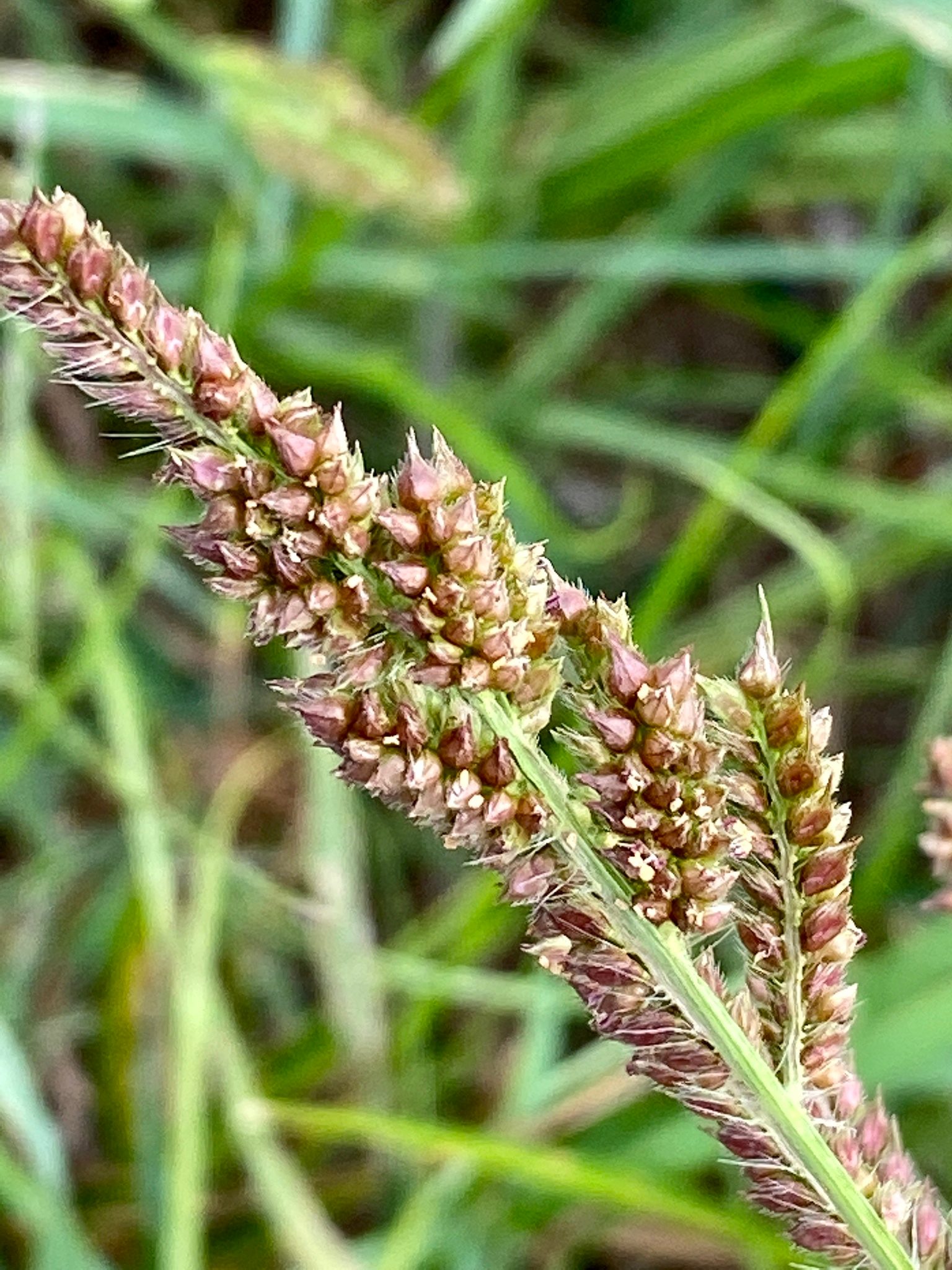
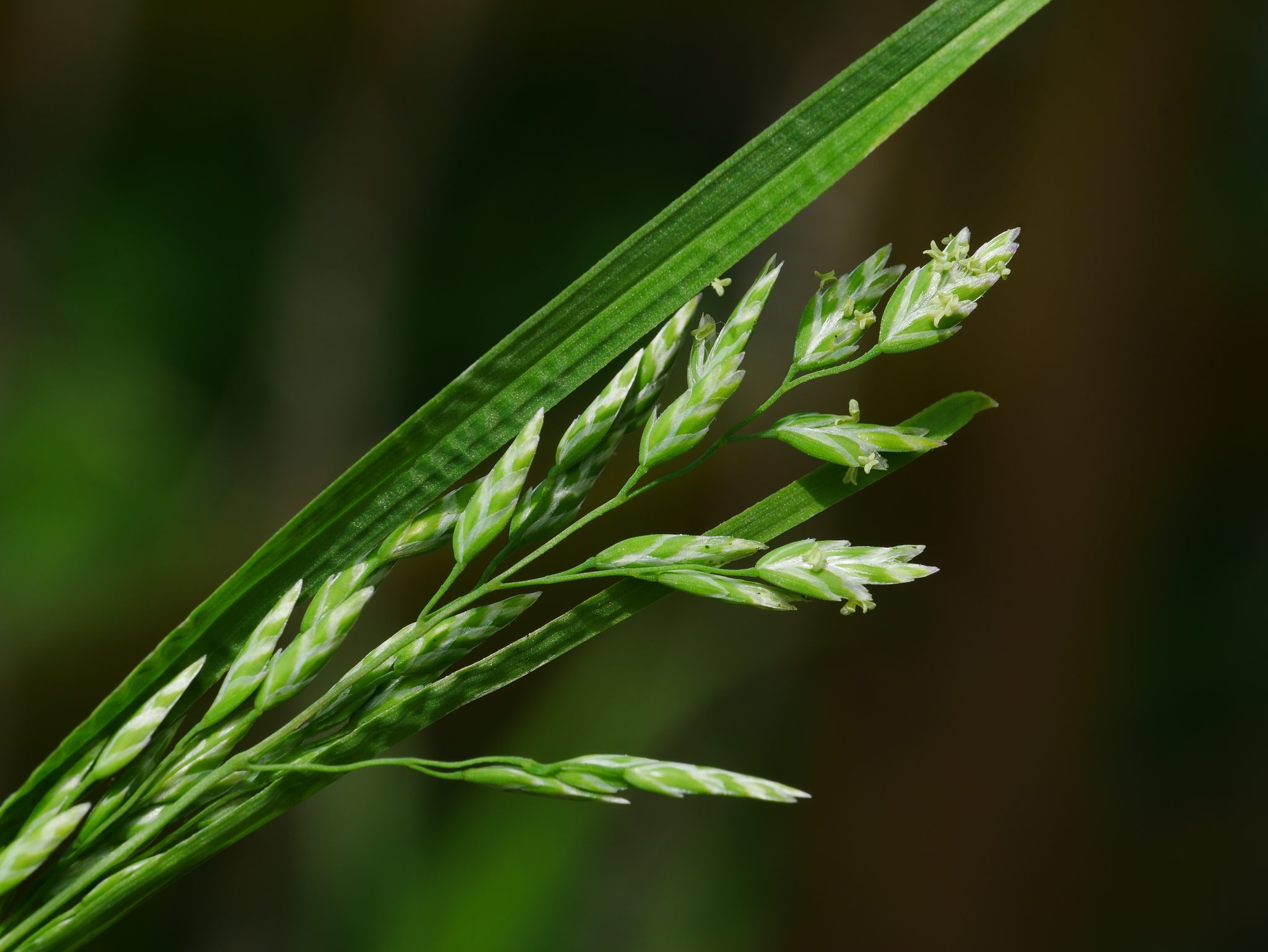
- What does the seedhead look like? UGA Extension describes a bermuda seedhead of 3 to 5 finger-like spikes, and a ligule (the small fringe on the inside where the blade meets the sheath) made of hairs. Look for old seedheads at the edge of a patch.
Two look-alikes also creep and turn tan in winter: zoysiagrass and nimblewill. Why does it matter? UGA lists zoysia as tolerant of fenoxaprop and fluazifop, so those sprays will not remove it. Nimblewill is not on the BioAdvanced label’s weed list. If the seedhead and ligule checks do not fit bermuda, confirm the grass before you buy anything.
If the runner check fails, the patch may be a different grass or a dead spot. Our guide to telling dead grass from dormant grass covers the tug test, and a photo diagnosis of one clear runner can narrow it. Your county Extension office can confirm it.
Selective program or glyphosate and reseed?
How much of the lawn is bermuda? That number decides the method. The University of Tennessee says to consider full renovation when bermuda covers a large share of the lawn, and that selective removal is often the best choice within an established tall fescue lawn. Measure the patches with the lawn size calculator, then compare them with the whole lawn.
| What you see | Method | Why it fits | Main limit |
|---|---|---|---|
| A few patches with clear edges | Glyphosate on the patches, then reseed | UGA Extension calls spot treatment with a nonselective herbicide the most effective way to control bermuda. | Glyphosate kills the fescue in the sprayed area too. You reseed those spots. |
| Bermuda scattered through most of the lawn | Glyphosate on the whole lawn, then reseed | Virginia Tech keeps renovation as an option when contamination is severe. NC State says to consider killing the whole lawn when perennial grassy weeds are scattered throughout. | You start the lawn again from seed or sod. |
| Bermuda in part of a fescue lawn you want to keep | Selective program plus tall mowing | Fenoxaprop harms bermuda more than tall fescue. | Suppression only. Plan on repeat sprays and follow-up years. |
Mow the fescue at 4 inches first
Virginia Tech puts this before any herbicide: you can't control bermuda without the cultural part. Bermuda tolerates almost every stress except low light. Their publication cites research showing tall fescue mowed at 4 inches can completely kill bermudagrass with no herbicide at all. It also says that fescue mowed at the low end of its range makes herbicide programs so weak that control is nearly impossible.
- Mow tall fescue at 3.5 to 4 inches, and never below 3.5 inches while you treat bermuda.
- Mow at least every 7 days while the fescue grows fast, so you never cut off too much at once.
- Do not mow within 3 days before or after a herbicide spray.
- Feed the fescue in fall, which Virginia Tech names with mowing height as the most important parts of the program. The tall fescue fertilizer guide has the rates.
Selective herbicide programs for tall fescue
Which herbicides harm bermuda more than fescue? Only a few. Virginia Tech, UGA and Clemson all list fenoxaprop (Acclaim Extra) and fluazifop (Fusilade II, Ornamec). UGA and Virginia Tech pair them with triclopyr (Turflon Ester), and Virginia Tech adds mesotrione (Tenacity) and topramezone (Pylex). UGA says tall fescue generally tolerates fenoxaprop and fluazifop well, and that mixing either one with triclopyr reduced injury to tall fescue without losing control.
Fluazifop has a limit for home lawns. UGA says it may be used in commercial and nonresidential turf, and the University of Tennessee lists the homeowner fluazifop product, Ortho Grass B Gon, as not for lawns. For a home lawn, fenoxaprop is the selective option: Acclaim Extra as a concentrate, or the BioAdvanced ready-to-spray bottle below.
These are Virginia Tech's tall fescue programs. Their rates are the maximum single-use rate for tall fescue, per acre of lawn. We converted them to fluid ounces per 1,000 square feet by dividing by 43.56. Your product label is the legal rate, and it can be lower, especially if you treat many times in one year. Every program here includes triclopyr, and Clemson says not to spray triclopyr above 85°F, because it can move as a vapor and drift onto trees and shrubs. Wait for a stretch of days under 85°F.
| Virginia Tech program | Rate per acre | Per 1,000 sq ft | Timing and repeats |
|---|---|---|---|
| Tenacity (mesotrione) + Turflon (triclopyr) | 4 oz + 32 oz | 0.09 fl oz (about 2.7 mL) + 0.73 fl oz | Late spring, when bermuda is about 50% green. Repeat 3 to 4 times, 3 weeks apart. Slows summer spread. |
| Acclaim (fenoxaprop) + Turflon (triclopyr) | 28 oz + 32 oz | 0.64 fl oz + 0.73 fl oz | Monthly, from about 50% green-up. Fall sprays work better than spring and summer sprays. |
| Ornamec (fluazifop) + Turflon (triclopyr); commercial and nonresidential turf (UGA) | 24 oz + 32 oz | 0.55 fl oz + 0.73 fl oz | At about 50% green-up in spring, then again in fall just before the bermuda goes dormant. |
| Pylex (topramezone) + Turflon (triclopyr) | 1 oz + 32 oz, with 0.5% methylated seed oil | 0.023 fl oz (about 0.7 mL) + 0.73 fl oz | From about mid-August, 3 sprays, 3 weeks apart. The label allows only 3 Pylex sprays a year. |
Virginia Tech's cheaper pairing is Tenacity plus Turflon in spring and summer, then monthly Acclaim plus Turflon in fall. Mesotrione and topramezone bleach bermuda white before it dies, so a white patch is the herbicide at work. It still takes repeat sprays to control most of the bermuda. Our Tenacity application guide covers mixing and the surfactant.
Kentucky bluegrass or fine fescue in the mix changes the rules. Virginia Tech notes that Ornamec is not labeled for Kentucky bluegrass, and that the Turflon rate drops by half for fine fescue and Kentucky bluegrass. Confirm every grass in your lawn against the label.
The ready-to-spray option
Do you want a hose-end bottle instead of a concentrate and a calibrated sprayer? BioAdvanced Bermudagrass Control for Lawns contains fenoxaprop (0.41%). The label copy posted by Lowe's lists it for Kentucky bluegrass, perennial ryegrass and fescue lawns, and not for bermudagrass, bentgrass, St. Augustine, centipede, bahia or zoysia lawns. One quart treats 5,000 square feet. Key label rules:
- Spray when the bermuda is actively growing and the temperature is below 90°F. Make the first spray in spring as the bermuda begins to green up.
- Up to seven sprays one month apart may be needed, but the label allows no more than three a year. That makes it a program of two or three seasons.
- Do not mow for 24 hours after you spray. If the lawn is dry, water 1 to 2 days before or within 1 day after.
- Fescue and perennial ryegrass can be reseeded right after a spray. Wait 3 weeks before you reseed Kentucky bluegrass.
- Do not spray new grass until the seedlings are at least 1 month old (3 months for Kentucky bluegrass).
- Do not spray when conditions favor drift or runoff, and keep it out of storm drains. The label says it is toxic to fish.
Check the label on the bottle you buy, because formulas and rules change between versions.
The glyphosate route: kill the patch and reseed
Will one glyphosate spray do it? No. UGA says bermuda needs high rates and repeat treatments, and that the spray must hit the patch plus a margin around it to catch runners hidden in the fescue. Virginia Tech's renovation sequence for the transition zone runs like this:
- Spray the bermuda patches with glyphosate in late June or early July, while the bermuda grows actively. Virginia Tech uses 5 quarts of Roundup-type product per acre; product strengths differ, so mix to your label.
- Keep the area watered so the surviving bermuda puts out new growth.
- Spray the regrowth again 3 to 4 weeks later.
- One week after the second spray, seed or sod the area. In the transition zone, seeding usually starts around Labor Day.
UGA adds that fall glyphosate sprays generally control bermuda better than summer sprays, because in fall the plant sends more sugars down to its rhizomes and carries the herbicide with them. Spray only bermuda that is green and growing. UGA also says to wait seven days after a spray before you verticut or aerate.
What to do in November
Is it too late to spray this year? For most fescue lawns, yes. Every program above needs bermuda that is green and actively growing, and dormant bermuda takes up almost nothing. Use the winter for the work that makes next year's sprays count:
- Map the patches now. Tan bermuda against green fescue is the easiest it will be to see all year. Photograph each patch and mark it on a sketch of the yard.
- Measure the bermuda area. The share of the lawn decides spot spray, full renovation or a selective program.
- Keep mowing high. Leave the fescue at 3.5 to 4 inches into winter.
- Put the dates on a calendar. Use the year plan in the next section.
If your bermuda is still green in early November in a warm fall, the late-season window may still be open. For fenoxaprop, Virginia Tech’s fall timing is monthly Acclaim plus Turflon while the bermuda is still green. Keep the triclopyr limit in mind: under 85°F only.
A year-long plan for tall fescue lawns
| When | Selective program | Glyphosate and reseed |
|---|---|---|
| November to February | Map and measure dormant patches. Keep mowing high. | Same. Pick the patches you will spray. |
| Spring, bermuda about 50% green | Start the first selective spray. Clemson says to repeat fenoxaprop monthly. | Wait. Mow fescue at 3.5 to 4 inches. |
| Summer | Stop sprays when days reach 90°F or the fescue is drought stressed (Clemson). Skip triclopyr on days above 85°F. | Late June or early July: first glyphosate spray. 3 to 4 weeks later: second spray. |
| Mid-August to fall | Main push: Pylex plus Turflon from mid-August, or monthly Acclaim plus Turflon. Spray triclopyr only on days under 85°F. | One week after the second spray: seed or sod, around Labor Day. |
| Fall seeding | Seed tall fescue into the gaps after the program. Turflon needs a 3-week wait before seeding, and NC State’s cool-season seeding window ends around October 1. Virginia Tech says you may need to leave Turflon out of the last fall spray so you can seed sooner, and that Acclaim and Ornamec have their own seeding limits on the label. | Do not spray new seedlings until they are at least 1 month old (3 months for Kentucky bluegrass), per the BioAdvanced label. Other products list their own limits. |
Expect to repeat part of the plan the next year. Virginia Tech calls bermuda control in the mid-Atlantic a program that needs repeat treatments and future management, because bermuda is so common in nearby landscapes. Also watch the fescue for disease after sprays, because the treatments can injure it for a short time and make it more vulnerable.
Mistakes that keep bermuda coming back
- Spraying dormant or drought-stressed bermuda. Both Virginia Tech and Clemson say not to spray during drought or stress that slows bermuda growth.
- Mowing fescue short. Below 3.5 inches, the herbicides lose most of their effect.
- One spray, then waiting. Every program here depends on repeats.
- Spraying right before rain or irrigation. Virginia Tech lists this as a mistake to avoid.
- Guessing the rate. Calibrate the sprayer: spray water over a measured area to see how much it puts down, then mix to the label rate.
- Using a product not labeled for your grass. Products that kill grassy weeds can injure the wrong lawn grass. Check every grass in your lawn against the label.
Want the opposite, a bermuda lawn with weeds in it? See our weed killers that are safe on bermudagrass. For more on the two grasses, see the tall fescue guide and the bermudagrass guide.
This guide combines the Extension publications and product label linked above. It does not report a field trial or treatment result. Per-1,000-square-foot rates are our arithmetic from Virginia Tech's per-acre rates.
Free Lawn Care Tools
Fenoxaprop (Acclaim Extra, and the BioAdvanced Bermudagrass Control ready-to-spray bottle) harms bermuda more than tall fescue, and it is the selective option for home lawns. Fluazifop (Fusilade II, Ornamec) works too, but UGA says it may be used in commercial and nonresidential turf, so it is not a home-lawn option. UGA says mixing either one with triclopyr reduced injury to tall fescue without losing control. Virginia Tech also lists mesotrione (Tenacity) and topramezone (Pylex) with triclopyr. Each one suppresses bermuda over repeat sprays; none kills it in one pass.
Late summer and early fall. Virginia Tech says programs started then work far better than spring and midsummer programs, because they weaken bermuda before winter. Spring sprays at about 50 percent green-up slow its summer spread. Spray only while bermuda is green and growing; dormant bermuda in November takes up almost nothing.
Usually not in a fescue lawn. Every selective and glyphosate program needs bermuda that is green and actively growing, and most bermuda in fescue lawns is dormant by November. Use the tan patches to map and measure it now, keep the fescue mowed at 3.5 to 4 inches, and plan the first spray for spring green-up.
Several times a year for more than one year. Virginia Tech's programs repeat every 3 weeks or monthly, and the BioAdvanced label says up to seven sprays one month apart may be needed while allowing no more than three a year. Glyphosate renovation takes at least two sprays 3 to 4 weeks apart.
It helps more than any spray. Virginia Tech cites research where tall fescue mowed at 4 inches can completely kill bermudagrass with no herbicide, because bermuda does not tolerate low light. They also say fescue mowed at the low end of its range makes herbicide control nearly impossible. Keep it at 3.5 to 4 inches.
It depends on the product. Virginia Tech seeds one week after the second glyphosate spray, and says triclopyr (Turflon) needs a 3-week wait before seeding tall fescue. The BioAdvanced fenoxaprop label allows reseeding fescue and perennial ryegrass right after a spray, and 3 weeks for Kentucky bluegrass. Check your product label.
Sources (6)
- Virginia Cooperative Extension SPES-350: Selective Bermudagrass Control for Lawns (Askew, Goatley and Askew, 2021)
- UGA Extension Bulletin 1393: Bermudagrass Control in Southern Lawns (McCullough, reviewed 2024)
- Clemson HGIC 2309: Managing Weeds in Fescue Lawns
- University of Tennessee W 1068: Lawn and Landscape Weed Control for Homeowners
- NC State Extension: Carolina Lawns
- BioAdvanced Bermudagrass Control for Lawns label (copy posted by Lowe's)
Photos: Matt Lavin / iNaturalist · CC BY 4.0

Beat weeds and brown spots from your phone
Snap a photo, get the fix, and follow a plan timed to your soil and weather. Free on iPhone.