

Prostrate Knotweed in a Lawn: How to Identify It and Clear a Patch

As an Amazon Associate we earn from qualifying purchases.
Is a flat, wiry weed spreading beside your walk or driveway? Prostrate knotweed is one possibility. Follow a stem and look for a thin, papery sleeve where each leaf joins it. That sheath is the clearest check before you pull a patch or choose a lawn product.
Fast Answer: Prostrate knotweed (Polygonum aviculare) is a low summer annual. Penn State Extension describes slender stems, alternate leaves, swollen joints, and a papery sheath at the base of each leaf. It often occupies compacted, thin turf. Small young patches can be hand pulled when soil is moist, according to University of Maryland Extension.
Check the leaf joint before treating. Purslane has fleshy leaves and stems without the papery sheath. Spurge has opposite leaves and milky sap. If the plant remains uncertain, photograph a full stem and a close view of the joints.
Which parts confirm prostrate knotweed?
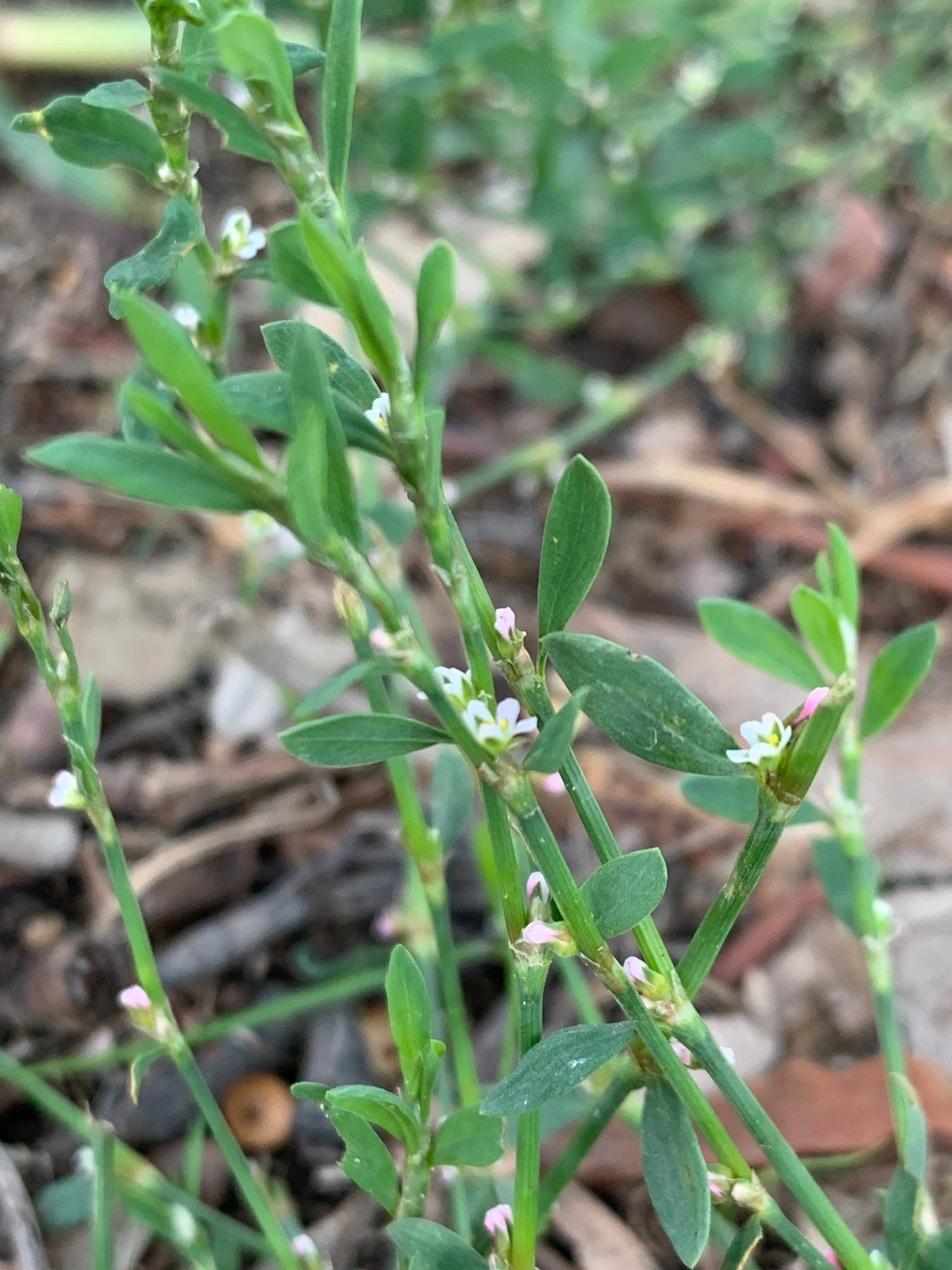
What does the plant look like from above? A mature plant lies close to the ground and sends slender, wiry stems outward. Penn State Extension says those stems form a mat and grow mostly sideways, so mowing can pass over them. A flat mat alone is a weak clue because several lawn weeds share that shape.
Lift one stem and follow it from the center toward the tip. Are the small leaves attached one at a time, alternating along the stem? At each joint, look for a pale, papery tissue wrapped around the stem. Botanists call this an ochrea. Penn State Extension identifies the swollen joint and its papery sheath as key features. A close phone photo can help if the sheath is hard to see.
Do you see tiny flowers? University of Maryland Extension describes small white or yellow flowers in the leaf axils, where leaves join stems. Their absence does not settle the identification. Use the leaf order and papery sheath first.
Photo: Dave Richardson via iNaturalist. CC BY 4.0. Cropped for the hero.
Could it be purslane or spotted spurge?
Both lookalikes can spread low across bare soil. Check the plant itself, rather than using the mat's outline.
- Prostrate knotweed: The leaves alternate along a wiry stem. A papery sheath circles each joint. Penn State Extension uses that sheath to separate knotweed from purslane.
- Common purslane: The leaves and stems feel thick and fleshy. They lack the papery sheath. Compare the close checks in our common purslane guide.
- Spotted spurge: The small leaves face each other on the stem. Penn State Extension says a broken stem releases milky sap. Avoid getting that sap in your eyes or on irritated skin. Our spotted spurge guide covers its identification and care.
If you cannot find the sheath, do not name the patch from its location alone. Send a close photo through photo diagnosis or ask your local Extension office to check a specimen.
Why is it growing there?
Is the mat beside a path, gate, or other busy part of the lawn? University of Maryland Extension says prostrate knotweed favors heavily trafficked, compacted soil. Penn State Extension also places it in stressed sites. The weed tells you where to inspect. It cannot tell you by itself whether the soil needs aeration, more suitable grass, or less traffic.
Press a screwdriver into moist soil inside the patch, then into a healthy part of the same lawn. A much harder patch suggests compaction worth investigating. Check whether grass cover is thin and whether feet or wheels repeatedly cross the spot. Record what you see before choosing a repair. A soil test can answer a nutrient question if growth stays poor; the weed alone cannot.
If traffic is the main pressure, a path or stepping stones may protect the grass better than repeated weed removal. If the surrounding lawn can recover, use the aeration timing calculator with your ZIP code and grass type to plan a suitable season. The tool helps with timing. It does not diagnose compaction or identify the weed.
How do you clear a small patch?
First confirm the papery sheath. Then work while the soil is moist and the plants are young. University of Maryland Extension recommends hand pulling or a weeding tool for an early, limited infestation. Follow the radiating stems to their central root and lift it. Check the surrounding soil for more young plants.
What if a larger mat has already spread? Hand work can take longer, and the open ground may still favor new seedlings. Penn State Extension recommends relieving soil compaction, and University of Maryland Extension recommends maintaining dense turf. Ask your local Extension office when core aeration and reseeding fit your grass and region. Keep foot traffic off a repaired patch while new grass establishes.
Mowing alone leaves much of the low growth below the blade, as Penn State Extension notes. Repeat inspection after removal, especially near the same compacted edge. That lets you catch small new plants while removal is still practical.
When would a lawn herbicide make sense?
What if hand removal is no longer practical? University of Maryland Extension lists spot treatment of actively growing knotweed with a selective broadleaf lawn herbicide in spring before seed set. The product must list your turfgrass, the lawn site, and the target weed on its current label. Follow its rate, timing, weather, and reseeding limits. A product sold for paths, landscape beds, or pastures is not automatically suitable for turf.
- Check the active ingredient and the whole label for your grass species and state. Product names and allowed uses can change.
- University of Maryland Extension warns against spraying dicamba over tree or shrub root zones. Check nearby plants before any treatment.
- Preemergent products act before seedlings emerge. They will not remove an existing mat and can conflict with grass seeding. Ask your local Extension office to align prevention and repair timing.
If the patch is small, hand removal and turf repair may solve the immediate problem without a herbicide. If identification or label fit is uncertain, pause the treatment and ask Extension for a local recommendation.
Working a case: a mat beside a driveway
Consider an illustrative lawn with one low patch beside a driveway. The stems radiate outward. A homeowner lifts one stem and sees leaves alternating along it, then finds a papery sleeve at a joint. Those features support prostrate knotweed. If the leaves were fleshy or milky sap appeared instead, the homeowner would return to the lookalike checks.
The patch sits where people step out of a car. The homeowner pulls the young plant from moist soil and checks the bare area for more seedlings. They compare the soil with a healthy part of the lawn and plan a grass repair suited to their region. The example does not prove that every driveway patch has the same cause.
What other guides misdiagnose
A red or brown stem can send a search toward spurge or purslane. Stem color alone does little work here. The leaf arrangement and papery sheath separate knotweed more reliably, according to Penn State Extension. The species name matters too: prostrate knotweed is a low annual lawn weed. Advice for tall Japanese knotweed does not describe this plant's life cycle or lawn setting.
A second error is to treat the weed as a complete soil test. Knotweed commonly appears where ground is compacted, but you still need to inspect traffic and turf cover. Remove the plant, then address the condition you actually observe.
Your prostrate knotweed diagnosis checklist
- Follow one wiry stem and look for alternate leaves.
- Find the papery sheath around a swollen joint.
- Compare fleshy purslane and opposite-leaved, milky-sap spurge.
- Pull a small young patch from moist soil, including its central root.
- Inspect compaction, traffic, and thin grass before planning repair.
- If you consider a herbicide, confirm the current label covers your turf, site, weed, timing, and nearby plants.
Still unsure which low mat is growing in your lawn? Send a photo for identification. Include the whole patch, one stem, and a close view of a leaf joint.
Sources: Penn State Extension, Prostrate Knotweed; University of Maryland Extension, Prostrate Knotweed; Penn State Extension, Weed Management in Turf.
Top Picks
- BioAdvanced Fungus Control for LawnsCheck price on Amazon
- Scotts Turf Builder Weed and Feed 3 (5,000 sq. ft.)Check price on Amazon
- Ortho WeedClear Lawn Weed Killer Ready-to-SprayCheck price on Amazon
As an Amazon Associate we earn from qualifying purchases.
Free Lawn Care Tools
Follow a wiry, low stem and check where a leaf joins it. Prostrate knotweed has alternate leaves and a thin papery sheath around each node, according to Penn State Extension. Small flowers can appear at the leaf joints.
No. The lawn weed described here is prostrate knotweed (Polygonum aviculare), a low summer annual that spreads by seed. If you have a tall, bamboo-like plant, ask your local Extension office to identify it before using this lawn advice.
Yes, for a small patch of young plants. University of Maryland Extension recommends hand pulling or a weeding tool and says moist soil makes removal easier. Follow the stems to the central root, lift it, and inspect the area for remaining plants.
Compacted, heavily used ground favors this weed, according to University of Maryland Extension. The location is a clue, not proof of your soil condition. Check for hard soil and thin grass before planning core aeration or repair.
Mowing is unlikely to remove a mature low mat. Penn State Extension notes that much of the plant grows sideways, close to the ground. Identify and remove small patches, then improve the turf conditions that leave the soil open.

Your lawn plan, in your pocket all season
Grass ID, a season plan, soil-timed reminders, and a lawn journal that remembers what you did. Free on iPhone.
Related Articles
 Problem Solving
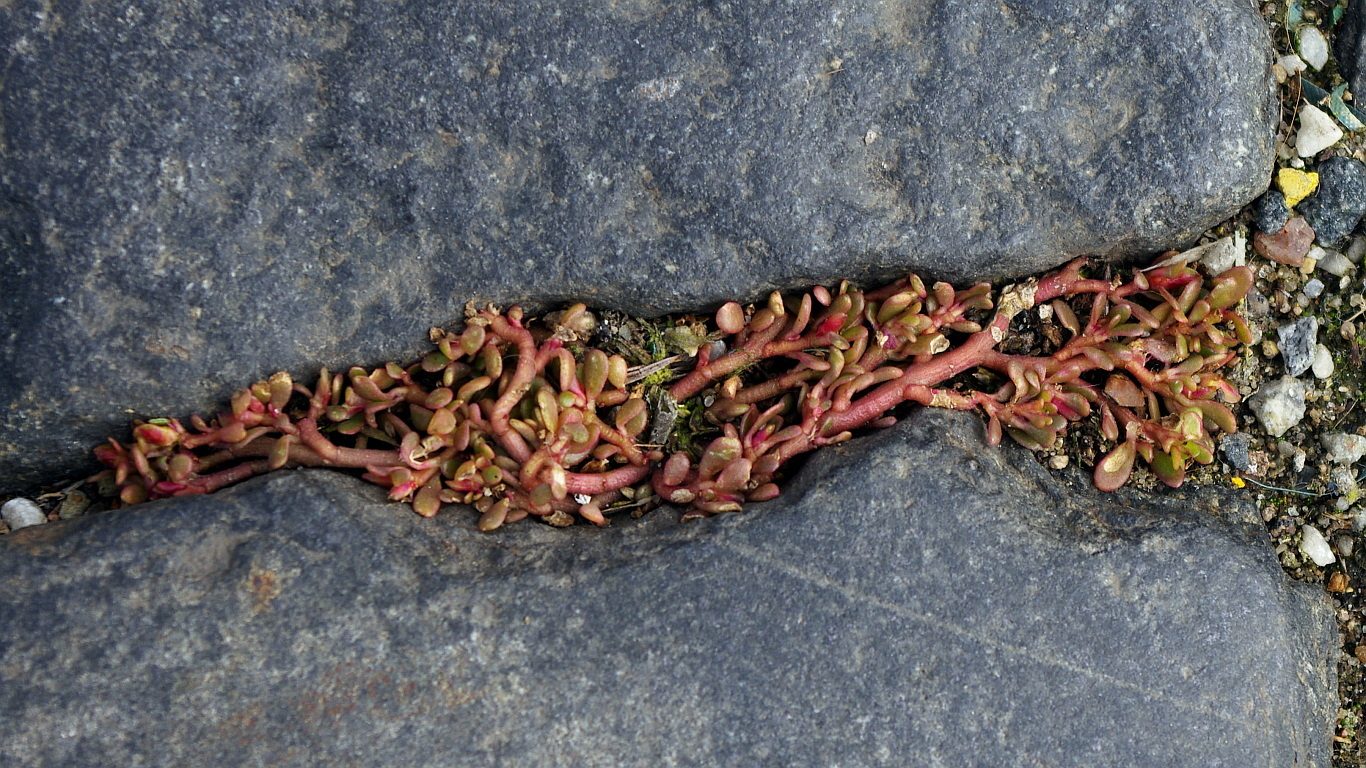
Common Purslane in a Lawn: How to Identify It and What to Check First
Sep 22, 2026•4 min read Problem Solving
Torpedograss in Lawns: How to Identify It and What to Do Next
Sep 20, 2026•5 min read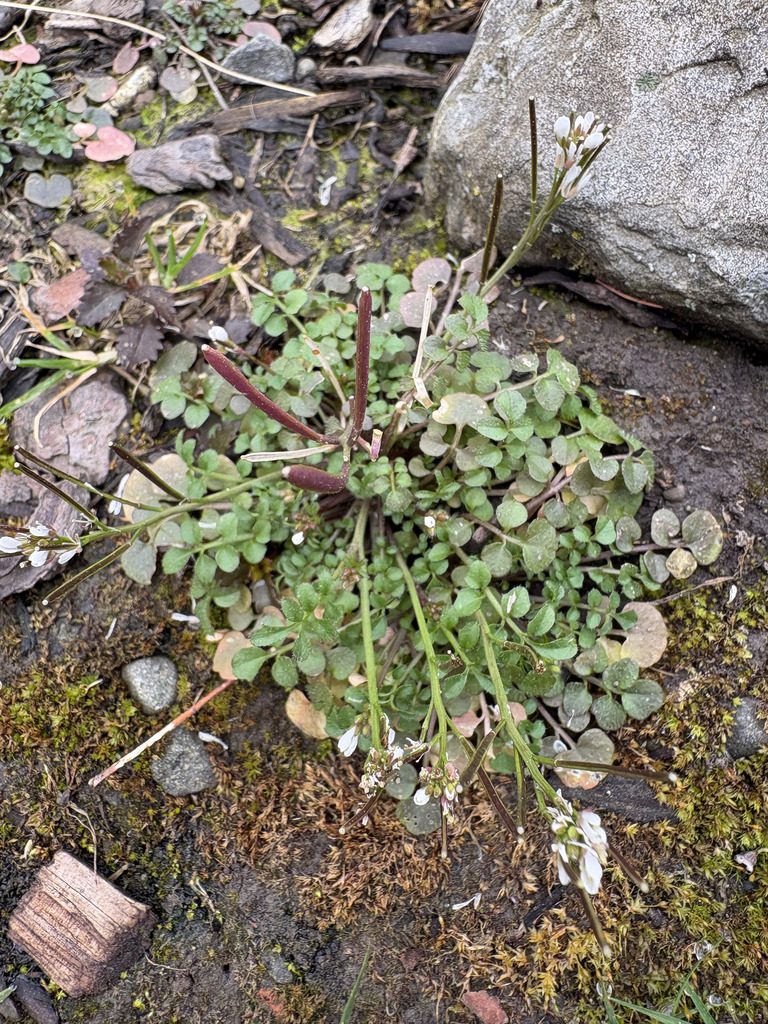 Lawn Care
Hairy Bittercress in a Lawn: How to Identify It Before It Sets Seed
Sep 22, 2026•5 min read
