

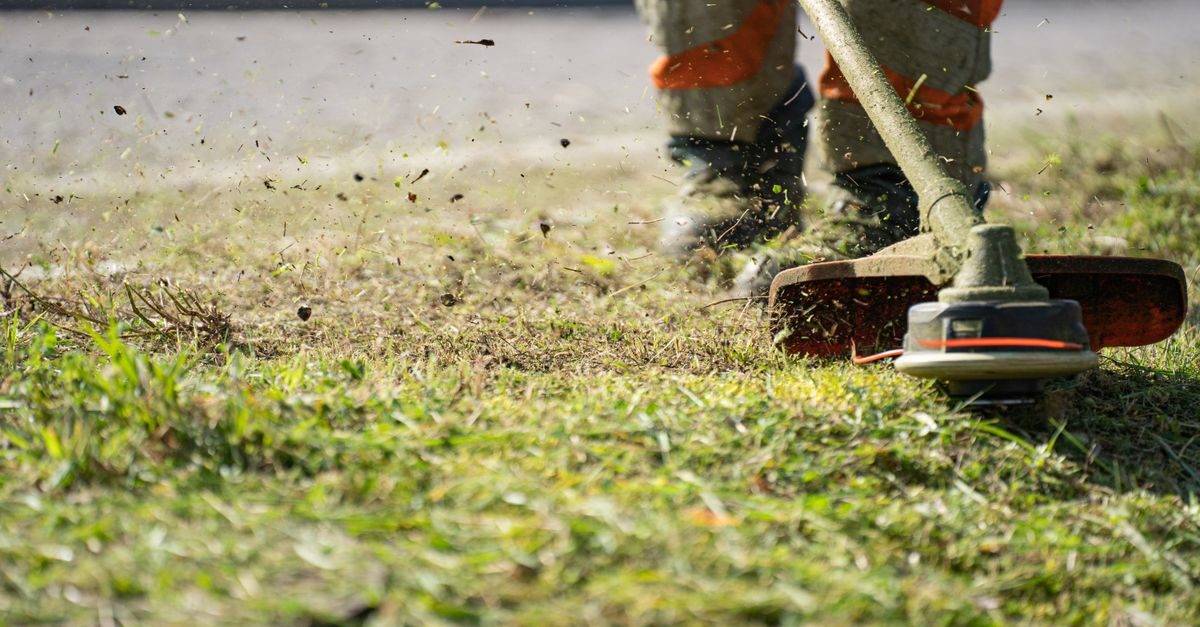
Trimmer Line Size Chart: Which Diameter and Shape Your Trimmer Takes

As an Amazon Associate we earn from qualifying purchases.
Line snapped. Spool empty. You're in the aisle staring at forty packages of string trimmer line in six sizes and five shapes. Most of that wall doesn't fit your trimmer. The number you need is already printed in your manual, and usually on the head. Here's how to read it, what each size and shape does, and when thicker line is worth it.
Use the trimmer line diameter your trimmer's manual or head label lists, and never go above the maximum it states. Common sizes run .065, .080, .095, .105, and .130 inch. Small battery trimmers like the Ryobi 18V ONE+ 10-inch take .065, EGO's 15-inch trimmer takes .095 with .080 as a backup, and STIHL's FS 56 gas trimmer runs .095 on its standard head and up to .120 on the DuroCut head.
Thicker line cuts heavier weeds. It also loads the motor. EGO's manual says heavier line than recommended cuts motor speed and causes overheating. Shape is the second choice. Round for durability, twisted for less noise, square for heavy weeds. Match the size first. Then pick the shape.
Trimmer line size chart
Diameter is measured in inches. Some packages print millimeters too. Same line, two units.
| Diameter (in) | Metric | Where you'll see it | Source |
|---|---|---|---|
| .065 | about 1.65 mm | Small cordless trimmers, like the Ryobi 18V ONE+ 10-inch String Trimmer/Edger | Ryobi product page |
| .080 | 2.0 mm | Ryobi 18V ONE+ 13-inch; the "compatible" size on EGO's 15-inch trimmer; an option on the STIHL FS 56 with the DuroCut 20-2 head | Ryobi, EGO manual, STIHL |
| .095 | 2.4 mm | EGO's recommended size and its stated maximum; standard line on the STIHL FS 56 | EGO manual, STIHL |
| .105 | about 2.7 mm | Standard on STIHL's TrimCut C 32-2 head for the FS 56, optional on several others | STIHL |
| .120 | about 3.0 mm | Standard on the DuroCut 20-2 head STIHL lists for the FS 56 | STIHL |
| .130 | about 3.3 mm | Heavy line. STIHL sells Premium Round Line up to .130; Oregon lists gauges up to .170 | STIHL, Oregon |
Read the chart as "who ships what." Your trimmer's own number beats every row in it.
Find the size your trimmer takes
Three places to look. In order.
- The manual. Look under Specifications or Line Replacement. The EGO ST1500 manual lists .095 twist line as recommended and .080 as compatible, with part numbers for both.
- The head card. STIHL says not all of its line fits every STIHL head, and points you to the head's instruction card for diameter and length.
- The old line. Lost the manual? Bring a piece of the old line to the store. Most packages list the diameter. Manufacturers post digital manuals too. STIHL and EGO both do.
Found the number? Write it on the trimmer shaft with a paint marker. Done forever.
Going thicker: skip it unless the manual lists it
Thicker line is tougher. It also drags harder through the air and the weeds. The motor pays for that.
EGO spells it out. Its manual says to use no more than 2.4 mm (.095) nylon line, because heavier line "increases the load on the motor and reduces its operating speed," which leads to overheating and damage. The same manual's warranty excludes damage from line thicker than .095. That's a hard ceiling.
Gas trimmers have more headroom on some heads. STIHL lists the FS 56 with the AutoCut C head on .095 and room for .105. Swap to the DuroCut 20-2 head and .120 is standard, with .080 to .105 optional. Note the catch. The head decides. Swap to a bigger size without the matching head and you're guessing.
My verdict on going thicker: skip it unless your manual or head card lists the bigger size. Too thick overloads the motor. A fatter string never fixed a weed problem the head wasn't built for.
Line shapes: what each one does
Shape is where the aisle gets loud. Here's what the manufacturers actually claim. Nothing more.
Round
The default. Oregon calls round the most popular shape and says it's "more durable and longer lasting than square trimmer line." STIHL calls its Premium Round Line a multi-purpose line that fits all STIHL and competitive heads. Cheap. Winds easy. Works.
Twisted
A spiral profile. Oregon says its twist line "produces fewer decibels and less drag than other shapes." STIHL's Quiet Line uses spiral grooves to cut wind noise, and STIHL aims it at electric and battery trimmers in noise-restricted areas. EGO specs twist line for its 15-inch trimmer. Less drag matters most on a battery.
Square, pentagon, and star
Edges. STIHL says the edges on its Commercial Square Line "cleanly slice through grass and heavy weeds," and pitches it for daily professional work. STIHL's pentagon line combines square line's hard edges with round line's abrasion durability and easy re-spooling. Oregon's All Purpose star line comes in .065 to .105. Oregon says the star gives "6 sharp-cutting sides" for low to medium tall grass.
The tradeoff Oregon states: round lasts longer than square. Edged line bites. Round line goes along fences and curbs, where EGO's manual says string wears fast.
Serrated and other specialty shapes
Serrated line exists. STIHL also sells an X-shaped line it says grabs grass and weeds and stays flexible. I found no manufacturer number that compares either one to plain round line. No number, no upgrade. Skip them unless you've worn out round line on heavy weeds and your head accepts the shape.
Battery vs gas: line choice
Battery trimmers are the touchy ones. Every bit of drag comes out of the pack.
- Battery trimmers: stay at or under the stated max, full stop. EGO specs twist line for its trimmers. STIHL points battery owners to its grooved Quiet Line. The EGO manual also says to cut with the tip only. Burying more line in the grass overloads the motor.
- Gas trimmers: more options, if the head supports them. Square or pentagon line earns its keep on heavy weeds. Round line is the cheap everyday choice.
Cross-shopping battery platforms? The line is a small part of it. The EGO vs Ryobi breakdown covers trimmers, blowers, and which battery you're locking into. If you're shopping mowers on the same battery, see the best battery lawn mower picks and the EGO vs Greenworks comparison.
Wind and replace the line
Heads differ. The steps below follow the EGO ST1500 manual. Check your own head card for length and direction.
- Pull the battery. On gas, shut it down. STIHL says fully powered off and cleaned before any maintenance.
- Line up the LOAD mark on the spool with the eyelets, per the EGO manual.
- Cut one piece of line 16 feet long. That's EGO's length for the ST1500.
- Feed it through the mounting hole until equal lengths hang out both sides.
- Wind it on following the arrow on the spool.
- Stop with about 5.5 inches showing on each side, the length EGO specifies.
- Push the spool retainer down and pull both ends to confirm the line feeds.
Bump heads feed on a tap. EGO says to tap on bare ground or hard soil. Tapping in tall grass can overheat the motor.
And one warning straight from EGO's manual: never load wire, metal-reinforced line, or rope. Those pieces break off and fly. Nylon only.
Shop math: reloads per spool
Givens: a 125-foot donut of .095 line and an EGO ST1500 head that takes 16 feet per reload.
- Reload length: 16 feet, per the EGO manual.
- 125 divided by 16 is about 7.8.
- That's 7 full reloads, with about 13 feet left over.
Your head's length goes in step 1. Most of the time the arithmetic is the whole buying decision.
Storage: line dries out
Old line snaps. Husqvarna's support answer says line ages and "dries out," which makes it brittle. Their fix: buy fresh line, or soak your line in water for several days to rehydrate it.
Husqvarna lists fresh line first. So buy the spool size you'll use in a season or two. Got a spool that keeps snapping? Soaking costs nothing. Try it on that one.
Keep line off tree trunks
Trimmer line cuts bark. That's the job it's built for, and bark doesn't know the difference. Purdue Extension warns that young, smooth-barked trees like maples and birches can have bark less than 1/16 inch thick. Cut through that and the tree loses the pathways that move food and water. Circle the trunk and the tree dies.
Purdue's fix is cheap. A 2- to 3-inch layer of mulch over the root zone gives equipment a visual line to stay out of. EGO's manual says the same about the machine side: avoid trees and shrubs, because the string easily damages bark, siding, and fence posts.
Brown strip along the walk a week after trimming? Scalp from a low head, or disease, or grubs. They look alike from standing height. Snap a photo for a free AI diagnosis and get the cause first. Then shop. Mulch rings and bed borders help too. The lawn edging ideas post has options.
- For trees in lawns, Purdue Extension recommends a 2- to 3-inch mulch layer on the root zone as a visual cue that keeps mowers and trimmers off the trunk. Your local extension office can advise on mulch ring size for the trees and soils in your area.
- Recommended mowing heights vary by grass type and region, and your extension office publishes them. Trim the edges to the same height. The mowing height calculator gives a starting number for your grass.
Picks by use
Named products, matched to the job. Check your manual's diameter before any of them.
| Item | Verdict | Buy it if / Skip it unless | Source |
|---|---|---|---|
| Ryobi .065 replacement spools | Buy | You run the Ryobi 18V ONE+ 10-inch, which reloads .065 spools | Ryobi |
| EGO .095 twist line (AL0951) | Buy | You run an EGO 15-inch trimmer; it's the manual's recommended line | EGO manual |
| EGO High-Performance Line AL2438, .095 | Buy | You run any EGO trimmer or head that accepts .095 and want EGO's bi-component twist line | EGO |
| Oregon Magnum Gatorline twist, .080 or .095 | Buy | Your battery or gas trimmer takes that size and you want less noise and drag | Oregon |
| Oregon Magnum Gatorline round, .095 | Buy | You trim along curbs and fences and want line that lasts | Oregon |
| STIHL Quiet Line | Buy | You run an electric or battery trimmer where noise matters | STIHL |
| Oregon All Purpose star line, .065 | Buy | You run a small battery trimmer that takes .065; Oregon says thin line cuts drag and power demand | Oregon |
| STIHL pentagon line | Skip | Unless round line wears out on heavy weeds and your head takes it | STIHL |
| STIHL Commercial Square Line | Skip | Unless you trim heavy weeds often with a gas trimmer whose head takes it | STIHL |
| Line thicker than your manual's max | Skip | Always. EGO says it overloads the motor, and its warranty excludes the damage | EGO manual |
| Wire or metal-reinforced line | Skip | Always. Breaks off and becomes a projectile | EGO manual |
No verdict on price here. Prices move weekly. Buy the size your head takes, in the shape your job needs, at whatever the shelf says that day.
What other guides get wrong
Most size charts sort line by yard size or by who you are. Homeowner gets .080. Pro gets .095. Acreage decides. That skips the part that matters. The trimmer head sets the range, and the manual prints it.
A pro-grade line in a small battery trimmer is a bigger load on a smaller motor. That mistake never shows up on a chart sorted by lawn size. Look up the number. Then shop.
Second miss: shape gets sold as a cutting upgrade, full stop. Oregon's own product copy says round outlasts square. Edged line trades life for bite. Pick it for heavy weeds. Leave it for everything else.
Where trimming fits the rest of the lawn
Trimmer line is a wear part. The lawn it edges is the real job. Measure it once with the lawn size calculator and every bag and spreader setting gets easier. Not sure what grass you're trimming? Get a free photo ID. From there, Premium's 12-month care plan sets a mowing-height target for your grass and ZIP code, and smart reminders time the season's jobs. Edge to that same height.
The trimmer line punch list
- Find the diameter in your manual or on the head card. Write it on the shaft.
- Never go above the stated max. EGO's manual caps its 15-inch trimmer at .095.
- Go thicker only when the manual lists the size for your head.
- Pick shape second: round for life, twisted for less noise and drag, square for heavy weeds.
- Cut the reload length your head card lists. EGO's ST1500 takes 16 feet.
- Nylon only. No wire.
- Buy line you'll use in a season or two. Soak brittle line if you like; Husqvarna says it helps.
- Mulch ring the trees. Keep line off the bark.
Right size, right shape, one reload at a time. Leave the rest on the shelf.
Free Lawn Care Tools
Your weed eater takes the diameter listed in its manual or on the trimmer head's instruction card. EGO's 15-inch trimmer, for example, lists .095 inch as recommended and .080 as compatible. Ryobi's 18V ONE+ 10-inch model reloads .065 spools. Check the number before you shop.
No, stay at or under the maximum diameter your manual states. EGO's manual says heavier line increases the load on the motor, reduces its speed, and can cause overheating and damage, and its warranty excludes that damage. Go thicker only if your manual or head card lists the bigger size.
The sizes you'll see most on shelves are .065, .080, and .095 inch, with .105 and .130 for heavier work. STIHL sells its Premium Round Line from .065 to .130, and Oregon lists gauges up to .170. The right one is whichever your trimmer head accepts.
Round line lasts longer, and twisted line runs quieter with less drag. Oregon says round is more durable than square line, and that its twist line produces fewer decibels and less drag than other shapes. Pick twisted for a battery trimmer or noise, round for curbs and fences.
Husqvarna recommends soaking for brittle line. Husqvarna says line ages and dries out, and that soaking it in water for several days rehydrates it so it breaks less. Buying fresh line is their other fix.
Yes, trimmer line can cut through bark and kill a tree if the damage circles the trunk. Purdue Extension says young, smooth-barked trees can have bark less than 1/16 inch thick. A 2- to 3-inch mulch layer over the root zone keeps the trimmer back.

Your lawn plan, in your pocket all season
Grass ID, a season plan, soil-timed reminders, and a lawn journal that remembers what you did. Free on iPhone.
Related Articles
 Mowing & Maintenance
Is a Reel Mower Worth It? Who It's For, Who Should Skip It, and the Picks
Sep 23, 2026•5 min read Mowing & Maintenance
Should You Mulch Leaves Into Your Lawn or Rake Them?
Sep 12, 2026•12 min read Mowing & Maintenance
EGO vs Ryobi: Which Battery Lawn Brand Should You Buy?
Jul 18, 2026•3 min read
