
Why cutworms are mostly a short-grass problem
Cutworms are night feeders that spend daylight hours curled up in a burrow in the soil, usually within a few inches of what they ate. That habit is the reason home lawns rarely suffer much: a lawn mowed at three inches has enough leaf area that a night of feeding barely registers, and the plants regrow. Golf greens, tees, and any turf cut very short have almost no margin, so a single caterpillar makes a visible bare spot that lasts for weeks.
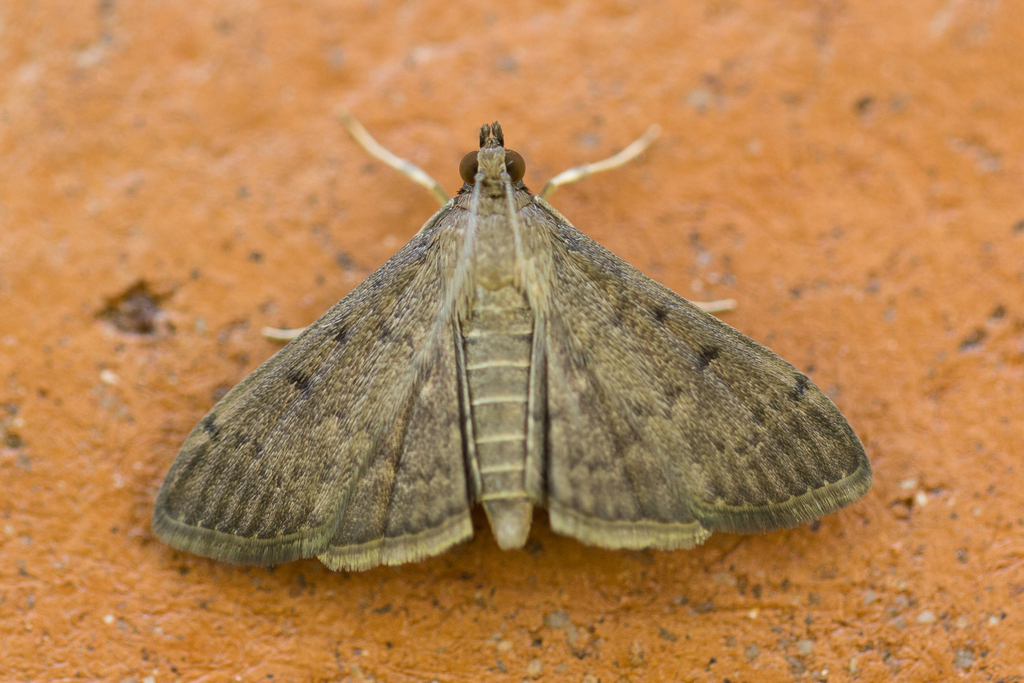
The adults are drab brown moths that fly in, lay eggs, and move on, and several generations can pass through in a season. Because damage is spread out as isolated spots rather than an expanding patch, cutworms tend to get blamed for other things, and other things get blamed for cutworms. The burrow beside the bare spot is the detail that settles it.
When to act and when to leave it alone
Most home lawns should do nothing. Mowing at the top of the recommended range for your grass gives the plants enough reserve to shrug off cutworm feeding, and the spots fill in on their own within a few weeks. Regular mowing also removes eggs and small larvae with the clippings. If you have been scalping the lawn, raising the mower is a more useful change than buying anything.
If you do have real, repeated damage, thatch reduction takes away shelter and any treatment goes on in the evening when the caterpillars come out, which is the opposite of how most people apply lawn products. Watering in the morning rather than at night keeps the surface drier through the feeding hours. As always, the product label sets the rate, the timing, and how long to stay off the lawn.
How do you identify cutworms?
- Small round bare or sunken spots an inch or three across, scattered rather than clustered
- Damage shows up most in the shortest-mowed parts of the lawn
- Grass at the edge of a spot is cut off cleanly right at soil level
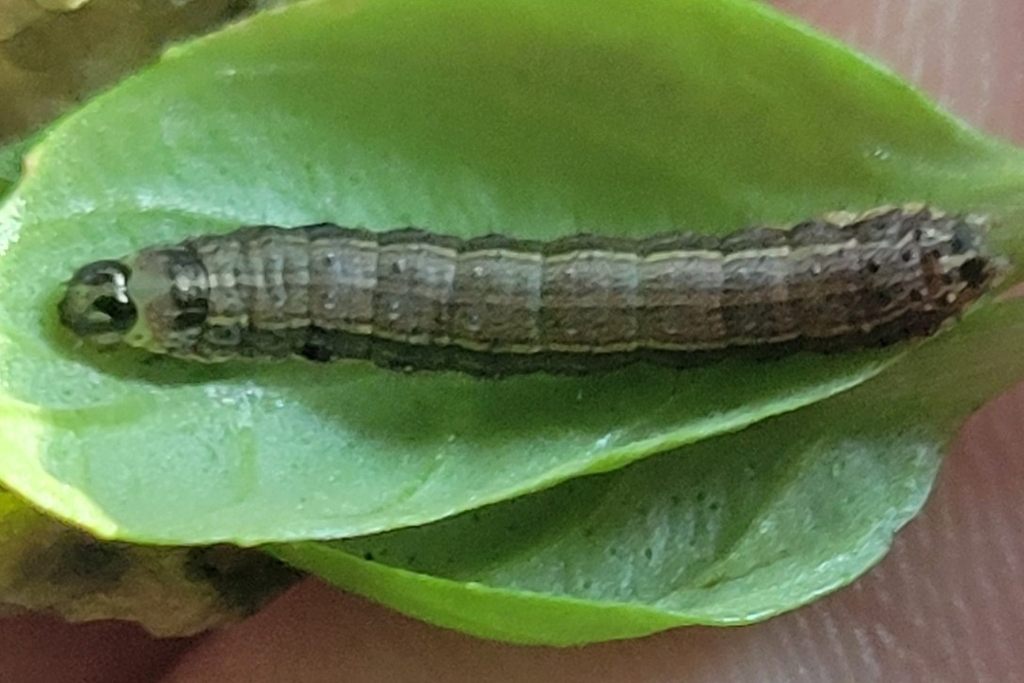
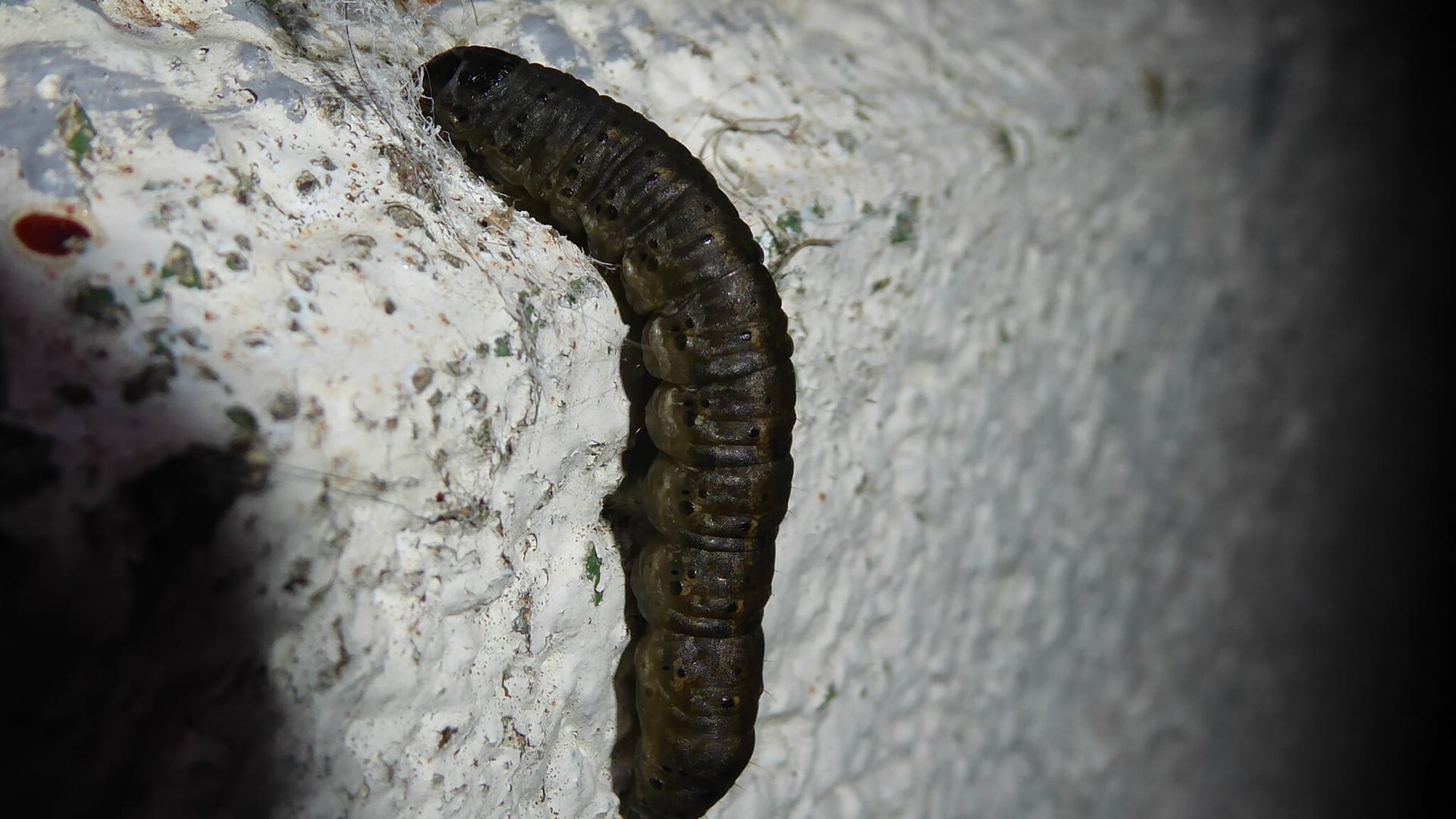
- Dull gray-brown caterpillars that curl tightly into a C when you pick them up
- Green frass pellets and a small burrow hole beside the damaged spot
What the damage looks like
Small circular dead spots 1-3 inches across; individual plants cut off at soil level.
Is it cutworms or something else?
How do you check for cutworms?
Soap flush test: drench suspect areas with soapy water at dusk. Cutworms will surface from their burrows within minutes.
Do the soap flush at dusk directly over a group of fresh spots, since cutworms sit in burrows within inches of the damage they made. Look for the burrow hole first: it is usually right beside the bare spot and often has frass at the entrance. Cutworms are rarely damaging enough in a home lawn to justify treating at all, so scout before you buy anything.
When should you treat for cutworms?
- Most home lawns: there is no treatment windowThis is the honest answer first. A lawn mowed at the top of the range for its grass type has enough leaf area to absorb cutworm feeding, and the spots fill in on their own over a few weeks. Raising the mower is the change that works, and it costs nothing.
- Spring through fall: when damage can appearSeveral generations pass through in a season, so fresh spots can show up any time the lawn is growing. Isolated spots that are not multiplying are not a reason to buy anything.
- At dusk, on the day you find fresh spots: soap flushCutworms feed at night and sit in burrows a few inches from what they ate, so both scouting and any treatment belong in the evening. Treating in the morning puts product down while they are underground.
- If damage keeps repeating: change the habitatThin the thatch to remove daytime shelter, water in the morning so the surface is drier through the feeding hours, and keep mowing regularly, which carries eggs and small larvae off with the clippings.
These windows shift by a few weeks with latitude and with the season you are actually having, so treat them as the shape of the year rather than as dates. Your county extension office publishes the local timing, and the population that justifies treating where you live.
How do you get rid of cutworms?
Start here: cultural
- Mow regularly
- Reduce thatch
- Water in the morning
Organic and biological
- Bacillus thuringiensis (Bt)
- Beneficial nematodes
- Spinosad
Conventional product categories
- Bifenthrin
- Chlorantraniliprole
- Lambda-cyhalothrin
Keep kids and pets off treated areas until the product has dried and any re-entry interval printed on the label has passed. That applies to the organic and biological options too, since most of them are still pesticides.
These are active ingredient categories, not a prescription. Rate, timing, and watering-in come from the product label. Confirm the label lists both your pest and your grass type before you apply anything.
Keeping it from coming back
- Monitor for cutworm moth flights
- Keep thatch minimal
- Inspect short-mowed areas regularly
Pest control quotes
Get matched with local pest control pros on Angi. Free quotes, no obligation.
Angi is a partner; we may earn a commission if you request quotes there.
What products work on cutworms?
These picks are not filtered to your lawn. Insect products differ in which pests and which grasses they are labeled for, and none of them are a substitute for confirming the pest first. Read the label for your pest, your grass type, and the rate before you buy.
Recommended Products
- 1Check price
 Top pick
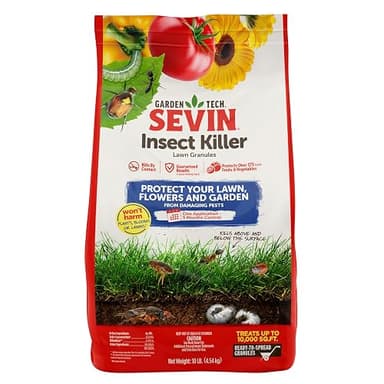
Sevin Insect Killer Granules 10 lb
Broad-spectrum granular insect killer for grubs, ants, fleas, ticks, and 100+ listed lawn pests. Treat late in the day, when cutworms feed, after a soap flush confirms them. Check that the label lists cutworms.
- 2Check price
 Best value
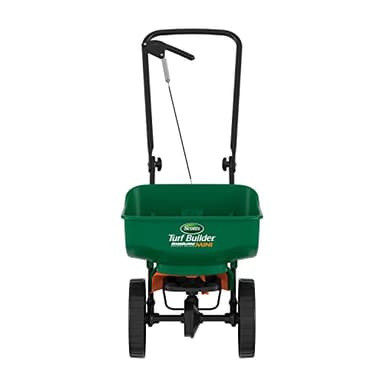
Scotts Turf Builder EdgeGuard Mini Broadcast Spreader
Simple broadcast spreader for granular fungicides, grub control, fertilizer, and recovery products that need even coverage. Granules need even coverage over the damaged area and a little beyond it.
- 3Check price
 Also great
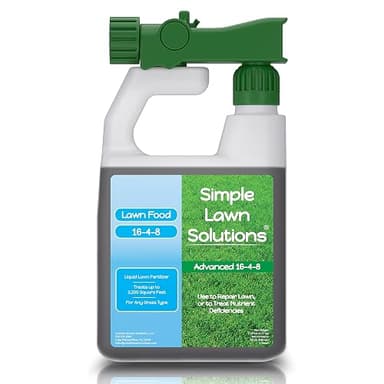
Simple Lawn Solutions Advanced 16-4-8
Liquid 16-4-8 lawn food for quick feeding on established lawns when you want balanced NPK and simple hose-end application. Light feeding helps chewed turf grow new leaf tissue.
As an Amazon Associate we earn from qualifying purchases.
Where do cutworms show up?
Most common in these regions:
Grass types at risk