Best Fertilizer for Bermuda Grass in North Carolina (2026 Top Picks)
 Marcus GreenTurf Management Pro | 18 Years
As an Amazon Associate we earn from qualifying purchases.
Bermuda grass is the go-to warm-season turf across the lower two-thirds of North Carolina. From the red-clay yards around Charlotte and the Triangle to the sandy lots near Fayetteville and Wilmington, it shows up on more sunny residential lawns and athletic fields than any other warm-season grass in the state. It loves heat, recovers from foot traffic, and shrugs off the humid Carolina summer.
But North Carolina sits in the transition zone, and that changes everything about how you feed bermuda here. This is the cool northern edge of bermuda's comfortable range, not the deep south. The growing season is shorter than it is in Georgia or Florida, green-up comes later (often April into May), and a hard winter can cause real winterkill on lawns that were pushed with nitrogen too late in the season. A feeding plan copied from a Gulf Coast schedule will green up too early and feed too far into fall, which is exactly how transition-zone bermuda gets thinned out over winter.
This guide walks through the top fertilizer picks for North Carolina bermuda in 2026, the NPK ratios that fit our acidic soils, and a region-by-region application schedule from the mountains to the coast. If you are still nailing down your variety and basic care, start with our bermuda grass care pillar for the broader playbook.
Fast Answer: For most North Carolina bermuda lawns, a 16-4-8 slow-release granular fertilizer like The Andersons PGF Complete is the best base. The included iron gives a deep color on our typically acidic clay and sandy soils, and the slow-release nitrogen will not surge-feed the lawn into late-season growth that cannot survive winter.
Split your nitrogen across the shorter transition-zone season, roughly mid-April through late August depending on region, and then stop. The single most important North Carolina rule is to cut off nitrogen by late August or early September so the lawn can harden off and store energy before dormancy. Confirm your exact nitrogen rate with your county NC Cooperative Extension office and the product label, because it depends on your soil test and how intensively you maintain the lawn.
Why North Carolina Bermuda is Different
Bermuda grows well across the Piedmont and Coastal Plain, but North Carolina is near the top of its range, not the middle. That single fact drives almost every feeding decision. The lawn wakes up later in spring, runs a shorter active season, and is more vulnerable to winter injury than the same grass would be in Augusta or Tampa. The job here is not to push maximum growth from March to November. It is to feed steadily through a compact summer window and then back off in time for the grass to prepare for cold.
Most North Carolina bermuda fertilizer failures trace back to two things: feeding too early before the lawn is truly active, and feeding too late into fall. Spring nitrogen applied before 50 percent green-up just feeds weeds. Fall nitrogen applied in September or October pushes tender growth that has no time to harden, and that tender growth is what dies back over a cold January, leaving thin, slow-recovering turf the next spring.
Recommended products
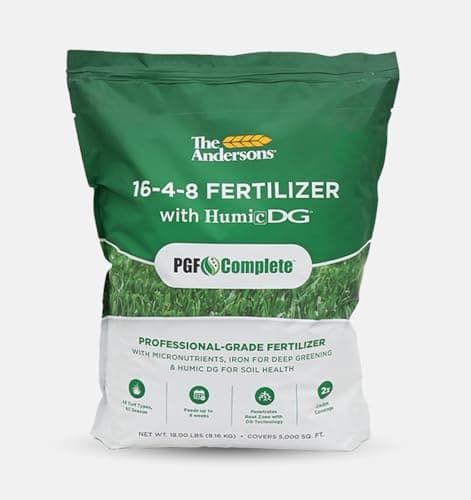
The Andersons PGF Complete 16-4-8
A slow-release 16-4-8 with 7.5% iron and a fairway-grade prill that spreads evenly on Carolina clay or sand.
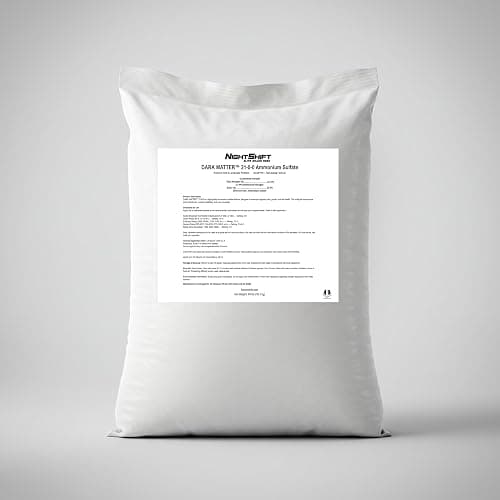
Dark Matter 21-0-0 Ammonium Sulfate + Iron
A quick spring color boost and iron-rich green-up.
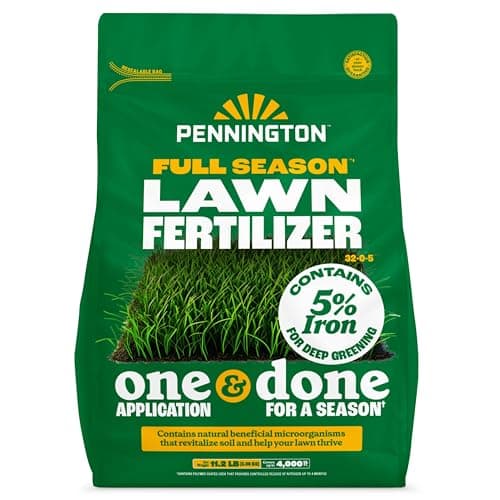
Pennington Full Season 32-0-5
A low-cost full-season feed for larger acreage lawns in the Piedmont or Coastal Plain.
Climate Realities in North Carolina Bermuda Care
North Carolina spans USDA hardiness zones 6b through 8a. The mountains run coolest at roughly 6b to 7a, the Piedmont sits around 7b, and the Coastal Plain reaches 8a. Bermuda actively grows when soil temperatures hold above 65 degrees and air temperatures stay in the 80s. On the coast and in the warmer Sandhills, that window opens in mid to late April and closes around early November. In the Piedmont it runs roughly late April through late October in an average year. In the mountains it is shorter still and bermuda is genuinely marginal, often not breaking dormancy until mid to late May.
Heat alone is rarely the limiting factor in North Carolina the way it is in Texas. Cold is. The shorter season means every feeding has to count, and the back end of the calendar matters more than the front. Humidity is high across the state in summer, which favors slow-release nitrogen and disease awareness rather than the heavy fast-release feeding you might get away with in a drier climate. Rainfall is generous statewide, so leaching on sandy soils is a bigger concern than drought for most of the bermuda-growing region.
Soil Types Across North Carolina
Piedmont (Charlotte, Raleigh, Durham, Greensboro, Winston-Salem)
Heavy red clay, usually acidic with a pH commonly between 5.5 and 6.2. It holds nutrients reasonably well but compacts hard and drains slowly, which stresses bermuda roots. Annual core aeration is close to non-negotiable on Piedmont clay. Because the soil is acidic, the pH fix here is lime, not sulfur. Get a soil test before liming so you apply the right rate. Use a balanced 16-4-8 with iron as your base feed.
Coastal Plain and Sandhills (Fayetteville, Wilmington, Greenville, Pinehurst)
Sandy to sandy-loam soils, also acidic, that drain fast and leach nitrogen quickly with the region's heavy rainfall. The answer is lighter, more frequent feedings and a preference for slow-release sources so the nitrogen is not gone after the next thunderstorm. This is where an organic slow-release like Milorganite earns its keep. Lime is still usually needed to nudge pH up, guided by a soil test.
Mountains (Asheville, Hendersonville, Boone foothills)
Cooler zone 6b to 7a, the shortest season in the state, and the highest winterkill risk. Bermuda is marginal here and many lawns are better served by cool-season grass. If you are growing bermuda in the mountains, feed lightly, start late, and stop early. The priority is winter survival, not summer push.
NPK Targets for North Carolina Bermuda
Nitrogen is the dominant driver of bermuda color and growth. Phosphorus and potassium matter less for nitrogen-driven color, but potassium earns extra attention in the transition zone because it supports cold hardiness heading into dormancy. Many North Carolina soils already test adequate to high in phosphorus, which is why a low-phosphorus ratio is usually the right call for established lawns. A soil test through NC State is the only way to know your real numbers.
For most North Carolina yards, a 16-4-8 or similar ratio is the safest base. It delivers the nitrogen bermuda wants without overloading the soil with phosphorus that will not get used. A higher-nitrogen ratio like 32-0-5 works for budget full-season feeding on larger lots, and a quick-release option is useful only for an early-season color boost, never for late-season feeding.
Iron is a nice extra in North Carolina, but for a different reason than in the alkaline Southwest. Our acidic soils usually keep iron available, so chronic iron chlorosis from high pH is far less common here. A fertilizer that includes iron still deepens the green and sharpens color, which is why several of the picks below carry it. Just remember that in North Carolina, persistent yellowing is more often a pH, drainage, drought, or disease problem than a locked-up-iron problem, so a soil test beats guessing.
Top 5 Fertilizers for North Carolina Bermuda (2026)
| Product | N-P-K | Release Type | Best For | Buy |
|---|---|---|---|---|
| The Andersons PGF Complete | 16-4-8 | Slow-release with 7.5% iron | All-purpose NC base feed, acidic clay and sand | Check on Amazon |
| Dark Matter 21-0-0 Ammonium Sulfate + Iron | 21-0-0 | Fast-release with iron | Early-season color boost, quick green-up (soil test first, it acidifies) | Check on Amazon |
| Milorganite | 6-4-0 | Slow-release organic with 2.5% iron | Sandy Coastal Plain and Sandhills soils, summer slow-feed, heat-safe | Check on Amazon |
| Pennington Full Season 32-0-5 | 32-0-5 | Polymer-coated slow-release | Budget large-acreage lawns, single full-season feed | Check on Amazon |
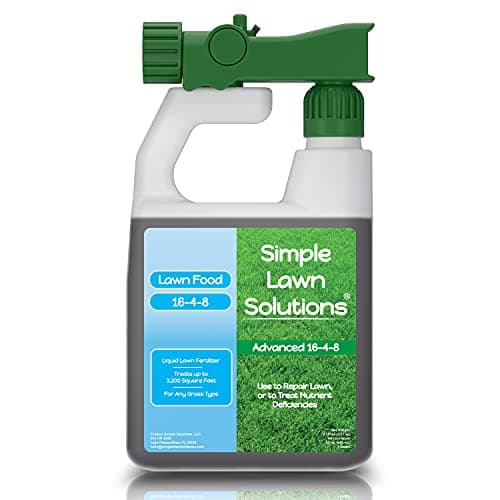
| Simple Lawn Solutions 16-4-8 Liquid | 16-4-8 | Fast-release liquid with seaweed and fish | Spot greening, hose-end touch-ups, mid-summer color boost | Check on Amazon |
The Andersons PGF Complete is the most flexible single choice for the bulk of the state. The prill size spreads evenly through a standard broadcast spreader, the iron content keeps the color deep, and the slow-release nitrogen profile fits a transition-zone summer without surge-feeding the lawn into fall. Dark Matter gives a fast early-season green-up, but because it acidifies the soil you should soil test first given that most North Carolina ground is already acidic. Milorganite earns its slot on the sandy Coastal Plain and Sandhills where leaching makes slow-release organics shine, and Pennington Full Season is the call for larger lots where cost per thousand square feet matters more than perfection. Simple Lawn Solutions liquid is a handy hose-end touch-up for spot color in the heat of July.
Application Schedule by North Carolina Region (2026)
These are starting points, not gospel. Soil temperature and your own lawn's green-up should drive the exact dates, and your county NC Cooperative Extension office can fine-tune the rate. Use our soil temperature tool to track your zip code rather than guessing.
Piedmont (Charlotte, Raleigh, Durham, Greensboro, Winston-Salem)
Average green-up: late April to early May once soil temperatures hold above 65 degrees at a 4-inch depth.
- March 10 to 25: Pre-emergent (prodiamine or dithiopyr) when soil hits 50 to 55 degrees. Do not fertilize yet.
- May 1 to 15: First nitrogen feed once the lawn is 50 percent or more green. Andersons PGF Complete 16-4-8 is the standard pick.
- June 10 to 20: Second feed. Same product, same rate.
- July 15 to 25: Third feed. A slow-release like Milorganite fits the mid-summer heat and humidity.
- August 20 to 31: Final nitrogen feed of the year. This is your cutoff. Do not apply nitrogen after this.
- September (optional): A potassium-only application with little or no nitrogen to help harden the lawn for winter. Skip if a soil test shows high K.
Coastal Plain and Sandhills (Fayetteville, Wilmington, Greenville, Pinehurst)
Average green-up: mid to late April. Sandy soils leach fast, so feed lighter and more often.
- February 25 to March 15: Pre-emergent.
- April 15 to 30: First feed at a light rate once the lawn is greening.
- May 20 to 31: Second light feed.
- June 25 to July 5: Third feed. Slow-release organic like Milorganite suits the leaching sandy profile.
- August 1 to 15: Fourth and final nitrogen feed. Stop nitrogen here for the year.
- September (optional): Potassium-only feed to support cold hardiness.
Mountains (Asheville, Hendersonville, foothills)
Average green-up: mid to late May. The shortest season and the highest winterkill risk in the state. Feed lightly, start late, and stop early.
- April 1 to 15: Pre-emergent.
- May 20 to June 1: First and main feed once the lawn is fully active.
- July 1 to 15: Second light feed.
- By mid-August: Last possible nitrogen feed. In the mountains, earlier is safer. Avoid any feeding that pushes late growth.
Common North Carolina Issues
Spring Dead Spot and Winterkill
This is the signature transition-zone bermuda problem and the number one reason North Carolina lawns look rough in spring. Symptoms: circular dead patches, often 6 inches to several feet across, that simply fail to green up while the rest of the lawn comes out of dormancy. Cause: a soil-borne fungus combined with cold stress, made worse by late-season nitrogen, heavy thatch, and poor drainage. The best prevention is cultural: stop nitrogen by late summer, keep potassium adequate in fall, manage thatch, and improve drainage. Fungicide programs exist but are timing-sensitive, so check with NC State Extension before spending on one. Not sure whether bare patches are spring dead spot, winterkill, or grub damage? Run a quick lawn diagnosis to narrow it down before you treat.
Acidic Soil and Low pH
Both Piedmont clay and Coastal Plain sand tend to run acidic in North Carolina, often below pH 6.0. Low pH ties up nutrients and leaves the lawn responding poorly even to regular feeding. Symptoms: weak growth, moss in shaded or damp spots, and disappointing color despite fertilizer. The fix is lime, not sulfur, and the rate should come from a soil test rather than a guess. NC State recommends bringing bermuda toward a pH around 6.0 to 6.5. Adding more nitrogen to a low-pH lawn rarely solves the underlying problem.
Clay Compaction
Piedmont red clay compacts hard and drains slowly, which chokes bermuda roots and worsens spring dead spot. Symptoms: water that puddles or runs off, thin turf in high-traffic lines, and a lawn that feels rock-hard underfoot in summer. Fix: core aerate once a year, ideally in early summer when bermuda is actively growing and can fill in the holes quickly. Topdressing with a thin layer of compost after aeration helps over time.
Nitrogen Leaching on Sandy Soils
On the Coastal Plain and in the Sandhills, fast-draining sand and heavy rain can wash nitrogen below the root zone before the grass uses it. Symptoms: a lawn that greens up after feeding and then fades within a couple of weeks. Fix: use slow-release sources, feed lighter and more frequently rather than in big doses, and water in deeply but not excessively. Milorganite and other coated or organic products hold up far better than fast-release nitrogen in this setting.
Feeding Before True Green-Up
The most common North Carolina timing mistake is feeding nitrogen too early in spring while the lawn is still mostly dormant. Symptoms: weeds that take off, plus wasted product. Bermuda will not use nitrogen until it is genuinely growing, which in the transition zone means late April to May for most of the state. Wait until the lawn is at least half green and soil temperatures hold above 65 degrees, and let pre-emergent, not fertilizer, carry the early-spring work.
Application Tips for North Carolina Conditions
Stop nitrogen by late summer. This is the rule that separates a healthy transition-zone bermuda lawn from a winter-thinned one. Late-season nitrogen pushes tender growth that cannot harden before cold, and that growth is what dies back over winter. Make your last nitrogen feed in late August in the Piedmont, by mid-August in the mountains, and no later than early September anywhere in the state.
Water granular fertilizer in within 24 hours. A quarter-inch of irrigation right after application drives the granules to the soil and protects the nitrogen from volatilizing in summer heat.
Use slow-release in summer. Carolina humidity and heat favor coated or organic sources like Milorganite. Fast-release nitrogen on a hot, humid day pushes growth the plant does not need and can feed summer disease.
Mow before fertilizing, not after. A clean, freshly mowed lawn lets granules fall to the soil rather than catching on tall blades. Skip mowing for 2 to 3 days after application so foot traffic does not redistribute the granules.
Soil test every 2 to 3 years. The NCDA and CS soil testing lab makes this cheap and easy, and it is free for much of the year. The report tells you your pH and exactly how much lime, phosphorus, and potassium you actually need, which often saves money and prevents over-application. To make sense of the N-P-K numbers on the bag, see our guide to reading fertilizer numbers.
Calibrate your spreader. A broadcast spreader set for PGF Complete is not set correctly for Milorganite. Always check the bag's spreader settings and verify by measuring out a known area and weighing what you applied.
Recommended products
The Andersons PGF Complete 16-4-8
The right answer for most North Carolina yards from Charlotte through the Triangle and Triad.
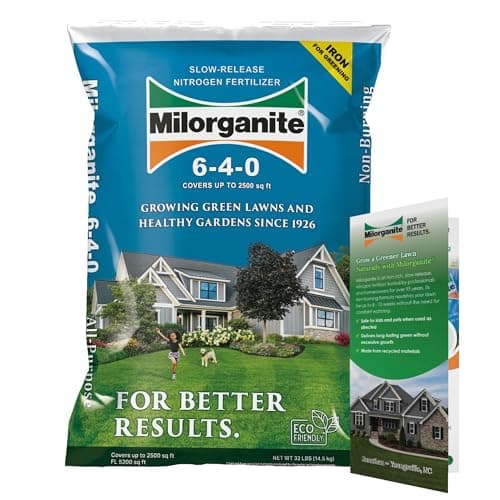
Milorganite 6-4-0
For the Coastal Plain and Sandhills where sandy soils leach fast and organic slow-release matches the rainfall pattern.
Dark Matter 21-0-0 + Iron
For an early-season color boost, used sparingly and after a soil test since most NC soils are already acidic.
- NC State Extension recommends matching your annual nitrogen to how intensively you maintain the lawn and to your soil test, rather than a fixed national number. Your county Cooperative Extension office and the product label are the authority on the exact rate.
- Because North Carolina sits in the transition zone, nitrogen should stop by late August or early September so bermuda can harden off and reduce winterkill risk.
- Most North Carolina soils are acidic, so lime (not sulfur) is the usual pH correction, applied at the rate your soil test specifies to reach roughly pH 6.0 to 6.5.
- Soil testing through the NCDA and CS lab is recommended every 2 to 3 years and is free for much of the year, helping you avoid over-applying phosphorus and potassium.
- Pre-emergent applications should be timed to soil temperature (50 to 55 degrees at a 4-inch depth), not the calendar, with timing varying across the mountains, Piedmont, and coast.
Conclusion
North Carolina bermuda is a tough, rewarding grass, but the transition-zone climate means the calendar matters as much as the product. Pick a 16-4-8 with iron as your base, lime to correct the acidic soil rather than reaching for sulfur, feed through a compact summer window, and then stop nitrogen by late summer so the lawn can survive winter. Get those four things right and your bermuda will come back stronger every spring.
If you want a deeper comparison of the same products in a national context, our best fertilizer for Bermuda grass walks through ratings without the North Carolina layer. Growing bermuda just south of here? Our Georgia bermuda fertilizer guide covers the warmer end of the range. For the full bermuda care playbook (mowing heights, watering, seasonal care), check our bermuda grass pillar guide. And before you apply your first round of pre-emergent or fertilizer in spring, confirm your local soil temperature with our soil temperature tool so you hit the window rather than guess at it. If your lawn is showing bare spots or odd color, a quick lawn diagnosis can tell you whether it is a feeding problem or something else before you spend on product.
Top Picks
 The Andersons Professional PGF Complete 16-4-8 FertilizerCheck price on Amazon
 Simple Lawn Solutions Advanced 16-4-8 Liquid FertilizerCheck price on Amazon
 Dark Matter 21-0-0 Ammonium SulfateCheck price on Amazon
As an Amazon Associate we earn from qualifying purchases.
Free Lawn Care Tools
The Andersons PGF Complete 16-4-8 is the top all-around pick for most North Carolina bermuda lawns. The slow-release nitrogen feeds steadily through the shorter transition-zone summer without surge-feeding the lawn into late growth, and the included iron keeps color deep on our typically acidic clay and sandy soils. For a fast early-season color boost you can rotate in Dark Matter 21-0-0 plus iron, but soil test first since it acidifies and most NC soils are already acidic.
Wait until the lawn is at least 50 percent green and soil temperatures hold above 65 degrees at a 4-inch depth. In the Coastal Plain and Sandhills that is usually mid to late April. In the Piedmont it lands in late April to early May. In the mountains bermuda often does not break dormancy until mid to late May. Feeding before true green-up just feeds weeds, so let pre-emergent carry the early-spring work and confirm timing with your county NC Cooperative Extension office.
Stop nitrogen by late August or early September. North Carolina sits in the transition zone, so late-season nitrogen pushes tender growth that cannot harden before winter, and that growth is what dies back and causes winterkill. Make your last nitrogen feed in late August in the Piedmont, by mid-August in the mountains, and no later than early September anywhere in the state. A potassium-only application in September is fine and actually helps cold hardiness.
Yes. Piedmont red clay holds nutrients but compacts hard and drains slowly, so annual core aeration matters and a steady 16-4-8 with iron works well. Sandy Coastal Plain and Sandhills soils drain and leach nitrogen fast, so feed lighter and more frequently and favor slow-release sources like Milorganite. Both regions tend to run acidic, so lime (guided by a soil test) is the usual pH correction rather than sulfur.
It depends on how intensively you maintain the lawn and what your soil test shows, so NC State Extension does not use a single fixed national number. The rate is matched to your management level and verified against the product label and a soil test through the NCDA and CS lab. The safer framing for North Carolina is to feed through a compact summer window and then stop nitrogen by late summer rather than chase a maximum annual pound count.
In spring, slow or patchy green-up is often just the transition-zone calendar. North Carolina bermuda wakes up later than it would in Georgia or Florida, frequently not until late April or May. If patches stay dead while the rest of the lawn greens up, suspect spring dead spot or winterkill, which are common here and made worse by late-season nitrogen and poor drainage. Persistent overall yellowing usually points to low soil pH, drainage, or drought rather than locked-up iron, so a soil test beats guessing.

Beat weeds and brown spots from your phone
Snap a photo, get the fix, and follow a plan timed to your soil and weather. Free on iPhone.