How to Get Rid of Doveweed (Identification, Prevention, and Control)
 Marcus GreenTurf Management Pro | 18 Years
As an Amazon Associate we earn from qualifying purchases.
You keep your lawn fed and mowed, but by late summer a low, fleshy weed with smooth, pointed leaves starts creeping through the thin and soggy spots, and nothing in the garage seems to touch it. You spray, it shrugs it off. You pull it, and a week later it is back and wider than before. If that sounds familiar, you are almost certainly dealing with doveweed (often spelled dove weed), one of the most stubborn warm-season lawn weeds there is.
Not sure that is what you have? Snap a photo for a free AI diagnosis and get a clear ID in seconds before you buy the wrong product.
Doveweed is a summer annual that thrives in wet, poorly drained turf, and its waxy leaves shrug off many sprays, which is exactly why it feels unkillable. The first and most important fix is not chemical. Doveweed is telling you the area stays too wet, so the foundation of control is watering deeply but infrequently, correcting drainage and low spots, and growing dense, taller turf that shades the soil. Get the moisture down and you remove the advantage that lets doveweed win.
The second key is timing. Doveweed germinates later than most summer weeds, once soil temperatures reach 65 to 70°F in late spring, so a single early pre-emergent often wears off before doveweed even sprouts. Prevention with a well-timed, split pre-emergent program is far easier than killing established plants. When you do treat visible doveweed, the safe product depends entirely on your grass type. On St. Augustine and centipede, atrazine and Celsius WG are the extension picks. On Bermuda and zoysia, Celsius WG or a three-way broadleaf product does the work. On bahia, no extension service recommends a doveweed herbicide, and the Celsius label bans it. Confirm the label lists your turfgrass before you spray, and plan on two to three seasons to clear a heavy stand.
First, Make Sure It Is Actually Doveweed
In my experience, the most expensive doveweed mistake is treating it like an ordinary broadleaf weed and reaching for whatever weed and feed is handy. It fails, people assume they need a stronger version of the same thing, and the real problem, the plant and the wet soil it grows in, never gets addressed. So before you buy anything, confirm the ID.
What doveweed looks like
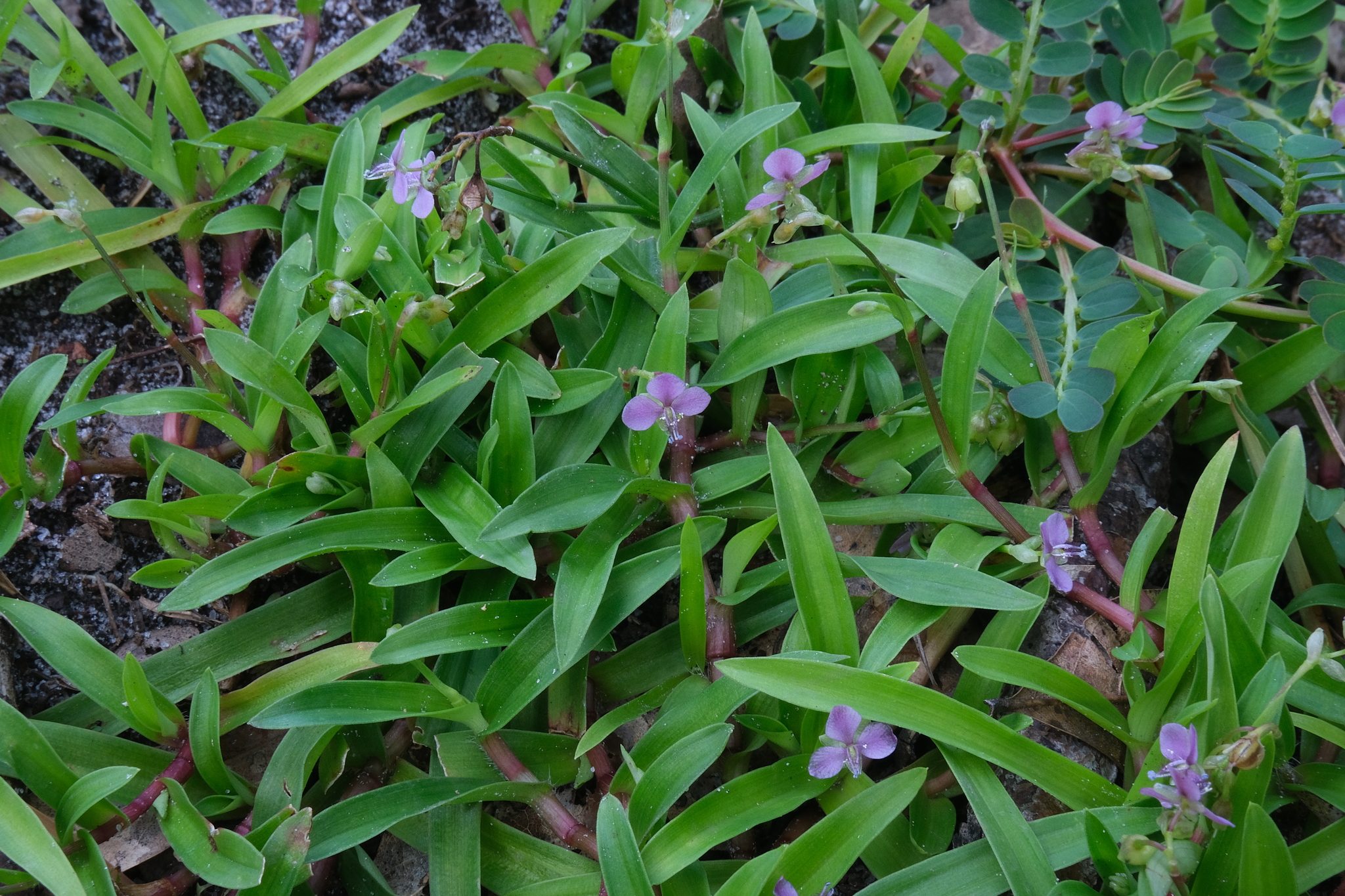
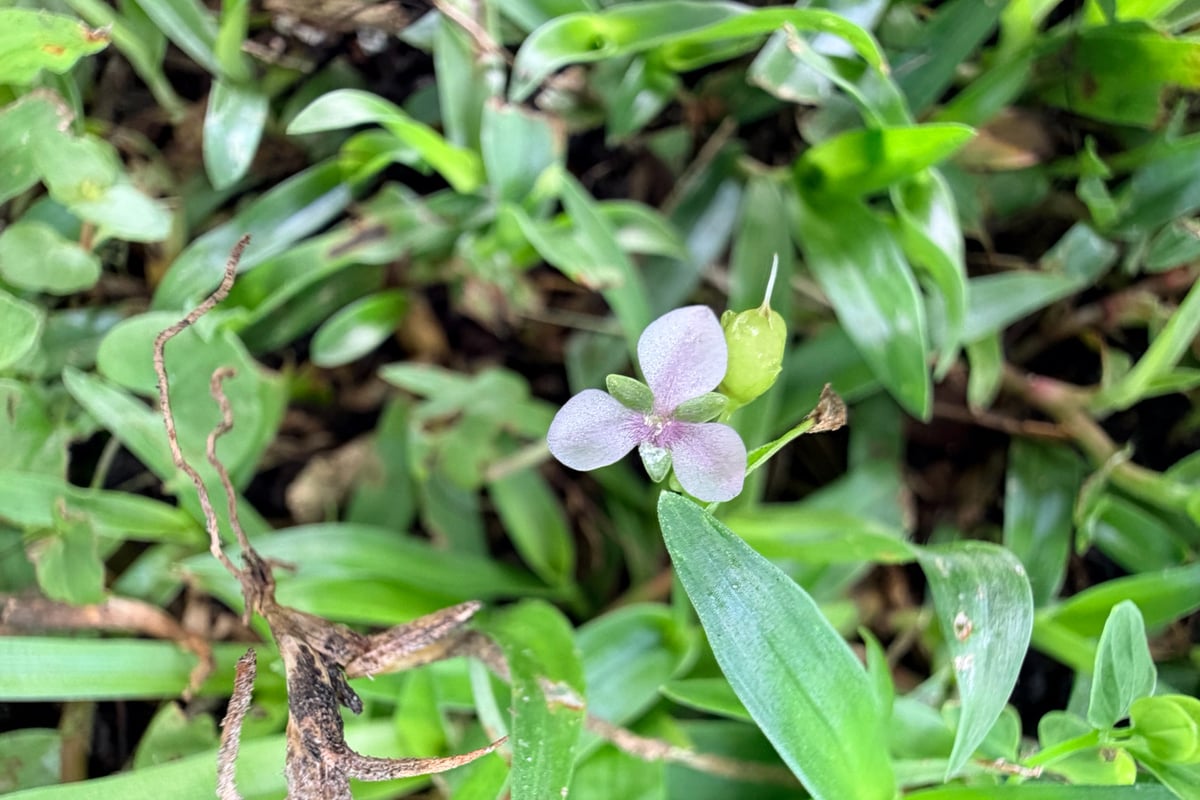
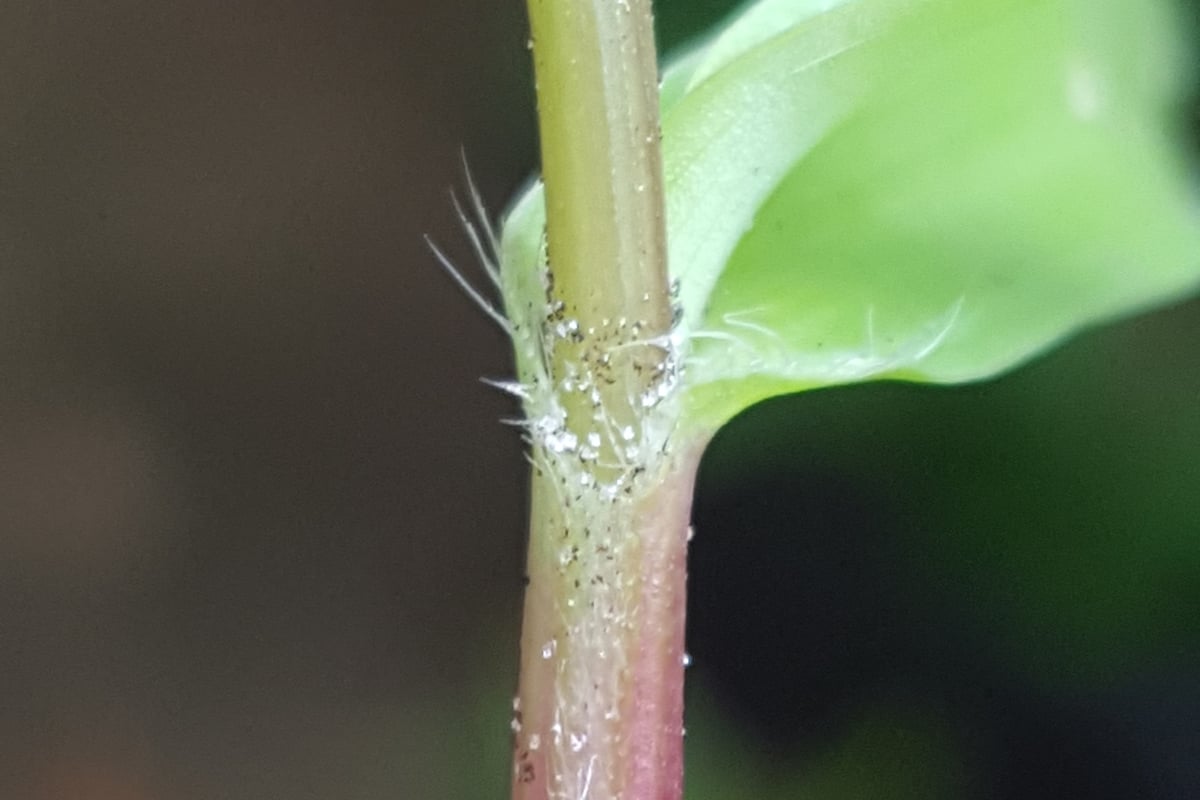
Doveweed has thick, slightly succulent leaves that are smooth, shiny, and lance-shaped, tapering to a point, with parallel veins running the length of the blade. The leaves wrap the stem at the base, and the stems are fleshy and tend to creep along the ground, rooting where the joints touch soil. In a lawn it often forms low, spreading patches that feel slightly rubbery and grow fastest in the wettest areas. Small blue to violet three-petaled flowers can appear later in the season. The look that fools people most is how grassy and harmless it seems early on, right up until it takes over a damp corner of the yard.
Common look-alikes
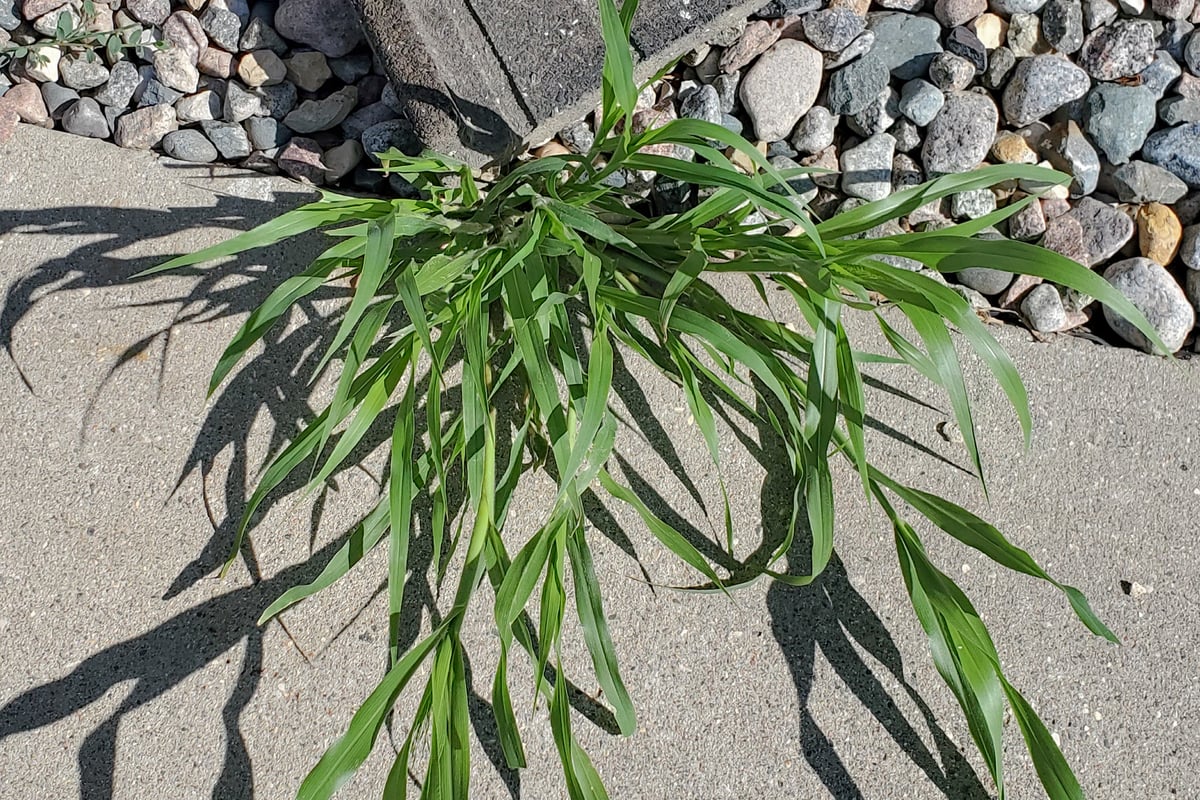
A few plants get mistaken for doveweed. The flat, milky-sapped mats of spotted spurge share doveweed's love of thin, stressed turf, but spurge leaks a white sap when you snap it and doveweed does not. Young grassy weeds can look similar before doveweed thickens up, but grasses have hollow or jointed round stems rather than doveweed's solid, fleshy creeping stems. If you are sorting through several weeds at once, our roundup of common lawn weeds and how to remove them is a useful side-by-side reference. When you are unsure, it is worth a few seconds to snap a photo for a free AI diagnosis rather than guess and spray the wrong thing.
Doveweed or dove weed croton?
Two different plants share the name, and which one you have depends a lot on where you live. The lawn weed in this article is Murdannia nudiflora, a glossy, grass-like creeper of wet Southern turf. Out West and across Texas, "dove weed" often means a croton. The U.S. Fish and Wildlife Service lists Croton texensis under the common name doveweed, and Texas A&M describes that plant as an annual with grayish to yellowish green leaves, 1 to 4 feet tall, whose seed crop is "very valuable to dove, quail and other seed-eating birds." In California the name goes to turkey mullein (Croton setiger), a low greenish-gray mat covered in dense pale hairs that prefers dry, disturbed ground.
The quick test is texture and site. Fuzzy, gray-green, and growing in dry, sunny ground points to a croton, a native plant whose seed feeds doves and quail. Shiny, hairless, bright green blades creeping through a soggy patch of St. Augustine or centipede point to Murdannia, and everything below is for that one.
Why Doveweed Is So Hard to Kill
Understanding why doveweed wins is what separates people who beat it from people who fight it all season. It has three advantages working together.
It loves wet soil. Doveweed thrives where soil stays soggy from overwatering, poor drainage, frequent rain, or a low spot that puddles. That habitat stresses your desirable grass while giving doveweed an open, sunny, moist seedbed. An outbreak is usually a drainage message, not a random invasion.
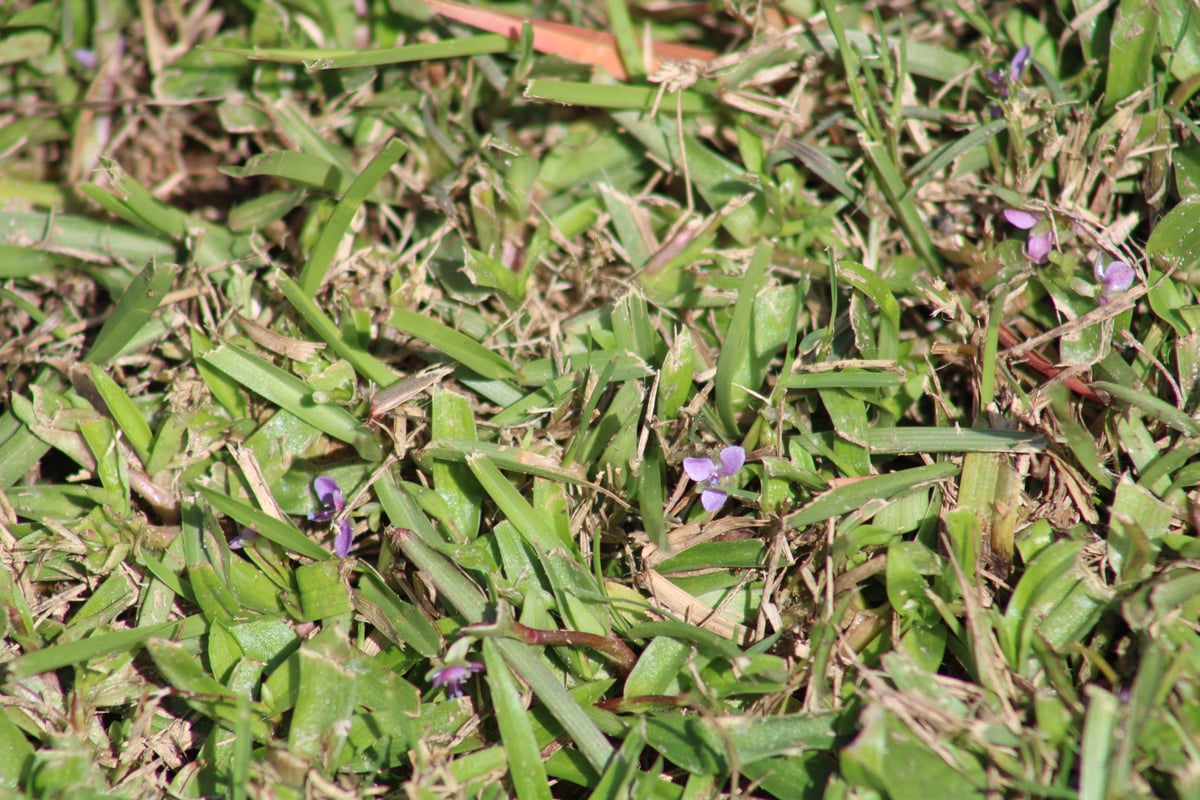
Its leaves shed sprays. The same waxy, slightly succulent surface that makes doveweed look glossy also causes herbicide droplets to bead up and roll off, so a single light application often does little. This is why repeat treatments and the right timing matter so much.
It germinates late and in waves. Doveweed comes up later in the season than crabgrass and most summer annuals, and it does not all emerge at once. New seedlings keep appearing for weeks, so one treatment rarely catches the whole population. On top of that, the creeping stems root at the joints, which means mowing or pulling can chop and scatter pieces that take root and spread the patch.
Its seed outlasts your patience. UF/IFAS notes that doveweed growth slows once temperatures fall below 70°F, and that is usually when it sets seed. Those seeds can survive in the soil for several years, which is why UF tells turf managers to plan doveweed control over two or three years. A summer annual dies back with the cold, so a clean-looking lawn in January only means the next wave is waiting in the soil.
Step 1: Fix the Moisture First
This is the highest-leverage move against doveweed, and it costs nothing but attention. Skip it and you will be spraying forever.
- Water deeply and infrequently. Let the top inch of soil dry between waterings instead of running light daily cycles that keep the surface constantly damp. Doveweed struggles when its favorite wet habitat dries out.
- Correct drainage and low spots. Track down areas that puddle after rain, downspouts dumping onto the lawn, and sprinkler heads that overshoot or leak. Core aerating compacted soil also helps water move down instead of sitting on top.
- Mow a touch higher and keep turf dense. Taller grass shades the soil and starves doveweed seedlings of the light they need, and a thick stand leaves no open ground to colonize. Do not scalp the lawn, and avoid mowing wet doveweed, since cutting its fleshy stems can spread rooting fragments.
Mowing heights that help the grass win
Mowing is where doveweed quietly gets its edge. UF/IFAS says turf cut too short and too often pushes doveweed leaves to grow flat to dodge the mower blade, and those flat leaves shade out the grass underneath. Height of cut, which is simply the mowing height, is the fix. Here are UF's numbers for the grasses doveweed invades, with the one-third rule on top: never take more than a third of the blade at once.
| Grass | UF/IFAS mowing height |
|---|---|
| St. Augustine (Floratam, Raleigh, Palmetto) | 3.5 to 4 inches |
| St. Augustine (Captiva, Delmar, Seville, Sapphire) | 2 to 2.5 inches |
| Centipede | 1.5 to 2.5 inches |
| Zoysia | 1 to 2.5 inches |
| Bermuda (home lawn, moderate care) | 0.75 to 1.5 inches |
Set the deck at the top of your grass's range while you are fighting doveweed. UF also notes that a light to moderate nitrogen feeding with or right after a herbicide application helps the turf recover and close the gaps faster.
For a full watering routine that keeps soil from staying soggy, see our lawn watering guide. Fixing the water is not a side note here. It is the main event.
Step 2: Prevent It With a Well-Timed Pre-Emergent
Here is the part most guides bury: doveweed is far easier to prevent than to kill once it is established. The catch is timing. Because doveweed germinates late, once soil temperatures reach 65 to 70°F in late spring, UF/IFAS warns that a February or March crabgrass pre-emergent may be fading right when doveweed comes up. University extension programs recommend a split or sequential program, a first application just ahead of that soil temperature and a second about 45 days later, so the barrier is still active when doveweed actually emerges.
Getting pre-emergent down is like getting the tarps on before the storm. Once the rain is falling, you're late. Clemson publishes its indaziflam (Specticle G) dates by region, and they make a good rough guide for the rest of the Southeast.
| Clemson region | First application | Second application |
|---|---|---|
| Coastal | Late March | 45 days later (about early to mid-May) |
| Midlands | Around April 1 | 45 days later (about mid-May) |
| Upstate | Mid-April | 45 days later (about June 1) |
Further south the soil usually warms sooner, so let a soil thermometer move those dates. UF/IFAS adds two more options for a split program: dimethenamid-P (Tower) at two applications 5 to 6 weeks apart, and S-metolachlor (Pennant Magnum), which on St. Augustine is registered only for sod farms. Soil-acting products need water to reach the seed zone. The Hi-Yield atrazine label, for example, calls for rain or irrigation within 7 to 10 days to stop weeds from seed.
Pre-emergent active ingredients that extension sources cite for doveweed include indaziflam, S-metolachlor, simazine, and atrazine, though which ones are safe depends on your grass. The simplest way to nail the timing is to watch soil temperature rather than the calendar. Use our soil temperature tracker to see when your soil is approaching the mid 60s, and our herbicide timing tool to line up the application window for your location. Note that pre-emergents stop roots from forming, so do not apply them to a lawn you recently seeded or sodded. Clemson's line for Specticle G is firm: no application to a lawn seeded less than 16 months earlier or sodded less than 3 months earlier.
Step 3: Post-Emergent Control by Grass Type
If doveweed is already up, the safe product depends entirely on your turfgrass, and this is where people cause real damage by spraying the wrong thing. Here is the extension-backed breakdown.
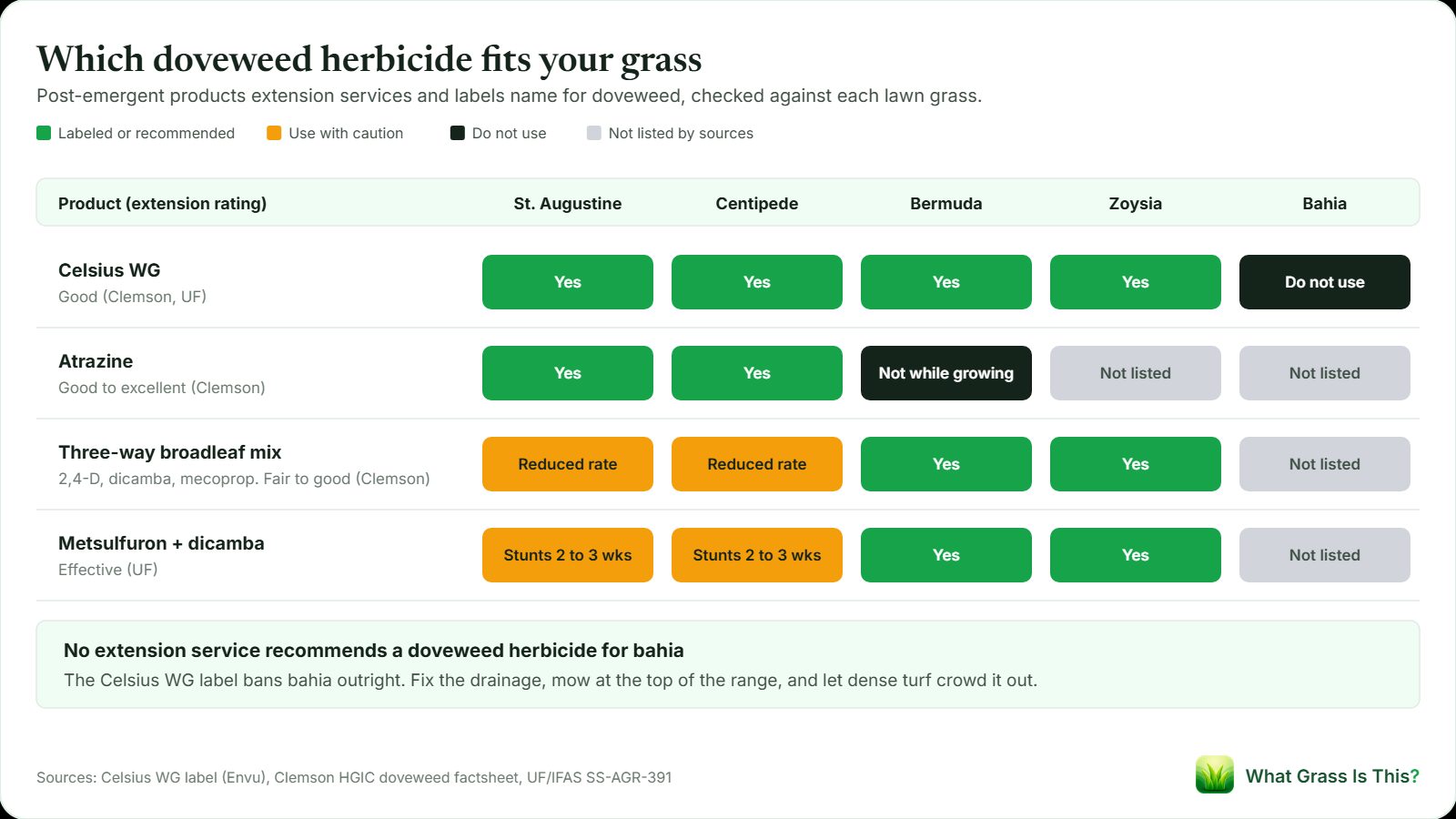
- St. Augustinegrass and centipedegrass: these are the most doveweed-friendly grasses to treat. Atrazine gives good to excellent control and can be used on both, applied after full spring green-up. A product containing thiencarbazone, iodosulfuron, and dicamba (sold as Celsius WG) gives good control, and Clemson calls it the only doveweed product you can use on warm-season lawns during spring green-up. A standard three-way broadleaf product can also be used, but only at a reduced rate, because both grasses are sensitive to it. UF notes some three-way labels exclude Floratam St. Augustine entirely.
- Bermudagrass and zoysiagrass: these tougher grasses tolerate a standard three-way broadleaf herbicide at the full labeled rate, and Celsius WG is also labeled for them. UF/IFAS adds metsulfuron-methyl plus dicamba as an effective combination that is safe on both. Keep atrazine off growing Bermuda: UF says it will significantly harm the grass, and consumer atrazine labels allow it on Bermuda only while the lawn is dormant. Simazine works the same way as atrazine and UF lists it as safe on Bermuda.
- Bahiagrass: this is the honest gap. No university extension source recommends a doveweed-specific herbicide that is safe on bahia, because the products that work on doveweed are not labeled for bahia. If you have a bahia lawn, lean entirely on the moisture fix, dense turf, and careful spot removal, and do not gamble with a product that can wreck your lawn.
Whatever your grass, plan on more than one application a few weeks apart, since doveweed's waxy leaves and staggered germination defeat single treatments.
Doveweed herbicide chart
Here is every product the extension services and labels name for doveweed, lined up by grass. Ratings are the extension service's own words.
| Active ingredient (example) | Type | Grasses | Keep it off | Doveweed control |
|---|---|---|---|---|
| Atrazine (Hi-Yield, Southern Ag) | Pre and post | St. Augustine, centipede | Growing Bermuda; lawns over 90°F or in drought | Good to excellent (Clemson) |
| Thiencarbazone + iodosulfuron + dicamba (Celsius WG) | Post | St. Augustine, centipede, Bermuda, zoysia | Bahia, seashore paspalum, all cool-season grass | Good (Clemson, UF) |
| 2,4-D + dicamba + mecoprop (three-way) | Post | Bermuda, zoysia; St. Augustine and centipede at reduced rate | Any warm-season lawn during spring green-up | Fair to good (Clemson) |
| Metsulfuron-methyl + dicamba | Post | Bermuda, zoysia | Caution on St. Augustine, centipede (2 to 3 weeks of stunting) | Effective (UF) |
| Indaziflam (Specticle G) | Pre | Warm-season lawns listed on the label | Seeded under 16 months, sodded under 3 months | Split program, 45 days apart (Clemson) |
| Glyphosate, 3% spray | Kills everything | Spot use only, then resod | Any turf you want to keep | For patches where turf is already gone (Clemson, UF) |
| MSMA | Post | None for home lawns | All residential lawns | Residential use canceled by EPA in 2009 |
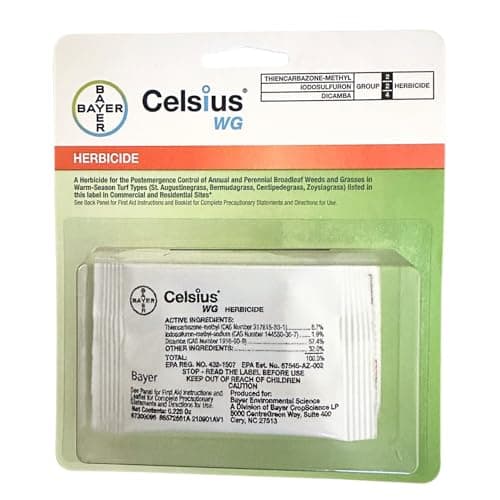
What the Celsius WG label says about doveweed
Celsius comes up in nearly every doveweed conversation, so here is what the label says, straight off the Envu sheet. Doveweed sits in the label's hardest tier, controlled at 0.113 oz of product per 1,000 sq ft, and the label caps the whole year at 0.17 oz per 1,000 sq ft. Do that math and you get one full-rate application plus a follow-up at roughly half rate, which is exactly how a stubborn doveweed patch tends to play out. For a spot or zone job, the label mixes 0.057 to 0.113 oz into 1 gallon of water, and that gallon covers up to 1,000 sq ft.
Expect weeds to stop growing within hours and die over 1 to 4 weeks, faster when soil is above 65°F and the weeds are not drought-stressed. Do not mow until the spray has dried, and know that rain before it dries may mean a retreat. Heat still matters: the label warns that spot treatments on St. Augustine above 90°F can cause temporary growth regulation, and it bans spray adjuvants, such as surfactants, above 90°F. Spray early on a mild morning and let the label's numbers set the rate.
- Confirm your turfgrass is on the label. University extension guidance is blunt about this: read the label and make sure the herbicide is recommended for the specific grass in your lawn. A product that is safe on one warm-season grass can severely injure another.
- Mind temperature and atrazine restrictions. Clemson says not to apply atrazine to a drought-stressed lawn or when daily temperatures are over 90°F, and turf injury from every broadleaf product rises in the heat. UF/IFAS caps atrazine and simazine at 1 lb of active ingredient per acre per application and 2 lb per year, because higher rates injure turf and raise the risk of the herbicide reaching groundwater. Skip it during spring green-up, and keep it away from water sources or where the water table is high. It is also legally restricted in some areas, so check the label's environmental section.
- Use amine, not ester, near sensitive turf. Ester formulations of 2,4-D can volatilize and drift in heat. Where a three-way product is appropriate, the amine form is the safer choice in summer.
- Avoid the discontinued arsenicals. EPA canceled MSMA for residential lawns in 2009, and it is now registered only for cotton, sod farms, golf courses, and highway rights-of-way. DSMA products were canceled outright the same year. They were never safe on St. Augustine or centipede either. Do not use old stock.
- Treat young, actively growing plants. Small doveweed is far easier to control than a thick established mat, so do not wait for it to take over.
What Most Guides Get Wrong
Most doveweed articles tell you to spray a broadleaf weed killer and move on. Here is what actually decides whether you win.
Prevention beats post-emergent control. Because doveweed germinates late and in waves and resists sprays, chasing established plants is the hard way. The people who beat doveweed are the ones who fix drainage and run a properly timed split pre-emergent program, so most of the weed never comes up.
Mowing and pulling can spread it. The creeping stems root wherever a joint touches moist soil, so chopping a wet patch with the mower or yanking plants apart scatters rooting fragments. Treat the patch, do not shred it.
There is no one-size product. The right chemical depends on your grass, and on bahia there may be no safe chemical answer at all. A blog that names a single product for everyone is setting someone up to damage their lawn. If you want the exact product and week for your specific zip code and grass type, that is what a personalized care plan is for, and you can start with a free photo diagnosis.
Your Doveweed Action Plan
- Confirm the ID. Check for thick, smooth, lance-shaped leaves and fleshy creeping stems in the wettest part of the lawn. If unsure, get a free diagnosis from a photo before buying anything.
- Fix the water. Switch to deep, infrequent irrigation and correct soggy spots, low areas, and drainage problems. This weakens doveweed more than any spray.
- Strengthen the turf. Mow a notch higher, aerate compaction, and keep the stand dense so doveweed has no open, sunny ground.
- Prevent next year. Run a split pre-emergent program timed to soil temperature, since a single early application wears off before doveweed germinates.
- Treat by grass type. Match the post-emergent to your turfgrass, confirm the label lists your grass, and respect temperature and atrazine limits. On bahia, rely on cultural control.
- Repeat and be patient. Expect several treatments a few weeks apart and a two to three year program on a heavy stand, since the seed survives in the soil for years. Keep the soil drier so the problem does not return.
For the fundamentals of choosing and applying lawn herbicides without wasting product, our guide to the best weed killers and DIY methods covers the basics, and if you are battling several warm-season weeds at once, our summer weed management guide ties the timing together. Beat doveweed by drying out its habitat first, preventing it on schedule, and treating what remains with the right chemistry for your grass, and that glossy creeper finally loses its grip.
Top Picks

As an Amazon Associate we earn from qualifying purchases.
Free Lawn Care Tools
Start with the soil, not a spray. Doveweed thrives in wet, poorly drained turf, so watering deeply but infrequently, fixing drainage and low spots, and growing dense, taller grass removes its biggest advantage. From there, prevention with a well-timed pre-emergent is more effective than chasing established plants, and any post-emergent you use should be matched to your specific grass type. There is no single product that works on every lawn. And whether you write it as doveweed or dove weed, it is the same plant, so the same plan applies.
Two reasons. First, doveweed germinates later than most summer weeds and emerges in waves over several weeks, so a single treatment never catches all of it. Second, it loves wet soil, so if the underlying moisture and drainage problem is not fixed, new plants keep appearing. Its creeping stems also root wherever they touch damp soil, so mowing or pulling can spread rooting fragments.
Often not well. Doveweed has waxy, slightly succulent leaves that shed many sprays, and timing matters more than with easier weeds. Some atrazine-based products labeled for St. Augustine or centipede can help on those grasses, but many standard broadleaf products do little, and several are unsafe on warm-season lawns. Always confirm the label lists your grass type.
Doveweed germinates in late spring, once soil temperatures reach 65 to 70°F, which is later than crabgrass and most summer annuals. Because of that late timing, a single early-spring pre-emergent often wears off before doveweed sprouts. Extension programs recommend a split application, with the first just before soil reaches that temperature and a second about 45 days later. Clemson's dates run from late March on the coast to mid-April in the Upstate.
Yes. St. Augustine and centipede are actually the easiest grasses to treat for doveweed. Atrazine gives good to excellent control on both, and a product containing thiencarbazone, iodosulfuron, and dicamba (sold as Celsius WG) gives good control and is the one doveweed product Clemson clears for use during spring green-up. Bermuda and zoysia tolerate a full-rate three-way broadleaf product. Bahiagrass is the exception, with no extension-recommended doveweed herbicide, so bahia owners should rely on cultural control.
Usually not, and it can backfire. Doveweed's fleshy stems root wherever a joint touches moist soil, so breaking a plant apart or mowing a wet patch can scatter pieces that take root and widen the infestation. Hand removal only makes sense on a small, young patch where you can lift the whole plant, and even then you should pair it with fixing the wet soil that invited it.
Yes. Doveweed is on the Celsius WG label at the top rate of 0.113 oz of product per 1,000 sq ft, and Clemson and UF/IFAS both rate its doveweed control as good. The label caps the year at 0.17 oz per 1,000 sq ft, so plan on one full-rate application and a lighter follow-up if the patch regrows. It is labeled for St. Augustine, centipede, Bermuda, and zoysia, and banned on bahia and all cool-season grasses.
It does not matter for a home lawn, because you can't legally use it there. EPA canceled MSMA for residential lawns in 2009, and it is now registered only for cotton, sod farms, golf courses, and highway rights-of-way. On St. Augustine and centipede, use atrazine or Celsius WG instead. On Bermuda and zoysia, Celsius WG, a three-way broadleaf product, or metsulfuron plus dicamba are the extension options.
The plants do. Doveweed is a summer annual, and UF/IFAS notes its growth slows once temperatures drop below 70°F, which is usually when it sets seed. The seed survives in the soil for several years, so the patch comes back next summer unless you run a pre-emergent program and fix the wet soil that favors it.
Photos: Alex Abair / Wikimedia Commons · CC BY 4.0, Melissa Meadows / iNaturalist · CC BY 4.0, earl woolsey / iNaturalist · CC BY 4.0, Sawyer Baran / iNaturalist · CC BY 4.0, Alex Abair / iNaturalist · CC BY 4.0

Your lawn plan, in your pocket all season
Grass ID, a season plan, soil-timed reminders, and a lawn journal that remembers what you did. Free on iPhone.
Related Articles
 Problem Solving
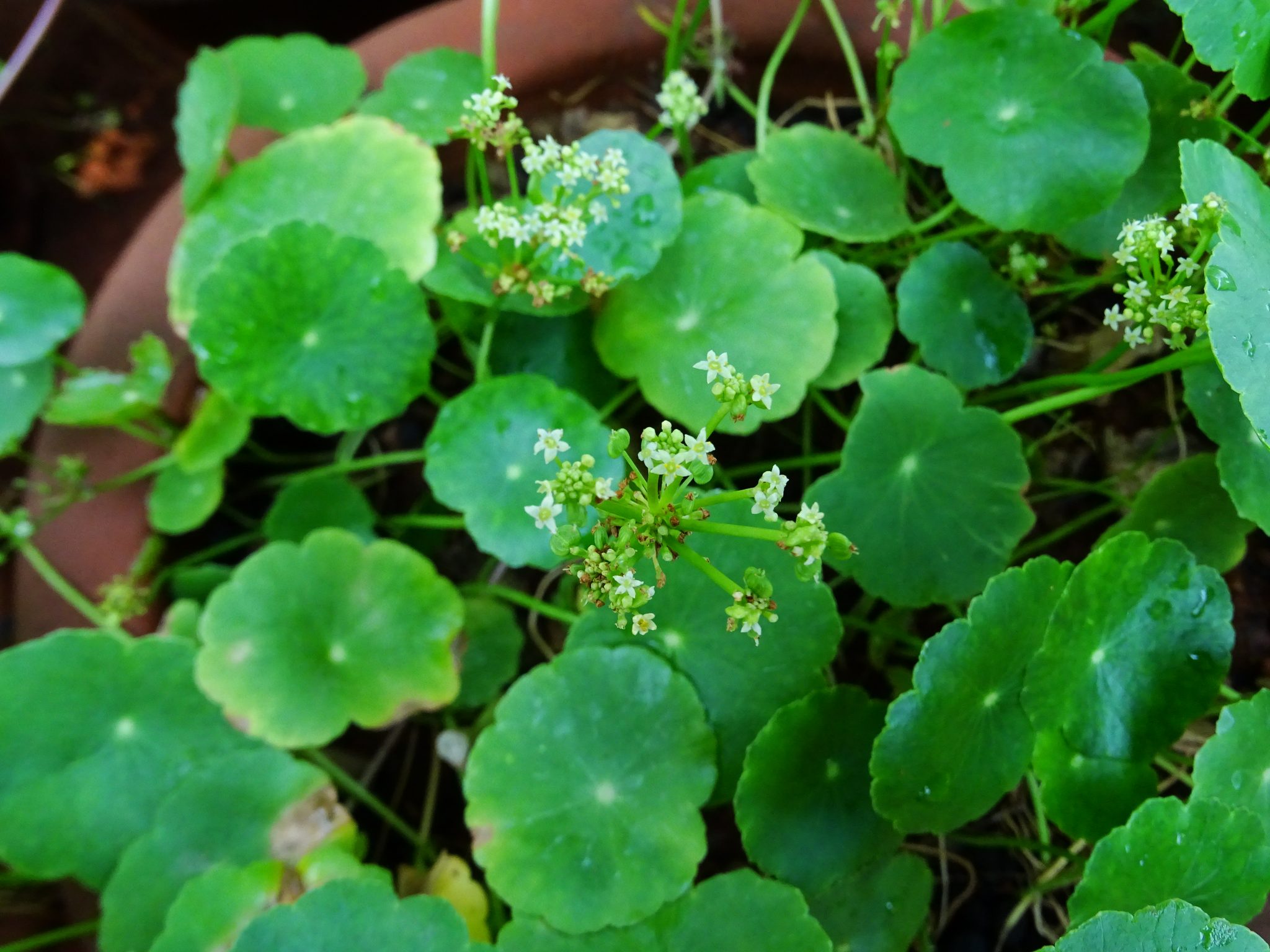
How to Get Rid of Dollarweed (Pennywort) in Your Lawn
Jun 27, 2026•9 min read Problem Solving
Weeds in St. Augustine Grass: How to Identify the Lookalikes and Kill Them Safely
Sep 16, 2026•5 min read Problem Solving
How to Get Rid of Moss in Your Lawn (And Keep It Gone)
Jun 19, 2026•11 min read