

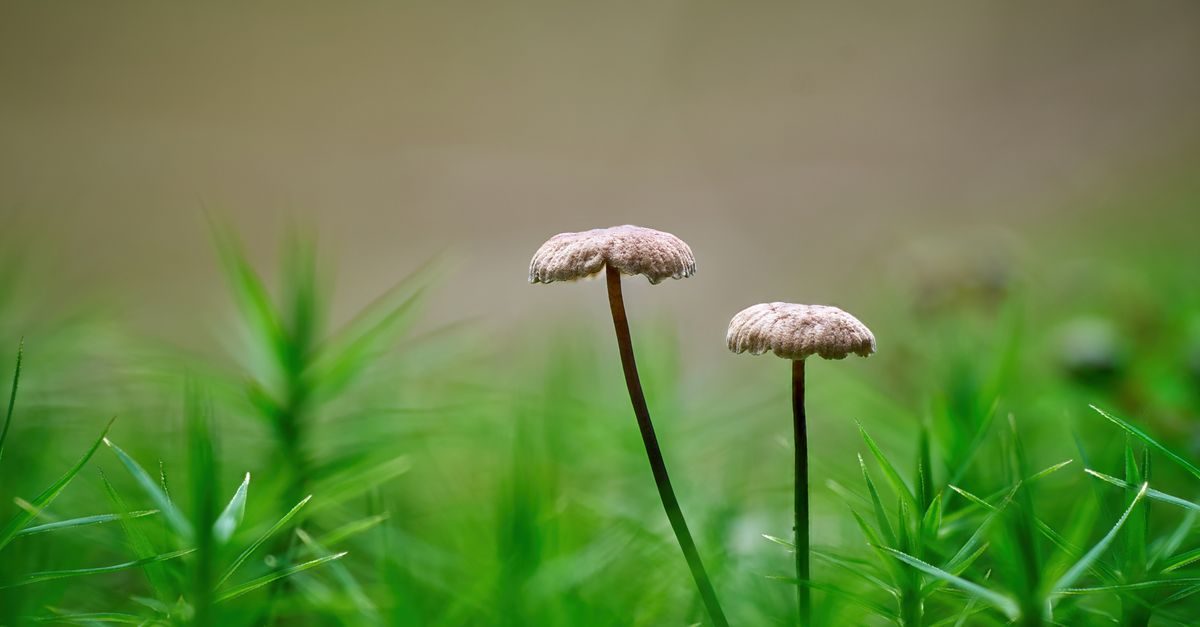
Mushrooms in Your Lawn: Why They Show Up and What to Do
 Sarah MitchellLawn Diagnostics Specialist | 12 Years
As an Amazon Associate we earn from qualifying purchases.
You went to bed with a perfectly normal lawn. Two days of warm rain later you walk out with your coffee and there are three dozen little tan caps across the back yard, a tight cluster by the fence line, and one arc of them curving through the grass like somebody set them out on purpose. It looks like something went badly wrong overnight. In my years diagnosing turf problems, this is one of the very few calls where I get to lead with good news.
Mushrooms are the fruiting bodies of fungi already living in your soil, feeding on buried tree roots, old construction lumber, or a thick thatch layer. The fungus lives underground year-round and only pushes mushrooms up when soil is warm and the surface stays wet for several days. That is why they seem to appear overnight in the same spots after rain.
For the lawn itself they are almost always harmless, and they usually mean your soil biology is working. Rake or knock them over if kids and pets use the yard, then leave the rest alone. They will keep returning until the buried food source is fully decomposed, which can take years. The changes that genuinely reduce them dry the surface and thin the organic layer: dethatching, aeration, deep but infrequent watering, and more light. Fungicides do not fix this. The one real exception is a fairy ring, where mushrooms form an arc or circle with a band of dark green or dead grass along it, because that is an actual turf condition worth diagnosing.
What Lawn Mushrooms Actually Are
Here is the mental model I give homeowners, because it changes how the whole problem feels. The mushroom is not the organism. It is the fruit.
The organism is a fungus living in your soil as mycelium, a web of thread-like filaments running through the top few inches of ground. It has been there for months or years, quietly breaking dead plant material down into the stuff that feeds your grass, and you never see it. When temperature and moisture line up, that network pushes mushrooms up for a few days to release spores, then they collapse and rot away.
So when someone tells me mushrooms "invaded" last week, the honest answer is that nothing arrived. Something already there became visible. Killing the mushrooms you can see does about as much to the fungus as picking apples does to an apple tree, which is why you rake them up and four days later they are back.
Why They Showed Up Right Now
Warm Rain Is the Trigger
Fruiting needs sustained surface moisture and mild to warm soil at the same time. A single afternoon thunderstorm rarely does it. Two or three days of steady rain, or humid weather where the surface never fully dries, is the classic setup. Add an irrigation system running every morning on top of the rain and you have built a mushroom factory without meaning to. That is why "mushrooms in yard after rain" spikes in late summer: the soil has been warm for months, decomposition underground is well along, and then a wet system parks over the region and everything fruits at once.
Buried Organic Matter Is the Food
Something down there is being eaten. The usual suspects, roughly in the order I find them:
- Old tree roots, from a tree removed two to fifteen years ago. The stump is long gone, the root system is still decomposing.
- A ground stump. Grinding removes what you could see and leaves a pile of wood chips under the fill dirt, which is a buffet.
- Construction debris: scrap lumber, form boards, and cardboard buried during the build, extremely common in newer subdivisions. Old fence posts and rotting landscape timbers count too.
- A thick thatch layer, the one homeowners cause themselves.
The Thatch Layer People Forget
Thatch is the spongy mat of dead stems and roots between the green grass and the soil. A thin layer is normal. Past about half an inch it holds water at the surface and is itself material for fungi to feed on, so heavy thatch is the food and the moisture in one package. Push a finger down through the turf, and if you hit a springy brown mat before you reach soil, that is your answer, and it is the most fixable item on the list. How much to pull and when your grass type can take the stress is what the dethatching calculator is for.
Are Mushrooms Bad for Your Lawn?
Overwhelmingly, no. The fungi producing typical lawn mushrooms are decomposers that eat dead material, not living grass. They are doing free labor, breaking buried wood and thatch down and returning nutrients to the root zone. I tell homeowners to think of it the way you would think of earthworm castings: not attractive on the surface, quietly good news underneath.
Two caveats. Their presence means the surface is staying wet, which is worth taking as a hint about your irrigation, and one specific pattern is a real turf condition rather than a cosmetic one.
The Fairy Ring Exception
This is the one to actually look at. Fairy ring is not a species, it is a growth pattern. A fungus colonizes a point in the soil and spreads outward evenly, so the active feeding edge forms an expanding circle. What you see above ground is a ring or arc rather than random scatter, and it comes in three versions:
- A ring of mushrooms with nothing unusual about the grass. Cosmetic.
- A ring or arc of noticeably darker, faster-growing grass. The fungus releases nitrogen as it decomposes material, so the turf right above it is getting fertilized.
- A ring of thin, wilted, straw-colored, or dead grass. This version genuinely harms turf. Dense mycelium can make the soil in that band water repellent, so irrigation runs off instead of soaking in and the grass droughts out while the rest of the lawn is fine.
Rings widen each year and can reach many feet across. The practical problem: circles and arcs of discolored grass are also how several turf diseases present, and their treatment is nothing like fairy ring management. Guessing is where people burn a season and real money. If you are seeing a ring and you are not certain what it is, upload a photo for a diagnosis before buying anything.
For the dry, water-repellent version the fix is water management rather than chemistry: core aerate through the ring to break that layer up, then water the band deeply and repeatedly to rewet the soil profile. A soil wetting agent helps the water penetrate.
- University extension turf programs generally treat fairy ring as difficult to eliminate on home lawns and steer homeowners toward cultural management, aeration, deep watering, and masking the ring with balanced nitrogen, rather than eradication.
- Fungicides labeled for fairy ring exist, but they are aimed largely at golf and sports turf, must be watered in deeply to reach the fungus, and give inconsistent results. Check with your state extension office before spending money on one.
- Wetting agent and fungicide rates, intervals, and grass type restrictions vary by product and region. Follow the product label, which is the legal document, and confirm timing with your local extension service rather than a general article.
Safety with Kids and Pets
I want to be direct here, because this is where bad advice does real harm. I cannot tell you whether the mushrooms in your lawn are safe, and neither can any article, app, or photo tool, including ours. Toxic and harmless species look nearly identical to anyone who is not a trained mycologist, and some of the seriously dangerous ones are small and unremarkable. Nothing on this page says any wild mushroom is edible.
The safe rule is simple and needs no identification at all:
- If small children or pets use the yard, clear mushrooms before they play out there. Knock them over with a rake or mower, or pick them with a bag over your hand, and bin them rather than composting them.
- Do it in the morning after wet weather, since that is when new ones appear.
- Treat every wild mushroom in the lawn as toxic. It costs nothing and it removes the entire question.
- If a child or pet eats one, do not wait to see what happens and do not try to identify it first. Call Poison Control or your veterinarian immediately, and if you can do it safely, keep a sample for the professionals.
- Mushroom species identification is a job for a trained mycologist, your state extension office, or a regional mycological society, and it generally requires the physical specimen rather than a photo. Spore prints and gill structure matter, and photos routinely lose the details that separate a harmless species from a dangerous one.
- Do not rely on folk tests for edibility. Extension and poison control sources agree there is no reliable home method for telling a toxic mushroom from a safe one.
- In the United States, Poison Control is reachable 24 hours a day at 1-800-222-1222. For pets, contact your veterinarian or an animal poison control line right away.
How to Get Rid of Mushrooms in Your Lawn
What You Can Do Today
Knock them down with a rake, a stiff broom, or the mower. Mowing scatters spores a little, which matters less than it sounds given the fungus is already established throughout that soil, but if it bothers you, rake and bag instead. Just understand what you are buying: you are removing today's mushrooms, not the fungus, and they return whenever the weather repeats.
What Actually Changes the Conditions
To reduce how often and how heavily they fruit, make the surface less hospitable and give the fungus less to eat:
- Water deep and infrequent. The single highest-leverage change. A few long soakings per week let the surface dry between cycles, while short daily watering keeps the top inch permanently damp, which is precisely what fruiting needs. The watering schedule tool works out run time and frequency for your grass and climate.
- Dethatch if the layer is over half an inch. This removes food and stops the mat from holding surface moisture. Timing depends on your grass type, since dethatching stresses turf.
- Core aerate. Aeration improves drainage and airflow into the root zone and speeds thatch breakdown. The aeration calculator gives you the right window and pass count for your soil.
- Add light and airflow. Limbing up low branches and thinning dense shrubs lets sun and wind dry the surface. Shaded, still corners are always where mushrooms are worst.
- Remove the food source where you can. If the mushrooms trace an old stump or a buried board, digging the wood out is the only permanent fix. For a large root system that is usually impractical, so accept that the spot fruits until the wood is gone.
If sequencing all of that sounds like work, that is what the paid care plan handles: it schedules dethatching, aeration, and watering around your actual zip code and grass type, so each task lands in the window where it helps instead of the window where it stresses the turf.
Recommended products
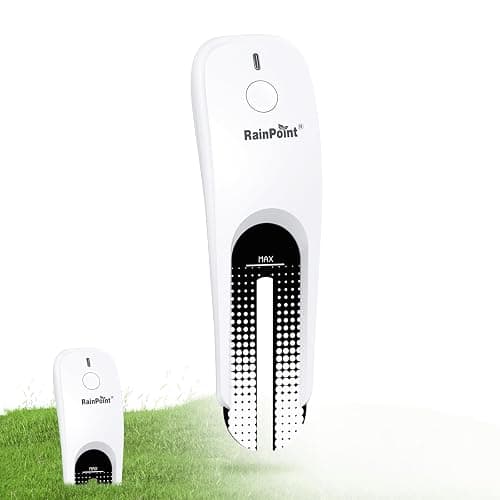
RAINPOINT 3-in-1 WiFi Soil Moisture Sensor
A soil probe that reports moisture to your phone so you can stop guessing.

Rachio 3 Smart Sprinkler Controller (8-Zone)
A smart irrigation controller that skips cycles after rain.
Greenworks 13 Amp Corded Electric Dethatcher
A powered dethatcher for lawns holding a thick layer of decaying thatch.
What Other Guides Miss
Mushrooms Are a Decomposition Signal, Not a Disease Signal
Most articles file mushrooms under "lawn disease" because both involve fungi. That is a category error with real consequences, since it points people at fungicides and at fighting their own soil. Turf diseases come from pathogenic fungi that attack living grass tissue. Lawn mushrooms come from saprophytic fungi that eat dead material and cannot infect a healthy plant. Same kingdom, completely different job.
The Buried Wood Diagnosis Nobody Runs
Look at the pattern, because the shape of the outbreak tells you what is underneath. Mushrooms in a rough line, or in a band radiating out from where a tree used to stand, are almost always tracking a decomposing root. A dense clump with clean turf around it usually means a single buried object: a chunk of lumber, a ground stump backfill, a post base. Even scatter across a whole area points to thatch instead.
I have had homeowners map their mushrooms on a phone photo, notice the clusters formed a rough Y, and remember the maple that came down before they bought the house. That is not a problem to solve, it is a countdown. Knowing which of the three patterns you have is the difference between an afternoon with a shovel and three seasons of pointless treatments.
Why Fungicide Is the Wrong Tool
Fungicides are formulated to protect living grass tissue from pathogens, applied at rates and depths that assume the target sits at or near the leaf and crown. The fungus making your mushrooms is a mycelial network spread through soil, often several inches down and feeding on wood you cannot reach, so a surface application never gets to it in meaningful concentration. What happens instead is that the visible mushrooms die back, which looks like success, and the next wet stretch produces a fresh crop because the organism was never touched. You paid for a result the weather was going to deliver anyway. Spend the money on aeration.
Your Action Plan
- Take a breath. If the grass around the mushrooms looks normal, your lawn is fine. This is cosmetic and temporary.
- Check for a ring. Walk the yard looking for arcs or circles, especially any with a band of dark green or dead grass. If you find one, or any patch of turf looks off, run a photo diagnosis before treating anything, since fairy ring and several turf diseases look alike and are managed completely differently.
- Clear them if kids or pets use the yard. Rake or mow them down in the morning, bag them, repeat after wet weather. Treat every one as toxic and never attempt identification yourself.
- Read the pattern. Line or band means a decomposing root. Tight clump means one buried object. Even scatter means thatch. Dig out what is reachable and let time handle the rest.
- Fix the water first. Move to deep, infrequent irrigation and stop any daily cycle. This pays back fastest.
- Measure your thatch and act on it. Push a finger through to soil. Over half an inch and dethatching goes on the calendar for your grass type's recovery window, with aeration to follow. Open up the shade in any corner that stays damp while you are at it.
- Skip the fungicide. It will not reach the organism, and the money does more good on aeration or a wetting agent for a dry fairy ring.
Mushrooms are one of the few things in a lawn that look alarming and mean almost nothing, the reverse of most turf problems, where the early signs are subtle and the damage is real. If identification is generally where you get stuck, our rundown of the best grass identification apps covers what these tools can and cannot do. And if the mushrooms turn out to be the least of it, we have walkthroughs for the weeds with purple flowers that appear in the same wet stretches and for getting rid of thistle, which is a genuinely stubborn one.
Top Picks
- BioAdvanced Fungus Control for LawnsCheck price on Amazon
- Scotts DiseaseEx Lawn FungicideCheck price on Amazon
As an Amazon Associate we earn from qualifying purchases.
Free Lawn Care Tools
Mushrooms are the fruiting bodies of fungi that already live in your soil, feeding on buried organic matter such as old tree roots, ground stump chips, construction lumber, or a thick thatch layer. The fungus is there year round as a network of fine threads underground, and it only pushes mushrooms to the surface when the soil is warm and the surface stays wet for several days. That is why they seem to appear overnight after rain and why they come back to the same spots.
Assume yes, and do not try to find out. No article, app, or photo tool, including ours, can tell you whether a specific wild mushroom is safe, because toxic and harmless species can look nearly identical to anyone who is not a trained mycologist. The safe rule needs no identification at all: remove mushrooms from any yard where children or pets play, treat every one as toxic, and never eat wild mushrooms. If a child or pet swallows one, call Poison Control or your veterinarian immediately rather than waiting or trying to identify it first.
Knocking them over with a rake or the mower removes today's crop, but it does nothing to the fungus underground, so they return with the next wet stretch. To reduce how often they fruit you have to change conditions: water deeply but infrequently so the surface dries out, dethatch if the layer is over half an inch, core aerate to improve drainage, and open up shade. Where mushrooms trace a buried stump or board, digging the wood out is the only permanent fix, and for a big root system the honest answer is that it will keep fruiting until the wood is gone.
Usually the opposite. The fungi that produce typical lawn mushrooms are decomposers that eat dead material, not living grass, so they cannot infect healthy turf. They are breaking buried wood and thatch down and returning nutrients to the root zone, which means the soil biology is working. The one thing worth acting on is what their presence implies about moisture, since a surface that stays wet long enough to fruit mushrooms is often being watered too frequently.
Generally no, and it is not worth the money. Fungicides are designed to protect living grass tissue from pathogens at or near the leaf and crown, while the fungus producing your mushrooms is a mycelial network spread through the soil, often several inches down and feeding on wood a surface spray cannot reach. What people see is the visible mushrooms dying back, which looks like success until the next wet stretch produces a fresh crop. Aeration and better watering do more.
A fairy ring is a growth pattern rather than a species. A soil fungus spreads outward evenly from a starting point, so mushrooms come up in an arc or circle instead of scattered at random. Some rings are purely cosmetic, some show a band of darker green grass from the nitrogen the fungus releases, and some show thin or dead grass because the dense mycelium makes that band of soil water repellent. The third kind is a genuine turf condition, and because several turf diseases also produce rings and arcs, it is worth getting a diagnosis before you treat anything.

Your lawn plan, in your pocket all season
Grass ID, a season plan, soil-timed reminders, and a lawn journal that remembers what you did. Free on iPhone.
Related Articles
 Problem Solving
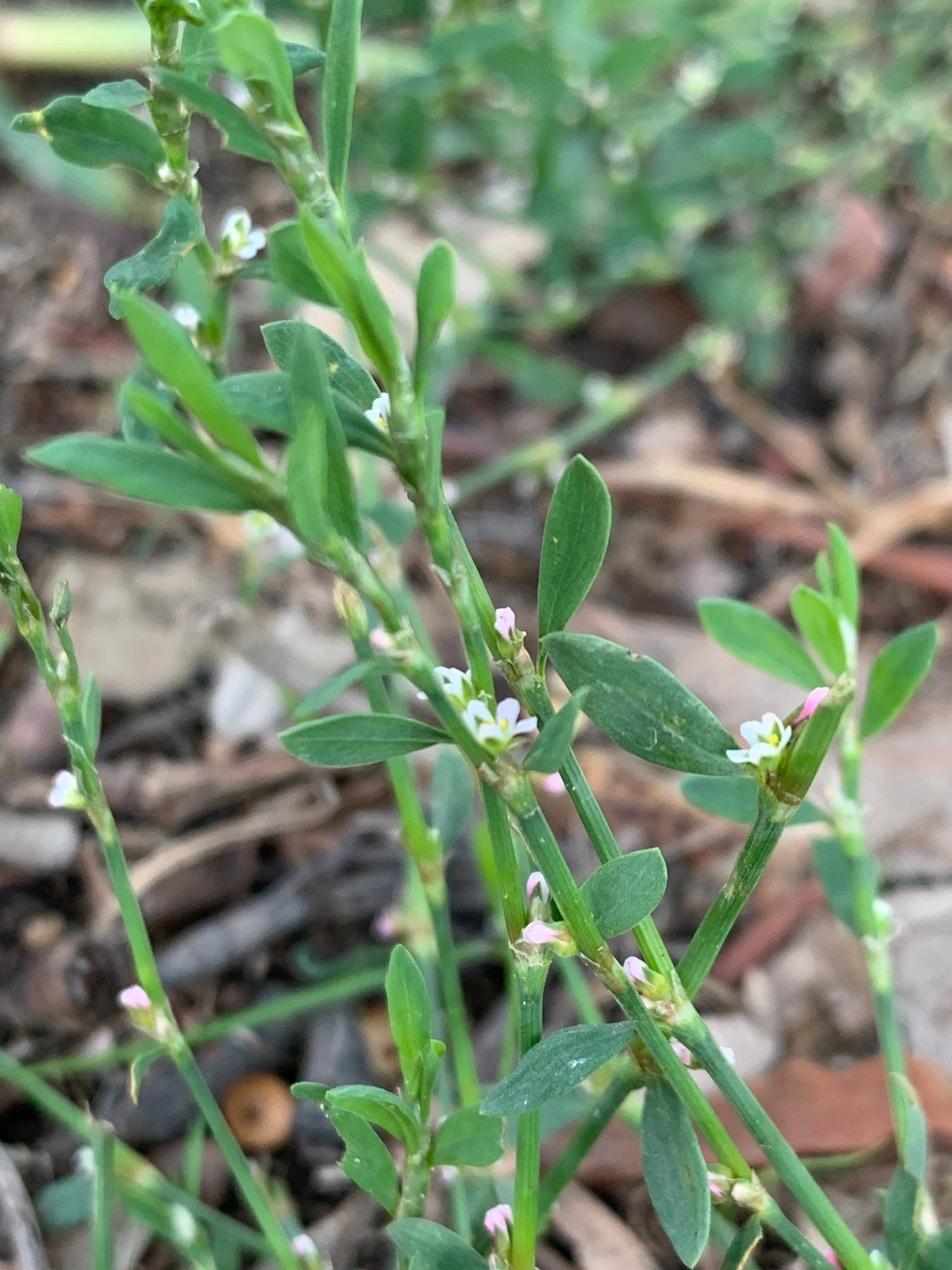
Prostrate Knotweed in a Lawn: How to Identify It and Clear a Patch
Sep 24, 2026•3 min read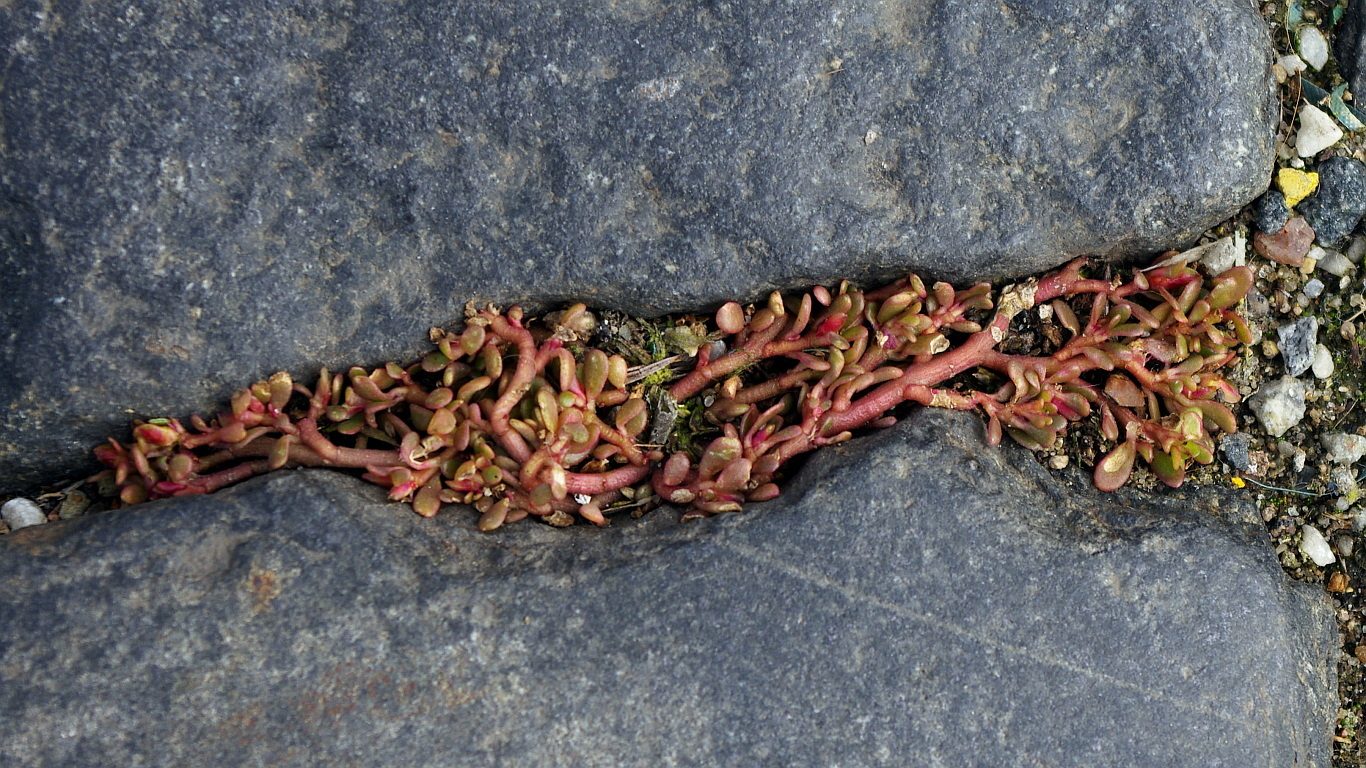 Problem Solving
Common Purslane in a Lawn: How to Identify It and What to Check First
Sep 22, 2026•4 min read Problem Solving
Torpedograss in Lawns: How to Identify It and What to Do Next
Sep 20, 2026•5 min read

