Why Your Neighbor's Grass Is Greener (And How to Get Dark Green Grass Yourself)
 James ThorntonLawn Equipment & Maintenance Expert | 20 Years
As an Amazon Associate we earn from qualifying purchases.
You mow. You water. You even fertilize when you remember. And your neighbor's lawn still looks like a golf course fairway while yours reads pale green at best. I've maintained over 10,000 properties in 20 years of professional lawn care, and I can tell you the difference is almost never luck, secret products, or a landscaping crew showing up at dawn. It's five specific things, and every one of them is fixable.
This post covers the real reasons a neighbor's grass looks darker, then walks through the exact program I'd run on your lawn to get that deep green color yourself. No hype, no equipment you don't need.
Your neighbor's grass is darker for five fixable reasons: a genetically darker cultivar, a real nitrogen program, iron, mowing high with a sharp blade, and deep watering. Check your tips the day after mowing. Frayed white tips mean a dull blade.
Feed 3 to 4 pounds of nitrogen per 1,000 square feet per year, split so no single application tops about 1 pound. Spray chelated iron every 3 to 4 weeks for color without the growth surge. Mow cool-season grass at 3 to 4 inches and water 1 to 1.5 inches weekly in 2 to 3 sessions.
The 5 Real Reasons Your Neighbor's Grass Is Darker
1. They're growing a darker grass species or cultivar
This is the one nobody talks about, and it's often the biggest factor. Grass genetics set a ceiling on color. A midnight-type Kentucky bluegrass or a modern dark tall fescue is genetically darker than a common-type bluegrass or an old ryegrass blend, no matter how well you feed either one. Same story on warm-season lawns: Zoysia and newer Bermuda cultivars like TifTuf hold a deeper color than common Bermuda or centipede, which is naturally apple green.
Walk over and ask what they planted. If your neighbor seeded an elite cultivar and you're growing contractor-mix from when the house was built, you will never out-fertilize that gap. You can close it with overseeding, which I'll cover below.
2. They run an actual nitrogen program, not random feedings
Nitrogen drives green color more than any other input. Chlorophyll, the pigment that makes grass green, is built around nitrogen. Most homeowners fertilize once or twice a year whenever the mood strikes. Lawns that stay dark green get 3 to 4 properly timed feedings totaling around 3 to 4 pounds of nitrogen per 1,000 square feet per year, split so no single application exceeds about 1 pound. If you've never decoded a fertilizer label, start with how to read fertilizer numbers so you know what you're actually putting down.
3. They're using iron
Here's the pro secret that isn't much of a secret: iron. Golf courses use iron constantly because it deepens color without pushing the surge of top growth that nitrogen does. Iron is central to chlorophyll production, and many lawns, especially on high-pH soils, can't pull enough of it from the ground. A lawn on a nitrogen-plus-iron program looks a full shade darker than one on nitrogen alone. If your neighbor's lawn has that almost blue-green cast, iron is very likely in the mix. My testing notes are in the best liquid iron for lawns roundup.
4. They mow high with a sharp blade
After maintaining thousands of lawns, the pattern is clear: tall grass looks darker. More leaf surface means more chlorophyll on display and deeper roots below. Grass scalped to 2 inches looks pale and stressed even when it's well fed. And a dull mower blade shreds the leaf tips, which dry out white-brown within a day and give the whole lawn a grayish haze. Check your grass a day after mowing. If the tips look frayed and whitish, your blade is the problem. Full cutting-height details by species are in my mowing height by grass type guide.
5. They water deeply, not daily
Daily light sprinkling produces shallow roots and a lawn that fades the moment temperatures climb. Deep, infrequent watering, about 1 to 1.5 inches per week in 2 to 3 sessions, grows roots that keep pulling water and nutrients through summer stress. The lawns that stay dark in August are the ones with 6-inch roots, not the ones getting a 10-minute sprinkle every morning.
How to Get Dark Green Grass
Here's the program. Nothing on this list is expensive or complicated, but the order and timing matter.
Step 1: Feed nitrogen on a real schedule
Skip the marketing claims on the bag - here's what I've seen actually work across thousands of lawns:
- Cool-season grass (bluegrass, fescue, rye): Feed in early fall (September), late fall (late October to November), and late spring (May). Fall is the priority. The late-fall feeding is what produces that early spring green-up your neighbor gets while your lawn is still tan.
- Warm-season grass (Bermuda, Zoysia, St. Augustine): Feed from late spring through summer, roughly May through August, once the lawn is fully green. Never feed a warm-season lawn as it's going dormant in fall.
Target 0.75 to 1 pound of nitrogen per 1,000 square feet per application. The fertilizer calculator does the bag math for you, based on your product's N number and your lawn size.
University guidance backs the fall-heavy approach for cool-season lawns. The University of Wisconsin Extension lawn fertilization guide recommends prioritizing fall nitrogen applications and warns against heavy spring feeding, which pushes lush top growth at the expense of roots.
Step 2: Add iron for color without growth
Once nitrogen is scheduled, iron is the color multiplier. Two forms matter:
- Chelated iron: Protected so it stays plant-available even in high-pH soil. It's absorbed through the leaf and shows visible darkening in 24 to 48 hours. This is what I use for a fast, reliable color response. More expensive per application, worth it.
- Ferrous sulfate: Cheap and fast-acting as a foliar spray, often greening within a day or two, but it can tie up quickly in alkaline soil when applied to the ground, and it stains concrete badly. Rinse it off driveways and walkways immediately.
Spray iron every 3 to 4 weeks during the growing season, early morning or evening, never in midday heat above roughly 85 degrees or you risk tip burn. Granular iron products work too but respond slower, over 1 to 2 weeks instead of days.
Step 3: Raise the deck, sharpen the blade
Set cool-season grass at 3 to 4 inches and most warm-season grass at 1.5 to 2.5 inches (Bermuda runs shorter, St. Augustine taller at 3 to 4 inches). Sharpen your blade at least twice a season; a clean cut heals fast and holds color, a ragged cut browns the tips. Never remove more than a third of the leaf in one mowing. This step costs nothing and moves color more than most products.
Step 4: Water deep, 2 to 3 times a week
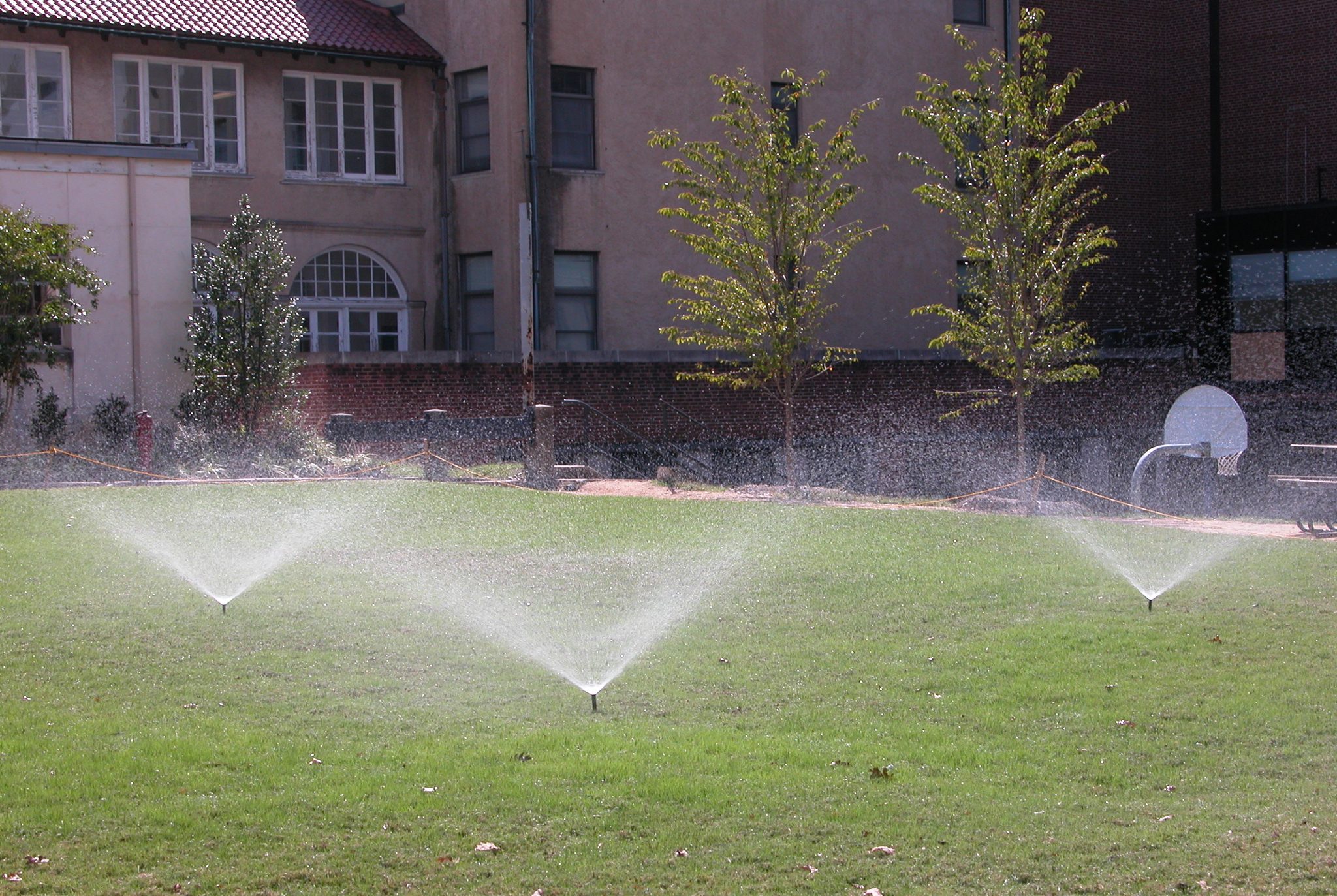
Deliver 1 to 1.5 inches per week total. Put a few tuna cans on the lawn and time how long your sprinklers take to fill them half an inch; that's your session length. Water early morning, between about 4 and 9 a.m., so leaves dry quickly and you're not feeding fungus overnight.
The University of Minnesota Extension fertilizing guide is a good reference for matching nitrogen rates and timing to your specific grass species, and it stresses soil testing first, which I agree with. A $10 to $20 soil test from your county extension tells you your pH and whether your soil is locking up iron, and it beats guessing every time.
Step 5: Overseed with darker genetics
If your lawn's color ceiling is the problem, change the genetics. For cool-season lawns, overseed in early fall with a midnight-type Kentucky bluegrass or a dark turf-type tall fescue blend; look for cultivars marketed on dark color and check NTEP ratings if you want the data. Two or three fall overseedings will visibly shift the whole lawn's baseline color. Warm-season lawns spread on their own, so upgrades usually mean plugging or sodding a better cultivar rather than seeding.
One more check: soil pH
If you run this whole program and the lawn still won't darken, test your soil pH. Grass takes up nitrogen and iron best between about 6.0 and 7.0. Above 7.5, iron gets locked in the soil no matter how much you apply to the ground, which is exactly why foliar chelated iron sprays exist. Below 6.0, sulfur-loving weeds and moss start winning. Lime raises pH, elemental sulfur lowers it, and both work slowly over months, so treat pH correction as a background project while the rest of the program does the visible work.
Recommended products
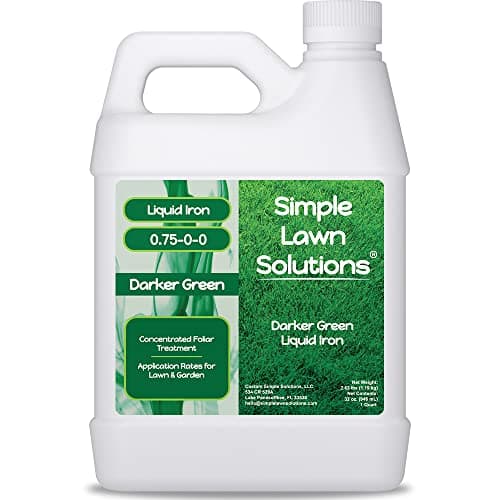
Simple Lawn Solutions Liquid Iron Darker Green
A chelated liquid iron that deepens color within days without pushing growth.
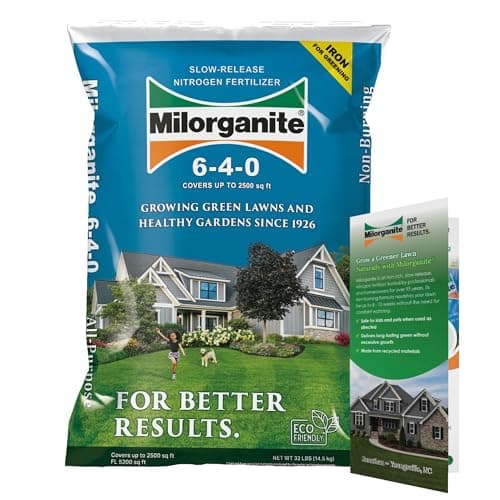
Milorganite 6-4-0
A slow-release organic nitrogen with iron built in, which is the steady half of the color program.
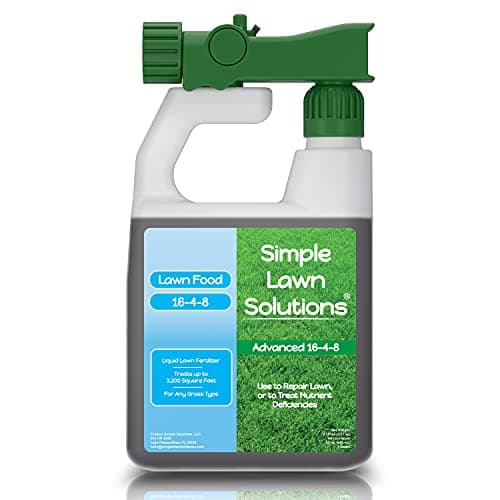
Simple Lawn Solutions Advanced 16-4-8 Liquid Fertilizer
A balanced liquid feed for keeping nitrogen on a light, regular schedule.
What Fakes Darkness, and What Backfires
A quick reality check, because some dark green lawns are cheating and some shortcuts will wreck yours:
- Lawn paint: Turf colorants are real and more common than you'd think, especially on dormant southern lawns in winter. If a lawn goes from tan to deep green in one afternoon, it was sprayed, not grown.
- Overwatering: A soggy lawn can look lush for a few weeks, then fungus and shallow roots collapse it. Don't chase that look.
- Over-fertilizing: Doubling nitrogen doesn't double the green. Past about 1 pound of N per 1,000 square feet in one shot, you get surge growth, disease pressure, and eventually fertilizer burn: brown streaks and crispy patches that take weeks to recover.
- Iron overdose: Too much iron turns grass gray-black temporarily and permanently stains concrete orange. Follow the label rate; more is not darker.
Diagnose Your Lawn: Symptom to Fix
| Symptom | Likely Gap | Fix |
|---|---|---|
| Uniformly pale or yellow-green grass | Nitrogen deficiency | Start the seasonal nitrogen schedule above |
| Yellowing with green veins, high-pH soil | Iron deficiency (iron chlorosis) | Spray chelated iron; soil test to confirm pH |
| Grayish haze, frayed brown leaf tips | Dull mower blade | Sharpen or replace the blade |
| Fades fast in summer heat | Shallow roots from light daily watering | Switch to deep watering 2 to 3 times weekly |
| Healthy but never truly dark green | Light-colored species or cultivar | Overseed with midnight-type KBG or dark tall fescue |
| Brown streaks after feeding | Fertilizer burn from over-application | Water deeply now; halve your rate next time |
The Bottom Line
Your neighbor's darker lawn comes down to genetics, nitrogen, iron, mowing, and watering. Start with the free fixes this week: raise your mowing height and sharpen the blade. Then get nitrogen on a schedule, add a chelated iron spray, and shift to deep watering. You'll see a real color change within two to three weeks, and by next season, with a fall overseed of darker cultivars, your lawn can be the one people slow down to look at.
Top Picks
- Pennington Full Season Lawn Fertilizer 32-0-5Check price on Amazon
- Jacklin Seed by Barenbrug Heisman Kentucky Bluegrass Blend (5 lb)Check price on Amazon
- Simple Lawn Solutions - Ryan Knorr - Lawn Essentials Bundle BoxCheck price on Amazon
As an Amazon Associate we earn from qualifying purchases.
Free Lawn Care Tools
Feed nitrogen on a seasonal schedule (about 3 to 4 pounds of nitrogen per 1,000 square feet per year, split across 3 to 4 applications), spray chelated iron every 3 to 4 weeks during the growing season, mow high with a sharp blade, and water deeply 2 to 3 times a week instead of daily. If your grass is a naturally light cultivar, overseed in fall with darker genetics like midnight-type Kentucky bluegrass or dark tall fescue.
The usual reasons are a darker grass cultivar, a consistent nitrogen fertilization schedule, iron applications, a higher mowing height with a sharp blade, and deep infrequent watering. Genetics matter more than most people realize: an elite dark cultivar will out-color a builder-grade seed mix even with identical care.
Yes. Iron is essential to chlorophyll production, and applying it deepens color without pushing extra top growth the way nitrogen does. Chelated iron sprayed on the leaf shows visible darkening in 24 to 48 hours. Ferrous sulfate also works fast as a foliar spray but can tie up in alkaline soil and stains concrete, so follow label rates and rinse hard surfaces.
Nitrogen is the nutrient that drives green color, so look at the first number on the bag. Products that combine nitrogen with added iron give the deepest color response. Apply about 0.75 to 1 pound of actual nitrogen per 1,000 square feet per application, timed for fall on cool-season lawns and late spring through summer on warm-season lawns.
A chelated iron spray darkens grass in 1 to 2 days. A nitrogen feeding shows in 5 to 14 days. Fixing mowing height and watering takes 2 to 3 weeks to show. Changing the lawn's baseline color by overseeding darker cultivars takes one to three fall seasons. Most lawns look noticeably darker within a month of starting the full program.
You can overdo the inputs. Excess nitrogen causes surge growth, disease pressure, and fertilizer burn, and excess iron temporarily turns grass gray-black and stains concrete orange. Stay at or below 1 pound of nitrogen per 1,000 square feet per application and follow iron label rates.

Beat weeds and brown spots from your phone
Snap a photo, get the fix, and follow a plan timed to your soil and weather. Free on iPhone.