Best Liquid Iron for Lawns: Darker Green Without the Extra Mowing (2026)
 Marcus GreenTurf Management Pro | 18 Years
As an Amazon Associate we earn from qualifying purchases.
If your lawn is well fed but still looks more lime than emerald, the answer usually is not more nitrogen, it is iron. Liquid iron is the fastest way to deepen color without forcing the burst of growth a nitrogen feed triggers, which means a darker lawn without an extra weekend of mowing. Here is how it works, when to reach for it, and the best liquid iron options for any grass type.
For where iron fits among the other liquid feeds, see our best liquid lawn fertilizer guide.
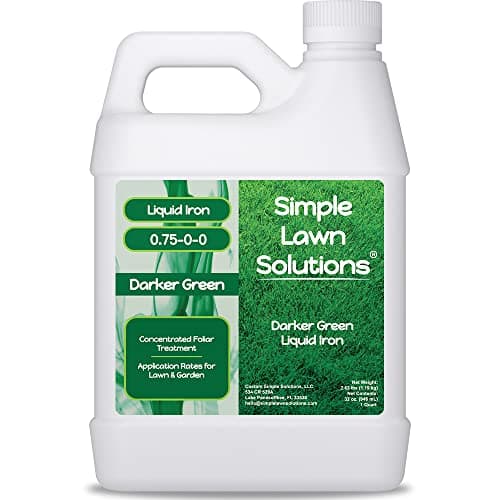
The best liquid iron for lawns is Simple Lawn Solutions Liquid Iron, a chelated formula for any grass type. Iron boosts chlorophyll directly, so color deepens without the extra mowing a nitrogen feed triggers. Pale leaves with greener veins mean iron chlorosis, common in alkaline soil, and chelated iron corrects it by feeding the leaf.
Spray on a cool morning under 80 degrees and do not water it in right away, since the leaf needs hours to absorb it. Green-up shows in three to seven days. Two applications a season is plenty, and keep it off concrete, which it stains.
Why iron, not nitrogen
Nitrogen builds color by driving growth, so a heavy nitrogen feed greens the lawn but also sends it into overdrive, which means more mowing and more stress in summer heat. Iron takes a different path: it boosts chlorophyll directly, so the blade darkens without the growth surge. That is why iron is the secret weapon of show lawns and the right tool when you want color in summer without pushing tender growth that heat and disease can punish.
Iron is also the fix for iron chlorosis, the yellowing that shows up as pale leaves with greener veins, common in alkaline soil where iron locks up in forms the grass cannot absorb. A chelated liquid iron bypasses that soil chemistry by feeding the leaf directly.
The best liquid iron picks
For most lawns, Simple Lawn Solutions Liquid Iron is the easy pick. The chelated micronutrient formula deep-greens any grass type, threads onto a garden hose, and is built specifically for color rather than growth.
If your lawn could use a little nitrogen alongside the iron, the Simple Lawn Solutions Lawn Energizer pairs nitrogen with chelated iron for a deeper green plus moderate growth, which suits a lawn that is both hungry and pale. A solid alternative if you want a second brand is PetraTools Liquid Iron, which delivers a similar chelated-iron green-up.
How to apply liquid iron without staining
Iron is forgiving on the lawn but unforgiving on hardscape, so technique matters.
- Apply on a cool morning. Iron works best below about 80 degrees, and a foliar application in the heat of the day risks leaf stress.
- Do not water it in right away. Unlike a macro feed, foliar iron needs a few hours on the blade so the leaf can absorb it. Watering it in too soon washes off the color.
- Keep it off concrete. Iron stains sidewalks, driveways, and siding a rust color. Sweep drift off hard surfaces immediately and avoid spraying near them.
- Less is more. Iron is potent in small doses. Follow the label rate; doubling up does not double the color and can darken unevenly.
You will usually see the green-up within a few days, and two applications across a growing season keeps most lawns looking deep and healthy.
How Much Liquid Iron to Use, and What Too Much Looks Like
On a course, the iron tank gets mixed to the label and the sprayer gets checked before anyone drives onto a fairway, because a heavy pass shows up as a dark stripe you can see from the tee box. A home lawn runs on the same arithmetic. The University of Arizona Cooperative Extension says 2 to 4 ounces of iron product per 1,000 square feet usually corrects a deficiency, mixed with enough water to spray 1 to 3 gallons over that same 1,000 square feet. Products differ in how much iron they carry, so your label sets the rate. The extension numbers give you a range to check it against.
| Source | Rate per 1,000 sq ft | Water per 1,000 sq ft |
|---|---|---|
| University of Arizona Extension | 2 to 4 oz of iron product | 1 to 3 gallons |
| UF/IFAS (SL21) | 2 oz of iron sulfate, or a chelated iron at its label rate | 3 to 5 gallons |
| University of Kentucky (AGR-246) | No more than 5 lb of actual iron per acre (our conversion: about 1.8 oz of actual iron) | About 1 gallon |
Keep the units straight when you read those rows. Arizona and UF count ounces of product, and Kentucky counts actual iron. UF/IFAS's Iron for Florida Turfgrasses (EP551) puts iron sulfate at a typical 20 percent iron, so 2 ounces of it carries about 0.4 ounce of iron, well under the Kentucky ceiling. The ceiling is what matters when you mix heavy.
Too much is where iron turns on you. The University of Kentucky's AGR-246 caps a foliar spray at 5 pounds of actual iron per acre, because going past that raises the risk of foliar burn and can blacken the turf, which happens when the iron oxidizes on the leaf surface instead of moving into it. The same bulletin says those burns normally fade within one to two weeks if the grass is healthy and actively growing. So if the lawn goes dark and scorched after you spray, hold off on the next pass and let it grow out. Measure the lawn, measure the product, and hold to the label.
As for how long one pass holds, EP551 says a foliar iron sulfate spray at 1 to 5 pounds of iron per acre generally improves color for up to four weeks, and how long it lasts depends on the iron rate, the nitrogen, and the time of year. UF/IFAS's SL21 puts the effect at roughly two to four weeks and says repeat applications are needed for summer-long color. In my experience, the streaked lawns are the ones where somebody eyeballed the hose-end dial. Rate first, color second.
Which grasses benefit most
Iron is a strong fit for grasses that want color without heavy feeding. Centipede is the classic example: it wants very little nitrogen, so iron is often the better way to green it up. St. Augustine in alkaline Florida and coastal soils also responds beautifully to iron, as does Bermuda when summer heat fades the color on a low-nitrogen program. On any grass type, iron is the move when the lawn is green-ish but not deep, and you would rather not mow more.
Frequently asked questions
- What does liquid iron do for a lawn? It deepens green color by boosting chlorophyll directly, without the growth surge a nitrogen feed causes. It also corrects iron chlorosis, the yellowing common in alkaline soil.
- How long does liquid iron take to work? Usually a few days. Most lawns show a noticeable green-up within three to seven days of a foliar application.
- Should you water in liquid iron? No, not right away. Foliar iron needs a few hours on the leaf to absorb. Watering it in too soon washes off the color, which is the opposite of how you treat a macro feed.
- Does liquid iron stain concrete? Yes. Iron stains hardscape rust-colored, so keep it off driveways, sidewalks, and siding, and sweep any drift off immediately.
- How often should you apply liquid iron? Two applications per growing season is plenty for most lawns. Apply on a cool morning and follow the label rate.
For the full set of liquid options ranked by need, see the best liquid lawn fertilizer guide, and to feed and color your lawn across the whole year, start with the complete fertilizing guide.
Top Picks

As an Amazon Associate we earn from qualifying purchases.
Free Lawn Care Tools

Your lawn plan, in your pocket all season
Grass ID, a season plan, soil-timed reminders, and a lawn journal that remembers what you did. Free on iPhone.