Types of Grass in Virginia: The Common Lawn Grasses
 Marcus GreenTurf Management Pro | 18 Years
As an Amazon Associate we earn from qualifying purchases.
Virginia is a transition-zone state, so it grows both cool- and warm-season lawns. Tall fescue is the dominant grass statewide and the most common home-lawn turfgrass, with Kentucky bluegrass and fine fescue blended in for cold and shade, plus Bermuda and zoysia in the hot east and full sun.
Seed tall fescue late summer to mid-fall, roughly mid-August through October, earlier in the mountains and later toward the coast. Plant Bermuda and zoysia May through July. Put crabgrass pre-emergent down in March and April, at full forsythia and daffodil bloom, near 55F soil.
Virginia Cooperative Extension calls the state a transition zone noted for its hot, humid summers and cold, wet winters, which means no single grass is perfectly at home. Cool-season grasses lead in the west and warm-season grasses in the east, with tall fescue the common thread across the whole state. This guide covers every common type and how to tell which is in your yard.
The types of grass that grow in Virginia
Tall Fescue
Tall Fescue is Virginia's dominant lawn grass. Virginia Cooperative Extension calls it the most common turfgrass species used in home lawns in Virginia, and it stays the default even in the warm east. It is a coarse, deep-rooted cool-season grass that holds green through the year, but Virginia's hot, humid summers bring brown patch disease, so fescue lawns are renovated and overseeded in fall.
Kentucky Bluegrass
Kentucky Bluegrass is the cold-tolerant blend partner, valued for its excellent density and cold tolerance and rapid recuperation from an aggressive lateral growth habit. It spreads by rhizomes to self-repair, so it is mixed into tall fescue seed for a denser, quicker-healing lawn, and it is strongest in the cooler Piedmont and mountains.
Fine Fescue
Fine Fescue is Virginia's shade grass. VCE notes that as a group these grasses have the best shade-tolerance of the cool-season turfgrasses. Their needle-fine blades tolerate shade and low input where tall fescue and bluegrass thin, so they are blended in for the tree-shaded parts of a Virginia yard.
Bermudagrass
Bermudagrass is Virginia's full-sun, warm-season workhorse for the hot east and coast and for high-traffic sites. VCE credits it with rapid establishment, high traffic tolerance, and exceptional tolerance to heat and drought. The trade-offs are its need for full sun, a long brown winter dormancy, and a habit of creeping into flower beds and cool-season lawns as a weed.
Zoysiagrass
Zoysiagrass is the most cold-tolerant warm-season option, which is why it reaches into central Virginia. VCE praises its exceptional density as a mature turf and excellent cold tolerance for a warm-season grass. It forms a tight, weed-resisting carpet and takes part shade better than bermuda, but it is slow to establish and goes tan in winter.
Perennial ryegrass rounds out the list in a supporting role. VCE notes its rapid four to seven day germination and exceptional mowing quality, which make it a fast-establishing nurse grass in cool-season seed mixes and the standard for overseeding dormant bermuda, rather than a stand-alone lawn.
Virginia grass types compared at a glance
| Grass | Season | Best role | Sun / shade | Water need | Maintenance |
|---|---|---|---|---|---|
| Tall Fescue | Cool | Statewide default lawn | Sun to part shade | Moderate to high | Medium |
| Kentucky Bluegrass | Cool | Cold-tolerant blend partner | Sun to light shade | High | Medium-high |
| Fine Fescue | Cool | Shade component in blends | Best shade tolerance | Low | Low |
| Bermudagrass | Warm | Full-sun east and coast | Full sun, poor shade | Low once established | High |
| Zoysiagrass | Warm | Dense, cold-hardy, central and east | Sun to light shade | Moderate | Low-medium |
How to tell which type you already have
Start with the big split: does the grass grow in clumps or spread by runners? Tall fescue and fine fescue grow in bunches; Kentucky bluegrass spreads by underground rhizomes; bermuda and zoysia spread by runners across the surface. Blade width, color, and the seed head sort the rest.
| Grass | Blade | Growth habit | Standout tell |
|---|---|---|---|
| Tall Fescue | Wide, coarse, rough edges | Bunching, no runners | Grows in clumps, not a spreading mat |
| Kentucky Bluegrass | Fine, soft | Spreads by rhizomes, dense sod | Boat-shaped blade tip; open seed-head panicle |
| Fine Fescue | Very fine, needle-like | Bunching, some creeping | Wispy, thread-thin blades in shade |
| Bermudagrass | Fine, wiry | Runners above and below ground | Bird's-foot seed head, even in mowed lawns |
| Zoysiagrass | Fine to medium, stiff | Slow, very dense | Springy carpet feel; crunches when dry |
Still not certain? Our free AI grass identifier reads a close-up photo, names the grass, and builds a 12-month care plan tuned to your ZIP.
Which types grow in your part of Virginia
Virginia runs cool-season in the western mountains to warm-season on the eastern coast, with the Piedmont squeezed in between. Tall fescue is the common thread the whole way across.
- Mountains and Valley (west): Cool-season country. Tall fescue with Kentucky bluegrass and fine fescue. Warm-season grasses are the exception here, held back by cold winters and short seasons.
- Piedmont (central, Richmond to Charlottesville): The hardest zone to pick for, since both hot summers and cold winters hit here. Tall fescue dominates, and zoysia is the most reliable warm-season pick.
- Tidewater and Coastal Plain (east): The warmest zone, best suited to warm-season grasses, where all the major ones are used. Even so, tall fescue is still the predominant lawn grass.
Virginia grass timing that matters
The key Virginia timing rule is that cool-season tall fescue goes in during late summer and fall, not spring. Soil temperature drives the rest:
- Fall seeding, the key window: VCE says late summer to mid-fall is the best time to establish cool-season turfgrass, roughly mid-August through October, earlier in the mountains and later toward the coast. Spring is only a second-best option, and it collides with crabgrass season.
- Spring pre-emergent: put crabgrass pre-emergent down in March and April, before crabgrass emerges, which VCE ties to full forsythia and daffodil bloom as soil crosses about 55F.
- Warm-season establishment: plant bermuda and zoysia from May through July, once the soil is warm.
- Last spring frost: late March to mid-April on the coast, mid-to-late April in central Virginia, and into May in the mountains.
- Dormancy: warm-season grasses go fully brown for four to five months of winter; cool-season grasses stay green much of the year, though summer heat and drought can brown them.
Our herbicide timing tool pins the exact pre-emergent date for your ZIP.
Can You Grow Bermuda Grass in Virginia?
Yes in much of Virginia: it is reliable in the Tidewater and Coastal Plain and across much of the Piedmont, while the mountains and the state's cooler northern edge are where it gets risky. In the east it is one of the best full-sun choices you can make. Bermuda thrives in Tidewater and Coastal Plain heat, shrugs off drought and heavy foot traffic once established, and carries VCE's praise for rapid establishment and exceptional heat tolerance. In the Piedmont it still works in open, sunny yards, though the brown dormant stretch runs longer than most homeowners expect, roughly four to five months of tan turf from the first hard frost until soils warm again in late spring.
The western mountains are a different story. Cold winters at elevation bring real winterkill risk, and a bermuda lawn that limps through two or three mild winters can be wiped out by one severe one. Spring dead spot, a fungal disease that shows up as circular dead patches when bermuda breaks dormancy, also gets worse the colder the site. West of the Blue Ridge, cool-season tall fescue is the safer bet in almost every yard.
If you want to try it, plant from late May through early July, once soil temperatures reach the mid 60s F, so it establishes well before frost, in full sun, and lean on cold-tolerant varieties; VCE's turfgrass variety recommendations are the right place to confirm a cultivar before you buy. And if you are not sure whether the wiry grass creeping into your fescue is already bermuda, a free photo diagnosis can identify it in seconds.
Next steps
Once you know your grass type, the care gets specific. Dig into the full guides for Tall Fescue, Kentucky Bluegrass, Bermudagrass, or Zoysiagrass, or line any two up in our grass comparison tool. For the wider picture, see how every state compares.
And if you are not sure what is growing out there, start with a quick photo on our free grass identifier.
Top Picks
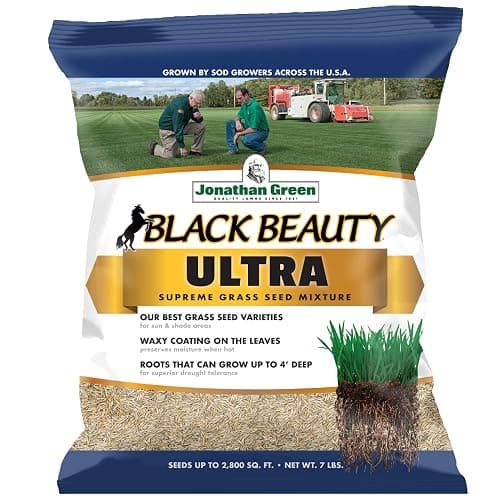
 Jonathan Green Black Beauty Ultra Grass SeedCheck price on Amazon
 Scotts Turf Builder Lawn FoodCheck price on Amazon
As an Amazon Associate we earn from qualifying purchases.
Free Lawn Care Tools
Tall fescue, which VCE calls the most common home-lawn grass in the state. It stays the default even in the warm east, with bermuda and zoysia filling full-sun and coastal yards.
Six show up in Virginia lawns: cool-season tall fescue, Kentucky bluegrass, fine fescue, and perennial ryegrass, plus warm-season bermuda and zoysia. That mix exists because Virginia is a transition-zone state.
It sits in the transition zone, with hot, humid summers and cold, wet winters, so no grass is perfectly adapted. The central Piedmont is the hardest place to pick, since both warm- and cool-season grasses get stressed there.
Yes, especially in the eastern Tidewater and Coastal Plain, where it is a top full-sun choice, and in sunny Piedmont yards. Expect four to five brown months of winter dormancy, and know that winterkill and spring dead spot become real risks in the western mountains, where tall fescue is the safer pick. Plant it from late May through early July, once soils warm into the mid 60s F, using cold-tolerant varieties recommended by VCE.
Fall for cool-season tall fescue, from about mid-August through October, which VCE marks as the best window. Fall seedings avoid the crabgrass that chokes out spring seedlings. Warm-season grasses go in from May through July instead.
Fine fescue, which VCE rates as the most shade-tolerant cool-season group. It is usually blended into a tall fescue seed mix for the tree-shaded parts of the yard.
Sources (3)
- Virginia Cooperative Extension, Selecting Turfgrass for Virginia (SPES-748).
- VCE, Lawn Diseases in Virginia (456-018) and Fall Lawn Care (430-520).
- VCE cool-season and warm-season lawn calendars, 430-523 and 430-522.
Photos: cwwood / iNaturalist · CC BY-SA 4.0, Tyler Bishop / iNaturalist · CC BY 4.0, Kevin Faccenda / iNaturalist · CC BY 4.0, mefisher / iNaturalist · CC0

Beat weeds and brown spots from your phone
Snap a photo, get the fix, and follow a plan timed to your soil and weather. Free on iPhone.