Types of Grass in South Carolina: The Common Lawn Grasses
 Marcus GreenTurf Management Pro | 18 Years
As an Amazon Associate we earn from qualifying purchases.
South Carolina is mostly warm-season lawn country. Five grasses do the work: centipedegrass, Bermudagrass, St. Augustinegrass, and zoysiagrass through the Midlands and coast, plus tall fescue in the cool Upstate. The fast check is habit: tall fescue grows in clumps and stays green all winter, while the warm-season four spread by runners and go brown.
Clemson targets May 1 to 14 for planting warm-season grass anywhere in the state, and mid-to-late September for seeding tall fescue. Bermuda has very poor shade tolerance; St. Augustine takes the most shade but still wants 4 to 6 hours of sun.
Most of South Carolina is warm enough that warm-season grasses run the show, going green in late spring and brown in winter. Clemson Cooperative Extension's list of grasses grown for South Carolina lawns runs to eight, but five do almost all the work in home yards. This guide covers each one and how to tell which is already growing in yours.
The types of grass that grow in South Carolina
Centipedegrass
Centipedegrass is the signature low-maintenance Carolina lawn, so common that people call it the "lazy man's grass." Clemson notes it is well adapted to the climate and soils of the coastal plains and lower Piedmont areas of the southern United States and thrives on infertile, acidic soils that are moderately to well-drained, exactly the sandy, acidic ground much of South Carolina has. It grows slowly, needs little fertilizer, and asks to be left alone, but it does best in open sun and can yellow in high-pH soil.
Bermudagrass
Bermudagrass is the full-sun workhorse for high-traffic, sunny yards and athletic-style turf. Clemson credits it with producing a vigorous, light to dark green, dense turf that is well adapted to most soils and climatic regions in the southern United States. The catch is shade: Clemson warns bermuda has very poor shade tolerance and should not be grown underneath tree canopies or building overhangs. It is fast, tough, and drought-hardy in full sun, but creeps into beds and browns out over winter.
St. Augustinegrass
St. Augustinegrass is the coastal and shade pick. Clemson calls it the most shade-tolerant warm-season grass, although it still needs 4 to 6 hours of sun to thrive, and notes it is well-suited for the coastal plain and has a fair tolerance to salt. Its broad, dark blades make a lush carpet for Lowcountry yards, but it is the least cold-hardy of the group and can take winter injury in a hard freeze.
Zoysiagrass
Zoysiagrass is the dense, cold-hardy all-rounder. Clemson says its cultivars are adapted to the entire state and are some of the most cold-tolerant of the warm-season grasses, and that they form a dense, attractive turf in full sun and partial shade, but often thin out in dense shade. That tight carpet resists weeds and handles the Upstate's cooler winters better than St. Augustine, but zoysia is slow to establish and goes tan in winter.
Tall Fescue
Tall Fescue is the Upstate exception, the one cool-season grass that holds a year-round South Carolina lawn. Clemson calls it a popular grass in the mountains and upper piedmont areas of South Carolina, which extends as far east as Columbia, and notes it will grow well with as little as 5 hours of sunlight per day, which makes it the go-to for shade up there. Its weakness is Carolina heat: established stands tend to thin out and become "clumpy" and may need annual reseeding every fall.
Two more grasses round out Clemson's list in narrower roles. Carpetgrass is not recommended for a high-quality lawn; however, it can be used in wet, shady areas where ease of maintenance is more important than quality, since it grows where few other grasses persist. Bahiagrass shows up too, but Clemson treats it mainly as a coarse pasture and roadside grass rather than a quality home lawn, so most homeowners meet it as a weed rather than plant it on purpose. Seashore paspalum is a specialty pick for salt-sprayed coastal sites.
South Carolina grass types compared at a glance
| Grass | Season | Best role | Sun / shade | Water need | Maintenance |
|---|---|---|---|---|---|
| Centipedegrass | Warm | Low-input Carolina classic | Full sun to light shade | Low to moderate | Low |
| Bermudagrass | Warm | Full-sun, high-traffic turf | Full sun, poor shade | Low once established | High |
| St. Augustinegrass | Warm | Shade and coastal lawns | Part shade, needs 4-6 hrs sun | Moderate to high | Medium |
| Zoysiagrass | Warm | Dense, cold-hardy, statewide | Sun to partial shade | Moderate | Low-medium |
| Tall Fescue | Cool | Upstate and shade lawns | Sun to shade (5+ hrs) | Moderate to high | Medium |
How to tell which type you already have
Start with the big split: does the grass grow in clumps or spread by runners? Tall fescue grows in bunches and stays green through winter; the four warm-season grasses all spread by runners and go brown in winter. From there, blade width and color do most of the sorting, from centipede's light apple-green to St. Augustine's broad, coarse blades.
| Grass | Blade | Growth habit | Standout tell |
|---|---|---|---|
| Centipedegrass | Medium, apple-green | Creeps slowly by stolons | Light "apple green" color; short seed stalks |
| Bermudagrass | Fine, wiry | Runners above and below ground | Bird's-foot seed head, even in mowed lawns |
| St. Augustinegrass | Broad, coarse, folded | Thick above-ground runners | Wide flat stems; coarsest blade of the group |
| Zoysiagrass | Fine to medium, stiff | Slow, very dense | Springy carpet feel; crunches when dry |
| Tall Fescue | Wide, coarse, rough edges | Bunching, no runners | Grows in clumps; stays green in winter |
Still not certain? Our free AI grass identifier reads a close-up photo, names the grass, and builds a 12-month care plan tuned to your ZIP.
Which types grow in your part of South Carolina
South Carolina runs cool-season in the Upstate mountains and warm-season everywhere else. Clemson frames it by elevation and the coast: the far Upstate is the only place a permanent cool-season lawn survives the summer, while warm-season grasses cover the Midlands and the coast.
- Upstate (mountains and upper Piedmont, Greenville and Spartanburg): The coolest, highest corner. Tall fescue is the year-round lawn here, since Clemson notes northern grasses will not survive the summer elsewhere except tall fescue at higher elevations. Zoysia and Bermuda also work in full sun.
- Midlands (Piedmont and central, Columbia): The transition, where tall fescue reaches its eastern limit near Columbia and warm-season grasses take over. Centipede, Bermuda, and zoysia are the mainstays; centipede does best in open sun.
- Lowcountry and coastal plain (Charleston, Myrtle Beach, Hilton Head): The warmest, saltiest zone. St. Augustinegrass suits the coast for its salt tolerance and shade, centipede covers sandy inland yards, and seashore paspalum handles salt-sprayed sites.
South Carolina grass timing that matters
The key South Carolina timing rule is that warm-season and cool-season grasses go in at opposite ends of the year. Soil temperature drives the rest:
- Warm-season planting (centipede, Bermuda, zoysia, St. Augustine): Clemson gives a target date of May 1 to 14 for all parts of the state, once the soil is reliably warm.
- Cool-season seeding (tall fescue, Upstate): Clemson says cool-season grasses are best established in mid-late September, so fall roots beat the summer heat.
- Spring pre-emergent: put crabgrass pre-emergent down in early spring, before the soil warms through about 55F and crabgrass germinates.
- Last spring frost: roughly late March on the coast, early-to-mid April in the Midlands, and mid-to-late April in the Upstate.
- Dormancy: the four warm-season grasses go brown for winter; some homeowners overseed Bermuda with ryegrass for winter color. Tall fescue stays green through winter but can thin in summer heat.
Our herbicide timing tool pins the exact pre-emergent date for your ZIP.
Next steps
Once you know your grass type, the care gets specific. Dig into the full guides for Centipedegrass, Bermudagrass, St. Augustinegrass, Zoysiagrass, or Tall Fescue, or line any two up in our grass comparison tool. For the wider picture, see how every state compares.
And if you are not sure what is growing out there, start with a quick photo on our free grass identifier.
Top Picks
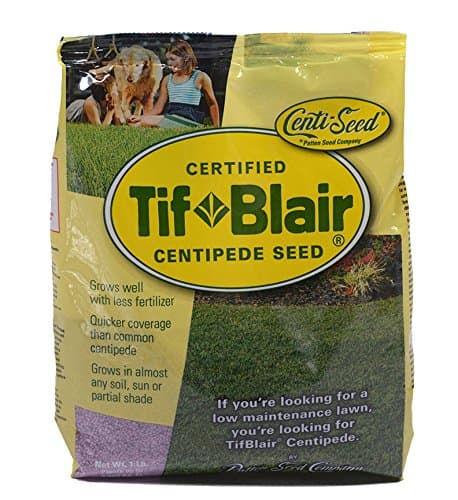
 TifBlair Centipede Grass Seed (1 lb, covers up to ~4,000 sq ft)Check price on Amazon
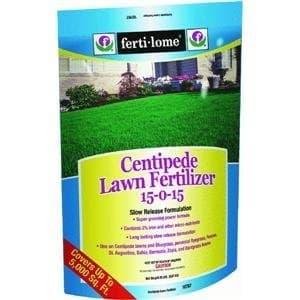
 Ferti-Lome Centipede Lawn Fertilizer 15-0-15 (20 lb)Check price on Amazon
As an Amazon Associate we earn from qualifying purchases.
Free Lawn Care Tools
Centipedegrass is the classic low-maintenance South Carolina lawn, so common it is nicknamed the "lazy man's grass." Bermuda and zoysia are the other warm-season mainstays, with tall fescue holding the cool Upstate.
Clemson lists eight grasses grown for South Carolina lawns, but five do almost all the work: centipedegrass, Bermudagrass, St. Augustinegrass, and zoysiagrass in the warm middle and coast, plus tall fescue in the Upstate. Carpetgrass, bahiagrass, and seashore paspalum fill narrow niches.
Tall fescue. Clemson calls it a popular grass in the mountains and upper Piedmont that extends as far east as Columbia, and it grows well with as little as 5 hours of sun, which makes it the pick for shade and cooler Upstate winters.
In the warm middle and coast, St. Augustinegrass, which Clemson calls the most shade-tolerant warm-season grass, though it still needs 4 to 6 hours of sun. In the Upstate, tall fescue takes shade well. Bermudagrass is the wrong pick for shade anywhere.
Warm-season grasses go in around May 1 to 14 statewide per Clemson, once the soil is warm. Tall fescue in the Upstate is seeded in mid-to-late September so it roots before summer heat.
Sources (3)
- Clemson Cooperative Extension HGIC, Selecting a Lawn Grass and Lawn Establishment.
- Clemson HGIC species factsheets: Centipedegrass, Bermudagrass, St. Augustinegrass, Zoysiagrass, and Tall Fescue.
- Clemson HGIC, Carpetgrass.
Photos: cwarneke / iNaturalist · CC0, Mary Lata / iNaturalist · CC BY 4.0, Matt Berger / iNaturalist · CC BY 4.0, Kevin Faccenda / iNaturalist · CC BY 4.0, Rod / iNaturalist · CC0

Beat weeds and brown spots from your phone
Snap a photo, get the fix, and follow a plan timed to your soil and weather. Free on iPhone.
Related Articles
 Climate & Regional Tips
Types of Grass in Arkansas: The Common Lawn Grasses
Jul 22, 2026•7 min read Climate & Regional Tips
5 Types of Grass in Hawaii and How to Tell Which You Have
Aug 30, 2026•7 min read Climate & Regional Tips
8 Types of Grass in Nevada and How to Tell Which You Have
Sep 2, 2026•9 min read