
Why fire ant colonies keep coming back
A fire ant mound is the visible top of a colony that can run for years and hold a very large number of ants. Many colonies have more than one queen, which is part of why knocking the top off a mound accomplishes so little: the colony simply relocates and rebuilds a few feet away, and you have made yourself harder to track. Killing the workers you can see does not touch the queens producing replacements underground.
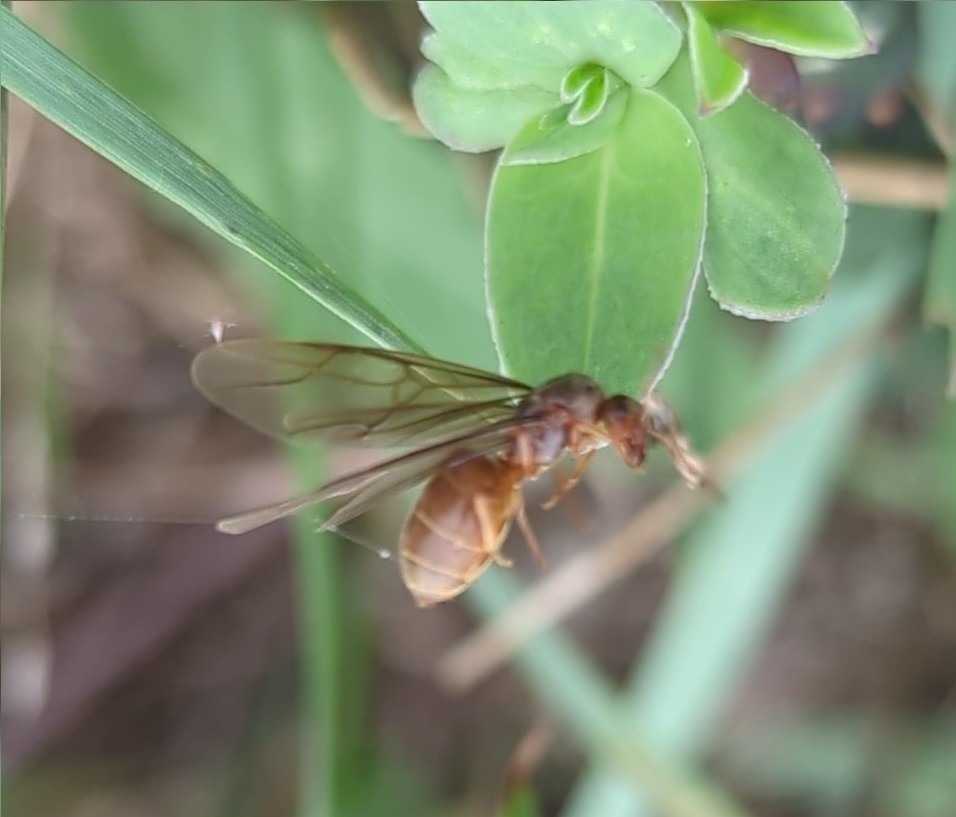
New colonies also arrive on their own. After rain, winged reproductives fly, land, and start fresh mounds, which is why a yard that looked clear in spring can have several mounds by late summer. Treating your yard while a neighboring property goes untreated means you are dealing with reinvasion as much as with your own colonies, and it is one of the few lawn pests where a coordinated neighborhood effort genuinely outperforms individual action.
Two approaches, and what each one is actually for
There are two distinct approaches, and confusing them is the most common reason fire ant control fails. A broadcast bait is spread over the whole yard, carried down into colonies by foraging workers, and works slowly against the queens, which is what actually ends a colony. An individual mound treatment is applied to one mound for fast local relief, and it does nothing about the mounds you have not found. Baits are the strategy. Mound treatments are the response to a mound that is in your way right now.
Both are label-driven, and the labels differ enormously in how much product goes down, how long it takes to work, and how long you should stay off the lawn afterward, so read the one in your hand rather than a general rule. Do not pour gasoline, bleach, or other household chemicals on mounds: it contaminates soil, it is unsafe, and it does not reach the queens. And keep checking after rain, since that is when new colonies land and start over.
How do you identify fire ants?
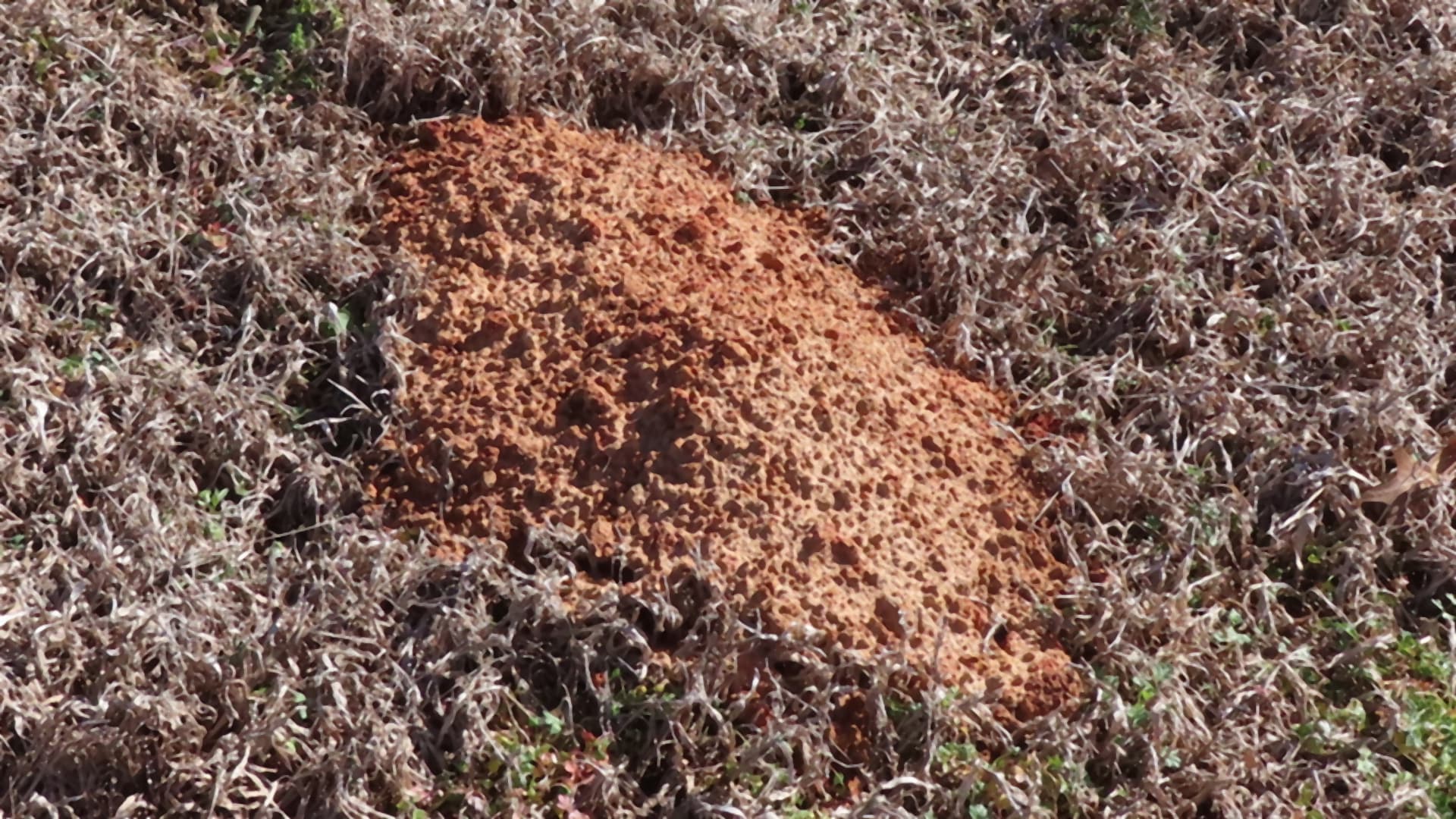
- Dome-shaped mounds of loose, fluffy soil with no visible hole in the top
- Mounds appear or grow quickly after rain, often several across the same sunny area
- Reddish-brown ants of noticeably different sizes within the same colony
- Ants swarm up onto anything that disturbs the mound within seconds rather than scattering away
- Stings that leave a raised white pustule after a day or so
What the damage looks like
Large dome-shaped mounds in lawn; surrounding grass may thin from soil displacement.
Is it fire ants or something else?
How do you check for fire ants?
Disturb the top of a suspect mound with a long stick from a step back, never with a hand or foot. Fire ants swarm out within seconds and run up the stick, and the mound has no single opening on top. Ant hills with a visible central hole are usually a different species.
Identify from a step back, never with your hands or feet, and never let a child or a dog be the one who finds the mound. Fire ants sting in numbers and the stings are painful, so treat any suspect mound as active until you have confirmed otherwise. If anyone in the household has a known insect sting allergy, that is a reason to have a professional handle the yard rather than doing it yourself.
When should you treat for fire ants?
- Two to three broadcast baitings a yearBait is the strategy, not the emergency response. It is spread over the whole yard, carried down to the queens by foraging workers, and works slowly, which is exactly why it goes on a schedule rather than on the day you get stung. Spring through fall is the active stretch.
- After every heavy rain: walk the yardRain is when winged reproductives fly, land, and start fresh mounds, and it is also when existing mounds get pushed up and become obvious. A yard that looked clear in spring can carry several mounds by late summer purely from new arrivals.
- Whenever a mound is in your way: treat that moundIndividual mound treatments are for fast local relief on a mound next to a play area or a path. They do nothing about the mounds you have not found, so they supplement the bait rather than replacing it.
- Coordinate with neighbors if you canTreating your yard while the property next door goes untreated means you are managing reinvasion as much as your own colonies. This is one of the few lawn pests where several yards treating around the same time clearly beats one yard trying hard.
These windows shift by a few weeks with latitude and with the season you are actually having, so treat them as the shape of the year rather than as dates. Your county extension office publishes the local timing, and the population that justifies treating where you live.
How do you get rid of fire ants?
Start here: cultural
- Broadcast bait treatments over entire yard
- Individual mound treatments for immediate control
- Maintain vigilance; re-treat new mounds
Organic and biological
- Spinosad-based baits
- Diatomaceous earth on mounds
- Boiling water on individual mounds (limited effectiveness)
Conventional product categories
- Hydramethylnon bait
- Spinosad bait
- Acephate (individual mound drench)
- Bifenthrin (broadcast)
Keep kids and pets off treated areas until the product has dried and any re-entry interval printed on the label has passed. That applies to the organic and biological options too, since most of them are still pesticides.
These are active ingredient categories, not a prescription. Rate, timing, and watering-in come from the product label. Confirm the label lists both your pest and your grass type before you apply anything.
Keeping it from coming back
- Apply broadcast bait 2-3 times per year
- Treat new mounds promptly
- Monitor after rain events for new colonies
Pest control quotes
Get matched with local pest control pros on Angi. Free quotes, no obligation.
Angi is a partner; we may earn a commission if you request quotes there.
What products work on fire ants?
These picks are not filtered to your lawn. Insect products differ in which pests and which grasses they are labeled for, and none of them are a substitute for confirming the pest first. Read the label for your pest, your grass type, and the rate before you buy.
Recommended Products
- 1Check price
 Top pick
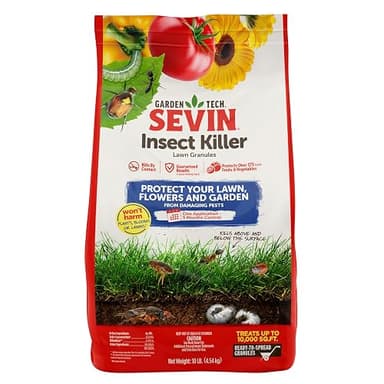
Sevin Insect Killer Granules 10 lb
Broad-spectrum granular insect killer for grubs, ants, fleas, ticks, and 100+ listed lawn pests. A broadcast granule suppresses foraging ants across the lawn. Check that the label lists fire ants, and treat individual mounds as its directions say.
- 2Check price
 Best value
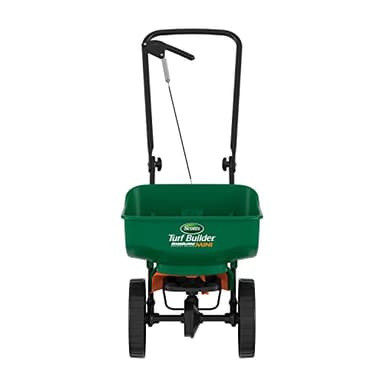
Scotts Turf Builder EdgeGuard Mini Broadcast Spreader
Simple broadcast spreader for granular fungicides, grub control, fertilizer, and recovery products that need even coverage. Broadcast treatments only work when the granules are spread evenly.
As an Amazon Associate we earn from qualifying purchases.
Where do fire ants show up?
Most common in these regions:
Grass types at risk