What the mound actually is, and why it lands where it lands
The cone you see is not the nest. It is spoil. The colony lives in the soil below and around it, and the workers carry excavated grains up and drop them at the tunnel opening, which is why the pile is made of soil that looks unusually fine and loose compared with the rest of your lawn.
That is also why the mounds cluster where they do. NC State reports that Formica colonies are more prevalent near sidewalks, concrete slabs and pavement, and in areas with direct sunlight and bare soil. Driveway seams, sidewalk edges, the thin strip along a south facing fence, and anywhere the turf has gone patchy are prime real estate.
The damage story is honest but modest. UMass Extension explains that tunneling can break off roots and root hairs or increase soil desiccation, and that large mounds can smother grass and even damage mower blades. Penn State describes it as minor damage to the turf from loosening soil and constructing small mounds. Meanwhile the same ants are scavengers and predators on certain harmful insects, and they are usually up in your shrubs chasing honeydew from aphids, mealybugs and soft scales rather than eating your grass. NC State puts it plainly: ants serve a useful role in the ecosystem, so their presence in turf is not always a negative thing.
What actually works, and what mostly does not
Start with the uncomfortable part. Iowa State says most species are beneficial and do not require control, and UMass Extension calls ants generally negligible pests on home lawns. If the mounds are not catching your mower or smothering visible patches, doing nothing is a defensible answer, and it is the one the extension literature leans toward.
When you do want them gone, mechanical work carries more weight than people expect. Iowa State says an anthill standing above the grass tops can be raked or washed flat as needed, with a forceful stream from the garden hose to disperse the soil, and that the need for it peaks during periods of prolific nesting activity such as wet spring weather. NC State notes that frequent disruption by digging or flooding with a garden hose may not kill the colony, but could cause the mound to relocate. WSU makes a related point with a caveat worth respecting: flooding has to be repeated every few days until the ants actually move. One pass does nothing.
On products, the single most useful fact is a mechanism one. UC IPM states that insecticide sprays kill only the foraging ants and more will emerge from their nests, while baits get carried back and can give more effective and longer control. Extension listed options for turf ants include pyrethroids such as bifenthrin, the carbamate carbaryl, fipronil gel baits, and spinosad as the organic option in the WSU listing. Rates, timing and watering in belong to the product label, not to us, and Penn State adds that if you treat, you water it in and keep children off the grass until it has dried. UC IPM is also blunt that totally eliminating ants from an outdoor area is generally not feasible, so aim at the mounds that bother you rather than the lawn as a whole.
How do you identify lawn ants?
- A small cone of fine, loose soil with a visible opening in the center, sitting on top of the turf rather than under it
- Several small piles scattered across a sunny area, often along driveway seams, sidewalk edges and thin dry spots where the soil is bare
- Grass around the pile looks buried or yellowed from being smothered, not chewed off or wilted
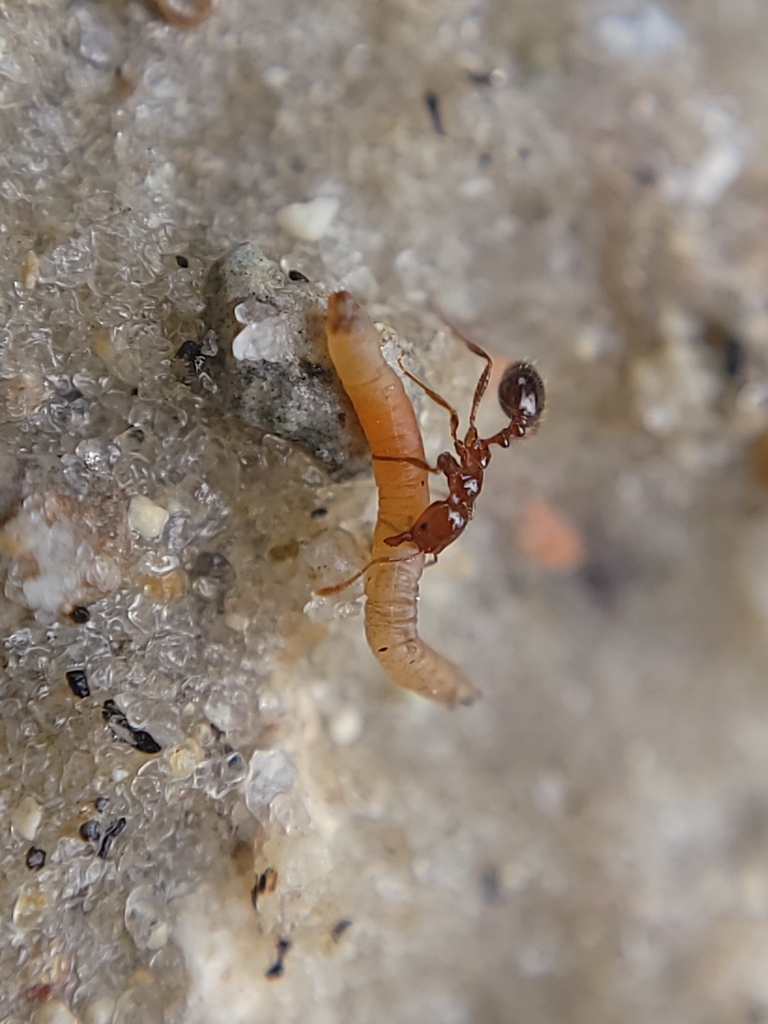
- The ants themselves run roughly 1/12 to 1/4 inch, light brown to black, with a pinched waist and elbowed antennae
- Bigger domed mounds at the lawn edge or field margin point to field ants in the genus Formica, including the Allegheny mound ant
- Ant trails running up plant stems to aphids or scale insects, because the ants are after honeydew
What the damage looks like
Small soil mounds that smother grass; mostly cosmetic damage.
Is it lawn ants or something else?
How do you check for lawn ants?
Look straight down into the top of the pile. A soil-nesting lawn ant mound has an open hole in the middle, made of fine, loose soil pushed up between the grass blades. A fire ant mound has no central opening, so an open hole rules fire ants out.
Scout on your normal mowing pass. Walk the sunny, thin, dry parts of the lawn and the strips next to pavement, because NC State reports Formica ants are most prevalent near sidewalks, concrete and pavement and in areas with direct sunlight and bare soil. Note whether the piles sit above the mown grass height, whether they are spreading week to week, and whether they are catching the mower. None of the extension publications cited on this page publish a numeric action threshold for ants in home lawns, so there is no count of mounds per square foot to hit. Penn State Extension recommends careful spot treatments of ant hills with a registered control material, and directs anyone treating an entire lawn to water it in immediately and keep children off until the grass has dried. Iowa State says most species are beneficial and do not require control. Treat the decision as cosmetic tolerance, not a pest count.
When should you treat for lawn ants?
- Late winter into early spring, if you plan to baitUC IPM says to apply bait beginning in late winter or early spring, when ant populations are lowest. Baits work through the food sharing behavior that carries the material back into the colony, so this is a slow, patient tactic rather than a same day fix.
- Spring, as soon as surface activity appearsUMass Extension advises making any initial insecticide application as soon as surface activity becomes apparent, often early May in the Northeast, and says applications made directly to the mound improve results and reduce the amount of pesticide used and the chance of misapplication. Follow the product label for rate, timing and watering in.
- Wet spring weather, when mound building peaksIowa State notes mound activity is greatest during periods of prolific nesting activity such as wet spring weather. This is the window where raking or washing the hills flat does the most good.
- Early spring and late summer swarmsPenn State reports swarming usually happens in early spring and late summer, when winged reproductives fly and new queens start colonies. Swarms on the driveway are normal and are not a sign your lawn is failing.
- Fall, when field ants rebuildNC State reports Formica ants build mounds when temperatures are not too hot, in spring and fall. Fall is a second chance to knock the big domes down before they harden and start catching mower blades.
These windows shift by a few weeks with latitude and with the season you are actually having, so treat them as the shape of the year rather than as dates. Your county extension office publishes the local timing, and the population that justifies treating where you live.
How do you get rid of lawn ants?
Start here: cultural
- Rake or wash mounds flat with a forceful stream from a garden hose
- Flood the mound repeatedly, every few days, until the colony relocates
Organic and biological
- Spinosad product labeled for lawn and turf ants
Conventional product categories
- Pyrethroids such as bifenthrin, applied per label
- Carbaryl, applied per label
- Fipronil gel bait
Keep kids and pets off treated areas until the product has dried and any re-entry interval printed on the label has passed. That applies to the organic and biological options too, since most of them are still pesticides.
These are active ingredient categories, not a prescription. Rate, timing, and watering-in come from the product label. Confirm the label lists both your pest and your grass type before you apply anything.
Keeping it from coming back
- Most lawn ant species are beneficial and rarely require treatment
- Treat only if mounds are smothering turf or catching the mower
- Control food sources near the lawn
Pest control quotes
Get matched with local pest control pros on Angi. Free quotes, no obligation.
Angi is a partner; we may earn a commission if you request quotes there.
What products work on lawn ants?
These picks are not filtered to your lawn. Insect products differ in which pests and which grasses they are labeled for, and none of them are a substitute for confirming the pest first. Read the label for your pest, your grass type, and the rate before you buy.
Recommended Products
- 1Check price
 Top pick
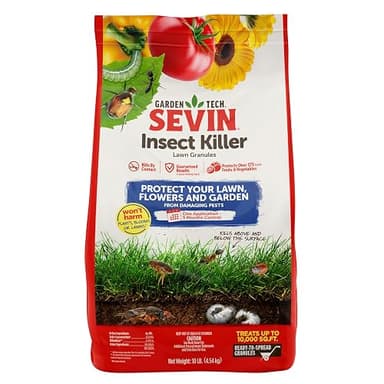
Sevin Insect Killer Granules 10 lb
Broad-spectrum granular insect killer for grubs, ants, fleas, ticks, and 100+ listed lawn pests. Most lawn ants are harmless, so treat only where mounds are a real problem. Check that the label lists ants.
- 2Check price
 Best value
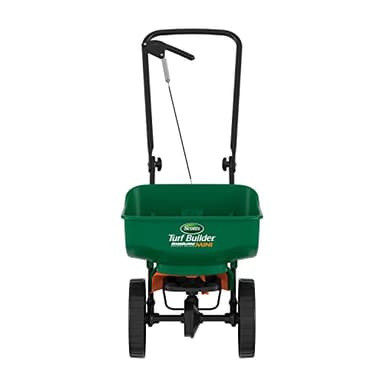
Scotts Turf Builder EdgeGuard Mini Broadcast Spreader
Simple broadcast spreader for granular fungicides, grub control, fertilizer, and recovery products that need even coverage. Spread granules evenly over the mounded area, then water in as the label directs.
As an Amazon Associate we earn from qualifying purchases.
Where do lawn ants show up?
Most common in these regions:
Grass types at risk