Best Fertilizer for Centipede Grass in South Carolina (2026)
 Marcus GreenTurf Management Pro | 18 Years
As an Amazon Associate we earn from qualifying purchases.
If your centipede lawn went a little pale this spring and your first instinct was to throw down more fertilizer, stop right there. In my years keeping warm-season turf alive across the Southeast, I watched homeowners kill more centipede with the fertilizer spreader than any fungus ever managed. Centipede is the rare grass that thrives on neglect, and finding the best fertilizer for centipede grass in South Carolina is really about finding the right product and using a lot less of it than your neighbor with bermuda does.
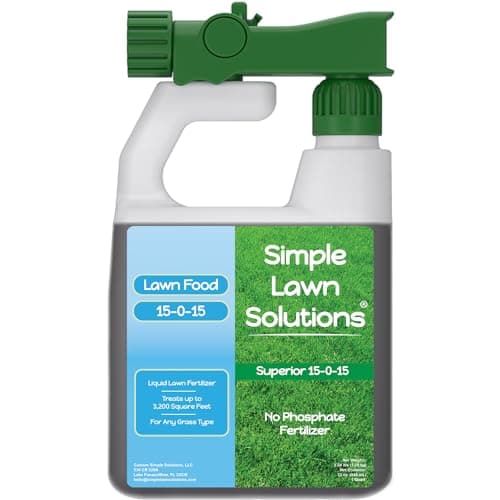
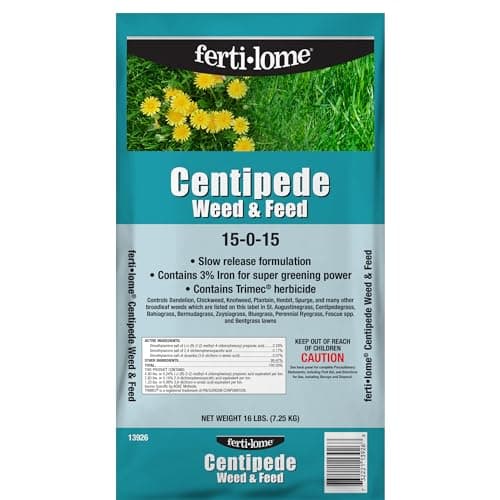
The best fertilizer for centipede grass in South Carolina is a low-nitrogen, iron-forward product applied lightly during the warm growing months, never in fall. Look for a low first number on the bag (something like 15-0-15 or a centipede-specific blend), little or no phosphorus, and added iron to handle the chlorosis our higher-pH soils tend to cause. Centipede only needs roughly half a pound to two pounds of nitrogen per 1,000 square feet for the entire year, which is a fraction of what other Southern lawns want.
Apply your first and main feeding in late spring after full green-up, use iron rather than nitrogen if the grass looks yellow in summer, and switch to a potassium-only application in early fall for cold hardiness. The single biggest mistake in SC is over-fertilizing, which triggers the slow thinning known as centipede decline. Less really is more with this grass.
Why Centipede Is Different (and Why South Carolina Makes It Trickier)
Centipede earned the nickname "the lazy man's grass" for good reason. It evolved on poor, acidic soils and it genuinely does not want to be pushed. Feed it like you would feed bermuda or St. Augustine and you get a short-term flush of green followed by thatch buildup, shallow roots, and the gradual collapse called centipede decline. The grass simply runs out of stored energy trying to keep up with growth it never asked for.
South Carolina adds two wrinkles. First, we span USDA zones 7b through 9a, from the cold-snap Upstate down to the nearly frost-free Lowcountry, so a single national feeding calendar does not fit the whole state. Second, our soils run from leaching coastal sand to nutrient-holding Piedmont clay, and both extremes change how fertilizer behaves once it hits the ground. Get those two factors right and centipede is the easiest lawn you will ever own. Get them wrong and you spend every summer chasing yellow spots.
I am not going to rehash the universal basics here, because the centipede fertilizer pillar guide already covers product chemistry and general feeding theory in depth. This page is about the South Carolina specifics: your zones, your soils, and your calendar.
Reading the Bag: What to Look For in a Centipede Fertilizer
Recognition beats memorization, so before we talk schedule, here is what actually matters on the label. Walk the aisle with this table in mind and most products sort themselves out fast.
| Fertilizer trait | What to look for | Why it matters for SC centipede |
|---|---|---|
| Nitrogen (first number) | Low: single digits to mid-teens | Centipede stores little energy; high N forces growth it cannot sustain and drives decline. |
| Phosphorus (middle number) | Zero or very low | Most SC soils already hold enough; excess phosphorus does nothing good and can run off. |
| Potassium (third number) | Present, ideally near the N value | Builds cold tolerance and stress resistance, which matters across the temperature swing. |
| Iron | Listed as Fe, ideally chelated | Greens up the grass without forcing growth and fixes the chlorosis our soils cause. |
| Slow-release nitrogen | "Slow-release" or "controlled-release" on the label | Feeds gently over weeks instead of a spike, which is exactly centipede's preference. |
| Added lime or high pH claims | Avoid | Centipede wants acidic soil; lime raises pH and locks out iron, causing yellowing. |
A centipede-labeled product usually nails most of these on its own. If you cannot find one, a low-nitrogen turf fertilizer with iron and minimal phosphorus is a fine substitute. You can plug your square footage and target rate into our fertilizer calculator so you buy the right amount and apply the light rate centipede actually wants instead of guessing.
Coastal Sand vs Piedmont Clay: Same Grass, Different Plan
This is where most generic advice falls apart, because the soil under your feet changes the whole approach.
The Lowcountry and Grand Strand (sandy, leaching soils)
Around Charleston, Beaufort, Hilton Head, and Myrtle Beach you are usually working with sandy soil that drains fast and has low cation exchange capacity. Translation: nitrogen washes out quickly, especially after our summer downpours. Here it makes sense to split your already-small yearly nitrogen total into two very light passes rather than one, so the grass actually gets to use it before it leaches past the roots. The longer warm season also stretches your feeding window into early fall a touch more than the rest of the state.
The Midlands and Upstate (clay-heavy Piedmont soils)
Around Columbia, Greenville, Spartanburg, and Rock Hill you are on heavier red clay that holds nutrients far better. One light feeding is often plenty, and the bigger risks are high soil pH and compaction rather than leaching. Clay soils in the Piedmont frequently test on the alkaline side of what centipede likes, which is exactly the recipe for iron chlorosis. Watch pH closely here and lean on iron rather than extra fertilizer to keep the color up. The Upstate also has the shortest growing window in the state, so your last nitrogen of the year needs to go down earlier.
The South Carolina Centipede Feeding Calendar
Here is the month-by-month framework. Slide the coastal column a couple of weeks earlier in spring and later in fall, and the Upstate column a couple of weeks the opposite direction. Soil temperature is a better trigger than the date on the wall, and you can check it for your zip with our soil temperature tool.
| Month | What is happening | What to do |
|---|---|---|
| February to March | Soil still cold, centipede dormant or barely waking | Do nothing. Feeding now feeds weeds, not grass. |
| April | Green-up beginning as soil warms past the mid-60s F | Still wait. Let it fully green up and start actively growing first. |
| May | Grass fully green and growing | Main feeding: one light pass of low-N, iron-forward fertilizer. |
| June to July | Peak heat, possible yellowing | If color fades, apply chelated iron, not more nitrogen. Coastal lawns may take a second tiny N pass. |
| August | Still growing strong | Hold. No more nitrogen for the year past late summer. |
| September | Days shortening, grass slowing | Optional light potassium-only application for cold hardiness. No nitrogen. |
| October to January | Slowing into dormancy | Nothing. Let it harden off and rest. |
If you take one thing from this calendar, make it this: the nitrogen stops in late summer. Everything after that is potassium or nothing at all.
- Centipede typically needs only about 0.5 to 2 pounds of total nitrogen per 1,000 square feet per year, and many SC lawns do best near the low end. Confirm your target before applying.
- Target soil pH for centipede is commonly cited in the acidic 5.0 to 6.0 range, lower than most lawn grasses want. Do not add lime without a test that calls for it.
- Green-up generally begins as soil temperatures hold in the mid-60s F, and iron applications green the grass without forcing growth.
- These are common ranges, not prescriptions. Pull a soil test and confirm exact rates, products, and timing with Clemson Cooperative Extension, the land-grant authority for South Carolina turf.
The pH Trap That Quietly Wrecks SC Centipede
Centipede is one of the few lawn grasses that genuinely prefers acidic soil. When the pH creeps up, the grass loses its ability to pull iron out of the ground, and you get that classic pale, almost lime-green look. Two things drive pH up in South Carolina yards: well water and hard municipal water that carry dissolved minerals, and a history of lime applications meant for a previous grass or a garden. Folks see yellow, assume hunger, and reach for nitrogen, which only accelerates decline.
Before you fertilize at all, find out where your pH actually sits. A soil test is cheap and it changes everything about your plan. If you are above the range centipede likes, the fix is usually elemental sulfur to bring pH down, not more fertilizer. I walk through that whole process in how to improve soil pH for grass, and you can sanity-check your own results against our soil test analyzer. For the deeper background on the grass itself, the centipede grass care guide is the pillar to bookmark.
What Other Guides Miss: Fall Nitrogen Is a SC Winterkill Trap
Most national centipede articles, and even a lot of Southern ones, hand you a tidy schedule that includes a fall feeding. That advice quietly assumes a long, mild winter. It works fine for a Georgia coastal lawn and it is a real problem in upstate South Carolina. Our Georgia centipede fertilizer guide gets into the warmer-zone version, but the SC twist is the temperature swing between the Lowcountry and the Blue Ridge foothills.
Here is the mechanism nobody spells out. Late-season nitrogen pushes a flush of tender new growth right when the plant should be storing energy and hardening off for cold. In zone 7b around Greenville and Spartanburg, an early hard freeze hits that soft growth before it acclimates, and the damage shows up the following spring as patchy, slow, thinning turf that everyone blames on disease. It is not disease. It is fall fertilizer. The same bag that greens up a December lawn in Beaufort can set up a winterkill in Anderson County.
The second thing guides gloss over is that centipede decline is rarely one cause. It is a stacking problem: too much nitrogen, plus thatch from forced growth, plus high pH locking out iron, plus shallow roots from frequent feeding. Each one alone is survivable. Together they spiral. The SC-specific fix is to attack the stack from the bottom: feed less, correct pH toward acidic, dethatch if needed, and water deeply but infrequently so roots chase moisture down. When the color still lags after all that, a photo diagnosis beats guessing, because iron chlorosis, dollar spot, and nitrogen burn can look nearly identical in a centipede lawn. Upload a photo and let the AI sort it out against what is actually active in your part of the state this month.
Putting It on the Ground: Your SC Centipede Action Plan
Centipede rewards restraint, so the goal here is a short, deliberate routine you can run on autopilot. Here is the order I would work it.
- Test your soil first. Pull a sample and send it to Clemson Extension before you buy anything. The pH result alone will tell you whether you have a fertilizer problem or a pH problem.
- Wait for full green-up. Do not feed dormant or half-awake grass. Let soil temps settle into the mid-60s F and the lawn green up completely, usually May for most of the state.
- Choose a low-N, iron-forward, low-phosphorus product. Use the trait table above. A centipede-specific blend is the easy button; a low-N turf fertilizer with iron is a fine alternative.
- Apply the right amount, lightly. Run your square footage through the fertilizer calculator and aim for the low end of the nitrogen range. When in doubt, use less.
- Treat summer yellowing with iron, not nitrogen. Chelated iron restores color without forcing the growth that drives decline.
- Stop nitrogen by late summer. Switch to potassium-only in early fall for cold hardiness, then leave it alone through dormancy.
- Match the plan to your soil. Split feeds into smaller passes on coastal sand; lean on iron and pH control on Piedmont clay.
Do that and you will spend less on fertilizer, less time fighting yellow spots, and you will have the dense, low-maintenance lawn centipede is supposed to be. If you want the timing dialed to your exact zip and grass type instead of a statewide framework, a personalized 12-month care plan tells you the precise week to feed, the iron windows for your soil, and the cutoff date that keeps your Upstate lawn from a winterkill. Start with a free photo diagnosis and let it build the schedule around your actual lawn.
Free Lawn Care Tools
Centipede wants low nitrogen and very little phosphorus, so look for a balanced low-N analysis or a centipede-specific blend, ideally one carrying iron. A ratio in the neighborhood of 15-0-15 or a similar low-first-number product works well in most of South Carolina. Skip the phosphorus unless a soil test says you are short, because our soils are often already adequate.
Less than you think. Most South Carolina centipede lawns need only one to two light feedings per year, applied during the warm growing months after full green-up. On sandy coastal soils you can split a small amount into two passes since nitrogen leaches quickly, but the yearly total stays low.
Yellowing in centipede is usually iron chlorosis or a pH problem, not a nitrogen shortage. Centipede struggles to pull iron from soil when the pH drifts too high, which is common with hard well water or past lime applications. Adding more nitrogen makes it worse, while a chelated iron product or correcting pH usually greens it back up.
Generally no. Late-season nitrogen pushes tender growth that does not harden off before cold weather, and in the Upstate that is a leading cause of winterkill and spring centipede decline. A light potassium application in early fall is fine and helps cold tolerance, but hold the nitrogen.
Centipede prefers acidic soil, commonly cited in the 5.0 to 6.0 range, which is lower than most other lawn grasses want. Many SC lawns are limed too aggressively, which raises pH and locks out iron. Get a soil test through Clemson Extension before adding any lime, since centipede rarely needs it.
Yes. The sandy coastal soils around Charleston, Beaufort, and Myrtle Beach drain and leach nitrogen fast, so light split feedings make sense and the season runs longer. The Piedmont clay around Columbia, Greenville, and Spartanburg holds nutrients better but is more prone to high pH and compaction, and the Upstate growing window is shorter on both ends.
Use granular slow-release for the one or two scheduled nitrogen feedings, because centipede's tiny annual budget (1 to 2 lbs of nitrogen) is easy to blow past with repeated liquid feeding. Liquids earn their keep as iron sprays: liquid chelated iron or ferrous sulfate gives summer color without adding nitrogen the grass does not want.
No. Centipede does not tolerate phosphorus-heavy soils, and Clemson recommends skipping phosphorus entirely unless a soil test shows deficiency. A 15-0-15 fits centipede in South Carolina far better than any balanced 10-10-10.
With centipede the answer is counterintuitive: less fertilizer, not more. Anything past 2 lbs of nitrogen per year invites centipede decline. Keep the pH between 5.5 and 6.0, use iron for the deep green, keep thatch under half an inch, and let the modest feeding schedule do its slow, steady work.

Your lawn plan, in your pocket all season
Grass ID, a season plan, soil-timed reminders, and a lawn journal that remembers what you did. Free on iPhone.