Types of Grass in Alabama: The Common Lawn Grasses
 Marcus GreenTurf Management Pro | 18 Years
As an Amazon Associate we earn from qualifying purchases.
Alabama is warm-season grass country. Bermuda, zoysia, St. Augustine, centipede, and bahia cover the state, with tall fescue as the one cool-season option for north Alabama. To tell yours apart, check whether it spreads by runners or grows in clumps. The warm-season grasses run; tall fescue bunches.
Bermuda is the most widely planted, St. Augustine handles shade and the Gulf Coast, and centipede suits acidic soil at pH 5.0 to 6.0. Put crabgrass pre-emergent down before the 4-inch soil temperature holds at 55F, early February on the coast and mid-March up north.
Alabama sits in the warm South, so all but one of its lawn grasses are warm-season. The Alabama Cooperative Extension System notes that where the turfgrass will be used is a big factor in selection, and in Alabama the biggest factors are sun, soil, and how far north you are. This guide covers every common type and how to tell which one is already in your yard.
The types of grass that grow in Alabama
Bermudagrass
Bermudagrass is Alabama's most widely planted lawn turf, the default for full-sun, high-traffic yards from the Tennessee Valley to the coast. Clemson describes it as a vigorous, dense turf well adapted to most soils and climatic regions in the southern United States. It takes heat and drought once established but needs full sun and frequent mowing, and it browns out after the first frost.
Zoysiagrass
Zoysiagrass is the dense, wear-tolerant upgrade, and it is among the most cold-tolerant of the warm-season grasses, which lets it reach further into north Alabama than most. It forms a tight carpet that resists weeds and takes light shade, but it is slow and costly to establish.
St. Augustinegrass
St. Augustinegrass is Alabama's shade and coast grass. Clemson calls it the most shade-tolerant warm-season grass, although it still needs 4 to 6 hours of sun to thrive. It thrives in the humid Gulf Coast and sandy south Alabama on broad, coarse blades, but it is the least cold-hardy of the set and struggles up north.
Centipedegrass
Centipedegrass is the low-input lawn for Alabama's common acidic soils. ACES notes it tolerates acidic soils (pH 5.0 to 6.0) better than other turfgrasses, and it asks for very little fertilizer or mowing. Give it high pH, compaction, or hard traffic and it declines, but in the right sandy, acidic ground it earns its lazy-lawn name.
Bahiagrass
Bahiagrass is the tough, low-maintenance grass for poor sandy soils and roadside-type lawns in south Alabama. Clemson calls it an aggressive, warm-season perennial grass, drought-hardy with deep roots and a coarse, open look topped by Y-shaped seed heads. It is function over polish, not a showcase lawn.
Tall Fescue
Tall Fescue is Alabama's one cool-season option, and ACES is specific that it is a cool-season, perennial, bunch-type grass for north Alabama lawns. In the Tennessee Valley and Appalachian foothills it stays green through winter when warm-season grasses go tan. It is best adapted to that northern tier, marginal in central Alabama, and generally not recommended in the south, and even up north it thins in hot, droughty summers.
Alabama grass types compared at a glance
| Grass | Season | Best role | Sun / shade | Water need | Maintenance |
|---|---|---|---|---|---|
| Bermudagrass | Warm | Full-sun default statewide | Full sun, poor shade | Low once established | High |
| Zoysiagrass | Warm | Dense and cold-hardy, statewide | Sun to light shade | Moderate | Low-medium |
| St. Augustinegrass | Warm | Shade and Gulf Coast | Best shade tolerance | Higher | Medium-high |
| Centipedegrass | Warm | Low-input, acidic soils | Sun to light shade | Low | Very low |
| Bahiagrass | Warm | Tough sandy south-AL lots | Full sun, poor shade | Low | Very low |
| Tall Fescue | Cool | North Alabama, marginal below | Shade to part sun | Moderate to high | Medium |
How to tell which type you already have
Start with one question: does the grass spread by runners, or grow in clumps? The warm-season grasses spread by runners; tall fescue is the odd one out, growing in bunches. From there, blade width, color, and the seed head sort the rest.
| Grass | Blade | Growth habit | Standout tell |
|---|---|---|---|
| Bermudagrass | Fine, wiry | Runners above and below ground | Bird's-foot seed head, even in mowed lawns |
| Zoysiagrass | Fine to medium, stiff | Slow, very dense | Springy carpet feel; crunches when dry |
| St. Augustinegrass | Broad, flat, coarse | Thick surface runners | Runners you can lift and trace; planted from sod |
| Centipedegrass | Medium, blunt-tipped | Low, slow creeping | Apple to yellow-green color; hugs the ground |
| Bahiagrass | Coarse, open | Short stout runners | Two-pronged, Y-shaped seed head on a tall stalk |
| Tall Fescue | Wide, coarse, rough edges | Bunching, no runners | Grows in clumps, not a spreading mat |
Still not certain? Our free AI grass identifier reads a close-up photo, names the grass, and builds a 12-month care plan tuned to your ZIP.
Which types grow in your part of Alabama
Alabama is a warm-season state with one cool-season exception up north, so the common grasses shift as you move from the Tennessee Valley down to the Gulf Coast.
- North Alabama and the Tennessee Valley (Huntsville, Muscle Shoals): The transition zone, and the southern limit of tall fescue. Cool-season tall fescue works here alongside the cold-hardier warm-season grasses, zoysia, bermuda, and cold-tolerant centipede. Cooler winters and upland clay-loam soils.
- Central Alabama (Birmingham, Montgomery): Warm-season country. Bermuda and zoysia lead, centipede on acidic low-input lots. Soils run from acidic Piedmont clay to the alkaline Black Belt, so a soil test matters. Fescue is marginal below the northern tier.
- South Alabama and the Gulf Coast (Mobile, Baldwin County): Warm, humid, and long-seasoned, with sandy coastal soils. St. Augustine shines, with bermuda, zoysia, centipede, and bahia all grown.
Alabama grass timing that matters
Soil temperature, not the calendar, runs an Alabama lawn, and the growing season stretches by weeks from the Tennessee Valley to the coast:
- Last spring frost: around mid-February on the Gulf Coast (Mobile) and late March in north Alabama (Huntsville).
- Pre-emergent window: put crabgrass pre-emergent down before the 4-inch soil temperature holds at 55F. That is often early-to-mid February on the coast, late February to early March around Birmingham, and early-to-mid March up north. Where a split program calls for it, a follow-up goes down at the label interval, often 6 to 10 weeks later.
- First fall frost: around early November up north and early December on the coast.
- Peak growth: warm-season grasses grow hardest from late spring through summer at 80 to 95F; tall fescue peaks in the cooler spring and fall.
- Dormancy: warm-season grasses go tan after the first frost, roughly December to March, and green up in April; north Alabama fescue stays green through winter but suffers in summer.
Our herbicide timing tool pins the exact pre-emergent date for your ZIP.
Next steps
Once you know your grass type, the care gets specific. Dig into the full guides for Bermudagrass, Zoysiagrass, St. Augustinegrass, or Centipedegrass, or line any two up in our grass comparison tool. For the wider picture, see how every state compares.
And if you are not sure what is growing out there, start with a quick photo on our free grass identifier.
Top Picks
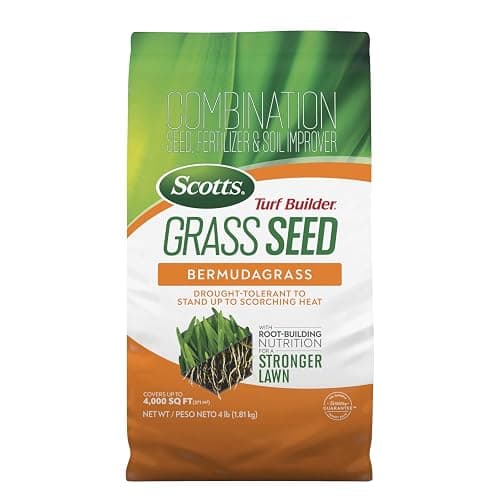
 Scotts Turf Builder Grass Seed Bermudagrass (4 lb)Check price on Amazon
 Scotts Turf Builder Southern Lawn FoodCheck price on Amazon
As an Amazon Associate we earn from qualifying purchases.
Free Lawn Care Tools
Bermudagrass in full sun, the most widely planted lawn turf statewide. St. Augustine is common for shade and the Gulf Coast, and centipede for low-input yards on acidic soil.
Five warm-season grasses cover most Alabama lawns: Bermuda, Zoysia, St. Augustine, Centipede, and Bahia. Tall fescue adds a sixth as the cool-season option for north Alabama only.
Only in north Alabama. ACES lists tall fescue as a cool-season grass for north Alabama lawns, the transition-zone tier, and even there it thins in hot, dry summers. It is not recommended for central or south Alabama.
Centipedegrass on Alabama's common acidic, sandy soils, for its very low fertilizer and mowing needs. Bahia is the tougher low-input option for poor sandy lots in the south.
St. Augustinegrass is a top Gulf Coast pick, especially for shade, since it loves the humid coast. Bermuda, zoysia, centipede, and bahia all grow there too, depending on sun and site.
Sources (3)
- Alabama Cooperative Extension System, Turfgrass Selection, Home Lawns: Centipedegrass, and Tall Fescue Lawns.
- ACES, South Alabama lawn maintenance calendar (St. Augustine, Zoysia, Bermuda).
- Clemson Cooperative Extension HGIC: Bermudagrass, Zoysiagrass, St. Augustinegrass, Bahiagrass.
Photos: Daniel Atha / iNaturalist · CC0, Kevin Faccenda / iNaturalist · CC BY 4.0, Pete Diamond / iNaturalist · CC BY 4.0, mikoikoi / iNaturalist · CC0, BluShine / iNaturalist · CC BY 4.0, Bob Miller / iNaturalist · CC BY 4.0

Beat weeds and brown spots from your phone
Snap a photo, get the fix, and follow a plan timed to your soil and weather. Free on iPhone.