When to Stop Watering Your Lawn in Fall
 James ThorntonLawn Equipment & Maintenance Expert | 20 Years
As an Amazon Associate we earn from qualifying purchases.
The sprinklers have been running on the same schedule since July, the mornings have turned cold, and you are starting to wonder whether you are just wasting water at this point. It is a fair question, and the answer is not the one most people expect. Fall watering does not end on a date. It winds down, and the wind-down matters more than the stop.
Not sure whether your lawn is thirsty or just slowing down for the season? Snap a photo for a free AI diagnosis and find out what your grass is actually doing before you shut the water off.
Fast Answer: Do not stop watering on a date, taper it. Cut back as evapotranspiration drops through September and October, then stop routine irrigation once daytime highs stay below about 50F and the lawn quits growing. Give one final deep soak before the ground freezes, then winterize the sprinklers.
Two exceptions override that. A newly overseeded lawn keeps getting light, frequent water until the seedlings are established, no matter how cold it gets. And in a dry, snowless winter, an occasional midday soak on a thawed lawn prevents the crown drying that kills turf outright.
This is the fall-specific companion to our guide on when to stop mowing your lawn. Mowing genuinely stops, because once top growth ends there is nothing left to cut. Watering does not, because roots keep working after the blades quit and dormant turf still loses moisture all winter. Same season, different endpoint.
Why fall watering tapers instead of just stopping
Two curves move in opposite directions every autumn, and understanding them is the whole thing.
The first is evapotranspiration, the water your lawn loses to evaporation from the soil and transpiration through the blades. It tracks heat, sun, and wind. Utah State University Extension puts typical peak-season turf loss at about a quarter inch per day in June and July. By late October the same lawn loses a fraction of that. Shorter days, weaker sun, and cooler air all cut demand hard.
The second curve is root activity, and it does not fall nearly as fast. Penn State Extension puts the best root growth for cool-season grasses at soil temperatures between 50F and 65F, and notes roots keep growing below 50F, slowing only as the soil approaches freezing. Leaf growth wants 60F to 75F air, so the top of the plant checks out well before the bottom does.
Put those together and you get the fall situation. Your lawn needs less water than it did in August, but it is not done with water. It is busy underground, building the root mass and reserves it will live on until spring. Colorado State University Extension notes that fall turf is still forming tillers and rhizomes to thicken up, and that late-season fertilizer applied to dry soil delivers far less of that benefit. Shut the water off in early October and you cut that work short.
When should you stop watering your lawn in fall?
Stop routine irrigation when the lawn stops asking for it, which shows up as four signals rather than one. Any single one on its own can mislead you. Two or three together mean you are done.
| Signal | What to watch for | What it means |
|---|---|---|
| Growth | Little to no new top growth between mows | Demand has collapsed. Water use is near zero. |
| Air temperature | Daytime highs no longer climbing past about 50F | Leaf growth has effectively stopped for the season. |
| Soil temperature | Soil holding in the low 50s and dropping | Roots are slowing. Below 50F growth continues but weakly. |
| Rainfall | Regular fall rain covering weekly need | Nature is handling it. Irrigation is redundant. |
Frost gets treated as the finish line more often than it deserves. A light frost nips the blade tips, the lawn thaws by mid morning, and if mild weather returns the grass carries on. What matters is the run of cold, not the first cold night. Keep watering through scattered light frosts if the lawn is still green and the ground is dry.
The genuine endpoint is the first hard freeze, when the top inch or two of soil freezes solid. Frozen soil cannot accept water, so irrigation past that point runs off, ices over walkways, and does nothing for the plant. If you want the fuller picture of what the grass is doing as this happens, our guide on when grass goes dormant covers the temperature thresholds by grass type.
The screwdriver test
Skip the guesswork and probe the soil. Push a long screwdriver into the lawn. If it slides in six inches easily, there is moisture down there and you can skip a cycle. If it stops at two inches, the soil is dry and the lawn wants a drink even if the calendar says October. This check beats any schedule.
How much water does your lawn need each month in fall?
Here is the taper in numbers. These are total water per week including rainfall, so subtract whatever the sky delivers before you turn anything on. Colorado State University Extension, working from historic evapotranspiration and rainfall data, calls for 0.5 to 1.0 inches of irrigation per week during September and October, and the figures below sit inside that band as demand falls off.
| Month | Cool-season lawns | Warm-season lawns | Frequency |
|---|---|---|---|
| Early September | 1 to 1.25 inches | 0.75 to 1 inch | 2 deep soakings per week |
| Late September | 0.75 to 1 inch | 0.5 to 0.75 inch | 1 to 2 per week |
| October | 0.5 to 0.75 inch | 0.5 inch, tapering | 1 per week, skip after rain |
| November | 0.25 to 0.5 inch or rain only | Stop once dormant | Every 10 to 14 days at most |
| December to March | 0.25 to 0.5 inch if dry and snowless | 0.25 to 0.5 inch if dry and snowless | Once or twice a month, midday only |
Two rules run underneath that table. Water deep and infrequently, not little and often, so moisture reaches the root zone instead of sitting in the top inch. And water in the morning or at midday in fall, never in the evening, because a lawn that goes into a cold night wet is a lawn inviting disease. If you want the weekly number calculated for your actual address instead of a regional average, our watering schedule tool builds it from your zip code and grass type.
Warm-season lawns: when to stop as dormancy sets in
Bermuda, zoysia, St. Augustine, and centipede run a shorter clock, and their endpoint is cleaner. These grasses slow through September, brown out with the first hard frost, and go fully dormant. That tan color is normal and the lawn is alive underneath it.
Keep watering while the lawn is green and growing, because it is still using water. Once it browns and goes dormant, routine irrigation is finished. Overwatering dormant turf sitting in cool soil is a reliable way to grow fungus instead of grass.
The caveat is the mild South, where a lawn can go dormant in December and then sit through eight rainless weeks. Dormant does not mean drought-proof. In a long rainless stretch, one light soak a month keeps the crowns hydrated.
Should you keep watering a newly overseeded lawn?
Yes, and this exception overrides everything above. If you overseeded in early fall, the seedlings coming up are the single most vulnerable thing in your yard, and the normal taper will kill them.
Colorado State's fall and winter watering guidance singles out newly seeded and newly sodded lawns as needing attention established turf does not, and Minnesota's turfgrass team notes that newly seeded plants face greater risk of death from winter drying. A mature lawn has a deep root system to draw on. A three-week-old seedling has an inch of root and nothing in reserve.
The watering pattern is the opposite of the established-lawn pattern. Keep the top half inch of soil constantly moist with light, short cycles two to three times a day until the seed germinates and the seedlings are up, which usually runs two to three weeks. Then taper: drop to roughly a quarter inch once a day for another week or so, then move toward deep and infrequent as the roots go down. Only after that transition does the new grass join the normal fall taper. Our guide to overseeding a lawn in fall walks through the full seeding sequence this attaches to.
The practical conflict is obvious. Overseed in mid September in a cold-winter state and your seedlings still need water in mid October, exactly when you planned to blow out the sprinklers. Either seed early enough that establishment finishes first, or finish the job with a hose after the system is drained.
The final deep watering before the ground freezes
This is the step most homeowners skip, and it is the one that pays off in March.
Before the ground freezes, give the lawn one long, slow soak. Not a quick pass. A soaking that pushes moisture well into the root zone and leaves the soil profile full going into winter. Colorado State uses a target soak depth of about 12 inches for landscape plantings, and the principle carries to turf: you are charging the soil, not wetting the surface.
The reason is winter desiccation. Penn State Extension describes it as the loss of moisture from crown tissues when turf sits unprotected by snow cover and takes drying cold winds for extended periods. The University of Minnesota explains the mechanism: water leaves the plant faster than the plant can replace it, because frozen soil cannot resupply the roots. The conditions that trigger it are air temperatures running more than 20F above soil temperature, no snow cover, and wind. Elevated, exposed sites get hit first, and the damage shows as browning and thinning that you do not discover until spring.
A lawn that enters winter with a full soil profile has a buffer against that. A lawn that enters winter dry has none. The soak costs an hour and it is the cheapest winter insurance on the list.
Watering during winter itself
In a dry, snowless winter the job is not quite over. Colorado State's guidance is to water once or twice each month from October through March during extended dry periods with no snow cover, and the rules for doing it are specific. Water only when the air temperature is above 40F and the soil is not frozen. Apply it at midday so it soaks in before the nighttime freeze. Disconnect and drain the hose afterward.
Snow cover cancels this. A blanket of snow both insulates the turf and melts into it, which is why lawns in reliably snowy climates rarely need winter watering while lawns in dry, open winters do.
Recommended products
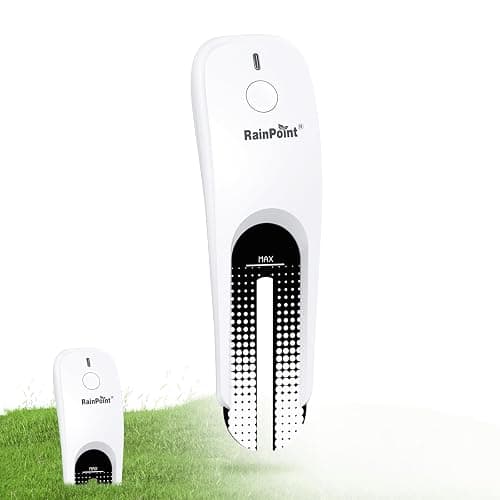
RAINPOINT 3-in-1 WiFi Soil Moisture Sensor
A buried probe showing root-zone moisture on your phone, which turns the fall taper into a reading instead of a guess.
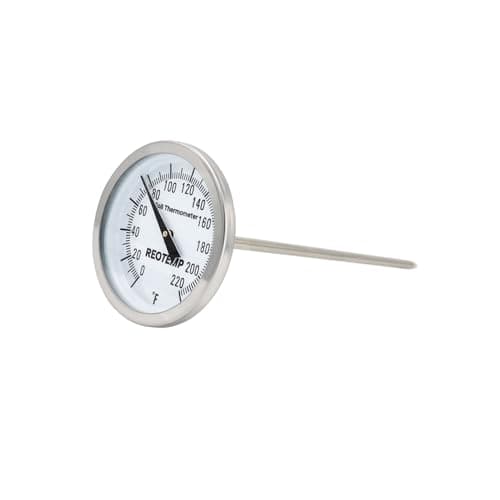
REOTEMP Waterproof Soil Thermometer
A simple 5-inch soil thermometer for tracking when soil drops toward dormancy temperatures.

Rachio 3 Smart Sprinkler Controller
A smart controller that scales run times down automatically as fall evapotranspiration falls.
When to taper and stop by region
Climate moves these windows by six weeks or more across the country. Use the row that matches you as a starting point, then let the four signals above make the final call. The winterization column follows the 28F rule from our sprinkler system winterization guide: drain the system 1 to 2 weeks before overnight lows reach 28F, because a few hours at that temperature is what cracks backflow preventers and shallow valves.
| Region | Start tapering | Stop routine watering | Final deep soak | Winterize irrigation by |
|---|---|---|---|---|
| Cold North and Mountain West (zones 3 to 5). Minneapolis, Denver, Boise | Early September | Late September to early October | Late September to early October | Early to mid October |
| Transition zone and Pacific Northwest (zones 6 to 7). Kansas City, Charlotte, Portland | Mid to late September | Mid to late October | Mid to late October | Late October to early November |
| South and Southwest (zones 8 to 9). Dallas, Atlanta, Sacramento | Early October | Mid to late November, at dormancy | Before the first hard freeze | 24 to 48 hours before a forecast freeze |
| Frost-free South (zone 10 and warmer). Miami, San Diego | Late October | Reduce, do not stop | Not applicable | Usually none needed |
Notice that the final soak and the winterization date sit close together in every northern row. That is the sequencing that makes fall work. Soak the lawn, then drain the system. Blow the lines out first and you have no easy way to deliver the soak.
The mistakes that cost you a spring
Four errors account for most of the fall watering damage we see.
- Running the summer schedule into October. The controller does not know the season changed. Cool soil plus summer volumes means saturated ground, shallow roots, and an invitation to fungal disease.
- Shutting the water off the first cold week. One cold snap in late September does not end the season. If mild weather returns and the soil is dry, the lawn loses root-building time it never gets back.
- Evening watering. Grass that stays wet through a long cool night is grass growing disease. Morning or midday only once nights turn cold.
- Skipping the last soak. The single highest-value watering of the season, and the easiest one to forget because by then you have mentally filed the lawn under next spring.
Your fall watering wind-down plan
- Confirm your grass type, cool-season or warm-season, so you know which clock you are on. A photo ID sorts it in seconds if you are unsure.
- Start cutting back in September. Reduce frequency first, keep each cycle deep, and stop adding water the rain already covered.
- Watch the four signals: growth, daytime highs near 50F, soil in the low 50s, and rainfall.
- Probe with a screwdriver before you skip or run a cycle. Six inches easy means skip it.
- Keep any newly overseeded area on its own light, frequent schedule until the seedlings establish, regardless of what the rest of the lawn is doing.
- Give one long, deep soak before the ground freezes. This is the step that prevents winter desiccation.
- Winterize the irrigation system 1 to 2 weeks before overnight lows reach 28F, after the final soak, not before.
- In a dry, snowless winter, water once or twice a month at midday, only when air temperature is above 40F and the soil is not frozen.
For everything else on the fall runway, our fall lawn care schedule and checklist puts the watering taper in order alongside the fertilizing, seeding, and mowing steps. And if you are not certain whether your lawn is going dormant on schedule or telling you something else, snap a photo for a free AI diagnosis before you make the call on the water.
- Weekly water need is driven by local evapotranspiration, which varies enormously by state and even by county. Many state extension services publish a weekly lawn watering guide built from local weather station data, which beats any national average in this article.
- First hard freeze dates, snow cover reliability, and winter desiccation risk are all local. Your regional cooperative extension office can give you the actual taper and shutdown window for your county, plus whether winter watering is a real concern where you live.
Top Picks
- Spectracide Weed Stop for LawnsCheck price on Amazon
- Taylor Freeze-Proof Silicone Rain GaugeCheck price on Amazon
- Premium Lawn Top Dressing Coco Coir MixCheck price on Amazon
As an Amazon Associate we earn from qualifying purchases.
Free Lawn Care Tools
Stop routine watering when the lawn stops asking for it, not on a set date. Watch four signals together: little new top growth between mows, daytime highs no longer climbing past about 50F, soil temperature holding in the low 50s, and regular rain covering the weekly need. The true endpoint is the first hard freeze, when the top inch or two of soil freezes and can no longer accept water.
Yes. Cool-season grasses do their best root growth at soil temperatures between 50F and 65F, and roots keep growing below 50F, so fall is when your lawn builds the root mass and reserves it lives on until spring. Colorado State University Extension calls for 0.5 to 1.0 inches of irrigation per week through September and October. Dry fall soil also blunts the benefit of any late-season fertilizer you apply.
About 0.5 to 0.75 inch per week for cool-season lawns, including rainfall, usually delivered in one deep soaking rather than several short ones. Warm-season lawns need roughly 0.5 inch and tapering. Skip the cycle entirely after meaningful rain. Water in the morning or at midday once nights turn cold, because grass that sits wet through a long cool night is grass growing disease.
Yes, and it is the highest value watering of the season. One long, slow soak before the ground freezes leaves the soil profile full going into winter. That buffers against winter desiccation, which Penn State Extension describes as loss of moisture from crown tissues when turf lacks snow cover and takes drying cold winds. Do this soak before you winterize the sprinklers, not after.
Yes, and this exception overrides the normal fall taper. Keep the top half inch of soil moist with light, short cycles two to three times a day until the seedlings are up, usually two to three weeks, then taper to about a quarter inch once a day before moving to deep and infrequent. Both Colorado State and the University of Minnesota flag new seedings as the most vulnerable turf going into winter.
Keep watering Bermuda, zoysia, St. Augustine, or centipede while the lawn is still green and growing, then stop once it browns and goes dormant after the first hard frost. Dormant warm-season turf uses almost nothing, and overwatering it in cool soil invites fungus. In the mild South, one light soak a month during a long rainless stretch keeps the crowns hydrated.
In a dry, snowless winter, yes. Colorado State University Extension recommends watering once or twice each month from October through March during extended dry spells with no snow cover. Water only when the air temperature is above 40F and the soil is not frozen, apply it at midday so it soaks in before the nighttime freeze, and drain the hose afterward. Reliable snow cover cancels the need.

Beat weeds and brown spots from your phone
Snap a photo, get the fix, and follow a plan timed to your soil and weather. Free on iPhone.