When to Use a High-Potassium Summer Fertilizer (and When to Skip It)
 James ThorntonLawn Equipment & Maintenance Expert | 20 Years
As an Amazon Associate we earn from qualifying purchases.
Walk into any garden center in July and the fertilizer shelf is mostly built around one number: nitrogen. Big bags promising fast green, quick growth, a thicker lawn in two weeks. That works fine in spring. In the heat of summer it can be the exact wrong move, because all that tender new growth is the first thing to wilt, brown out, and get chewed up by disease when the temperature climbs and the rain stops.
This is where the third number on the bag matters more than the first. Potassium, the K in N-P-K, is the nutrient that helps grass survive stress rather than grow faster. A high-potassium, low-nitrogen summer fertilizer keeps color and toughness in the lawn without pushing the surge of soft growth that gets your turf in trouble in the heat. Here is exactly what potassium does, when a high-K blend earns its place, and the simple rule for choosing between a summer stress blend and a standard high-nitrogen feed.
Use a high-potassium, low-nitrogen fertilizer once soil temps are holding in the 80s and the lawn is under heat, drought, or wear stress. Potassium regulates water movement and thickens cell walls, so you keep color and toughness without a flush of soft growth.
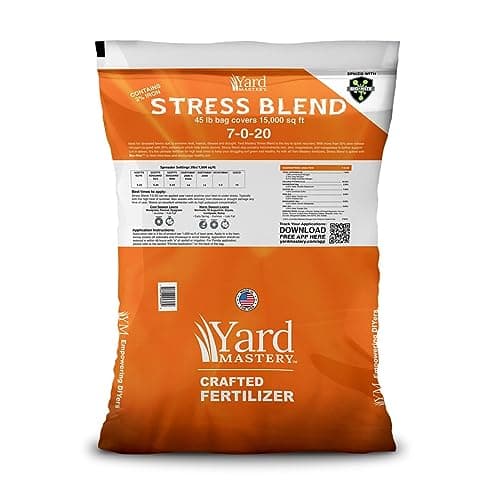
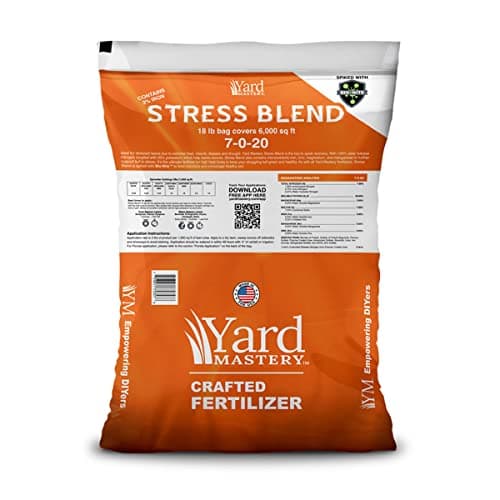
A 7-0-20 is the summer stress blend; a 24-0-6 is the growth feed for late spring and early fall. Yard Mastery's Stress Blend runs $79.99 for 45 lb covering 15,000 sq ft, or $49.99 for 18 lb covering 6,000 sq ft.
What potassium actually does in the lawn
Nitrogen builds the green, leafy top growth you mow off every week. Potassium does almost the opposite job. It works inside the plant, regulating water movement, thickening cell walls, and helping the grass manage stress. Think of nitrogen as the gas pedal and potassium as the suspension and the cooling system. One makes the lawn go, the other helps it survive the rough road.
In practical terms, adequate potassium does three things that matter most from June through August. It improves drought tolerance, because grass with enough K manages water far more efficiently and holds turgor when the soil dries out. It improves heat and wear tolerance, since those thicker cell walls stand up better to foot traffic, mowing stress, and high-temperature days. And it improves disease resistance, because a stressed, soft, over-fertilized lawn is exactly what summer fungal diseases like brown patch feed on. None of this shows up as dramatic fast growth. It shows up as a lawn that simply does not fall apart when the weather turns hostile.
If you want the longer version of how each number on the bag maps to a job in the lawn, our explainer on how to read fertilizer numbers breaks down N-P-K without the jargon. For the seasonal timing of every feeding across the year, the fertilizing guide is the pillar to keep bookmarked.
Why high-K and low-N matters specifically in summer
The reason a summer-specific blend exists comes down to one trade-off: color without surge growth. Your lawn still looks pale and tired in the heat, and the instinct is to throw nitrogen at it. But heavy nitrogen in summer forces a flush of soft, water-hungry leaf growth at the exact moment the plant can least afford it. That new growth needs more water you may not be able to supply, it burns more easily, and it is the preferred food source for the diseases that thrive in warm, humid weather.
A high-potassium, low-nitrogen product like a 7-0-20 sidesteps that trap. The small amount of nitrogen, plus a little iron in some blends, keeps the lawn green and respectable to look at. The heavy dose of potassium goes to work on the stress side of the equation. You get a lawn that holds its color and toughness through the hottest stretch without the growth surge that gets people into trouble. For warm-season grasses pushing through peak growing season, and for cool-season lawns just trying to coast through summer dormancy risk, that is the priority.
This is a nutrient decision, not a brand contest. If you just want the broad shortlist of solid summer feeds across a range of N-P-K ratios, including moderate-potassium options, start with our roundup of the best summer lawn fertilizers to keep grass green and healthy. This post is narrower on purpose: when to deliberately reach for a high-K, low-N blend instead of a standard feed.
7-0-20 vs 24-0-6: the decision rule
The cleanest way to frame the summer fertilizer choice is to put a true high-K stress blend next to a standard high-N feed and decide which job you actually need done. Yard Mastery sells both, which makes them a tidy example: the Stress Blend 7-0-20 is the high-potassium, low-nitrogen option, and the Flagship 24-0-6 is the high-nitrogen growth option. Both carry the same Bio-Nite slow-release base, so the difference really is the nutrient ratio, not the brand.
| Product | N-P-K | Best for | When to use it |
|---|---|---|---|
| Yard Mastery Stress Blend 7-0-20 (45 lb, covers 15,000 sq ft, $79.99) | 7-0-20 (high K, low N, 3% iron) | Heat, drought, high foot traffic, disease pressure | Peak summer once soil temps are holding in the 80s, or any time the lawn is under stress and you want color without pushing growth. Smaller lawns can grab the 18 lb bag (covers 6,000 sq ft, $49.99) instead. |
| Yard Mastery Flagship 24-0-6 (high-N counterpart, covered in the linked review) | 24-0-6 (high N, low K, 3% iron) | Filling in, thickening, recovering a thin lawn | Late spring and early fall growing windows, or summer for warm-season grasses that genuinely need to grow. Skip it during a heat or drought spell. |
The rule that ties it together is soil temperature plus grass type. When soil temps are climbing into the 80s and the lawn is under real heat or drought stress, lean high-K and low-N to protect what you have. When soil temps are in the active growing window and the lawn actually needs to fill in, lean high-N to push growth. Cool-season lawns in particular should avoid heavy nitrogen in summer entirely, which is what makes a 7-0-20 such a useful tool for them. If you are weighing the high-nitrogen side of this decision, our full breakdown of whether the Yard Mastery Flagship 24-0-6 is worth it covers the cost and coverage math so you are not guessing.
How to time it and put it down right
Because the whole point of a high-K summer blend is reading the season correctly, two free tools take the guesswork out. Check your local soil temperature before you decide between stress mode and growth mode with the soil temperature tool, since soil temp is a far better signal than the calendar. Then work out exactly how much product your lawn needs with the fertilizer calculator, so you hit the label rate instead of guessing and either wasting product or under-feeding.
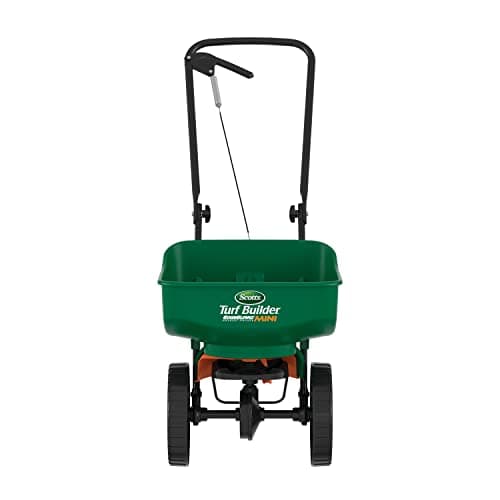
On application: a granular blend like 7-0-20 needs a calibrated broadcast spreader to go down evenly, otherwise you get streaks of dark green and pale stripes between them. A workhorse like the Scotts Turf Builder EdgeGuard Mini Broadcast Spreader handles a lawn this size and shuts off the spread pattern at the edges to keep granules off beds and pavement. Water the product in after spreading, and if you are applying in genuine heat, do it in the cooler part of the day. If your lawn is already showing stress and you are not sure whether it is heat, disease, or a nutrient issue, run it through our lawn diagnosis tool before you reach for any bag.
Is there a cheaper version of a 7-0-20?
Honest answer: not really, and I would rather tell you that than point you at the wrong product. There is no true budget clone of a high-potassium, low-nitrogen turf blend that I can confirm on Amazon today. The products that show up when you search around the same numbers are not what they look like. Iron supplements such as Ironite are exactly that, iron, not a potassium feed. The popular liquid lawn products from brands like Simple Lawn Solutions are high-nitrogen, not high-K. Swapping any of those in would be a bait-and-switch, and they would not do the job a 7-0-20 does.
If you genuinely want to go the cheap, DIY route, the closest equivalent is straight sulfate of potash, a bagged soil amendment you would meter in yourself. That is commercial and farm-supply territory, not a tidy consumer lawn product, and it is not something I can responsibly hand you an affiliate link for, so I am not going to fake one. For most people the right move is to buy the named stress blend, size it to the lawn, and use it only when the season calls for it.
Bottom line: pick by your goal
High-potassium summer fertilizer is not a do-it-every-month product. It is the right tool for a specific job: keeping color and toughness in the lawn through heat, drought, and wear without forcing the soft growth that gets turf into trouble in summer. If the lawn is stressed and you want to protect it, reach for the high-K, low-N blend. If the lawn is in an active growing window and genuinely needs to fill in, reach for the high-N feed instead and check your soil temperature first. Match the nutrient to the moment and you will spend less, and your lawn will thank you for it in August.
Free Lawn Care Tools
It helps the grass survive stress rather than grow faster, regulating water movement and thickening cell walls. Adequate potassium improves drought tolerance, heat and wear tolerance, and disease resistance, since a stressed, over-fertilized lawn is what summer diseases like brown patch feed on. It won't produce dramatic fast growth, it shows up as a lawn that holds together when the weather turns hostile.
The 45 pound bag costs $79.99 and covers 15,000 square feet. A smaller 18 pound bag covers 6,000 square feet for $49.99. Both carry 3 percent iron along with the 7-0-20 nutrient ratio.
Reach for the 7-0-20 stress blend once soil temperatures are holding in the 80s and the lawn is under heat, drought, or wear stress, since it gives you color without pushing new growth. Reach for the 24-0-6 during active growing windows in late spring or early fall, or summer for warm-season grasses that genuinely need to fill in. Cool-season lawns in particular should avoid heavy nitrogen in summer.
No, Ironite is exactly what its name says, an iron supplement, not a potassium feed. Swapping it in for a 7-0-20 blend would mean skipping the potassium that actually helps with drought, heat, and disease resistance. The same goes for high-nitrogen liquid products like Simple Lawn Solutions, they're not a high-K substitute either.
Not really, there's no confirmed budget clone of a true high-potassium, low-nitrogen blend available on Amazon. The closest DIY equivalent is straight sulfate of potash, but that's farm-supply territory you'd have to meter in yourself, not a tidy consumer lawn product. For most people, buying the named stress blend sized to your lawn is the simpler move.

Your lawn plan, in your pocket all season
Grass ID, a season plan, soil-timed reminders, and a lawn journal that remembers what you did. Free on iPhone.