
Why grub damage always shows up at the same time of year
Grubs run on a calendar, and once you know it the timing of the damage stops being mysterious. Adult beetles fly and lay eggs in mid to late summer. Those eggs hatch into tiny grubs that feed just under the surface through late summer and fall, which is exactly when lawns are already stressed from heat. As soil cools the grubs burrow deeper and wait out winter. They come back up for a short second feeding window in spring, then pupate and start the whole thing over.
Two practical things fall out of that. First, the brown patches you notice in September were set in motion back in July, which is why a curative product in October often feels like it did nothing: the roots are already gone. Second, European chafers tolerate cold better than Japanese beetles do, so in the Northeast, Great Lakes, and Pacific Northwest the spring feeding window is the one that wrecks lawns. Knowing which species you have changes when you scout.
The two-season plan that actually gets ahead of grubs
Season one is about confirmation and recovery. Do not treat because a neighbor treated. Confirm live grubs under the turf with a real sample, then decide. If the count is low, feed and water the lawn and let it grow through the damage, because healthy turf outgrows light feeding. If the count is high, plan a preventive application for the following season rather than chasing full-grown grubs with a curative product, and reseed the bare areas so weeds do not claim them first.
Season two is about timing and density. Preventive active ingredients need to be in the root zone before the eggs hatch, which means going down well ahead of the damage you are trying to avoid, and watering them in as the label directs. Pair that with deeper, less frequent irrigation so roots go down, and with overseeding in fall for cool-season lawns. A dense, deep-rooted lawn tolerates a grub population that would flatten a thin one, and that tolerance is what stops the yearly cycle.
How do you identify white grubs?
- Brown grass that peels back in a mat when you grab a handful and pull
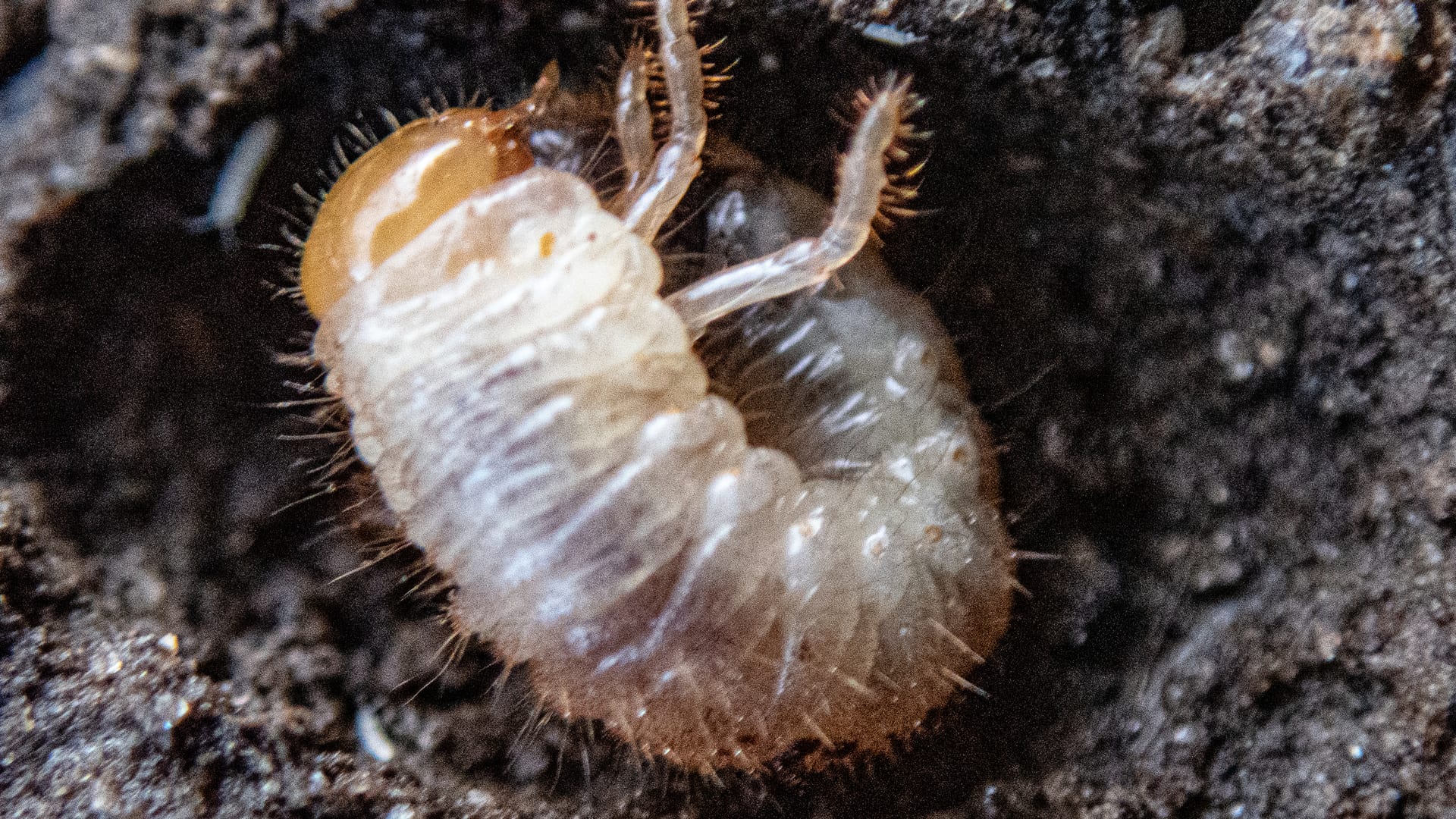
- Fat white larvae curled into a C shape, half an inch to an inch long, in the top couple inches of soil
- Skunks, raccoons, or crows tearing patches open overnight to dig
- Damage that keeps spreading even after you water it well
- Adult Japanese beetles chewing on roses, linden, or grape leaves nearby in midsummer
What the damage looks like
Irregular brown patches that lift like carpet; roots severed below soil surface.
Is it white grubs or something else?
How do you check for white grubs?
Tug test: grab a handful of brown grass and pull. If the turf lifts like a carpet with no roots, grubs are likely present. Cut a 1-sq-ft section and count: threshold is 10+ grubs per sq ft.
Sample where healthy grass meets brown grass, not in the middle of a dead patch, because grubs move on once the roots are gone. Cut three sides of a one square foot flap about two inches deep, fold it back, and sort through the loose soil with your fingers. Check three or four spots across the lawn before you decide anything, since grubs clump badly.
When should you treat for white grubs?
- Late spring into early July: the preventive windowPreventive active ingredients have to be in the root zone before the eggs hatch, so they go down in late spring, and by early July at the latest if European chafer is your species. Water them in as the label directs, or they sit on the thatch and do nothing.
- June: watch for adult flightsJapanese beetles show up on roses, linden, and grape leaves, and European chafer adults swarm at dusk in late June. Heavy flights tell you eggs are going into the lawn now, which is the cue to plan a fall count rather than to spray.
- Late summer and fall: count before you treat anythingThis is when the grubs are feeding and when the tug test works. Cut a square foot and count. Ten or more Japanese beetle grubs per square foot, or five or more European chafer grubs, is what justifies a curative product, and small grubs are far easier to kill than large ones.
- Late fall through winter: stop treatingGrubs burrow deep once the soil cools, so a late curative application reaches nothing and the roots it was meant to save are already gone. Reseed the bare areas instead and put the preventive on the calendar for next spring.
These windows shift by a few weeks with latitude and with the season you are actually having, so treat them as the shape of the year rather than as dates. Your county extension office publishes the local timing, and the population that justifies treating where you live.
How do you get rid of white grubs?
Start here: cultural
- Irrigate deeply to encourage deep root growth
- Overseed damaged areas
- Allow lawns to go dormant in summer to reduce egg-laying appeal
Organic and biological
- Milky spore (Bacillus popilliae), which works on Japanese beetle grubs only and does nothing to European chafer or other white grub species
- Beneficial nematodes (Heterorhabditis bacteriophora)
- Neem oil to deter adults
Conventional product categories
- Chlorantraniliprole (preventive, spring)
- Trichlorfon (curative, fall)
- Imidacloprid (preventive, early summer)
Keep kids and pets off treated areas until the product has dried and any re-entry interval printed on the label has passed. That applies to the organic and biological options too, since most of them are still pesticides.
These are active ingredient categories, not a prescription. Rate, timing, and watering-in come from the product label. Confirm the label lists both your pest and your grass type before you apply anything.
Keeping it from coming back
- Apply preventive grub control in late spring
- Reduce irrigation in July to discourage egg laying
- Maintain healthy turf to tolerate moderate populations
Pest control quotes
Get matched with local pest control pros on Angi. Free quotes, no obligation.
Angi is a partner; we may earn a commission if you request quotes there.
What products work on white grubs?
These picks are not filtered to your lawn. Insect products differ in which pests and which grasses they are labeled for, and none of them are a substitute for confirming the pest first. Read the label for your pest, your grass type, and the rate before you buy.
Recommended Products
- 1Check price
 Top pick
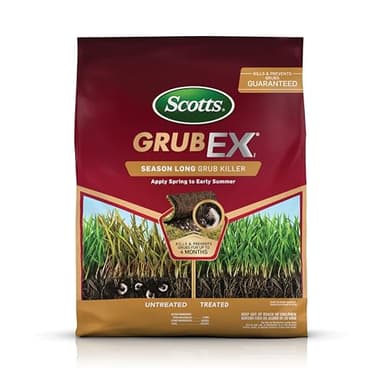
Scotts GrubEx1 Season Long Grub Killer, 5,000 sq. ft.
Preventive chlorantraniliprole grub control for late spring applications before root-feeding larvae explode. Chlorantraniliprole is the prevention pick before grubs feed hard.
- 2Check price
 Best value
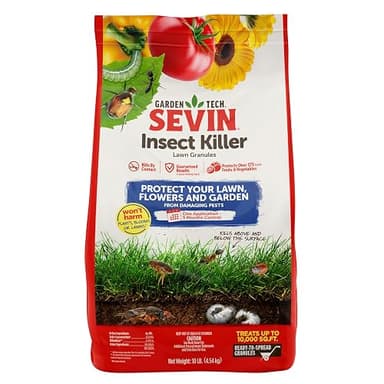
Sevin Insect Killer Granules 10 lb
Broad-spectrum granular insect killer for grubs, ants, fleas, ticks, and 100+ listed lawn pests. Use broad-spectrum insect control only when active feeding is confirmed.
- 3Check price
 Also great
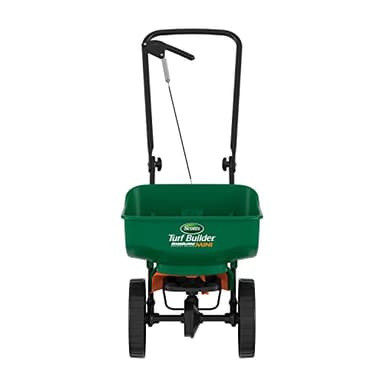
Scotts Turf Builder EdgeGuard Mini Broadcast Spreader
Simple broadcast spreader for granular fungicides, grub control, fertilizer, and recovery products that need even coverage. Granular grub products need uniform coverage and watering-in.
As an Amazon Associate we earn from qualifying purchases.
Where do white grubs show up?
Most common in these regions: