Weeds in St. Augustine Grass: How to Identify the Lookalikes and Kill Them Safely

As an Amazon Associate we earn from qualifying purchases.
Your St. Augustine looked fine in May. Now there's a bright green patch that grows faster than the lawn, a spot that feels wiry underfoot, and little round leaves popping up by the downspout. Some of it looks almost exactly like your grass. Here's how I sort out what's actually growing and how to kill it without taking the St. Augustine down with it.
Fast Answer: The most common weeds in St. Augustine grass are doveweed, dollarweed, Virginia buttonweed, spurge, crabgrass, goosegrass, nutsedge, and invading bermudagrass or torpedograss. The safe-control rule: use only products whose label lists St. Augustinegrass, skip anything containing quinclorac, and don't spray when air temperatures run above 85°F, which UF/IFAS gives as the cutoff for postemergence products like atrazine. Glyphosate (Roundup) kills St. Augustine too, so it's a spot-and-resod tool only.
Identify before you spray. Doveweed is a brighter green than your turf, bermudagrass has fine pointed blades with a hairy collar, and sedges have triangular stems. Grassy lookalikes like bermudagrass and torpedograss have no selective fix in St. Augustine, according to LSU AgCenter.
Weeds That Look Like St. Augustine Grass
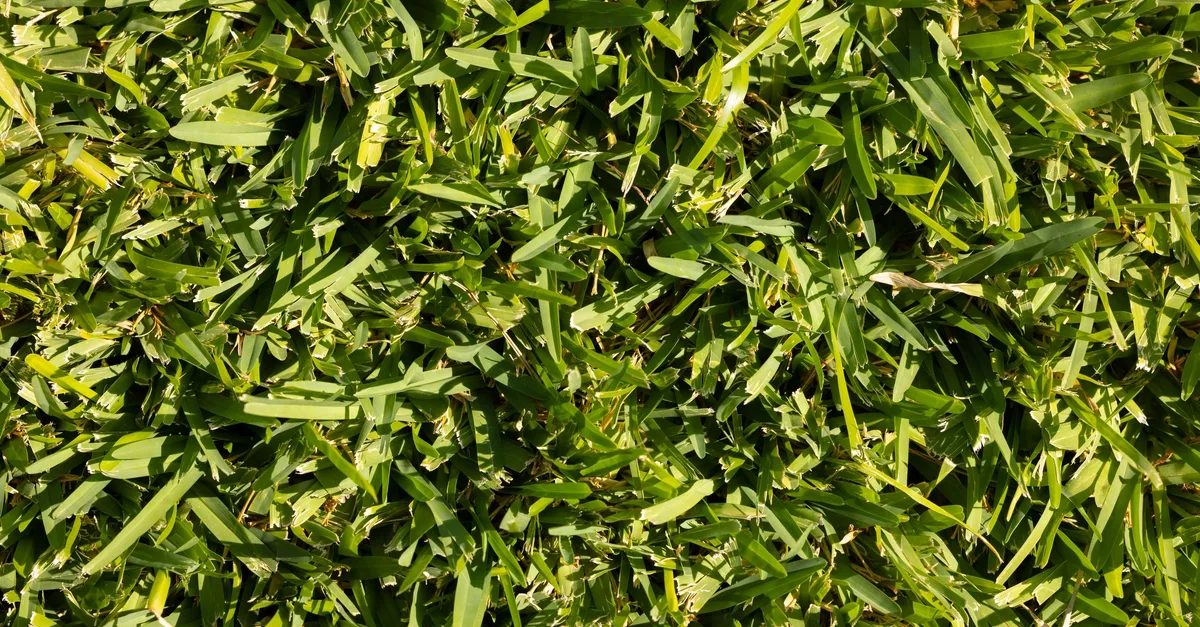
This is where most people go wrong. St. Augustine has flat leaves with rounded tips, tightly compressed sheaths, and creeping stolons, per Mizzou WeedID. LSU AgCenter adds that its wide leaves sit opposite each other on the stolon and it sends up a thick, single seedhead. Compare what you're looking at against this table.
| Plant | Blade tip and width | Runners and nodes | Seedhead or flower | Quick tell |
|---|---|---|---|---|
| St. Augustine | Wide, flat, rounded tip | Thick stolons, leaves opposite | Single thick spike | Coarse, blue-green to dark green |
| Doveweed | Thick, grass-like, similar width | Stolons, sometimes pink to red | Small blue to purple flowers | Brighter green than the lawn |
| Torpedograss | Pointed, stiff, waxy silver-green, often hairy | Sharp-tipped rhizomes | Small, flat, white to brown | Leaves stand upright |
| Bermudagrass | Fine, 1/8 to 1/4 inch, sharply pointed | Stolons and rhizomes; hairy ligule | 3 to 7 thin spikes | Wiry runners over the turf |
| Carpetgrass | Rounded tip, narrower, alternate leaves | Flattened, smooth stolons; a few long hairs on sheath edges | 2 to 5 spikes, top two paired in a V | Tall seedheads in wet spots |
| Crabgrass | Wide, tapered point, often hairy | Roots at lower nodes, no real runners | 2 to 6 finger-like spikes | Clumps in thin areas, dies in fall |
Traits come from LSU's doveweed, bermudagrass, crabgrass, and carpetgrass pages, the torpedograss page linked above, UGA's bermudagrass bulletin for blade width, and UGA Turf for carpetgrass stolons and hairs.
Doveweed is the classic fooler. I tell homeowners to look at color first: if a patch is a lime-green shade your lawn never is, pull a runner and check for those little purple flowers. Our doveweed guide goes deeper. If you're still stuck, run a photo through the weed identifier. It's faster than squinting at ligules.
Broadleaf Weeds in St. Augustine
- Dollarweed (pennywort): shiny, round, silver-dollar leaves with the stem attached in the center, per LSU AgCenter. It's a moisture signal. See our dollarweed guide.
- Virginia buttonweed: opposite, linear to oval leaves, small white four-petal flowers, and a low mat. LSU calls it the most troublesome lawn weed in Louisiana because mowing spreads its stem fragments.
- Chamberbitter: looks like a tiny mimosa sprout with small round fruits tucked under the stem. The University of Florida lists it among the annual broadleaves a preemergence herbicide can stop.
- Spotted spurge: small oval leaves with a red to purple spot, a flat mat from one center, and milky sap when you snap a stem (LSU). More on our spotted spurge page.
"White weeds" in St. Augustine are usually one of three: Virginia buttonweed and dollarweed, which both carry tiny white flowers, or white clover. Check the leaf: round and centered is dollarweed, opposite and narrow is buttonweed, three leaflets is clover.
Grassy Weeds and Sedges
Crabgrass germinates when soil warms to about 60°F and shows up where turf is thin, says LSU AgCenter. Postemergence products work better on young plants with fewer than two tillers. Our crabgrass page covers it in more detail.
Goosegrass grows in a flat, silver-white "wagon wheel" and flags compacted, high-traffic soil (LSU). Aeration helps. See goosegrass.
Nutsedge isn't a grass at all. Roll the stem between your fingers: sedges are triangular and solid, per the University of Florida. LSU notes yellow nutsedge spreads by tubers and points to poor drainage. Our nutsedge guide and yellow nutsedge page cover it.
Can St. Augustine Choke Out Crabgrass?
Partly, if it's thick. The University of Florida says dense turf shades the soil so weed seeds can't get the light they need, and that weeds fill voids rather than create them. But crabgrass tolerates low mowing and moves into thin spots, so a scalped or shaded St. Augustine lawn won't win on its own. UF's St. Augustinegrass guide notes the CitraBlue cultivar's flatter, denser growth competes with weeds better than Floratam.
What Kills Weeds but Not St. Augustine
St. Augustine is picky about herbicides. UGA Extension calls it "sensitive to many herbicides." This matrix pulls ingredients from the University of Florida's homeowner herbicide tolerance table, UGA Extension's home lawn guide, and LSU AgCenter's weed pages. It's a starting list, not a prescription.
| Weed | Ingredients extension sources name | St. Augustine notes |
|---|---|---|
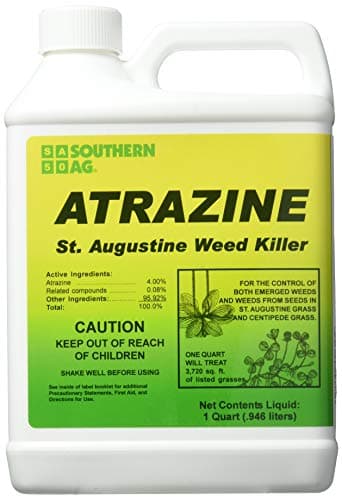
| Doveweed | Atrazine (labeled for St. Augustine; UF rates it tolerant) | Multiple applications 2 to 4 weeks apart (LSU) |
| Dollarweed, spurge | Metsulfuron (LSU); atrazine | Atrazine rated tolerant (UF); confirm the metsulfuron label lists St. Augustine |
| Virginia buttonweed | Spring: spot sprays of a 2,4-D + dicamba + mecoprop + carfentrazone mix (LSU); summer: metsulfuron, repeated 4 to 6 weeks later (LSU) | Only a southern formula whose label lists St. Augustine, at the low rate, before highs reach 85°F. UF rates its southern four-way mix "some injury may occur," so this is a spot-spray trade-off, not a broadcast |
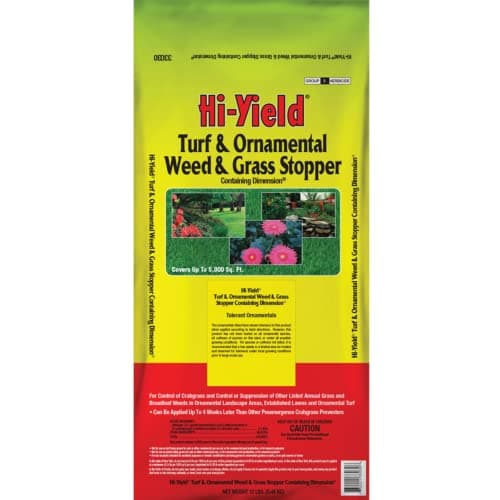
| Crabgrass, goosegrass | Pre: pendimethalin, dithiopyr; post: atrazine on young plants | Pre-emergents rated tolerant (UF) |
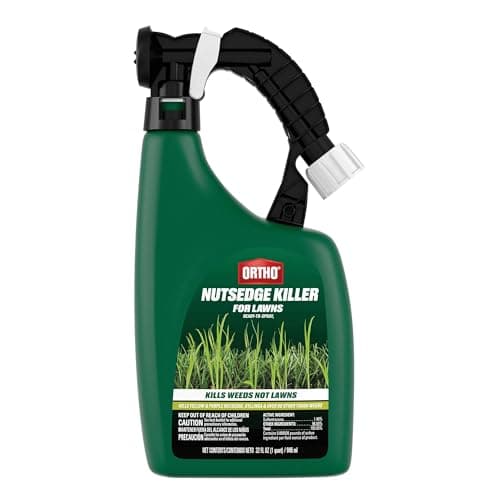
| Nutsedge | Sulfentrazone, imazaquin, penoxsulam mixes (UF) | Fix wet soil first; repeats needed. Imazaquin may injure (UF); UGA rates sulfentrazone sensitive |
| Bermudagrass, torpedograss | No selective homeowner option (LSU) | Glyphosate spot kill, then resod |
Matching an ingredient to a bottle: ignore the name on the front. Turn the bottle over, read the active-ingredients panel, and confirm St. Augustinegrass appears in the list of grasses the label says it's safe on. If St. Augustine isn't listed, it isn't a St. Augustine product.
What to Avoid
- Quinclorac. The University of Florida rates every quinclorac mix on its homeowner list either "potentially damaging, do not use" or not recommended on St. Augustine, and UGA marks quinclorac sensitive. That rules out many "weed and crabgrass killer" bottles.
- Standard 2,4-D + MCPP + dicamba. The University of Florida rates most three-way products "some injury may occur" on St. Augustine, and rates at least one "do not use." UGA calls standard mixes injury-prone, so use only low rates as spot treatments. It says southern formulas with less 2,4-D improve tolerance, but never at or above 90°F with high humidity. That's why the buttonweed row above points to St. Augustine-labeled southern formulas only.
- Glyphosate (Roundup). Nonselective. UGA rates St. Augustine sensitive, and the University of Florida says treated spots usually need resodding. One exception: UF notes the ProVista cultivar is glyphosate-tolerant.
If you'd rather feed and weed in one pass, compare options in our St. Augustine weed and feed roundup. The University of Florida cautions these make sense only when weeds are spread evenly across the lawn.
- The label is the law. Use only products that list St. Augustinegrass, at the rate and interval printed there.
- Tolerance ratings assume well-established, healthy turf. New sod and stressed lawns are more easily injured.
- Sources disagree on some ingredients, and cultivars differ. Your county extension office can confirm what fits your lawn.
Temperature and Timing Rules
The heat rule: stay below 85°F to be safe. The University of Florida says not to apply postemergence products like atrazine when turf is drought-stressed or air temperatures exceed 85°F. UGA Extension puts its line at 90°F, so 85°F covers both. UGA also says not to apply atrazine while warm-season grass is coming out of winter dormancy.
How long atrazine takes: it's slow, so plan on a week or more and a repeat at the label interval. The University of Florida warns that mowing within several days of spraying cuts a postemergence herbicide's effect.
Here's the calendar by region, straight from extension dates.
| Window | Florida (UF/IFAS) | Louisiana and Georgia (LSU, UGA) |
|---|---|---|
| Spring pre-emergent | Feb 1 south, Feb 15 central, Mar 1 north, or before highs of 65 to 70°F for 4 to 5 days | Late Jan (New Orleans) to late Feb (Shreveport); Feb 15 to Mar 15 in south Georgia |
| Goosegrass pre-emergent | 3 to 4 weeks after the dates above | Late winter to early spring, again in summer |
| Second spring pre-emergent | 6 to 9 weeks after the first | Per label |
| Spot-spray broadleaves | When weeds are young, below 85°F | April and May for buttonweed (LSU) |
| Fall pre-emergent | Nights 55 to 60°F: early Oct north, late Oct to early Nov central and south | Sept 1 to 15 in south Georgia |
| Winter | South Florida lawns grow year-round | Atrazine on St. Augustine Nov to mid-Feb (UGA) |
Texas: time pre-emergent by soil temperature (crabgrass starts near 60°F, per LSU) and confirm local dates with your county AgriLife Extension office. The herbicide timing calculator gives pre-emergent dates by ZIP code.
If you'd rather not track this yourself, WGIS Premium sends reminders timed to your ZIP and grass type for pre-emergent windows, inside a 12-month St. Augustine care plan, so the Feb 15 window doesn't slip past you.
Prevention: Fix What Let the Weeds In
The University of Florida says it plainly: weeds are a result of weak turf, not the cause. The usual culprits in St. Augustine:
- Mowing too low. Mow standard cultivars like Floratam at 3.5 to 4 inches and dwarf cultivars at about 2.5 inches, per the University of Florida. LSU AgCenter warns that mowing low hands bermudagrass the advantage.
- Overwatering. UF says dollarweed and sedges thrive in constantly wet soil. Water when blades fold, about 1/2 to 3/4 inch at a time.
- Shade. Floratam doesn't persist well with less than 6 hours of sun, per UF.
- Pests and disease. Nematodes thin turf and invite spurge and Florida pusley. If brown patches came first, check our St. Augustine disease guide.
The full routine lives in our St. Augustinegrass guide.
Regional Notes: Florida, Texas, Louisiana
Florida: St. Augustine is the state's most common lawn grass (UF/IFAS), and wet sites breed dollarweed, doveweed, and sedges. Torpedograss often arrives in fill soil, says LSU, so inspect soil before a renovation. Louisiana: Virginia buttonweed is LSU's most troublesome lawn weed, and doveweed signals poor drainage. Texas: bermudagrass creeping in from neighbors and alleys is the headache I hear about most. UGA's bulletin notes ethofumesate with atrazine can control bermuda, but only in nonresidential St. Augustine, so most homeowners are left with spot-kill and resod.
Where the Extension Services Disagree
The extension services don't agree on everything. UF/IFAS rates sulfentrazone alone as tolerant on St. Augustine. UGA's table marks it sensitive. Imazaquin flips the other way. Same with atrazine on crabgrass: UF says it helps on young grassy weeds, while UGA calls its crabgrass activity generally poor. Any guide that hands you one "safe" product list is skipping that nuance. The label on the specific bottle, for your specific grass, is the tiebreaker.
Your cultivar matters. ProVista tolerates glyphosate, CitraBlue out-competes weeds better than Floratam, and Raleigh tends to yellow in peak summer heat, per UF. Know which one you have before you shop.
Worked Example: Spot-Spraying a 5,000 Sq Ft Lawn
Rates vary by bottle, so here's the math you do with your label.
- Measure the weedy area, not the lawn. Say you find three doveweed patches: 10 x 12 ft (120 sq ft), 15 x 20 ft (300 sq ft), and 8 x 10 ft (80 sq ft). That's 500 sq ft, a tenth of the lawn.
- Set your water volume. The University of Florida says to apply herbicides in 1/2 to 1 gallon of water per 1,000 sq ft. For 500 sq ft, mix 1/4 to 1/2 gallon. Spraying the whole 5,000 sq ft would take 2.5 to 5 gallons.
- Calibrate. Mark off 1,000 sq ft (UF's unit), spray it with plain water at your normal pace, and measure what you used.
- Add product. Read the label's rate per 1,000 sq ft or per gallon and scale it to your 500 sq ft. The tank mix calculator does the conversion.
Spot-treating that 500 sq ft instead of the whole yard uses a tenth of the chemical and exposes far less turf to injury.
Your St. Augustine Weed Action Plan
- Identify first. Upload a photo for a free diagnosis or use the table above.
- Find the cause: mowing height, wet spots, shade, or compaction.
- Check the thermometer. No post-emergent sprays above 85°F.
- Pick a product whose label lists St. Augustine and contains no quinclorac.
- Spot-spray measured patches with the tank mix calculator.
- Put pre-emergent dates on the calendar or let a Premium care plan handle reminders.
- Bermuda or torpedograss? Plan a spot-kill and resod, and confirm the ID before you use glyphosate.
Weeds in St. Augustine are fixable. Name the weed, fix the condition that invited it, and spray only in the right window. For the broader list beyond St. Augustine, see our common lawn weeds guide.
Free Lawn Care Tools
Identify the weed first, then fix the cause, such as low mowing, wet soil, or shade. Spot-spray with a product whose label lists St. Augustinegrass, avoid quinclorac, and skip sprays above 85°F per UF/IFAS. Use pre-emergent in late winter so summer annuals like crabgrass never sprout. Bermudagrass needs spot-kill and resod.
UF/IFAS rates atrazine, pendimethalin, and dithiopyr as tolerated by established St. Augustine, and lists sulfentrazone and penoxsulam mixes for broadleaves and sedges. Low-2,4-D southern formulas are an option with some injury risk. Avoid quinclorac. Sources disagree on a few ingredients, so check that your exact product label lists St. Augustinegrass before spraying.
Yes. Glyphosate, the active ingredient in original Roundup, is nonselective, and UGA Extension rates St. Augustine as sensitive to it. Use it only as a spot treatment for bermudagrass or torpedograss, then expect to resod. The exception is ProVista, a glyphosate-tolerant cultivar. Some Roundup lawn products use different ingredients, so read the label.
A thick, healthy stand helps a lot. UF/IFAS says dense turf shades the soil so weed seeds can't germinate, and that weeds fill voids rather than create them. But thin, scalped, or shaded St. Augustine can't compete, and grassy invaders like bermudagrass spread right through it. Mow standard cultivars at 3.5 to 4 inches.
Only if the lawn is dense. LSU AgCenter says crabgrass shows up where turf is thin and tolerates low mowing, so bare or scalped areas let it in. Raise your mowing height, stop overwatering, and apply a pre-emergent like pendimethalin or dithiopyr before soil reaches about 60°F. UF/IFAS also notes CitraBlue competes better.
Atrazine is slow and systemic, so expect a week or more before you see results and plan on a repeat at the label interval. The University of Florida warns that mowing within several days of spraying cuts its effect. Spray only when air temperatures stay below 85°F and never on drought-stressed St. Augustine turf.
Sources (17)
- UF/IFAS EP141: Weed Management Guide for Florida Lawns
- UF/IFAS LH010: St. Augustinegrass for Florida Lawns
- UGA Extension B978: Weed Control in Home Lawns
- UGA Extension B1393: Bermudagrass Control in Southern Lawns
- UGA Turfgrass: Carpetgrass
- Mizzou WeedID: St. Augustine Grass
- LSU AgCenter: St. Augustinegrass
- LSU AgCenter: Carpetgrass
- LSU AgCenter: Doveweed
- LSU AgCenter: Torpedograss
- LSU AgCenter: Common Bermudagrass
- LSU AgCenter: Crabgrass
- LSU AgCenter: Goosegrass
- LSU AgCenter: Dollarweed
- LSU AgCenter: Virginia Buttonweed
- LSU AgCenter: Spotted Spurge
- LSU AgCenter: Yellow Nutsedge

Your lawn plan, in your pocket all season
Grass ID, a season plan, soil-timed reminders, and a lawn journal that remembers what you did. Free on iPhone.
Related Articles
 Problem Solving
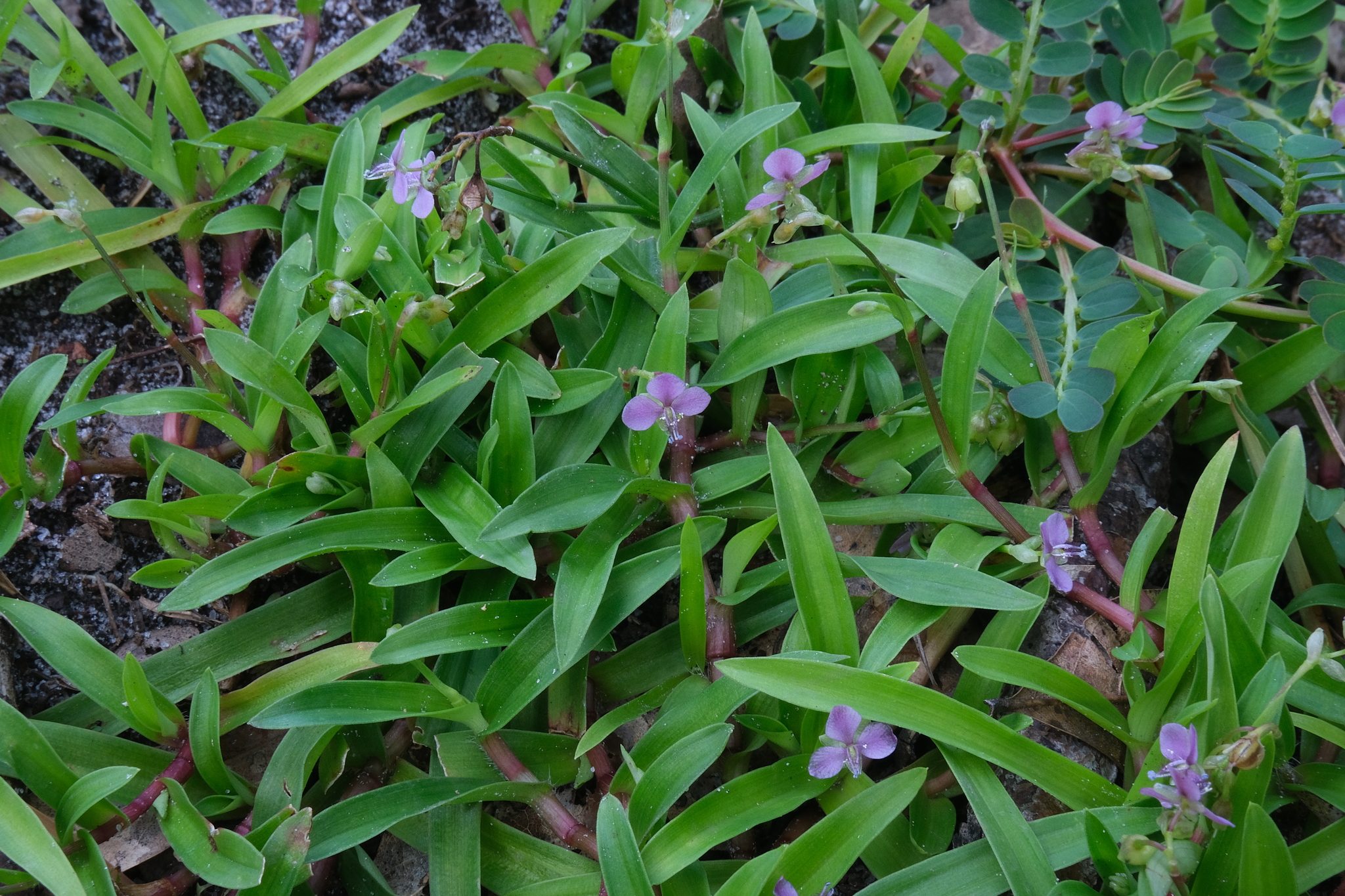
How to Get Rid of Doveweed (Identification, Prevention, and Control)
Jun 27, 2026•10 min read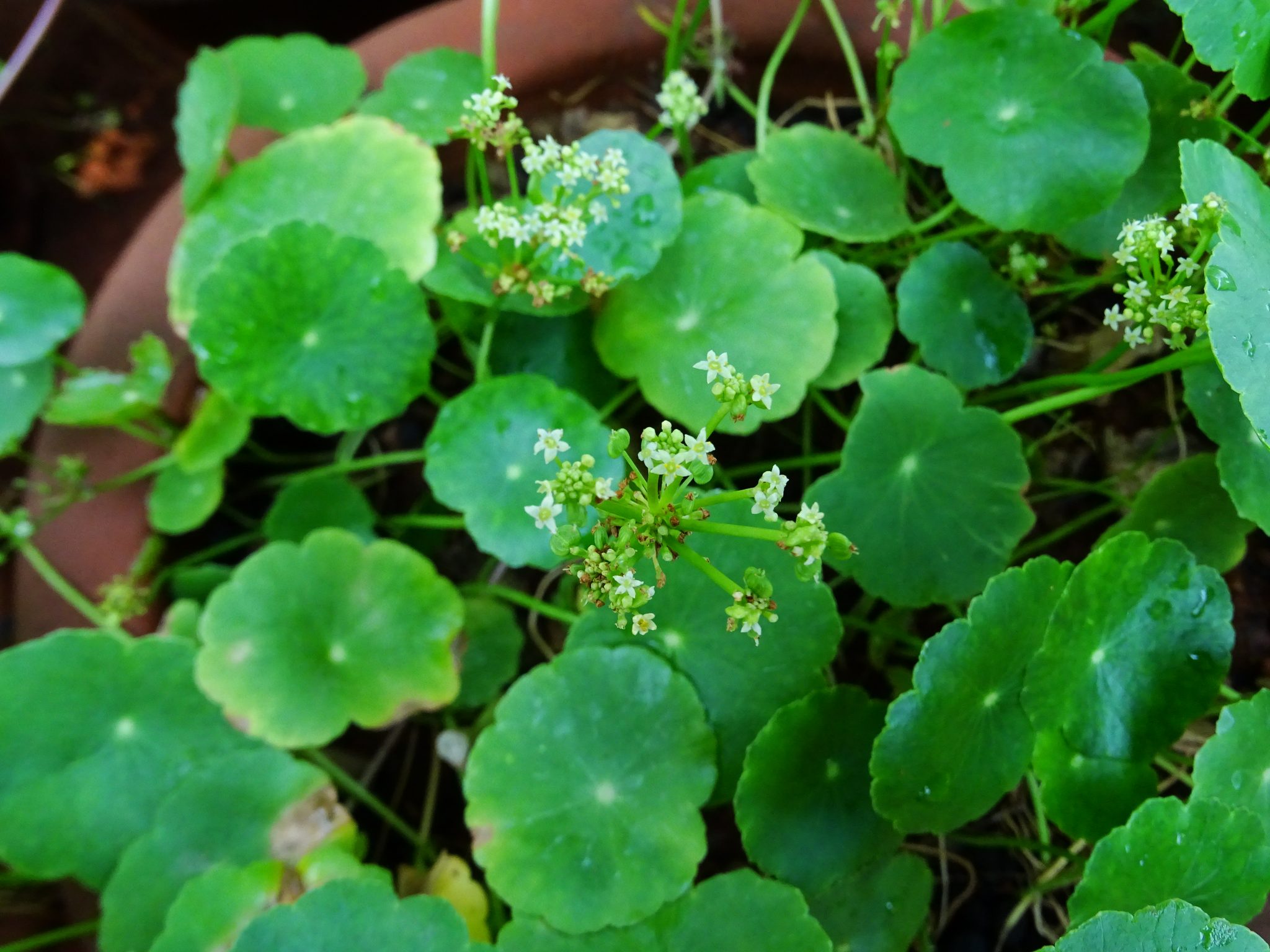 Problem Solving
How to Get Rid of Dollarweed (Pennywort) in Your Lawn
Jun 27, 2026•9 min read Problem Solving
Weeds With Purple Flowers: Identify What's Blooming in Your Lawn
Aug 12, 2026•6 min read