Best Fall and Winter Lawn Fertilizer: Winterizer Picks by Grass Type
 James ThorntonLawn Equipment & Maintenance Expert | 20 Years
As an Amazon Associate we earn from qualifying purchases.
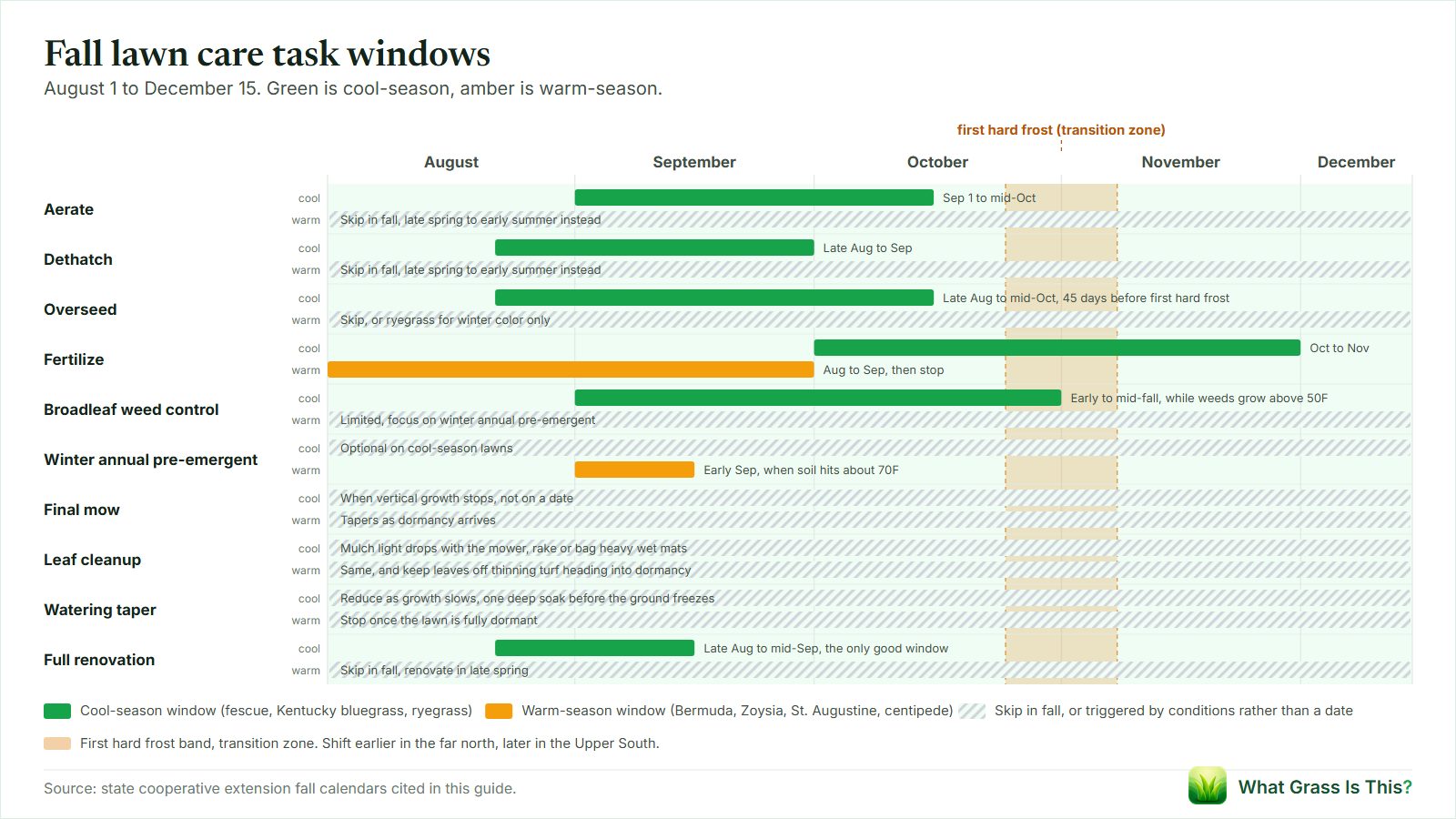
Two feedings. That's the whole fall plan for a cool-season lawn. A balanced feed in September, while the grass is still growing. Then a winterizer in late fall, near your last mowing, while the lawn is still green and the soil runs about 40 to 55°F. Purdue wants mostly quick-release nitrogen in that last bag, 0.5 to 1.0 lb per 1,000 sq ft, so the roots take it up before the ground freezes. That covers fescue, ryegrass, and Kentucky bluegrass up North and in the transition zone. Warm-season lawns in the South? Skip the winterizer. Clemson's nitrogen cutoff is at least 2 months before your average first frost.
Winter fertilization sets up most of what you see in your lawn the following spring: how fast it greens up, how thick it feels underfoot, and how well it fights off weeds and disease. For cool-season grasses especially, the right winter feeding can be more important than your spring fertilizer.
Below: what a winterizer really is, when it helps, when it's wasted, and how to pick the bag and the date for your lawn fertilizer plan. Buy on agronomy. The big "winterizer" on the front of the bag is marketing.
We will look at how winter feeding impacts root depth, color, and disease resistance, and why the focus should be on carbohydrate storage in roots, not on pushing top growth. You will see how winter strategies differ between cool-season lawns like Kentucky bluegrass or tall fescue and warm-season lawns like Bermuda or Zoysia, and how your region and climate control the window for a final application.
Whether you are a homeowner managing a small yard or a pro thinking about dialed-in fertility programs, you'll find products, timing, application rates, step-by-step processes, and the most common mistakes to avoid. If you also want a broader view of yearly feeding, you can later pair this with resources like Best Fertilizers for Lawns and Organic vs Synthetic Fertilizers, but here we focus on the winter piece of the puzzle.
Feed cool-season lawns twice in fall: a balanced feed in September while the grass is growing, then a winterizer in late fall when growth has slowed but the grass is still green and the soil is roughly 40 to 55°F. Purdue puts that last pass near or just after the final mowing, usually late October through mid November up North, at 0.5 to 1.0 lb of nitrogen per 1,000 sq ft. Skip it once the ground freezes.
Mostly quick-release nitrogen in that last bag. Purdue and K-State both say so. Slow-release sits in cold soil until spring. Warm-season lawns? No winterizer. Clemson stops nitrogen at least 2 months before the average first frost, because late nitrogen pushes soft growth that frost can kill. Tan, crunchy Bermuda on soil under about 55°F can't use it anyway.
Quick answer by grass type: here is the winter fertilizer cheat sheet before we get into the details.
| Grass Type | Best Winter/Fall NPK | When to Apply | Skip It If |
|---|---|---|---|
| Tall fescue | Balanced feed (16-4-8 range) in September, then a high-N winterizer (24-0-10 range) | Winterizer late Oct to mid Nov, green but barely growing | Ground is frozen |
| Kentucky bluegrass | Balanced feed in September, then a high-N winterizer (24-0-10 range) | Winterizer late Oct to mid Nov | Ground is frozen |
| Perennial ryegrass (in a cool-season blend) | Same two feedings as the rest of the blend | Winterizer late Oct to mid Nov | Ground is frozen |
| Bermuda / zoysia (not overseeded) | Potassium only (0-0-50 or 0-0-60), and only if a soil test shows potassium is short | Last nitrogen at least 2 months before average first frost. Keep any late-season pass at 0.5 lb actual N or less per 1,000 sq ft | Past that cutoff: no more nitrogen this year |
| Overseeded winter ryegrass (South) | 0.5 lb N per 1,000 sq ft from a 16-4-8 or 15-0-15 | After the second mowing, again midwinter if needed, last one by mid to late January | You skipped overseeding: dormant Bermuda needs nothing |
Understanding Winter Lawn Fertilizer Fundamentals
What Is a “Winterizer” Fertilizer, Really?
"Winterizer" is mostly a marketing term, not a specific legal or agronomic category. In practice, it usually refers to a fertilizer formulated for late fall or early winter application on cool-season grasses. The real differences from regular fertilizers are the nutrient ratios and the amount of slow-release nitrogen used.
Compared to a typical spring fertilizer like 29-0-4, a winterizer often has lower nitrogen and relatively higher potassium, for example 24-0-10, 18-0-6, or 10-0-20. The lower nitrogen rate helps avoid forcing leaf growth when temperatures are dropping, while the extra potassium supports winter hardiness and stress tolerance.
You will also see terms like "fall fertilizer" on bags. Many fall fertilizers are targeted at early fall, when grass is still actively growing and can use more nitrogen to thicken. A true winterizer is usually meant for the last application of the year, after peak growth slows but before the soil is too cold for nutrient uptake.
Nitrogen source matters too, and the common advice runs backward here. Slow-release nitrogen, like polymer-coated or sulfur-coated urea, feeds slowly as the soil cools. Fine for September. Quick-release nitrogen, like urea or ammonium sulfate, is available right away. For the late-fall pass, Purdue prefers a product with nearly 100 percent water-soluble nitrogen. The grass has to take it up before winter. Keep that pass at 1.0 lb N per 1,000 sq ft or less.
Phosphorus is often low or zero in winter fertilizers, which is not a problem in most established lawns. Many states regulate phosphorus in lawn fertilizers due to water quality concerns, and most soils already have adequate phosphorus unless a soil test shows a deficiency. This is why so many winterizer products read 24-0-10 or similar, with that middle number at zero.
The main purpose of a winterizer is to support carbohydrate storage in the crown and roots of the plant. As top growth slows, cool-season grasses shift energy below ground. Proper nitrogen and potassium in this window help roots remain active and store more reserves, which directly impacts how strongly the lawn "wakes up" in spring and how well it fights off disease and summer stress.
Cool-Season vs Warm-Season Lawns in Winter
Grass type is one of the biggest factors in deciding whether a winter lawn fertilizer makes sense. Cool-season grasses, such as Kentucky bluegrass, perennial ryegrass, tall fescue, and fine fescues, stay physiologically active in cooler weather. They often grow roots well into late fall, even as air temperatures drop, which is why winterizers are so effective on them.
Warm-season grasses, including Bermuda, Zoysia, St. Augustine, centipede, and Bahia, behave very differently. They thrive in summer heat and shut down hard when soil temperatures fall. Once warm-season grass has gone fully dormant and turned tan, nutrient uptake is minimal. Fertilizer applied at that stage either leaches away or can even predispose the turf to winter injury if it stimulated late growth earlier.
In northern and transition zone regions, cool-season lawns are the main candidates for a true winterizer applied in late fall. This late feeding is often the single most important fertilizer of the year for Kentucky bluegrass and tall fescue lawns, especially after a season of mowing and traffic stress.
In the Deep South and warm coastal areas, where Bermuda or St. Augustine dominates, the focus shifts. Instead of a winterizer in December, success comes from a strong summer fertilization program that wraps up by late summer and builds reserves before dormancy, plus feeding again in late spring once the lawn is fully green. Trying to mimic northern winterizer timing on a fully dormant warm-season lawn is usually a waste of money.
If your yard is in the transition zone with a mix of cool-season and warm-season turf, you may need a split approach. The cool-season portions can benefit from a late fall winterizer, while the warm-season sections stop nitrogen at least 2 months before the average first frost, Clemson's cutoff, to avoid late tender growth.
How Winter Fertilization Works in the Soil
In winter lawn care, soil temperature is more important than air temperature. Nutrient uptake and microbial activity slow as soil cools, but do not stop immediately. For most cool-season lawns, there is still meaningful activity down to about 40°F soil temperature, which is why winterizers should be timed to hit that window just as top growth is tapering off.
Slow-release fertilizers depend on either microbial action or physical coating breakdown. In cooler soils, microbial processes slow, so fully organic fertilizers or uncoated slow-release sources may act more gradually than in summer. Coated products that rely on moisture and temperature will still release nutrients, but the release curve may be flatter and longer. That flat curve works in September. In November it means part of the bag waits until spring, which is why Purdue picks soluble nitrogen for the last pass.
The goal of winter fertilization is to shift the plant's response from leaf production to root growth and storage. As days shorten and temperatures drop, cool-season turf naturally favors roots and crown development over blades. By supplying moderate nitrogen and adequate potassium in this moment, you enhance root density and depth without forcing a last flush of top growth that may be damaged by frost.
Winter fertilizer also interacts with other fall practices like core aeration and overseeding. If you aerate compacted soil in early to mid fall, applying fertilizer afterward helps roots take better advantage of the improved soil structure. When overseeding, especially with perennial ryegrass or tall fescue, you will typically use a starter fertilizer at seeding, then follow with a winterizer 6-8 weeks later once seedlings are established and mowing regularly. This staggered approach feeds both young and mature plants without overloading them at once.
Best Fall Lawn Fertilizer: What to Buy Before Winter
One timing rule covers most cool-season lawns. Make the last feeding near or just after your final mowing, while the lawn is still green and before the ground freezes. That's Purdue's timing. Blade growth has about stopped, but roots in soil above about 40°F still bank the nutrients for spring. Up North that's usually late October to mid November. Your frost pattern beats the calendar.
Grass type decides the rest. Cool-season grasses (tall fescue, Kentucky bluegrass, perennial ryegrass, fine fescues) want two fall feedings. NC State's tall fescue calendar puts 1 lb of nitrogen per 1,000 sq ft down in mid September and again in November, using a balanced 16-4-8 style fertilizer when you have no soil test. Warm-season grasses (Bermuda, zoysia, St. Augustine, centipede) skip late-fall nitrogen. Clemson's cutoff is at least 2 months before the average first frost: August 15 in upstate South Carolina, September 1 on the coast. UGA puts the last Bermuda feeding in August. Lawn turns tan and crunchy for winter? Leave the winterizer bag on the shelf.
Winter Fertilizer for Fescue
Fescue gets its own call-out because it's the most common cool-season lawn in the transition zone. Run NC State's calendar: 1 lb N per 1,000 sq ft in mid September, then the late pass in November, when the grass is green but not actively growing. Hold that late pass at 0.75 to 1.0 lb N, mostly quick-release, such as a 24-0-10. Don't go over 1.0 lb N. The full fescue breakdown is in the grass-by-grass section below.
Preventing Winter Damage: What the Right Fall Feeding Does
People often search for the best fertilizer for preventing winter damage, and the honest answer is that prevention is less about a specific brand and more about one nutrient: potassium. Applied in fall on soils that test low or medium in K, potassium strengthens cell walls, improves water regulation inside the plant, and measurably increases cold hardiness, which together reduce the odds of winter kill and speed spring recovery. That is exactly why winterizer labels carry a high third number, like 24-0-10 or 10-0-20.
Nitrogen plays a supporting role, and only when the timing is right. A late-fall dose of 0.5 to 1.0 lb N per 1,000 sq ft on cool-season turf, applied after top growth slows, fuels root growth and carbohydrate storage. That's what carries the lawn through freeze-thaw cycles and into green-up. The damage comes from heavy nitrogen while the grass is still pushing top growth. Soft, tender blades. Winter injures them easily, and MSU says fast growth right before snow mold season makes turf more susceptible. Worried about winter damage? Add potassium only if a soil test shows it's short, keep late nitrogen modest and mostly quick-release, and time it after growth stops but before the ground freezes.
Choosing the Best Winter Lawn Fertilizer: Key Criteria
Step 1: Determine Your Grass Type and Region
Before you can pick the best winter lawn fertilizer, you need to know what is actually growing in your yard. If your lawn stays somewhat green through winter in a northern climate, you likely have cool-season grass. If it turns tan and fully dormant, especially in the South or warm transition zones, it is probably warm-season.
Simple identification checks help. Kentucky bluegrass forms a dense, fine to medium textured sod with boat-shaped leaf tips. Tall fescue has wider blades with visible veins and forms clumps, especially in older lawns. Perennial ryegrass is glossy on the underside of leaves and germinates very quickly from seed. Fine fescues have thin, hair-like leaves and do well in shade.
Warm-season grasses have their own signatures. Bermuda is low, aggressive, and spreads by stolons and rhizomes, with a rougher texture. Zoysia forms a dense, carpet-like mat and can feel almost stiff underfoot. St. Augustine is coarse, with wide blades and above-ground stolons, and is usually confined to warmer regions like the Gulf Coast and Florida. If you are unsure, a local extension office or a nearby turf farm can usually help identify your grass type quickly.
Your region and climate zone then determine your fertilization window. Two key pieces of data are your USDA hardiness zone and your average first frost date. For example, in the Upper Midwest and Northeast, cool-season winterizer applications typically fall between late October and mid November, once daytime highs cool into the 40s and 50s but before the ground freezes. In milder coastal or Mid-Atlantic climates, that window may stretch into late November or even early December.
In the Pacific Northwest, cool but not brutally cold winters mean roots can stay active for a longer period, so winterizer timing is often tied more to rainfall patterns and soil saturation. You may apply the final fertilizer a bit earlier to avoid heavy winter rains that could leach nutrients.
Mountain and high elevation areas cool faster, so the window is often earlier, sometimes late September to mid October, depending on altitude. In the Deep South and Gulf Coast with warm-season grasses, finish the last nitrogen at least 2 months before your average first frost. Clemson and UGA both land that in August to early September. No winter fertilizer after that.
Step 2: Get a Soil Test Before You Pick a Product
The best winter lawn fertilizer depends on your soil more than on whatever ratio is popular in stores. Without a soil test, you are guessing. With one, you know whether you actually need phosphorus, how much potassium is appropriate, and whether correcting pH should take priority over another bag of fertilizer.

A good lawn soil test measures pH, organic matter, phosphorus (P), potassium (K), and sometimes key micronutrients like iron, manganese, and zinc. Many state universities and private labs offer lawn-specific tests that cost less than a bag of fertilizer. Results typically come back in 1-3 weeks and include recommendations tailored to your soil type and grass species.
To take a proper soil sample, follow a simple step-by-step process:
- Use a clean trowel or soil probe and a clean plastic bucket.
- Sample when the soil is not soaking wet or bone dry.
- Take 8-12 cores or slices from across the lawn to a depth of about 3-4 inches.
- Mix all cores thoroughly in the bucket and remove stones and large debris.
- Fill the lab's sample box or bag with the mixed soil, usually about 1 pint.
- Label by lawn area if you have distinct zones with different management.
When results arrive, focus on three things for winter fertilizer decisions. First, phosphorus levels. If the test indicates adequate or high P, you can safely choose zero phosphorus fertilizers and comply with any local regulations. If P is low, you may need a product that includes phosphorus, which might be labeled as a starter fertilizer rather than a winterizer, and you will follow the lab's recommended rate.
Second, potassium status. If your K level is low or in the low-medium range, that is a signal that a higher K winter fertilizer like 24-0-10 or 10-0-20 will be beneficial. Adequate potassium supports cold tolerance and disease resistance, which are both important going into winter.
Third, pH. If your soil is very acidic, for instance pH below 5.8 for most cool-season grasses, lime may provide more benefit than another round of nitrogen and potassium. Conversely, if pH is above about 7.5, sulfur or using more acidic fertilizer sources might be the better investment. Soil test data should override generic bag recommendations, since those are written for "average" conditions that may not match your yard.
- Penn State Extension recommends basing fall and winter lawn fertilization on a current soil test, with potassium applications tailored to bring soil test K into the optimum range for better winter hardiness.
Step 3: Reading Fertilizer Labels for Winter Use
Once you know your grass type and have soil test results, you can decode fertilizer labels with a winter mindset. The N-P-K numbers on the front tell you the percentage by weight of nitrogen, phosphorus (as P2O5), and potassium (as K2O) in the product. For winter use on established lawns, you will often be looking at ratios like 24-0-10, 18-0-6, or 10-0-20, which supply moderate nitrogen and ample potassium without excessive phosphorus.
On the back label, look for three critical details. First, the percentage of nitrogen that is slow-release or water-insoluble. It might be listed as "polymer-coated urea," "sulfur-coated urea," or "slowly available nitrogen." For the late-fall pass, you want that share small. Purdue prefers nearly all water-soluble nitrogen from October on. Second, check for the presence of sulfur, iron, or micronutrients. Iron can enhance color, though in cold soil its effect is limited. Sulfur can slightly acidify the soil and is helpful in high pH situations.
Third, look at any mention of coating technologies. Polymer-coated products release based on temperature and moisture, while sulfur-coated fertilizers may depend more on microbial breakdown. Stabilized nitrogen or urease inhibitors can reduce nitrogen loss, which is useful if rainfall is expected after your application. Whatever the source, don't put down more than 1.0 pound of N per 1,000 square feet in a single late-fall dose. More than that pushes soft top growth.
A common target rate for a cool-season lawn winterizer is about 0.5 to 1.0 pounds of actual nitrogen per 1,000 square feet. To calculate how much product that means, divide the desired nitrogen rate by the percentage of nitrogen on the bag. For example, if you want 0.75 pounds of N and the fertilizer is 24-0-10, which is 24 percent N, you divide 0.75 by 0.24, which gives about 3.1 pounds of product per 1,000 square feet.
Organic vs synthetic winter fertilizers comes down to expectations. Synthetic products give more predictable and timely nutrient availability in cool soils, which is why they dominate winterizer formulations. Organic fertilizers rely heavily on microbial activity, which slows in cold conditions, so their nitrogen release in late fall may be limited. However, organics add organic matter and can be part of a long term soil health plan, especially if applied a bit earlier in fall when soils are still warmer.
If you prefer organic products only, focus on building soil through compost topdressing and practices described in Composting for a Healthier Lawn, rather than expecting a classic fast green up from a winter application. A hybrid approach, using mostly organic feeding through the season and a carefully chosen synthetic winterizer once a year, often balances soil health with performance.
Organic winter lawn fertilizer: put it down early
Organic winterizer on the late-fall date? Skip it. Organic nitrogen has to be broken down by soil microbes before grass can use it. Illinois Extension says cold soil slows that breakdown. NC State puts the line at about 50°F. Above it, microbes stay active and release nutrients.
So move the date up. Feed organic while the soil still reads above 50°F. NC State notes tall fescue keeps growing in fall as long as temperatures allow, and an early organic feeding keeps up with it. A soil thermometer settles the date in a minute.
Soil already under 50°F and dropping? Use a quick-release synthetic for the last pass, or skip the late feeding and let the early one carry the lawn. Organic lawn food on cold ground sits there until spring.
Step 4: Tailoring Your Winter Fertilizer Plan
With grass type, region, soil test, and label knowledge in hand, you can tailor a winter fertilizer plan instead of relying on generic advice. Start by deciding whether your lawn actually needs a winterizer this year. If it is a cool-season lawn in a northern or transition zone climate, and your soil test indicates room for more potassium or moderate nitrogen, a winterizer makes sense. If you are managing a healthy, fully dormant warm-season lawn, assets are better spent on pH adjustment, weed prevention, or spring overseeding.
Next, match product to soil results. For example, a Kentucky bluegrass lawn in the Upper Midwest with adequate phosphorus and low-medium potassium might get a 24-0-10 product applied in early November at 0.75 pounds of nitrogen per 1,000 square feet. A tall fescue lawn in the Mid-Atlantic with high organic matter and already adequate potassium might use a lower K product like 18-0-6 at 0.5 pounds of N instead. If your soil test shows very low potassium, you might prioritize a ratio with even higher K such as 10-0-20 and possibly add a second, lighter K-only application earlier in fall.
Align timing with your local conditions. As a rough guide, for cool-season lawns you want to apply when you have likely had your last mowing, leaf growth has clearly slowed, but the lawn is still fully green and soil is not frozen. This often occurs when average daytime highs are in the 40-55°F range and soil temperatures are around 40-50°F, typically 1-3 weeks after growth noticeably tapers off. For warm-season lawns, the nitrogen cutoff is at least 2 months before your average first frost (Clemson). Look up your frost date and count back.
Finally, integrate winter fertilization into your entire yearly program. Winterizer is not a magic fix. If your lawn is chronically compacted, lacks irrigation, or is plagued by thatch and disease, the benefits will be limited. Combine late fall feeding with good mowing height, periodic core aeration, and overseeding when needed for best results. Resources like Best Soil Test Kit for Lawns and How to Improve Soil pH for Grass can help build that broader context.
When to Apply Fall Fertilizer by Region and Grass Type
Cool-Season Lawns: Timing Windows and Rates
For cool-season lawns, winter fertilizer timing is crucial. Too early and you simply create another fall fertilizer, which is not harmful but misses the root-storage emphasis. Too late and you risk having nutrients sit unused in frozen soil or wash away.
In the Upper Midwest and Northeast, a typical winterizer window is late October through mid November. For example, in a zone 5 climate like Detroit or Chicago, you might apply between October 25 and November 15. The trigger is when you notice mowing frequency dropping to once every 10-14 days and growth significantly slowing, but the lawn still looks green. Soil temperatures around 40-50°F at 3-4 inches depth are a useful confirmation.
In the Mid-Atlantic and transition zone cities like Philadelphia, Washington D.C., or Kansas City, the window often extends into late November, sometimes even early December in mild years. Again, watch the lawn more than the calendar. When blade growth slows, but before the first hard freeze of the soil, you are in the right window.
Recommended nitrogen rates for a winterizer on cool-season lawns generally fall between 0.5 and 1.0 pounds of N per 1,000 square feet. If you have already applied two or three fall fertilizers, lean toward the lower end. If your total nitrogen for the year has been modest and the lawn is healthy, you can go toward 1.0 pound. That's the ceiling for one pass.
Here is what extension guidance says about that late-fall nitrogen pass, region by region. Every rate below is per 1,000 square feet, so measure your yard with the lawn size calculator before you buy a bag, and use the fertilizer schedule calculator to pin the date to your ZIP.
| Region | Apply when | N rate per 1,000 sq ft | N source |
|---|---|---|---|
| Midwest and Northeast | First few weeks of November, near or after the last mowing, lawn still green | 0.5 to 1.0 lb | Quick-release: urea, ammonium sulfate, calcium nitrate |
| Kansas and the plains | About the time of the last mowing. Mid November through Thanksgiving around Kansas City | 1.0 lb | Quick-release, high nitrogen (27-3-3 or 30-0-3) |
| Transition zone | Early November to Thanksgiving | 0.5 to 1.0 lb | Quick-release |
| Pacific Northwest | Through mid November, a milder fall extends the window | 0.5 to 1.0 lb | Quick-release |
That last column surprises people. Purdue is explicit that fall inverts the usual slow-release preference, recommending "products with a greater percentage of slow-release nitrogen sources during spring and summer months and a greater percentage of quick-release nitrogen sources in the fall." The nitrogen has to be taken up before winter to do anything, and a slow-release bag applied in November is still sitting there in March.
Warm-Season Lawns: Avoiding Late Nitrogen
For warm-season lawns, the best winter lawn fertilizer strategy is usually not to fertilize in true winter at all. Bermuda, Zoysia, St. Augustine, centipede, and Bahia rely on strong summer nutrition to build reserves, then go dormant once soil temperatures drop below roughly 55°F. Applying nitrogen to these grasses after dormancy is either wasted or counterproductive.
In the Deep South and Gulf Coast, the last nitrogen goes down at least 2 months before the average first frost. Clemson names August 15 for upstate South Carolina and September 1 for the coast. UGA says August for Bermuda, because September nitrogen can delay dormancy long enough for cold injury. In the warmer parts of Florida or south Texas, where true frost is rare, the focus shifts more to seasonal growth patterns, and you may continue light fertilization later, but you still avoid pushing late tender growth heading into any potential cold snaps.
If you see a product labeled as winterizer for warm-season lawns, read the label carefully. Many are low nitrogen, higher potassium formulas. Even then, the nitrogen goes down before the cutoff, at 0.5 lb actual N per 1,000 sq ft or less, Clemson's light rate. And only if your soil test suggests a need.
Warm-season lawns run the opposite calendar, and Clemson puts real dates on the cutoff instead of a rule of thumb.
| Item | Guidance |
|---|---|
| Nitrogen cutoff | At least 2 months before average first frost. Clemson names August 15 for the South Carolina upstate and September 1 for the coast. |
| Why | Late nitrogen forces tender shoots while metabolism slows, depletes carbohydrates, and raises cold injury risk. |
| Potassium, only if a soil test shows a deficit | 1 lb potash per 1,000 sq ft. |
| Product options | 5-5-25 at 4 lb per 1,000 sq ft, 0-0-60 muriate of potash at 1.6 lb, 0-0-50 potassium sulfate at 2 lb. |
| Nitrogen ceiling in any winterizer you use | 0.5 lb actual N or less per 1,000 sq ft. |
| Risk of overdoing potassium | Foliar burn, reduced magnesium uptake and lighter color, higher disease pressure. |
Worth saying plainly, because every competing page treats high-potassium winterizer as automatically correct: extension guidance supports potassium only where a soil test shows a deficit. Where soil potassium is already adequate, more of it does not improve winter hardiness, and excess potassium in the leaf is linked to higher snow mold risk.
Special Cases: Overseeded and Shady Lawns
Some lawns in warmer climates are overseeded with perennial ryegrass for winter color. In that case, you essentially manage a temporary cool-season lawn on top of dormant warm-season turf. The winterizer question then becomes more nuanced. You want to feed the ryegrass enough to stay healthy and attractive, without overloading the base Bermuda or Zoysia with nitrogen that will still be present when it wakes up in spring.
Keep it light. Clemson feeds overseeded ryegrass 0.5 lb of nitrogen per 1,000 sq ft after the second mowing, then another 0.5 lb in midwinter only if the color fades. Their examples are a 16-4-8 or a 15-0-15. No feeding after mid to late January, so the ryegrass fades as the warm-season grass wakes up. Skip the heavy winterizer.
Shady lawns, regardless of grass type, are often weaker and less dense. For them, overfertilization heading into winter can increase disease risk, especially in damp, shaded conditions. If you have a heavily shaded cool-season lawn, still use a winterizer, but stay toward the lower nitrogen end, for example 0.5 pounds per 1,000 square feet, and ensure good leaf cleanup to reduce moisture and disease pressure.
Best Winter Fertilizer by Grass Type: Fescue, Ryegrass, and Kentucky Bluegrass
The general winterizer playbook above gets you 80% of the way there. The remaining 20% is grass-specific: each cool-season species has slightly different fall growth patterns, nitrogen needs, and disease risks that change what "best" looks like. Here is the breakdown for the three species that dominate northern and transition-zone lawns.
Best Winter Fertilizer for Tall Fescue
Tall fescue does most of its eating in fall. NC State's calendar puts the bulk of the year's nitrogen on a tall fescue lawn between September and November: 1 lb N per 1,000 sq ft in mid September and again in November. Spring and summer feedings stay light, 1/5 to 1/2 lb N, lower after March 15.
Target rate for the late pass: 0.75 to 1.0 lb of nitrogen per 1,000 sq ft, mostly quick-release. A 24-0-10 or 20-0-8 does the job. Soil test says the lawn is short on phosphorus? A 16-4-8 works. Don't go over 1.0 lb N in one pass.
Timing window: early November to Thanksgiving in the transition zone (Mid-Atlantic, Tennessee, Kentucky, southern Missouri), late October to mid November in the upper Midwest and Northeast. Soil should still read 40 to 55°F. Lawn fully green, barely growing, last mowing just done? You're in the window. Overseeded in the last 6 weeks? Wait until the new grass has been mowed 2 or 3 times.
Fescue's big disease is brown patch. NC State ties it to humid weather above 85°F. That's summer. Keep the heavy feedings in fall, where the calendar puts them, and go light in spring.
Best Winter Fertilizer for Perennial Ryegrass
Perennial ryegrass needs winter feeding in two very different scenarios, and the right answer depends on which one applies to your lawn.
Scenario 1: Ryegrass as part of a cool-season lawn (Northern US). If perennial ryegrass is part of your standard cool-season blend (often mixed with tall fescue and Kentucky bluegrass), treat the lawn as a whole and run the tall fescue schedule above. Ryegrass the dominant species? Run the late pass at the low end, 0.5 to 0.75 lb N per 1,000 sq ft. Pure ryegrass is the more disease-prone lawn under heavy nitrogen, gray leaf spot especially.
Scenario 2: Ryegrass overseeded into a dormant warm-season lawn (Southern US). This is the more common winter-fertilizer-for-ryegrass scenario. If you've overseeded ryegrass into dormant Bermuda or Zoysia for winter color, you're effectively maintaining a cool-season lawn for 4-6 months. Light feeding beats one heavy winterizer here. Clemson's schedule: 0.5 lb N per 1,000 sq ft after the second mowing, another 0.5 lb in midwinter if needed, and nothing after mid to late January. Feed it harder or later and the ryegrass competes with the Bermuda come spring. Clemson also flags Pythium blight on over-fertilized, over-watered ryegrass.
Annual or perennial ryegrass, same schedule. Both should fade as the Bermuda or zoysia greens up, and the January stop date helps that along.
Best Winter Fertilizer for Kentucky Bluegrass
Kentucky bluegrass benefits from a winterizer more than almost any other lawn grass. Its rhizome growth (the underground runners that fill in bare spots) depends heavily on fall and early winter carbohydrate storage. Skip the winterizer and KBG often comes out of winter thin and slow to fill.
Target rate: 0.5 to 1.0 lb N per 1,000 sq ft, mostly quick-release. That's Purdue's late-fall range. KBG gets snow mold more often than tall fescue. Had snow mold last spring? Run the low end of the nitrogen range. Add potassium only if a soil test shows it's short. Extra potassium in the leaf is linked to more snow mold, so more isn't better.
Timing window: same as the rest of the cool-season lawn. Late October to mid November in the upper Midwest and Northeast, into late November in the transition zone, before the ground freezes. Purdue puts it near or just after the last mowing. Apply on green grass that has mostly stopped growing. Yellowing or dormant turf? Too late.
Snow mold every spring? Skip the fungicide unless the cultural fixes have already failed. MSU says chemical control for pink snow mold is generally not recommended on home lawns. The cultural fixes do the job. Keep mowing until growth stops so the grass doesn't go into winter tall. Get the leaves off. Keep the late nitrogen at 1.0 lb N or less, mostly at the low end.
Best Fertilizer for Winter Grass (Overseeded Ryegrass Lawns)
Searched for winter grass fertilizer and live in the South? You probably mean the annual or perennial ryegrass overseeded into a Bermuda lawn each fall. That winter grass grows all winter. It gets fed on its own schedule.
Clemson's schedule for overseeded ryegrass:
- At seeding: nothing on Clemson's schedule. Skip the starter bag unless a soil test shows low phosphorus.
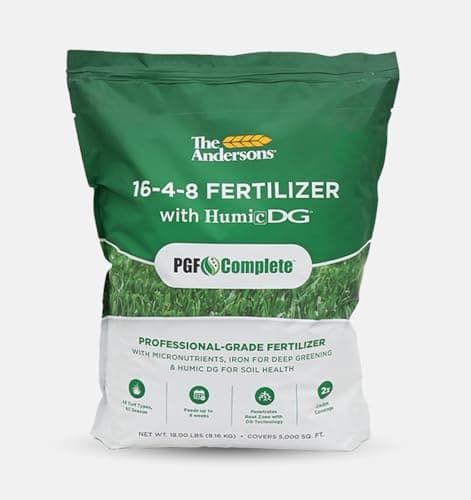
- After the second mowing: 0.5 lb N per 1,000 sq ft. Clemson's examples are a 16-4-8 or a 15-0-15 at 3 lb of product per 1,000 sq ft. The Andersons PGF Complete 16-4-8 is that ratio.
- Midwinter, if needed: another 0.5 lb N to hold the color.
- Mid to late January: last feeding. Later nitrogen keeps the ryegrass strong into spring and slows the transition back to Bermuda.
One warning that trips up a lot of southern lawns: do not let winter-grass feeding spill onto non-overseeded dormant Bermuda. Nitrogen on fully dormant warm-season turf feeds winter weeds, and during warm spells it can push tender growth that the next freeze burns back.
Step-by-Step: How to Apply Winter Lawn Fertilizer
1. Confirm Conditions and Calculate Product Amount
Before spreading any fertilizer, confirm that conditions are right. For cool-season winterizer, check that the lawn is still green, growth has slowed noticeably, and soil is not frozen or saturated. For warm-season lawns, confirm that you are still within the safe window before dormancy if you are making a final fall application.
Measure your lawn area. Many homeowners underestimate or overestimate. Use a simple rectangle or irregular-area calculation and convert to square feet. A threshold to remember is that misjudging by more than 20 percent can lead to under or over application. Once you know total area, use the nitrogen rate you have chosen, for example 0.75 pounds N per 1,000 square feet, and the product's N percentage to calculate how many pounds of product you need.
2. Set and Test Your Spreader
Choose a quality broadcast or rotary spreader for even coverage. Check the bag for recommended spreader settings, but treat them as a starting point, not a guarantee. It is wise to do a test run on a driveway or tarp, walking your normal pace, to see if the output looks uniform and matches the coverage you expect.
Divide your total fertilizer amount in half and plan to apply it in two perpendicular passes, for example north-south and then east-west. This crisscross method helps correct for any minor inconsistency in spread pattern and reduces the risk of striping. Adjust spreader settings slightly lower than you think you need so you do not inadvertently dump too much in one pass.
3. Apply and Water In
Walk at a steady pace, overlapping wheel tracks slightly to ensure no gaps. Keep the spreader closed when turning and only open it once you are moving forward at normal speed. Watch for any clumping or uneven flow and pause to break up clumps if needed. After two passes, visually inspect the lawn for any heavy or thin bands of granules.
Most granular winter fertilizers should be watered in with about 0.25 to 0.5 inches of irrigation or rainfall within a day or two. This moves nutrients off the leaf blades and into the soil where roots can access them, and it reduces the risk of leaf burn. If the soil is already moist and rain is forecast within 24 hours, you can often rely on that, but avoid heavy storms that could cause runoff.
Integrating Winter Fertilizer With Other Lawn Practices
Core Aeration and Dethatching
Core aeration in fall helps relieve compaction and improves water and nutrient movement into the root zone. If your lawn fails the screwdriver test, where you cannot easily push a screwdriver 6 inches into the soil, it typically points to compaction. In that case, aerate 2-6 weeks before your planned winter fertilizer and then apply fertilizer after aeration. The open cores allow better penetration and utilization.
Dethatching can also be paired with fall fertilization when thatch exceeds about 0.5 inches in depth. However, aggressive dethatching close to winter can stress the turf. If you have heavy thatch, plan mechanical removal earlier in fall and allow several weeks of recovery with appropriate fertilization and irrigation before winter conditions arrive.
Overseeding and Renovation
When overseeding cool-season lawns in fall, use a starter fertilizer at seeding with a higher phosphorus content if your soil test recommends it, then plan a winterizer once new grass has been mowed 2-3 times. This is often about 6-8 weeks after seeding. The starter fertilizer helps early root and shoot development, while the winterizer refuels the growing plants for winter and spring.

In full lawn renovations, be cautious not to over apply nitrogen in the establishment period. Follow the lab's recommendations for both starter and follow-up feedings, and prioritize steady, moderate nutrition over heavy doses. Late fall winterizer in a renovation should usually be on the lower side of the nitrogen range, such as 0.5 pounds per 1,000 square feet, to avoid pushing tender growth into harsh winter conditions.
Weed Control and Disease Management
Fall is also a key time for weed and disease control, and winter fertilizer needs to fit alongside any herbicides or fungicides you are using. Many preemergent herbicides for winter annual weeds are applied in late summer or early fall, so they usually do not interfere with a later winterizer. However, some postemergent herbicides have restrictions on fertilization intervals, so always read labels.
If you battled diseases like snow mold in past winters, your fall nitrogen strategy matters. Excess late nitrogen can increase susceptibility to certain diseases. In that case, keep winterizer rates more conservative, closer to 0.5 pounds N per 1,000 square feet, and ensure good leaf removal and air movement to reduce disease pressure.
- Michigan State University Extension says fertility that pushes fast growth right before snow mold season makes turf more susceptible to pink snow mold, and recommends timing nitrogen so the turf can harden off before snow or frost.
What Other Guides Miss: Common Mistakes to Avoid
Many online articles about winter lawn fertilizer focus only on product names and ignore the context that determines whether those products actually help. Three errors show up repeatedly and can undermine your efforts if you follow shallow advice.
1. Ignoring Soil Temperature and Root Activity
Some guides tell you to fertilize on a calendar date, like "apply winterizer in November," without mentioning soil temperature. In reality, if soil is already below about 35-40°F and staying there, nutrient uptake is minimal. Conversely, if it is still warm and grass is actively growing, you are really doing another standard fall feeding.
To avoid this, use a simple soil thermometer or check local soil temperature reports from an agricultural weather station. Aim for your cool-season winterizer when soil is trending through the 40-55°F range at 3-4 inches. That timing ensures roots are still active enough to use the nutrients for carbohydrate storage.
2. Treating Warm-Season and Cool-Season Grass the Same
Many broad lawn care guides do not distinguish between grass types when talking about winterizer, which typically results in warm-season lawns getting fertilizer at the wrong time. If you see advice suggesting a December winterizer for all lawns, it is incomplete.
For warm-season lawns, confirm grass type and dormancy status. If blades are tan and crunch underfoot and soil is cool, fertilizer is usually wasted. The better test is to watch for consistent green growth in late spring and base fertilization on that pattern instead. Feeding a dormant Bermuda lawn in mid winter is a common misuse of product and a potential environmental risk.
3. Overlooking Total Annual Nitrogen Load
Another oversight is not accounting for total nitrogen applied in a year. A lawn that has already received high nitrogen doses in spring and summer may not benefit from another heavy shot in late fall. In some cases, it may increase disease risk or create excessive thatch over time.
Review your season's fertilizer records. If you have already applied 3-4 pounds of nitrogen per 1,000 square feet for cool-season turf, a light winterizer or even skipping it in a given year might be best. If your total is more modest, in the 1.5-2.5 pound range, then a 0.5-1.0 pound winterizer is more justified. Count the year's total before you add the late pass.
Conclusion: Building Next Year’s Lawn Now
Winter fertilization is not about chasing immediate color. It is about investing in root systems, carbohydrate reserves, and stress tolerance that show up as thicker, greener, more resilient turf next spring. For cool-season lawns in northern and transition zones, a well timed, soil test informed winterizer at 0.5-1.0 pounds of nitrogen per 1,000 square feet, with adequate potassium and mostly low or no phosphorus, is often the single most valuable feeding of the year.
For warm-season lawns, the best winter lawn fertilizer strategy is often to finish nitrogen earlier, focus on soil health and pH, and avoid late season applications that do more harm than good. Matching product, timing, and rate to your grass type, region, and soil test is what separates effective winter care from marketing driven routines.
Want the whole year on one calendar? The fertilizer schedule calculator pins every feeding to your ZIP. Best Fertilizers for Lawns covers the bags. Same job every fall. Same week. That's the whole trick to it.
Top Picks
 The Andersons PGF Complete 16-4-8 (5,000 sq ft)Check price on Amazon
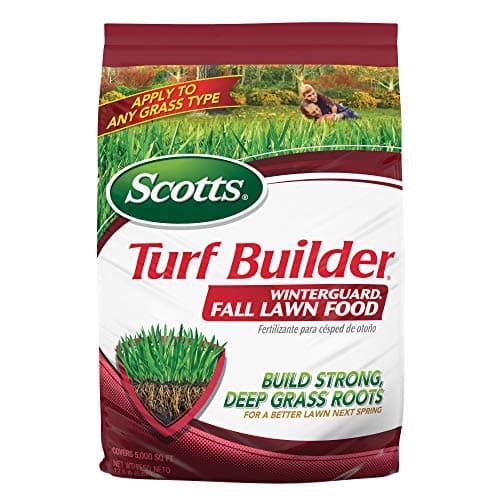
 Scotts Turf Builder WinterGuard Fall Lawn Food, 12.5 lb.Check price on Amazon
As an Amazon Associate we earn from qualifying purchases.
Free Lawn Care Tools
"Winterizer" is mostly a marketing term, not a specific legal or agronomic category. In practice, it usually refers to a fertilizer formulated for the last feeding of the year on cool-season grasses, in late fall. The real differences from regular fertilizers are the nutrient ratios and how fast the nitrogen releases.
For cool-season lawns, the best fertilizer to use before winter is a mostly quick-release, high-nitrogen winterizer such as a 24-0-10, applied near or just after your last mowing while the lawn is still green. Purdue recommends 0.5 to 1.0 lb of nitrogen per 1,000 sq ft from a soluble nitrogen source, because the grass has to take it up before winter. Warm-season lawns like Bermuda and zoysia skip it: Clemson stops nitrogen at least 2 months before the average first frost.
The best winter fertilizer for grass depends on grass type. Cool-season lawns (fescue, Kentucky bluegrass, ryegrass) do best with a late-fall winterizer that is mostly quick-release nitrogen, like a 24-0-10, applied while the lawn is still green and the soil is roughly 40 to 55°F, usually late October through mid November up North. Fully dormant warm-season grasses should not be fertilized in winter at all. Add potassium only if a soil test shows it is short.
Apply winter fertilizer to cool-season lawns in late fall, when growth has noticeably slowed but the lawn is still green and the soil is around 40 to 55°F. Purdue times it near or just after the last mowing, usually late October through mid November in northern states. Blades have mostly stopped growing, but roots are still active and store the nitrogen for spring. Skip it once the ground freezes.
A late-fall winterizer on cool-season lawns should supply 0.5 to 1.0 lb of nitrogen per 1,000 square feet, and it should be mostly quick-release. Purdue prefers a product with nearly 100 percent water-soluble nitrogen from October on, because the grass has to take it up before winter; slow-release nitrogen in cold soil is still sitting there in spring. Keep any single pass at 1.0 lb N or less.
Fully dormant warm-season grasses such as Bermuda and zoysia do not benefit from winter fertilizer, and late nitrogen raises the risk of winter injury. Clemson says to make the last nitrogen application at least 2 months before the average first frost, because late nitrogen pushes tender growth while the plant is slowing down. Once the lawn is tan and the soil is below about 55°F, fertilizer is wasted. Resume feeding in late spring when the lawn is fully green.
On cool-season lawns, a well-timed late-fall winterizer is the best fertilizer for limiting winter damage. Keep the nitrogen at 0.5 to 1.0 lb per 1,000 sq ft and apply it after top growth slows, since heavy nitrogen on still-growing grass produces soft growth that winter injures easily. Potassium improves cold hardiness where a soil test shows it is short; Clemson notes excess potassium can burn leaves, cut magnesium uptake, and raise disease pressure.
For tall fescue, apply 0.75 to 1.0 lb of nitrogen per 1,000 sq ft in late fall, near your last mowing, using a mostly quick-release winterizer like a 24-0-10 or 20-0-8. NC State's calendar feeds tall fescue 1 lb of nitrogen in mid September and again in November, when the grass is green but not actively growing. Don't go over 1.0 lb N in the late pass.
It depends on the lawn. Perennial ryegrass in a northern cool-season blend gets the same late-fall winterizer as the rest of the lawn, at 0.5 to 0.75 lb N per 1,000 sq ft if ryegrass dominates. Ryegrass overseeded into dormant Bermuda in the South, annual or perennial, gets 0.5 lb N from a 16-4-8 or 15-0-15 after the second mowing and another 0.5 lb in midwinter if needed, per Clemson. Stop by mid to late January so the Bermuda can take back over.
Kentucky bluegrass does best with a mostly quick-release winterizer at 0.5 to 1.0 lb of nitrogen per 1,000 sq ft, applied late October to mid November in the upper Midwest and Northeast while the grass is green but barely growing. Purdue times it near or just after the last mowing. KBG gets snow mold more often than tall fescue, so lawns with a snow mold history should use the low end of that range. Add potassium only if a soil test shows it is short.
Only if the grass is actively growing. Overseeded winter ryegrass in the South can take a light midwinter feeding, with the last one by mid to late January per Clemson. Dormant lawns should not be fertilized: cool-season lawns get their last feeding in late fall before the ground freezes, and nitrogen on dormant warm-season grass feeds weeds and risks freeze damage to any growth it pushes. On frozen ground, fertilizer mostly runs off with the next melt.
For cool-season lawns, put a balanced fall feeding down in September while the grass is still growing; NC State uses 1 lb of nitrogen per 1,000 sq ft from a 16-4-8 style fertilizer. The late-fall winterizer follows in late October to mid November, near or just after your last mowing, while the lawn is still green. Warm-season lawns run the reverse calendar: stop nitrogen at least 2 months before your average first frost, which lands in mid August to early September across much of the South.
Mostly, with one timing difference. Fall fertilizer is any feeding made during autumn. A winterizer is the last one of the season, applied right before growth stops, and it usually carries more potassium and a larger share of quick-release nitrogen so the roots take it up before the ground freezes. On warm-season grass, neither one belongs in late fall.
A winter fertilizer for cool-season grass should have a solid first number, a zero or low middle number, and some potassium in the last spot, like 24-0-10, 18-0-6, or 10-0-20. The first number is nitrogen, the middle is phosphorus, and the last is potassium. Winter lawn food, winterizer, or fall fertilizer: read the same three numbers whatever the bag calls it. Skip extra phosphorus or potassium unless a soil test says your lawn is short on it.
Most lawns should not be fertilized in late winter, because dormant grass cannot use the nitrogen. Cool-season lawns got their feeding in late fall, and the next one waits until the grass is actively growing in spring. Warm-season lawns wait until they are fully green in late spring. Overseeded winter ryegrass in the South is the exception, and Clemson has its last light feeding done by mid to late January.
Photos: RDNE Stock project / Pexels, Mehmet Demir / Pexels

Beat weeds and brown spots from your phone
Snap a photo, get the fix, and follow a plan timed to your soil and weather. Free on iPhone.