Best Grass for Dogs: Pet-Friendly Picks for Paws, Urine & Digging
 James ThorntonLawn Equipment & Maintenance Expert | 20 Years
As an Amazon Associate we earn from qualifying purchases.
Sharing your yard with a dog or two changes everything. Suddenly, that picture-perfect lawn turns into a maze of yellow spots, bare paths, and random craters where your pup just had to dig. That is where choosing truly pet friendly grass and building a thoughtful pet safe lawn makes a big difference.
The short answer: turf-type tall fescue is the best grass for dogs overall in cool-season yards, with deep roots that dilute urine and tough blades that shrug off paw traffic. In warm climates, hybrid Bermuda (TifTuf in particular) is the top pick, since it refills urine spots and dig damage faster than any other turfgrass.
When people talk about dog resistant grass, they usually mean turf that handles heavy paw traffic, rebounds quickly from damage, and stays safe for pets to walk, roll, and even nibble on. No grass type is completely dog proof, but some are far more forgiving of urine, running, and roughhousing than others.
Traditional lawns often fail once dogs arrive because they were chosen for looks first and durability second. Shallow roots, poor traffic tolerance, and low disease resistance show up fast when you add urine burn, digging, and soil compaction.
This guide walks you through how to choose the best pet friendly grass for your climate, how to match it to your existing lawn, and what to expect from popular species. You will see options for cool season and warm season regions, along with practical care tips and ideas when you need something tougher than grass alone.
If your lawn is plagued by yellow spots and bare patches, your dog's daily adventures might be to blame. These symptoms often indicate that your grass can't withstand heavy paw traffic or the high nitrogen content in dog urine. To verify, check if the affected areas are primarily where your dog plays or relieves itself. Identifying these patterns can help you choose a grass type better suited for your furry friend.
For a pet-friendly lawn, consider planting perennial ryegrass or Kentucky bluegrass, both known for their resilience. These varieties can recover quickly from wear and handle moderate urine exposure. Expect to see improvement within 6-8 weeks after reseeding. Meanwhile, ensure your dog stays hydrated to dilute urine and reduce potential lawn damage. With smart grass choices and care, you can enjoy a lush, dog-friendly yard.
Best Pet-Safe Grass for Dogs at a Glance
If you just want the short list, here are the pet-safe, pet-friendly grass types that hold up best to dogs, grouped by climate so you can match one to where you live. Each pick balances paw comfort, urine tolerance, and how fast it bounces back from wear.
- Tall fescue (cool-season): deep roots dilute urine and shrug off heavy paw traffic, making it the most dog-friendly all-rounder up north.
- Kentucky bluegrass (cool-season): soft underfoot and self-repairs dug-up spots through spreading rhizomes, best blended with fescue.
- Perennial ryegrass (cool-season): germinates in days, so it is the fastest fix for dog-worn patches and pee spots.
- Bermuda (warm-season): the closest thing to a dog-proof lawn in full sun, spreading aggressively to fill bare paths and play zones.
- Zoysia (warm-season): a dense, cushioned mat that feels soft on paws and crowds out weeds for a genuinely pet-safe lawn.
- St. Augustine (warm coastal): wide, comfortable blades that handle partial shade where dogs like to rest.
Sharing the yard with children too? See our companion guide to the best grass for busy families with kids and pets. The full side-by-side table and climate-by-climate breakdowns are just below.
Understanding What Makes a Lawn “Pet-Friendly”
Key Traits of Pet-Friendly, Dog-Resistant Grass
A truly pet friendly lawn is more than just green and soft. It is a mix of the right grass species plus good soil and smart maintenance. If you want grass that can survive real life with dogs, focus on a few core traits instead of just color.
The first priority is durability under heavy traffic. Dogs do not spread their activity evenly around the yard. They sprint off decks, patrol fence lines, and race to the same corner every time the mail truck appears. Grass in these zones needs strong roots and tough leaves that tolerate repeated wear.
Next is the lawn's ability to self repair. Grasses that spread by rhizomes or stolons, or that tiller aggressively, can fill small divots and paw prints on their own. This fast recovery is what separates dog resistant grass from lawns that stay bare once damaged.
Urine tolerance also matters. No grass loves dog urine, but some handle the sudden spike of nitrogen and salts with fewer burnt spots. Deep rooted, drought tolerant species are usually more forgiving because they use and dilute that nitrogen more effectively.
On the comfort side, your pet safe lawn should still feel good under paws and bare feet. Blades should be flexible, not sharp or spiky, and free of toxic weeds or plants. Most common lawn grasses are considered low toxicity, but a clean, well maintained lawn is always safer than a neglected one.
Common Pet-Related Lawn Problems to Plan Around
Even with the best grass types, dog habits will shape your lawn. Planning around those habits is just as important as choosing the right seed.
Dog urine spots are the issue most people notice first. Urine contains nitrogen and salts. In small amounts, nitrogen acts like fertilizer, which is why you sometimes see dark green rings around damaged centers. In higher concentrations, especially on dry or stressed turf, it burns the grass and leaves yellow or brown patches.
Digging is another challenge. Some dogs dig from boredom, others because they are hot, anxious, or chasing scents. Favorite digging areas, such as shady corners or along fences, can quickly turn to bare soil and mud.
Many dogs establish racing routes along fences, between doors and gates, or around play areas. These repeated paths compact soil, which reduces air and water movement and makes it harder for roots to grow. Compaction is one of the main reasons grass will not regrow in high traffic pet areas.
Sun and shade patterns also matter. Dogs often rest and linger in partial shade, which is already a tougher environment for turf. Worn spots appear faster in these zones because the grass was under light stress before the traffic began. You can find more specific help in resources like Best Grass Types for Shade and Best Grass Types for Full Sun.
Seasonal stress adds another layer. In winter, frozen or saturated soil is easily rutted by running dogs. In summer, heat and drought make turf more vulnerable to urine and wear. Choosing grass that matches your climate will help smooth out these seasonal ups and downs.
Best Grass for Dogs: Quick Picks by Common Problem
The best grass for dogs depends on which of the three classic dog problems you are trying to solve. Each has a clearly stronger pick.
- Sensitive paws: Kentucky bluegrass and fine fescue blends produce the softest blade texture. Tall fescue is a solid second if you also need durability.
- Dog urine spots: Bermuda grass and Zoysia recover fastest because they spread laterally by runners and can fill yellow spots back in. Fescue and ryegrass spot-recover much more slowly.
- Digging and heavy traffic: Bermuda grass in warm climates, and Kentucky bluegrass with a tall fescue blend in cool climates, hold up best. Bermuda self-repairs fastest in the South; KBG self-repairs in the North.
The regional breakdowns below walk through each cool-season and warm-season pick in more detail with setup and care guidance tailored to your climate.
Best Grass for Dogs: Side-by-Side Comparison
If you only have a minute, this table covers the six grass types most often picked for dog yards. Pick the column that matches your most pressing dog problem (urine spots, sensitive paws, heavy traffic) and the row that matches your climate.
| Grass Type | Climate | Urine Resistance | Paw Softness | Traffic Tolerance | Self-Repair Speed | Shade Tolerance |
|---|---|---|---|---|---|---|
| Tall Fescue | Cool | Good (deep roots dilute nitrogen) | Medium | Strong | Slow (clumping, no runners) | Good |
| Kentucky Bluegrass | Cool | Fair (shallower roots burn easier) | Soft | Medium | Good (rhizomes) | Fair |
| Perennial Ryegrass | Cool | Fair | Soft | Strong | Slow (clumping) | Fair |
| Bermuda Grass | Warm | Good | Coarse | Excellent (sports-field grade) | Excellent (stolons + rhizomes) | Poor |
| Zoysia Grass | Warm | Good | Soft (dense mat) | Strong | Medium (slower stolons) | Fair |
| St. Augustine | Warm (coastal) | Fair | Coarse | Medium | Good (stolons) | Good |
Two patterns jump out. First, the spreading grasses (Bermuda, Zoysia, Kentucky Bluegrass) recover from urine spots and dug-up patches on their own because new growth fills in from the sides. Clumping grasses (tall fescue, perennial ryegrass) need active reseeding for the same recovery. Second, no grass scores top marks across every column. Bermuda is the closest to a "dog-proof" lawn in warm climates, but its coarse blades and low shade tolerance are real tradeoffs.
Step 1: Know Your Climate and Existing Grass Type
Cool-Season vs Warm-Season Regions
Before you choose any pet friendly grass, you need to know which broad climate zone you are in. Grass is highly regional, and picking the wrong category will leave you fighting nature and losing ground every year.
In the United States, cool season grasses dominate northern states and higher elevations. If you live where winters are cold with regular freezing, and your lawn is naturally green in spring and fall but can struggle in the heat of midsummer, you are likely in a cool season region.
Cool season lawns are usually a blend of Kentucky bluegrass, tall fescue, and perennial ryegrass. These grasses grow best when air temperatures are in the 60 to 75 degree range. They stay semi active through much of the year, which is helpful for recovery from pet traffic.
Warm season grasses dominate the South and coastal areas with mild winters. If your lawn is at its best in summer heat and goes tan or fully dormant in winter, you likely have warm season turf. Common species include Bermuda, Zoysia, and St. Augustine, each with their own strengths for pet lawns.
If you are in a transition zone, roughly the middle band of the country, you may be able to grow either type, or even a mix. For a deeper dive into the pros and cons of these categories, look at the Complete Guide to Cool-Season Grass Types and the Complete Guide to Warm-Season Grass Types.
Identify Your Current Grass Before You Change It
Once you know your climate, the next step is to confirm what is already growing in your yard. Mixing random seed types can create a patchwork of colors, textures, and growth habits that never quite look right.
Identification matters because you want new seed or sod that is compatible in mowing height, appearance, and seasonal growth. For example, overseeding a fine textured Kentucky bluegrass lawn with coarse pasture type fescue can make the surface uneven and harder to mow.
If you are not sure what you have, start with the guide How to Identify Your Grass Type by Look & Feel. It will walk you through blade width, growth habit, color, and other simple clues. You can also take a small sample to a local garden center or your county extension office and ask for help.
Renters or homeowners who inherited a mystery lawn can still make smart choices. If you know you are in a cool season area, choosing a tall fescue and perennial ryegrass blend is usually a safe bet for pet traffic. In warm season regions, matching your seed or plugs to what you see in neighbors' yards often works well because local sod farms usually supply similar species.
Taking time to match your new pet friendly grass to your existing turf makes later overseeding, patch repair, and fertilization much simpler and more effective.
Best Pet-Friendly Grass Options by Region (Core Section)
Best Cool-Season Pet-Friendly Grasses
Tall Fescue (especially Turf-Type Tall Fescue)
Tall fescue, particularly turf-type tall fescue, is one of the top choices for dog owners in cool season regions. It has deeper roots than many other cool season grasses, often reaching several inches or more into the soil, which gives it strong drought resistance and better access to nutrients.
This deep rooting habit also helps the lawn tolerate moderate dog urine damage. While no grass is immune, tall fescue often shows less severe burn, especially when the soil is not compacted and is kept reasonably moist. University turf research consistently rates tall fescue as the most urine-tolerant of the common cool season species, ahead of fine fescue, perennial ryegrass, and Kentucky bluegrass in that order. The blades are relatively tough, so they stand up well to repeated running and turning.
Modern turf-type tall fescue varieties are much finer textured than the old pasture types many people remember. When you choose quality turf-type seed, you get a lawn that looks dense and attractive, not clumpy and coarse. It establishes quickly from seed and often stays green longer into fall and earlier in spring compared to Kentucky bluegrass.
There are some tradeoffs. Tall fescue grows in bunches, which means it does not spread horizontally as aggressively as Kentucky bluegrass. When dogs dig or wear out specific spots, you may need to overseed those areas in spring or early fall to keep the surface uniform.
For most active dog households in cool climates, a tall fescue dominant lawn is a practical, good looking, and fairly dog resistant grass solution. It performs well in mixed sun and light shade, which is useful if your dog frequently uses side yards or areas near trees.
Perennial Ryegrass (and Perennial Ryegrass Mixes)
Perennial ryegrass is another strong contender for pet safe lawns in cool season regions, especially when you need fast results. It is one of the quickest germinating lawn grasses, often sprouting in 5 to 7 days under good conditions.
This rapid establishment makes perennial ryegrass ideal for patch repair after pet damage. If your dog has favorite spots that regularly thin out, you can rake, loosen the soil, apply a perennial ryegrass heavy mix, and see green cover return quickly.
Perennial ryegrass has good wear tolerance and a relatively fine, attractive leaf blade. Many high traffic sports fields in cool climates use perennial ryegrass or ryegrass blends because it stands up well to cleats and constant use, which translates nicely to dog paws and backyard games.
The main limitation is heat and drought tolerance. In hot, dry summers, perennial ryegrass can thin and become more vulnerable to disease if not watered and maintained carefully. It is less forgiving than tall fescue when water is limited or when mowing heights are kept too low.
For homeowners in cooler coastal climates or those who are willing to overseed regularly, perennial ryegrass is a great tool. It shines as part of a mix or as a go-to for quick dog spot repair. Many pet owners combine a tall fescue base with periodic perennial ryegrass overseeding for a balance of durability and rapid recovery.
Kentucky Bluegrass (for Moderate Pet Traffic)
Kentucky bluegrass is the classic cool season lawn grass, and for good reason. It creates a dense, carpet like turf with a rich color that many homeowners love. Its biggest advantage in a pet friendly lawn is its ability to self repair by spreading underground rhizomes.
When dogs create small divots, paw prints, or narrow trails, Kentucky bluegrass can slowly creep into those gaps. This spreading habit means a well maintained bluegrass lawn can recover from moderate pet traffic without constant reseeding, provided the underlying soil is healthy and not severely compacted.
However, Kentucky bluegrass is more sensitive to dog urine than tall fescue. The shallower roots and higher water needs make it easier to burn under stress. Urine spots can be frequent in single species bluegrass lawns, especially in summer when the turf is already struggling with heat.
The solution many pet owners use is blending. A mix that includes Kentucky bluegrass plus tall fescue and perhaps a bit of perennial ryegrass provides the lush appearance and self repair of bluegrass with the toughness and deeper roots of fescue.
For households with one small to medium dog and a strong desire for a picture perfect lawn, Kentucky bluegrass based mixes can work very well. Just be prepared to water properly, mow at the right height, and address compacted or high traffic zones with extra care and occasional overseeding.
Best Warm-Season Pet-Friendly Grasses
If you live in a warm season region, your options shift to grasses that love heat and can handle summer activity even when temperatures soar. Many of these species spread aggressively and recover quickly, which is a major plus for dog owners.
Bermuda Grass
Bermuda is one of the toughest warm season grasses available. It thrives in full sun and high heat, and it spreads by both stolons (above ground runners) and rhizomes (below ground stems). That spreading growth habit allows Bermuda to repair damage from running and digging faster than many other species.
For dog owners, Bermuda's dense, mat forming nature helps resist wear along fence lines and in play areas. Sports fields and golf course fairways in hot climates often rely on Bermuda for exactly this reason. When a bare spot appears, the surrounding turf usually creeps in over time, provided the area receives enough sun and is not heavily compacted.
If you are buying sod, ask for TifTuf. University trials rate it the most drought tolerant Bermuda variety available, using roughly 38 percent less water than older Tifway while holding better quality under wear, which is why sod farms recommend it first for households with large, active dogs.
The tradeoff is that Bermuda needs plenty of sun. It performs poorly in shade and can thin rapidly under trees or next to tall structures. If your dog prefers shady rest spots, you may see more problems in those zones. Bermuda can also become invasive into landscape beds if edges are not maintained.
Regarding urine, Bermuda handles moderate nitrogen loads reasonably well when the lawn is healthy and watered. Burn spots can still occur, but the fast spreading habit often helps those areas fill back in without as much intervention compared to some other grasses.
Zoysia Grass
Zoysia is another warm season option that offers good wear tolerance and a dense, cushioned surface. Many homeowners like the feel of Zoysia because it forms a thick, soft mat underfoot when maintained at proper heights.
It spreads more slowly than Bermuda but still uses stolons and sometimes rhizomes, depending on the variety, to fill gaps. This means Zoysia lawns recover from moderate traffic and small damaged spots over time. The dense turf also does a good job of crowding out weeds, which helps maintain a truly pet safe lawn.
Zoysia has good heat tolerance and can manage with less water than many cool season grasses, which helps when you are trying to dilute urine effects during hot months. It is not a big fan of heavy shade, but certain varieties handle partial shade better than Bermuda, which can be helpful in yards with trees or tall fences.
The main downside is the slower establishment. Starting a Zoysia lawn from seed or plugs can take patience. However, once established, it is relatively low maintenance and quite dog resistant for most households, especially in moderate traffic situations.
St. Augustine Grass
St. Augustine is a popular choice in coastal and humid southern regions. It has wide, coarse blades and tolerates heat and humidity very well. St. Augustine is usually grown from sod or plugs rather than seed, which gives you an instant or near instant lawn.
It forms a thick, lush surface via above ground stolons. This growth pattern helps it cover ground quickly and rebound from light wear. St. Augustine also handles partial shade better than many other warm season grasses, which is valuable in yards with trees where dogs like to rest.
For pet owners, St. Augustine works best with light to moderate traffic. The turf is comfortable for dogs to lie on, and the dense canopy helps keep weeds down. However, its wear tolerance is not as high as Bermuda on heavily used paths or play fields.
St. Augustine is somewhat sensitive to soil compaction and can be vulnerable to certain pests and diseases if stressed. Regular aeration, proper mowing height, and good irrigation scheduling will go a long way toward keeping it healthy in a pet environment.
Best Grass for Dog Urine Resistance
The most common reason people search for pet-friendly grass is urine spots. The mechanism is straightforward: dog urine concentrates a small amount of nitrogen and salts onto a tiny patch of grass all at once. In the right amount, that nitrogen acts like fertilizer (which is why you sometimes see a dark green ring around a dead spot), but in higher amounts, especially on stressed turf, it burns the blades.
By raw urine resistance, the most forgiving grasses are Bermuda, Zoysia, and tall fescue. All three have deeper roots and either spread laterally or have enough leaf area to absorb the nitrogen load before it concentrates. University testing backs this up: warm-season Bermuda and Zoysia tolerate urine compounds better than any cool-season species, and among cool-season grasses tall fescue tolerates the most, followed by fine fescue, then perennial ryegrass, with Kentucky bluegrass the most easily burned. KBG spots can persist for a month or more even from diluted urine.
Here is the ranked cheat sheet for dog pee resistant grass, best to worst:
| Rank | Grass | Urine Resistance | Why |
|---|---|---|---|
| 1 | Bermuda | Excellent | Deep roots absorb the nitrogen load; spreads laterally to repair spots fast |
| 2 | Zoysia | Excellent | Dense, salt-tolerant turf; slower to repair than Bermuda but hard to burn |
| 3 | Tall fescue | Good (best cool-season) | Deep roots and high leaf area dilute the burn |
| 4 | Fine fescue | Moderate | Tolerates dilute urine; struggles with repeat use of one spot |
| 5 | Perennial ryegrass | Moderate | Recovers by reseeding quickly but burns easier than fescue |
| 6 | Kentucky bluegrass | Poor | Burns easily; spots can persist a month or more |
Even with a tolerant grass, daily habits matter more than the species choice for managing urine spots:
- Rinse the spot within a few hours. A watering can or hose pass over the spot dilutes the nitrogen before it concentrates enough to burn. If your dog uses the same area repeatedly, this single habit does more for your lawn than any grass swap.
- Encourage your dog to drink more water. More water in means more dilute urine out. A second water bowl or a fountain often does the trick.
- Spread the use. Train your dog to use a wider area, or designate a mulch or gravel potty zone in a back corner. Concentrated repeat use of one spot is what kills lawns; spread use is much easier for any grass to absorb.
- Cut taller. Mowing at the high end of your grass's range gives more leaf area to absorb the nitrogen load and shades the soil so it stays moist enough to dilute urine naturally.
- Be skeptical of urine-neutralizing supplements and "dog rocks." Most have weak evidence behind them. Diet changes that shift urine pH can reduce damage in some cases, but they should only be done with your vet's input. Grass type, daily watering, and spreading the use will do more than any pill.
Already got brown spots? Flush them, reseed them, and stop the next ones with our dog urine lawn spot repair guide.
Is Bermuda Grass Good for Dogs? Quick Verdicts by Grass Type
Wondering about one specific grass? Here are the short answers, species by species. All of the grasses below are non-toxic to dogs, so these verdicts are about durability and recovery, not safety.
- Is Bermuda grass good for dogs? Yes, it is the best warm-season grass for active dogs in full sun. Bermuda spreads by both stolons and rhizomes, so urine spots and dig damage refill on their own faster than any other turfgrass. The catches: coarse blades and poor shade tolerance, so skip it under trees.
- Is Zoysia good for dogs? Yes. Zoysia forms a dense, cushioned mat that feels softer than Bermuda, tolerates urine well, and self-repairs, just more slowly. A great pick for moderate dog traffic in warm and transition-zone yards.
- Is St. Augustine good for dogs? Yes, for light to moderate traffic. St. Augustine handles heat, humidity, and partial shade well, but its wear tolerance trails Bermuda and it dislikes compacted soil, so it struggles under multiple high-energy dogs.
- Is tall fescue good for dogs? Yes, it is the best cool-season pick. Tall fescue is the most urine-tolerant cool-season grass in university testing and takes traffic well. Because it clumps rather than spreads, plan to overseed worn spots each fall.
- Is Kentucky bluegrass good for dogs? Mixed. Kentucky bluegrass is the softest on paws and self-repairs through rhizomes, but it is the most easily urine-burned of the common cool-season grasses. Blend it with tall fescue instead of planting it alone.
- Is perennial ryegrass good for dogs? Yes, as a blend and repair grass. It germinates in about a week, which makes it the fastest fix for pee spots and worn paths, but it burns more easily than tall fescue and dislikes drought, so use it as a supporting player.
- Is bahiagrass good for dogs? Serviceable, not great. It is tough, low-input, and fine for dogs on large sandy Florida lots, but the open, coarse canopy shows wear quickly and never fills into a plush lawn.
Grasses to skip with dogs
Two grasses to skip where a dog runs. Centipede and straight fine fescue. Both fail on wear.
Centipede first. Clemson HGIC says centipede forms a loose turf that won't withstand heavy foot traffic. UF/IFAS calls it a slow-growing grass.
The UF/IFAS comparison chart rates centipede fair on wear and fair on recovery from wear. Bermuda gets excellent on both. A worn path along the fence stays worn.
Skip it unless you have one small, low-energy dog that spends most of the day on the patio.
Fine fescue next. It has a job, and the job is shade. UMN Extension says fine fescue tolerates shade better than other cool-season turfgrasses.
Traffic is where it quits. UMN warns that heavy traffic during drought leaves pitted damage, baseball-sized to softball-sized. Clemson's cool-season chart rates its wear tolerance fair to good, under tall fescue and Kentucky bluegrass at good.
Keep it in the shady corner where the dog naps. Put tall fescue where the dog runs.
| Grass | Verdict with dogs | Skip it unless | Source |
|---|---|---|---|
| Centipede | Skip | One small, low-energy dog | Clemson HGIC; UF/IFAS |
| Fine fescue on its own | Skip for play areas | It's a shady rest spot with little running | UMN Extension; Clemson HGIC |
Wrong grass for the job works like a light-duty jack under a truck. Holds for a while. Then it doesn't.
Best Grass for Dogs by Yard Activity Level
Grass choice should also match how hard your dogs actually work the lawn. Most "dog-friendly grass" articles assume a worst-case herd of high-energy dogs, but that overshoots reality for many households.
- One small dog (under 30 lbs), light activity: Almost any well-maintained lawn grass works. Kentucky bluegrass blends, fine fescue, or St. Augustine sod will hold up fine. Maintenance practices matter more than species choice.
- One medium-to-large dog, moderate activity: This is the sweet spot for the species recommendations in this guide. Tall fescue (cool) or Zoysia (warm) is a good default; Bermuda if you are in full sun and want maximum durability.
- Multiple dogs or one high-energy working or sporting breed: Go with the toughest options: Bermuda in warm climates, a tall fescue and perennial ryegrass blend in cool. Plan for active maintenance: aeration twice a year, overseeding every fall, and probably designated potty and play zones to spread the impact.
- Dogs that dig as a primary hobby: Grass selection will not fix this. Address the root cause (boredom, shade-seeking, prey drive, anxiety) and physically protect favorite digging spots with mulch, river rock, or buried hardware cloth. The right grass can hide the rest, but no species will out-grow a determined digger.
Practical Tips to Make Any Grass More Pet-Friendly
Choosing the right grass sets the foundation, but your maintenance habits will determine how well your pet friendly lawn holds up long term. Small adjustments can significantly increase dog resistance and recovery.
Start with mowing height. Keeping grass slightly taller, within the recommended range for your species, encourages deeper roots and shades the soil. Taller grass also helps dilute urine impact by spreading the moisture and nutrients over a greater leaf area.
Next, pay attention to watering. Deep, infrequent watering is best for most lawns, and it also helps flush salts from urine through the soil profile. If your dog tends to use the same spots, a quick rinse with a watering can or hose in the evening can reduce burn risk, especially in summer.
Soil health is critical. Compacted soil from constant running makes it hard for roots to grow and for water to infiltrate. Annual or semi annual aeration in high traffic zones breaks up compaction and creates space for air, water, and nutrients. Overseeding immediately after aeration in cool season lawns is a smart way to thicken turf in dog paths.
Fertilization should be moderate and matched to your grass type. Too much nitrogen can make turf lush but weak and may increase the contrast between urine burn spots and the rest of the lawn. Follow regional recommendations or soil test results to avoid overfeeding.
Finally, consider training and layout. Creating designated potty zones with mulch, gravel, or hardy groundcovers, adding stepping stones on favorite routes, and providing shade structures can redirect some of your dog's impact away from the main lawn while still giving them space to play.
Pet Friendly and Dog Friendly Lawn Seed: What to Look For
If you would rather seed than sod, most of the cool-season picks here are sold as dog friendly lawn seed, and a couple of warm-season ones are too. Tall fescue, perennial ryegrass, and Kentucky bluegrass are all readily available as seed and seed blends, and a tall fescue base with some perennial ryegrass and Kentucky bluegrass mixed in is the classic pet friendly lawn seed combination for northern yards. Bermuda can be seeded in warm climates, while Zoysia and St. Augustine are usually started from plugs or sod instead.
When you are choosing an animal safe grass seed, a few things matter more than the brand on the bag:
- Read the seed-tag weed and other-crop numbers. Look for near-zero "weed seed" and "other crop" percentages and zero noxious weeds, so you are not seeding problem plants into a yard your dog uses every day.
- Be cautious with coated or treated seed. Many bags use a colored coating, and some include a fungicide or other treatment. Common seed coatings are generally low-risk, but you do not want a dog eating freshly spread treated seed by the mouthful. Keep pets off the area until after the seed is watered in and established, and check the bag label for any pet warnings.
- Skip "weed and feed" style combo products on a pet lawn. Plain grass seed is the pet safe choice; the safety questions almost always come from the herbicide or fertilizer added to a product, not the seed itself. Follow the label re-entry interval on anything you do apply.
Not sure what is wrong with the spots you are trying to reseed? Our free AI lawn problem diagnoser can help you match the right seed and fix to the issue you are seeing before you spread anything.
Recommended products
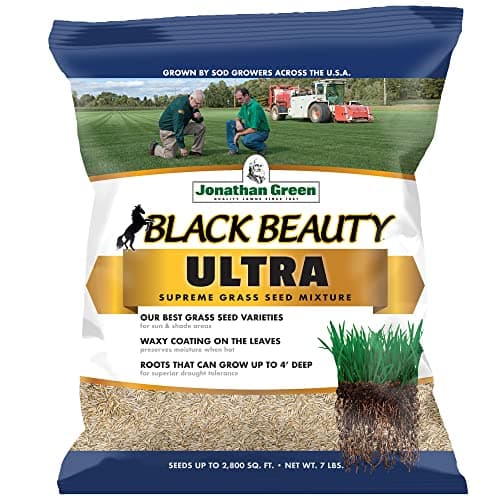
Jonathan Green Black Beauty Ultra Grass Seed
A deep-rooting tall fescue blend built for wear tolerance in cool-season yards.
Outsidepride Maya Bermuda Grass Seed
A fine-bladed bermuda seed for warm-season yards that take constant paw traffic.
NightShift Perennial Ryegrass Seed
A fast-germinating ryegrass for patching worn paths and urine spots between full overseeds.
Grass Alternatives for Dogs (When Real Grass Won't Survive)
Sometimes the honest answer is that no grass will survive your dogs, especially in small yards with big, high-energy breeds. That is when a grass alternative for dogs earns its keep. Clover, and microclover in particular, is the best living alternative: it stays green with less water, handles urine far better than turfgrass, feels soft under paws, and fills in small bare spots on its own. Kurapia, a sterile groundcover popular in California, offers similar toughness in hot, dry yards.
Pet-rated artificial turf is the zero-maintenance route. Look for products with a permeable backing and an antimicrobial infill, and rinse it down weekly so urine odor never builds up. It stays usable in mud season, but it does get hot in full summer sun, so shade or a quick hose-down matters for paw comfort.
For the worst wear zones, a hybrid approach usually beats fighting for grass: give the fence line or racing path a dedicated dog run surfaced with decomposed granite, pea gravel, or bark mulch (skip cocoa mulch, which is toxic to dogs), and keep real grass where traffic is lighter. Redirecting the traffic is often what finally lets the rest of the lawn recover.
Conclusion: Building a Pet-Safe Lawn That Works in Real Life
A healthy, attractive, and truly pet friendly lawn is absolutely possible, even with active dogs. The key is matching the right grass species to your climate, then supporting it with good soil care and smart habits. Tall fescue, perennial ryegrass, and Kentucky bluegrass mixes work well for cool season yards, while Bermuda, Zoysia, and St. Augustine are strong options in warmer regions.
Remember that even the most dog resistant grass has limits. Expect some wear in favorite play zones, and plan for seasonal overseeding, aeration, and occasional spot repair. Over time, you will learn how your specific dog uses the yard and can fine tune grass choices, potty areas, and traffic patterns to keep both your pets and your lawn happy.
If you want to go deeper on species selection, shade challenges, or regional choices, explore resources like the Complete Guide to Cool-Season Grass Types, Complete Guide to Warm-Season Grass Types, Best Grass Types for Shade, Best Grass Types for Full Sun, and How to Identify Your Grass Type by Look & Feel. With the right information and a practical plan, your lawn can be both pet safe and beautiful for years to come.
Top Picks
- Jacklin Seed by Barenbrug Heisman Kentucky Bluegrass Blend (5 lb)Check price on Amazon
- Jonathan Green (10322) Black Beauty Ultra Grass Seed - Cool Season Lawn Seed (7 lb)Check price on Amazon
- Outsidepride Fireball & Hattrick Perennial Ryegrass Blend (5 lb)Check price on Amazon
As an Amazon Associate we earn from qualifying purchases.
Free Lawn Care Tools
The best grass for dogs varies by climate. In cool-season regions, tall fescue (especially turf-type tall fescue) is the top overall pick because it is durable, soft on paws, and recovers well from traffic. Kentucky bluegrass is a softer alternative that holds up to moderate dog activity. In warm-season regions, Bermuda grass leads for most dog yards because it spreads by runners and fills in urine spots and dug-up patches faster than clumping grasses. Zoysia is a softer warm-season second choice. St. Augustine can work in the coastal South for light-to-moderate dog activity.
All of the common lawn grasses are safe for dogs: tall fescue, Kentucky bluegrass, perennial ryegrass, Bermuda, Zoysia, St. Augustine, fine fescue, and buffalograss are all considered non-toxic, even if your dog nibbles a few blades. The real pet-safety concerns are the products applied to the lawn, not the grass itself: herbicides, fertilizers, weed-and-feed combos, and treated seed. Follow the label re-entry interval on anything you apply, and keep dogs off freshly spread coated seed until it is watered in and established.
Bermuda grass and Zoysia are the best dog pee resistant grasses overall: both tolerate the nitrogen and salts in urine better than cool-season species, and they spread by runners so any yellow spots fill back in on their own during active growth. Among cool-season grasses, tall fescue is the most urine-tolerant in university testing, while Kentucky bluegrass burns most easily. No grass is truly urine-proof, so rinsing spots with water within a few hours remains the most effective habit regardless of species.
Yes, Bermuda grass is one of the best options for dogs in warm, sunny climates. It is non-toxic, durable, and spreads by runners, so it recovers from heavy paw traffic, digging, and urine spots faster than clumping grasses. TifTuf and other hybrid Bermuda sod gives you an instant, tough surface for high-energy dogs. The main limitation is shade: Bermuda thins out under trees, so it is a poor fit for shaded yards or dogs that mostly rest in the shade.
Bermuda grass is the best pick for most Florida dog yards in full sun because it spreads by runners and repairs urine spots and dig damage quickly. Zoysia is a softer second choice, and St. Augustine works for light to moderate dog activity, especially in shadier coastal yards, though it repairs more slowly and its coarse blades are less comfortable for sprawling dogs. Bahiagrass survives dogs on large sandy rural lots but stays thin and coarse, so most homeowners treat it as a fallback.
Hybrid Bermuda is the best grass for dogs in Southern California because it combines top-tier wear tolerance with the lowest water needs; TifTuf in particular is rated the most drought-tolerant Bermuda in university trials. Zoysia is a good lower-water alternative once established, and buffalograss or Kurapia suit native, low-water yards with light dog activity. Under strict watering restrictions, many SoCal dog owners pair pet-rated artificial turf in the run zone with real grass elsewhere.
For a cool-season dog friendly lawn, the best grass seed is usually a blend built on turf-type tall fescue with some perennial ryegrass and Kentucky bluegrass for quick patch recovery. In warm climates, Bermuda can be seeded for full-sun durability. When you buy, look for near-zero weed seed and other-crop percentages on the seed tag, and keep dogs off any coated or treated seed until it is watered in and established. Plain grass seed is the pet safe choice; the safety concerns come from added herbicides or fertilizer, so always follow the label.
Clover (especially microclover) is the best living grass alternative for dogs: it tolerates urine far better than turfgrass, stays green with less water, and repairs small bare spots on its own. Pet-rated artificial turf with a permeable backing is the best zero-maintenance option, and decomposed granite or bark mulch works well as a dedicated dog-run surface along fence lines and racing paths.
Dog urine contains nitrogen and salts that hit a small patch of grass all at once. In light amounts, that nitrogen can act like fertilizer, which is why you sometimes see dark green rings around a damaged center. When concentrations are higher, especially on dry or stressed turf, it burns the grass and leaves yellow or brown patches. Deep-rooted, drought-tolerant grasses usually cope better by using and diluting that nitrogen more effectively.
There is no single most pet friendly grass for every yard, because the best choice depends on your climate. In cool-season regions, turf-type tall fescue is the most pet friendly all-rounder: deep roots, good urine tolerance, and strong traffic resistance. In warm-season regions, Bermuda is the most durable, fast-recovering pick for full sun, with Zoysia as a softer option. All of these are non-toxic to dogs, so "most pet friendly" really comes down to which one survives your dog traffic and climate best.
Yes, in high enough concentration. Dog urine delivers a heavy dose of nitrogen and salts to one small spot, which burns the blades the same way spilled fertilizer would. Small amounts on healthy, well-watered turf often just green the spot up. The fix is dilution: rinse fresh spots with water within a few hours, keep your dog well hydrated, and grow a urine-tolerant grass like Bermuda, zoysia, or tall fescue.
Bermuda and zoysia are the most urine-resistant grasses overall, with deep roots and lateral spreading that repairs spots quickly. Among cool-season options, tall fescue is clearly the best, followed by fine fescue and perennial ryegrass. Kentucky bluegrass is the most easily burned and the slowest to recover, so it is the worst common choice for dog-heavy yards.
Yes. TifTuf is a dense, drought-tolerant hybrid Bermuda that handles both dog traffic and urine well, and its aggressive lateral growth repairs worn paths and spots faster than most turf. Its main requirements are full sun and regular mowing; in shady yards, a tall fescue blend is the better dog-friendly pick.

Beat weeds and brown spots from your phone
Snap a photo, get the fix, and follow a plan timed to your soil and weather. Free on iPhone.